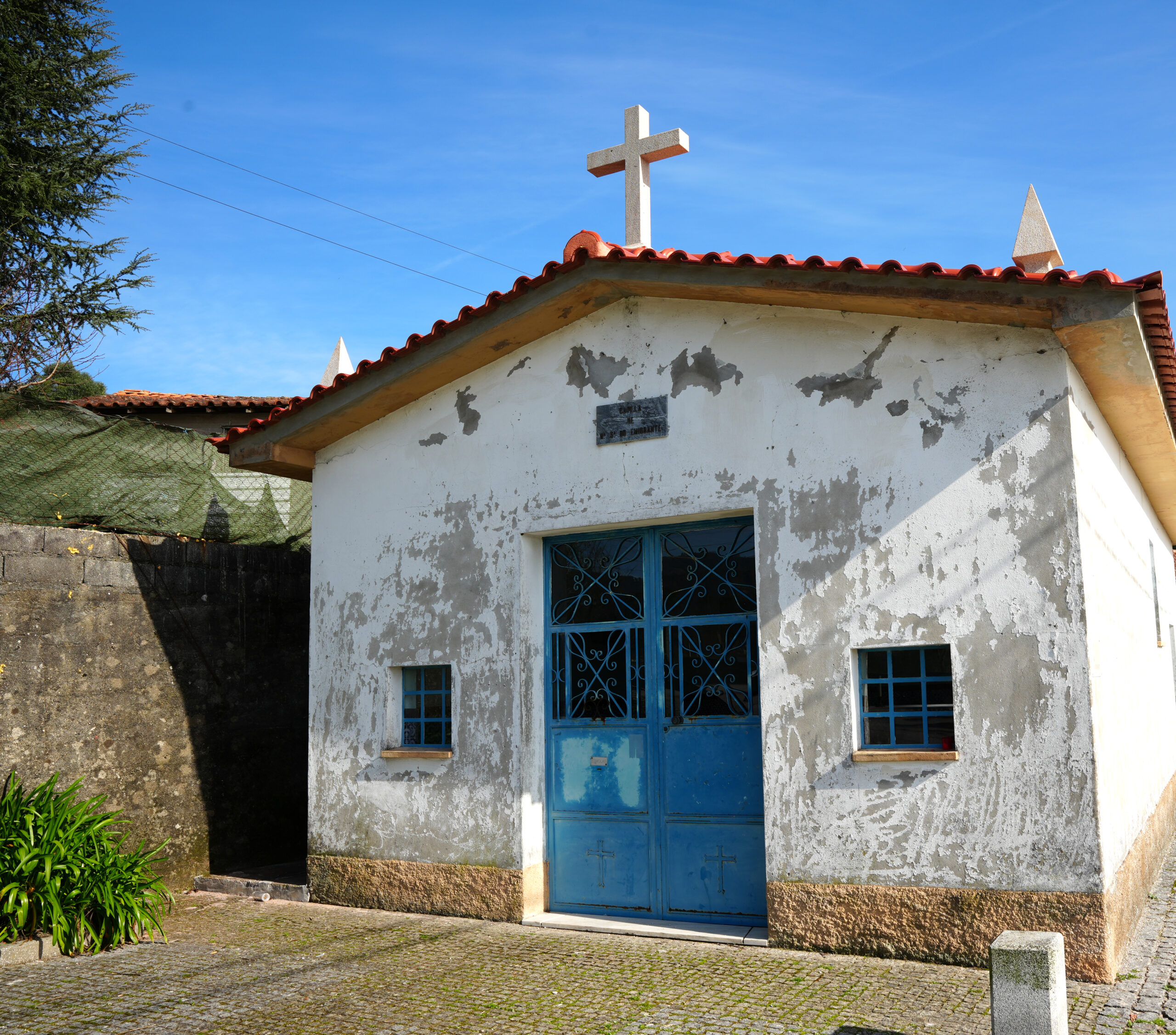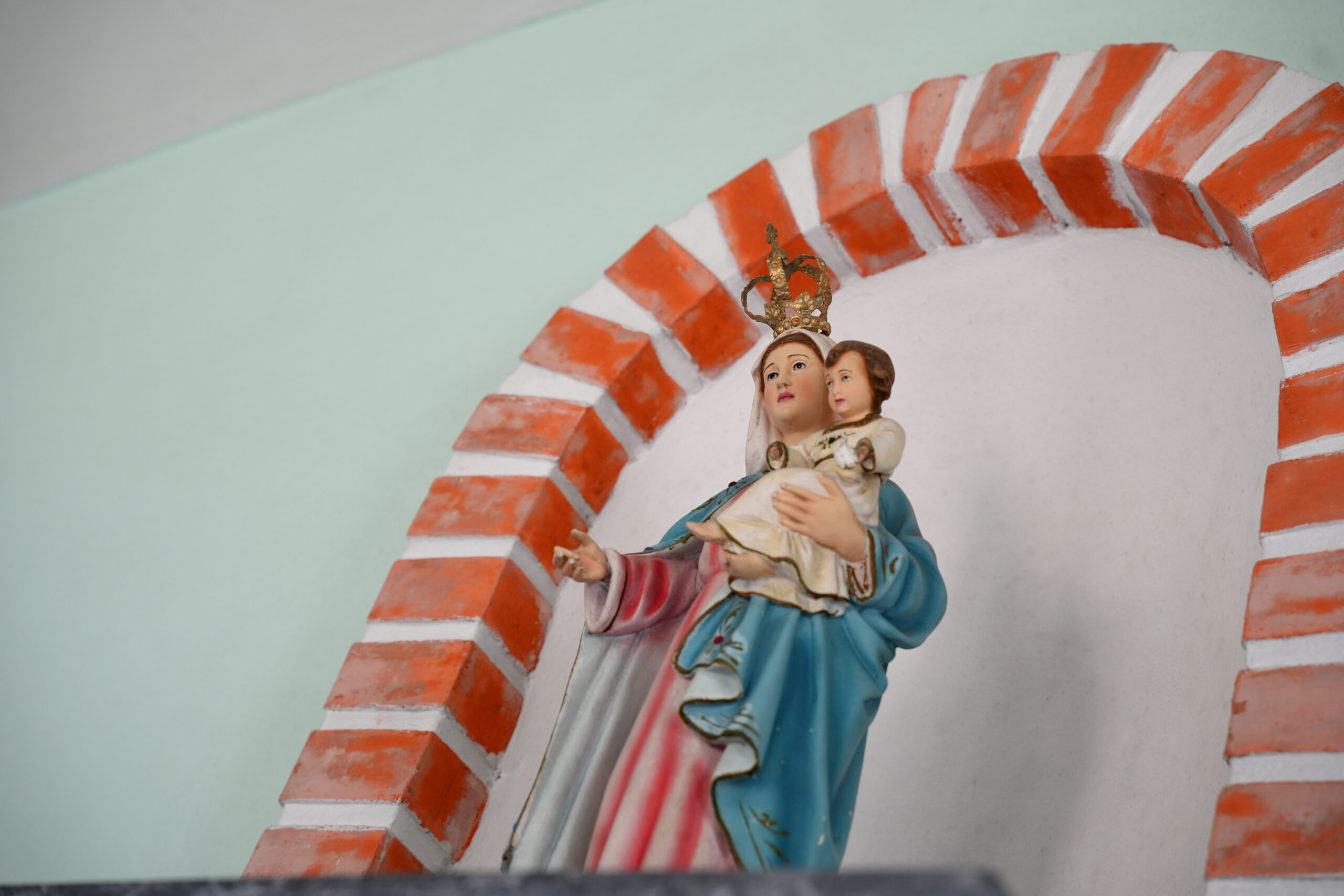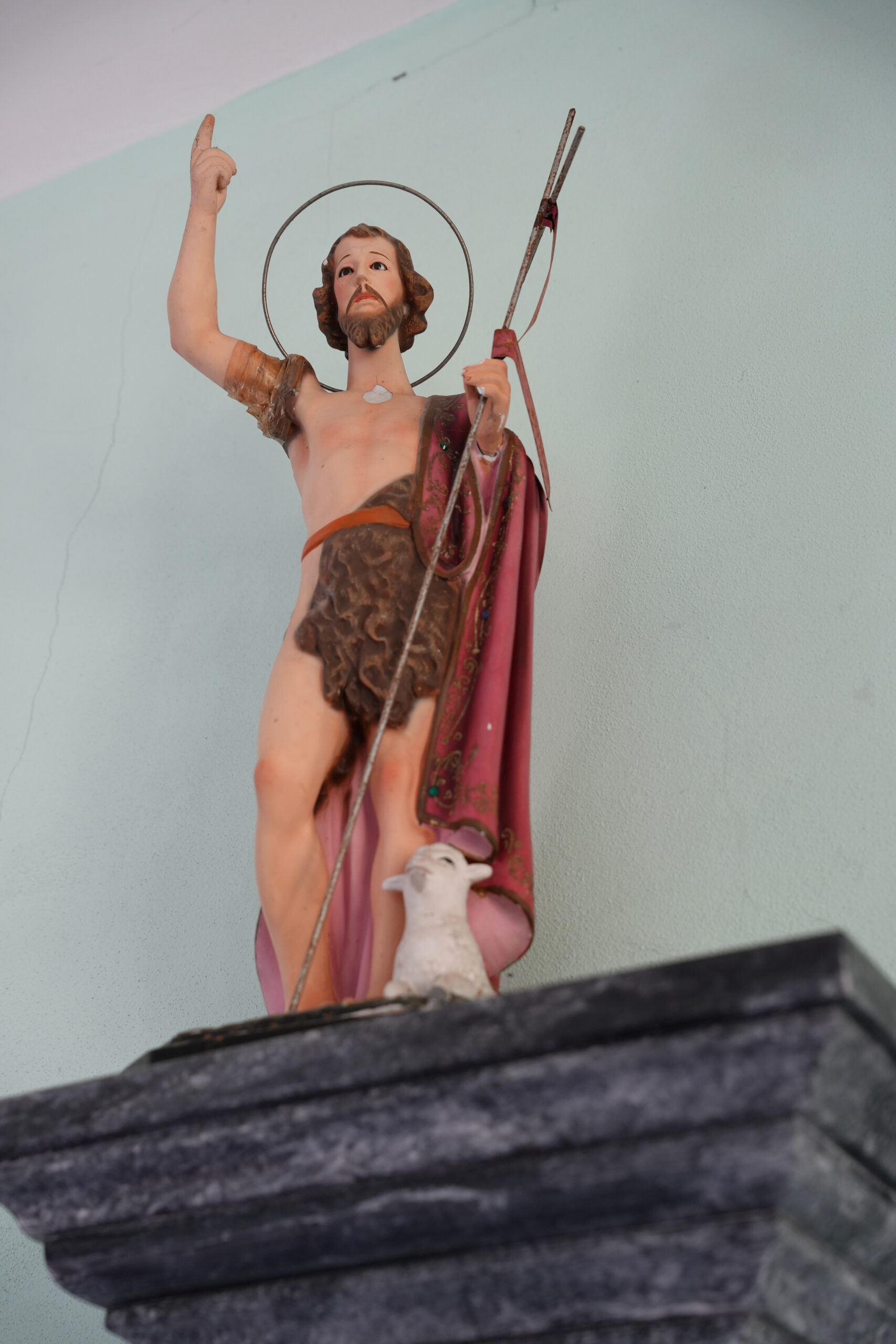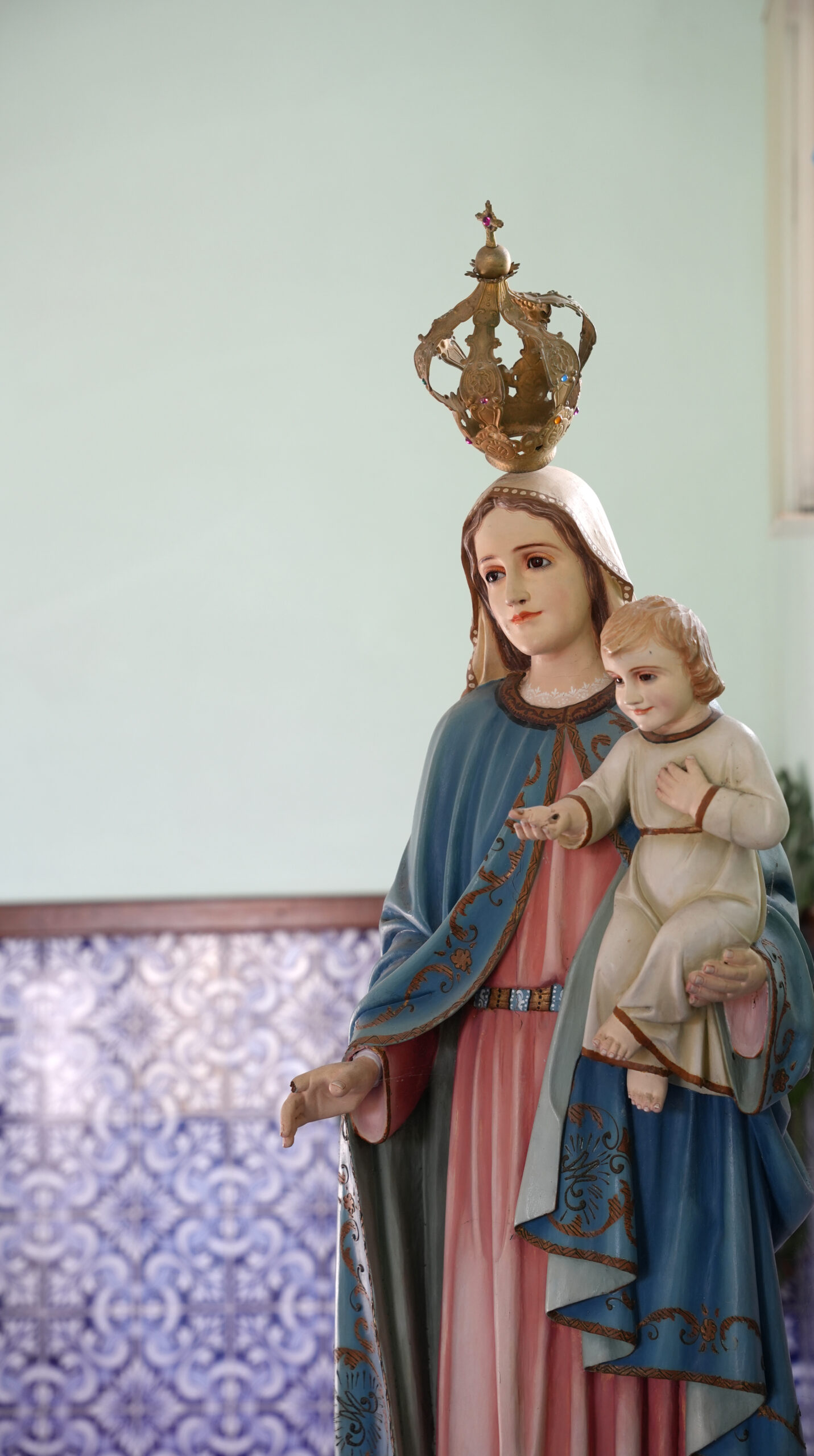
The rurality of Amares contains an intrinsic religiosity manifested in various traditions, festivals and pilgrimages. The paths and villages are also dotted with crosses, niches and shrines, a genu...
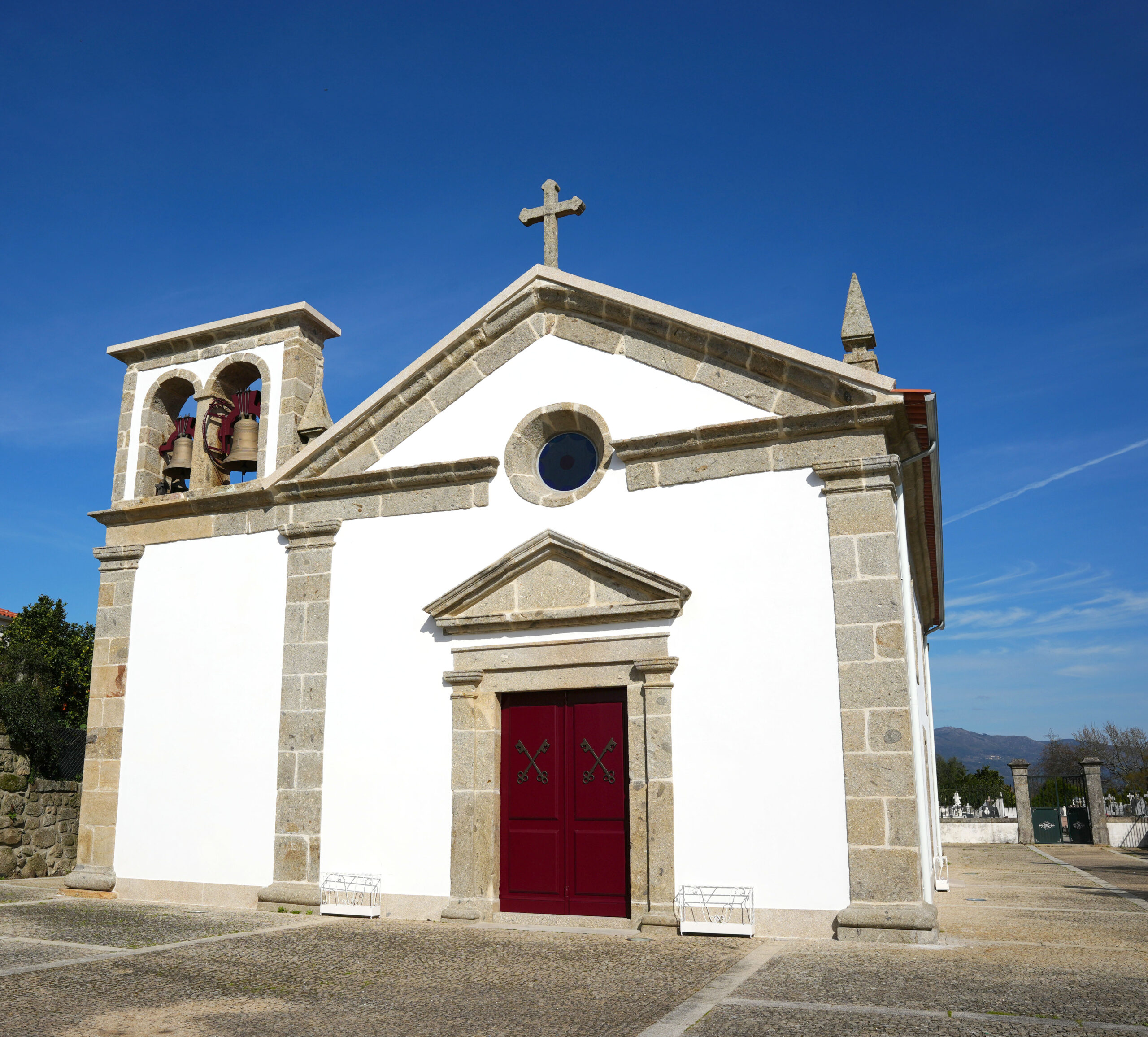
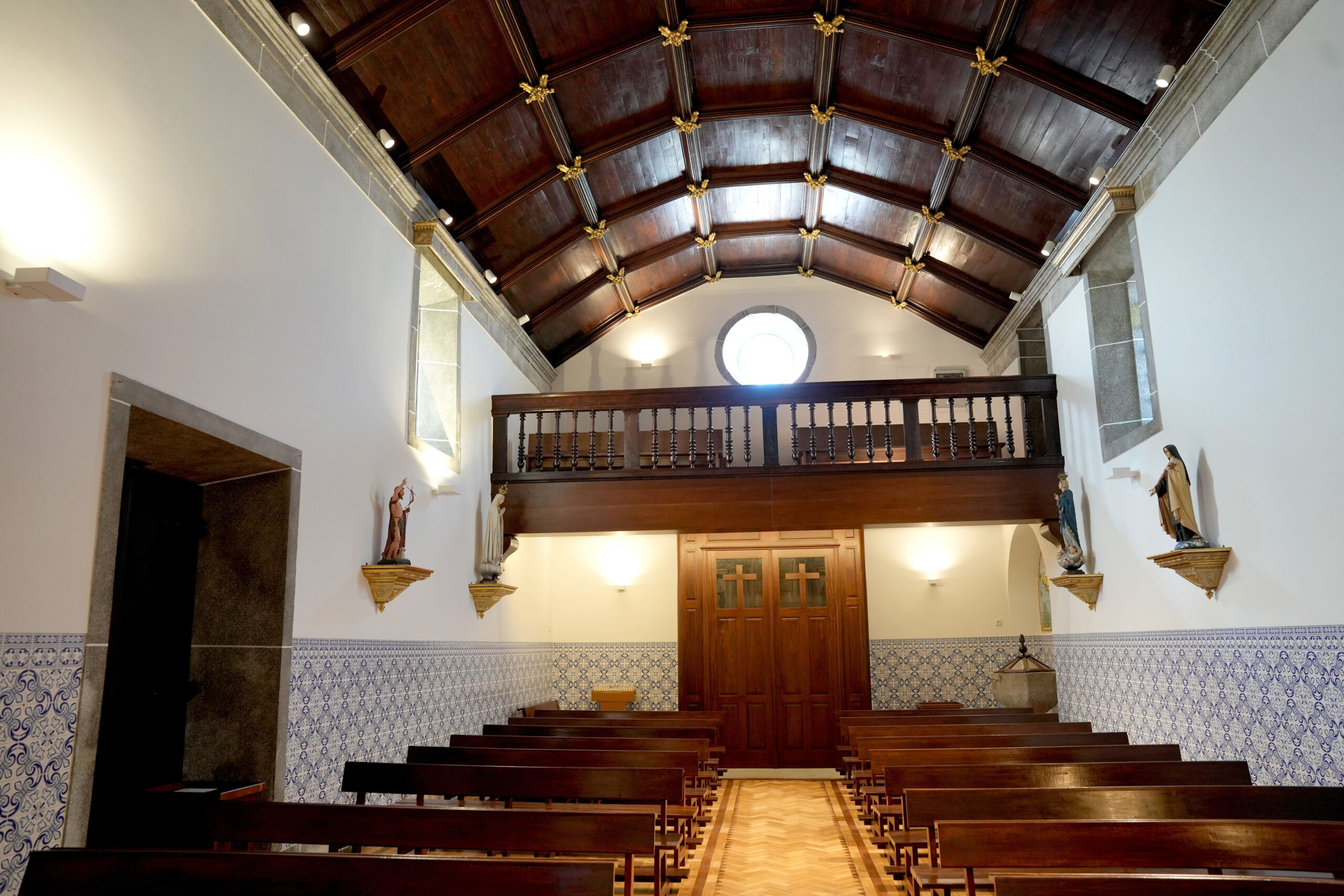
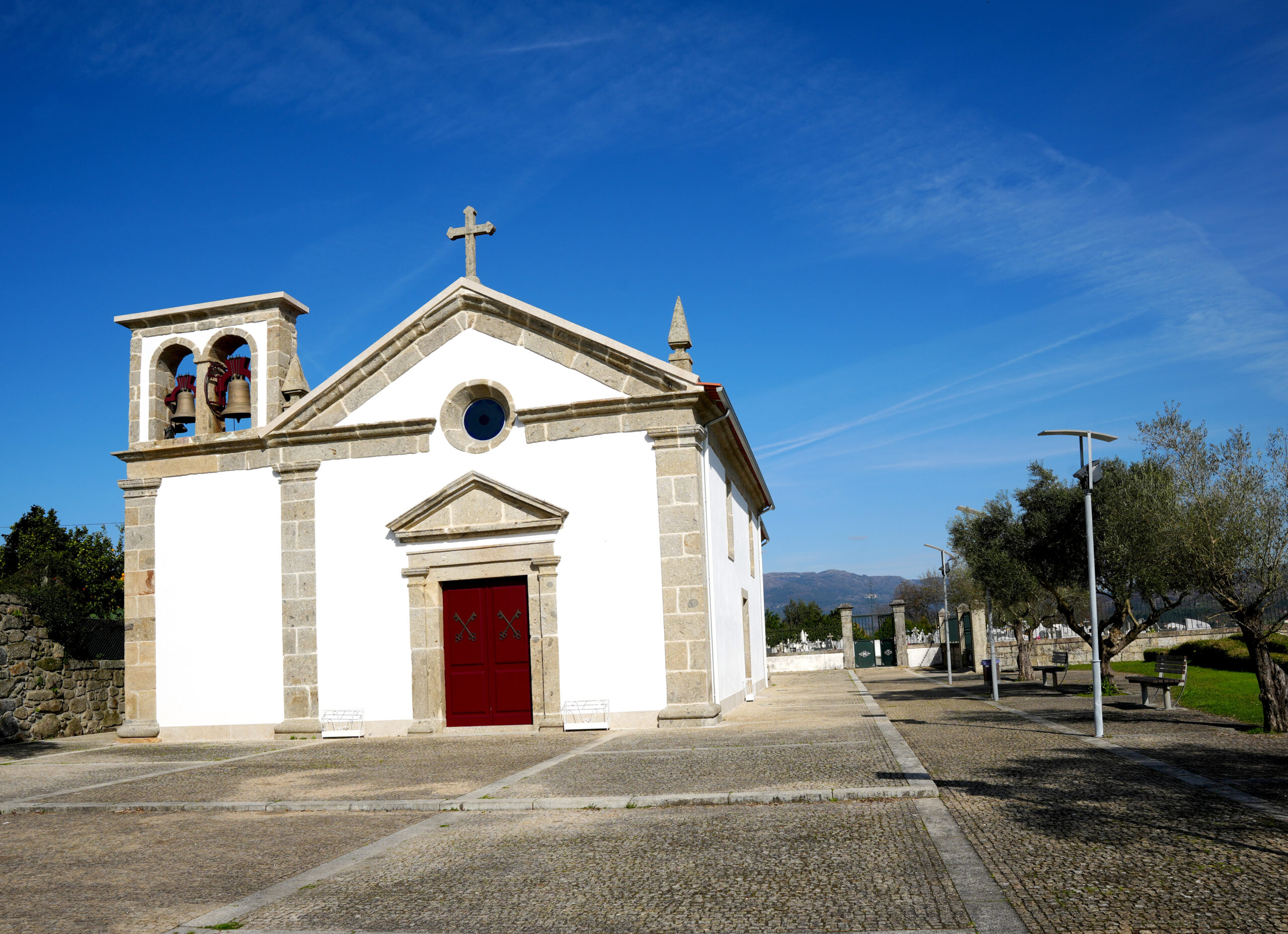
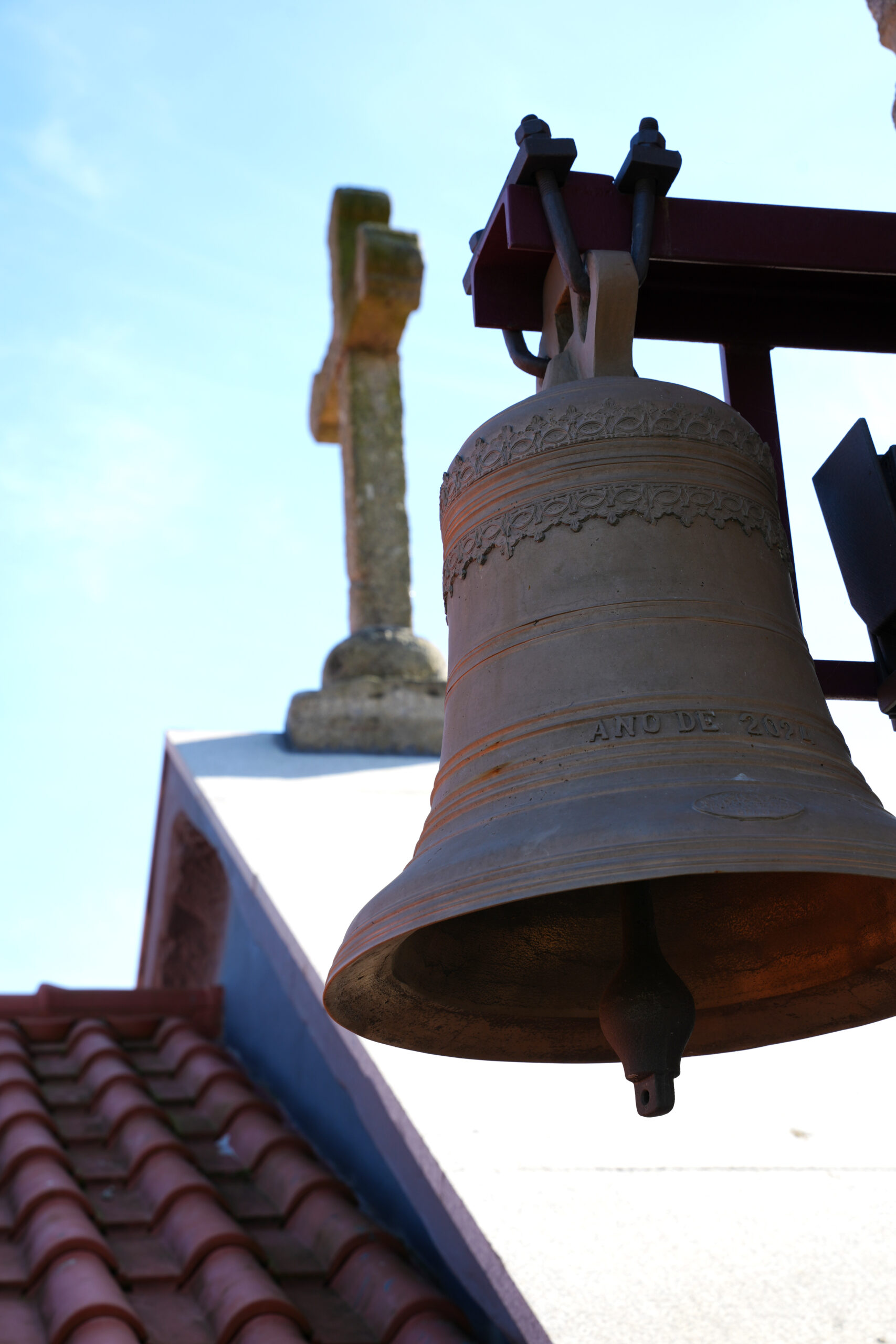
The patron saint is S. Pedro, apostle. Building from 1706 – according to Father Carvalho da Costa, it is an abbey of the patronage of the Diocese of Braga.
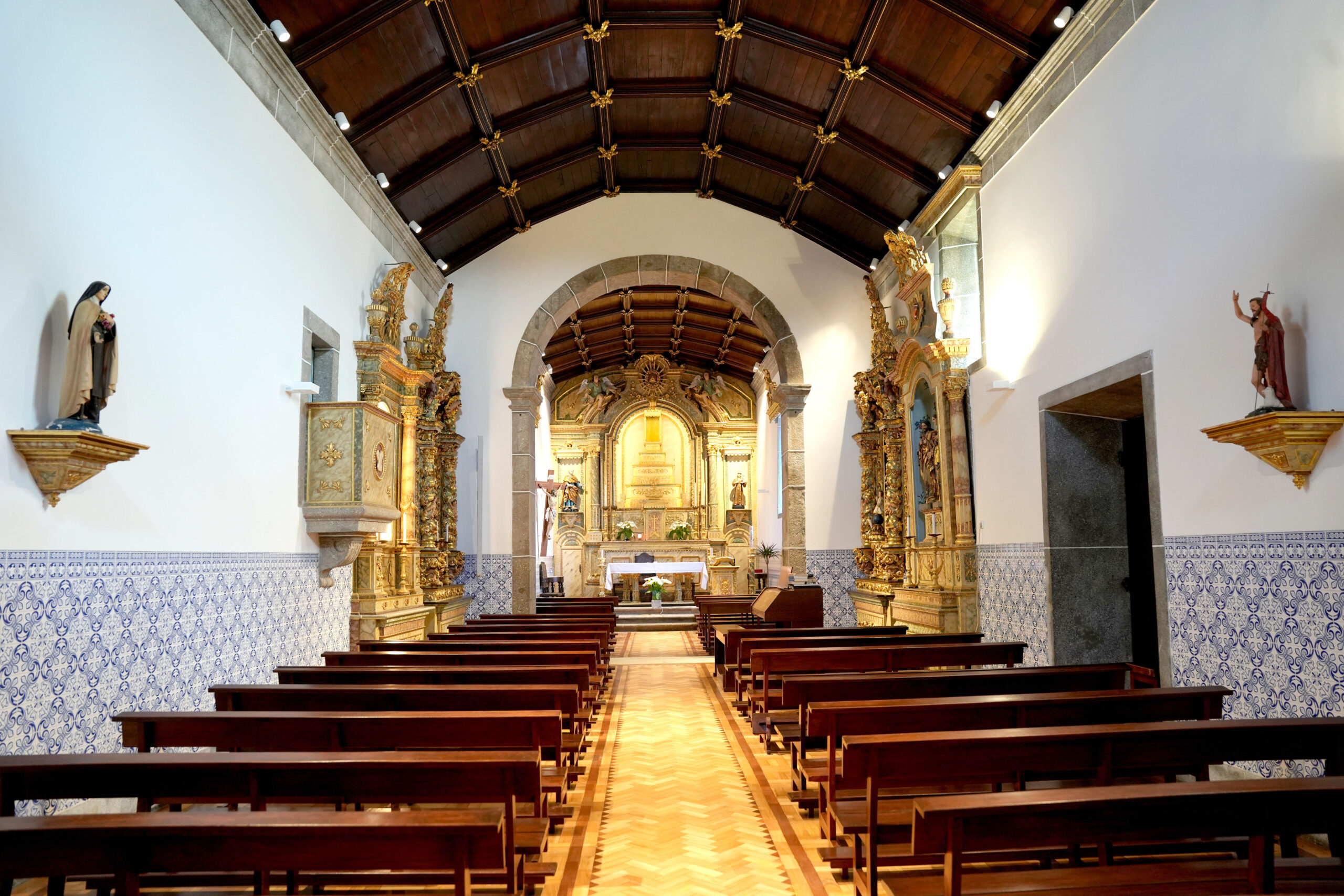
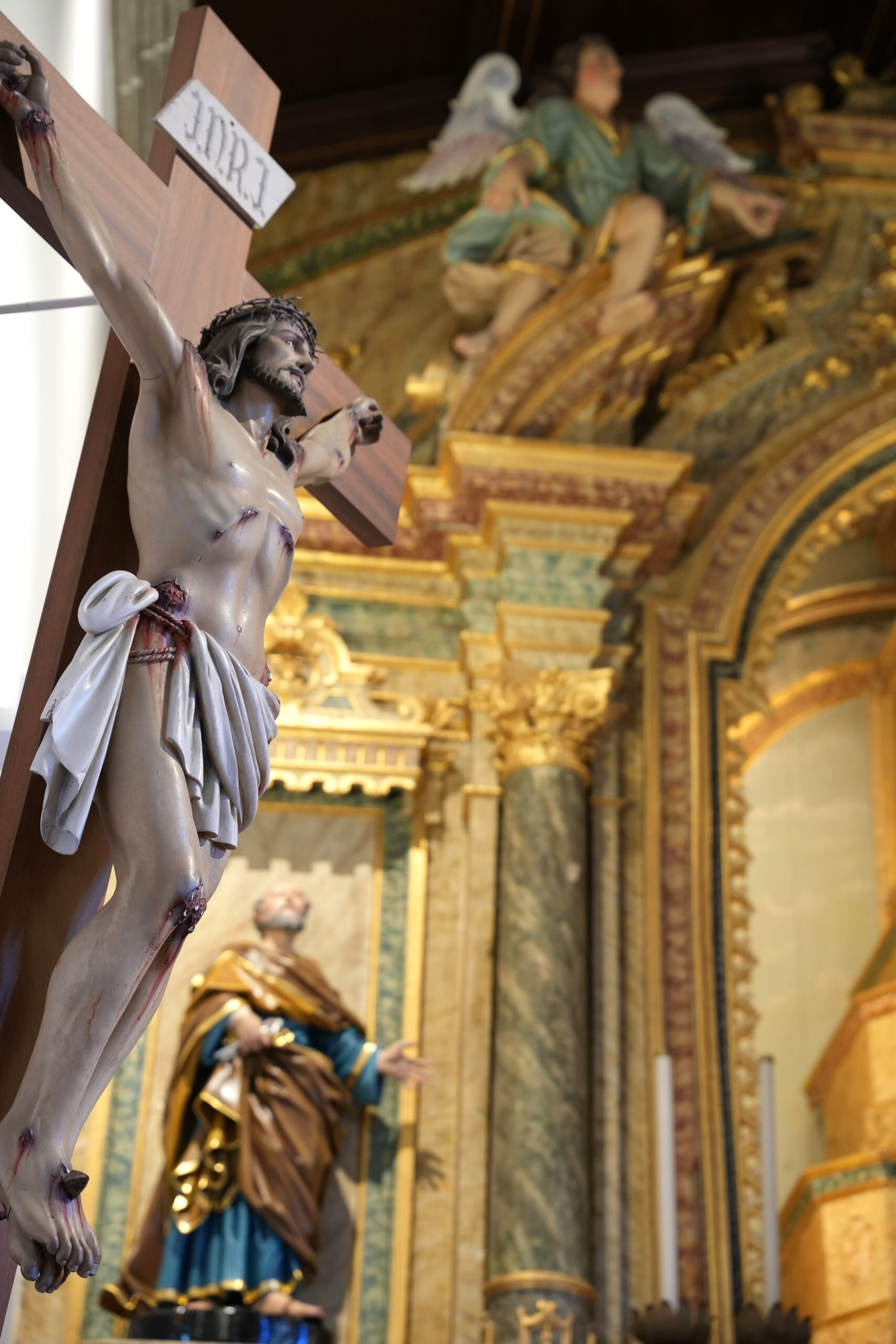
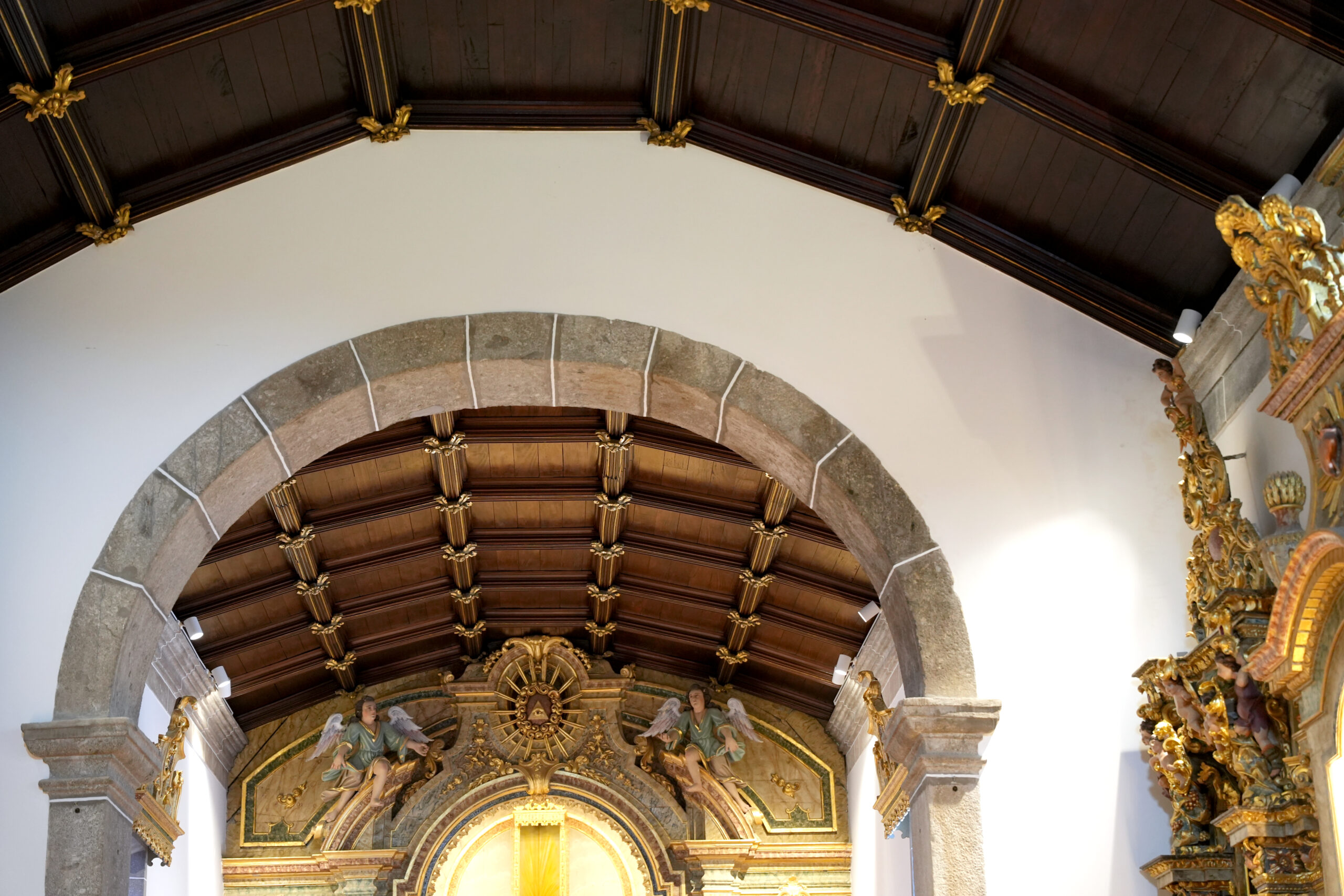
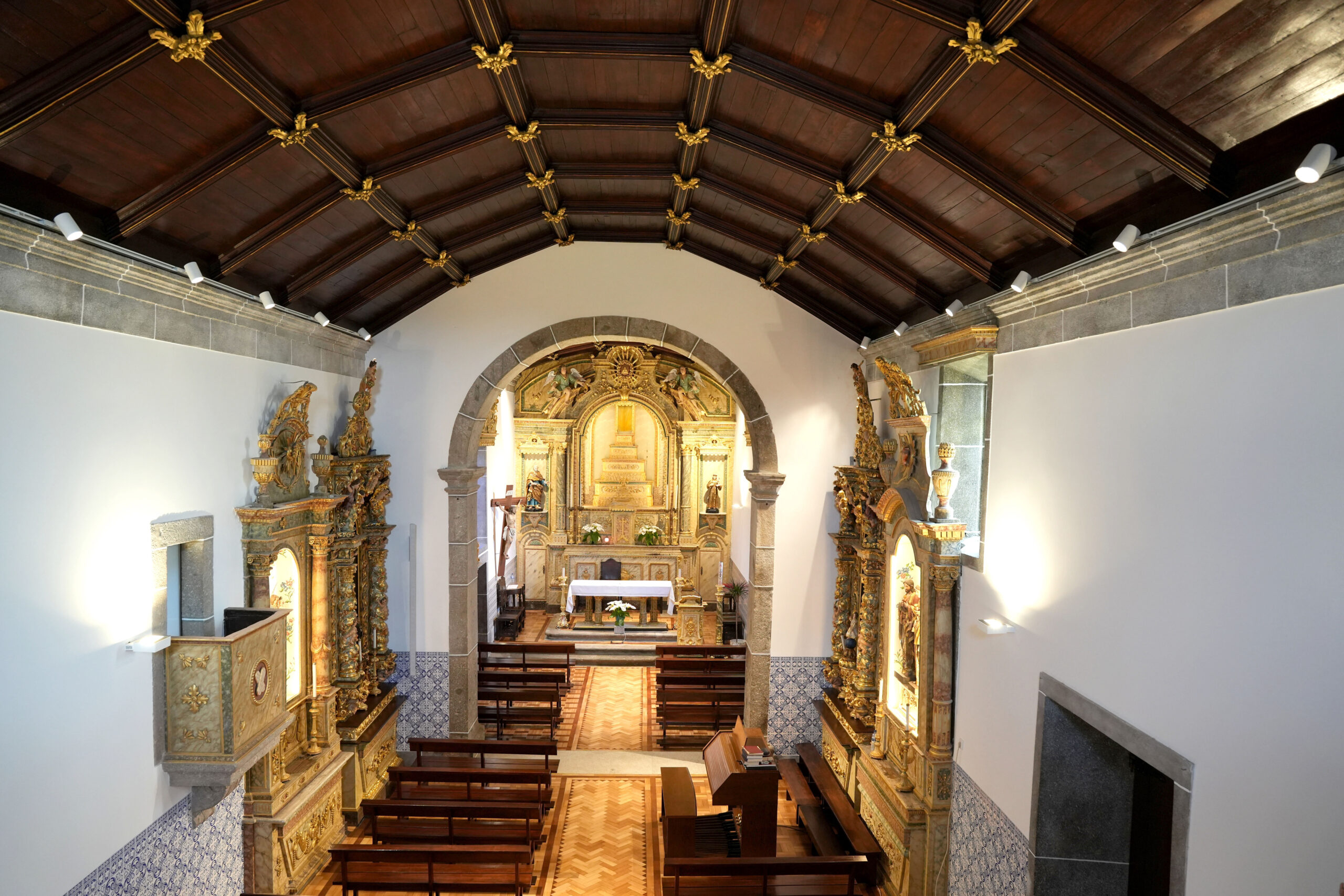
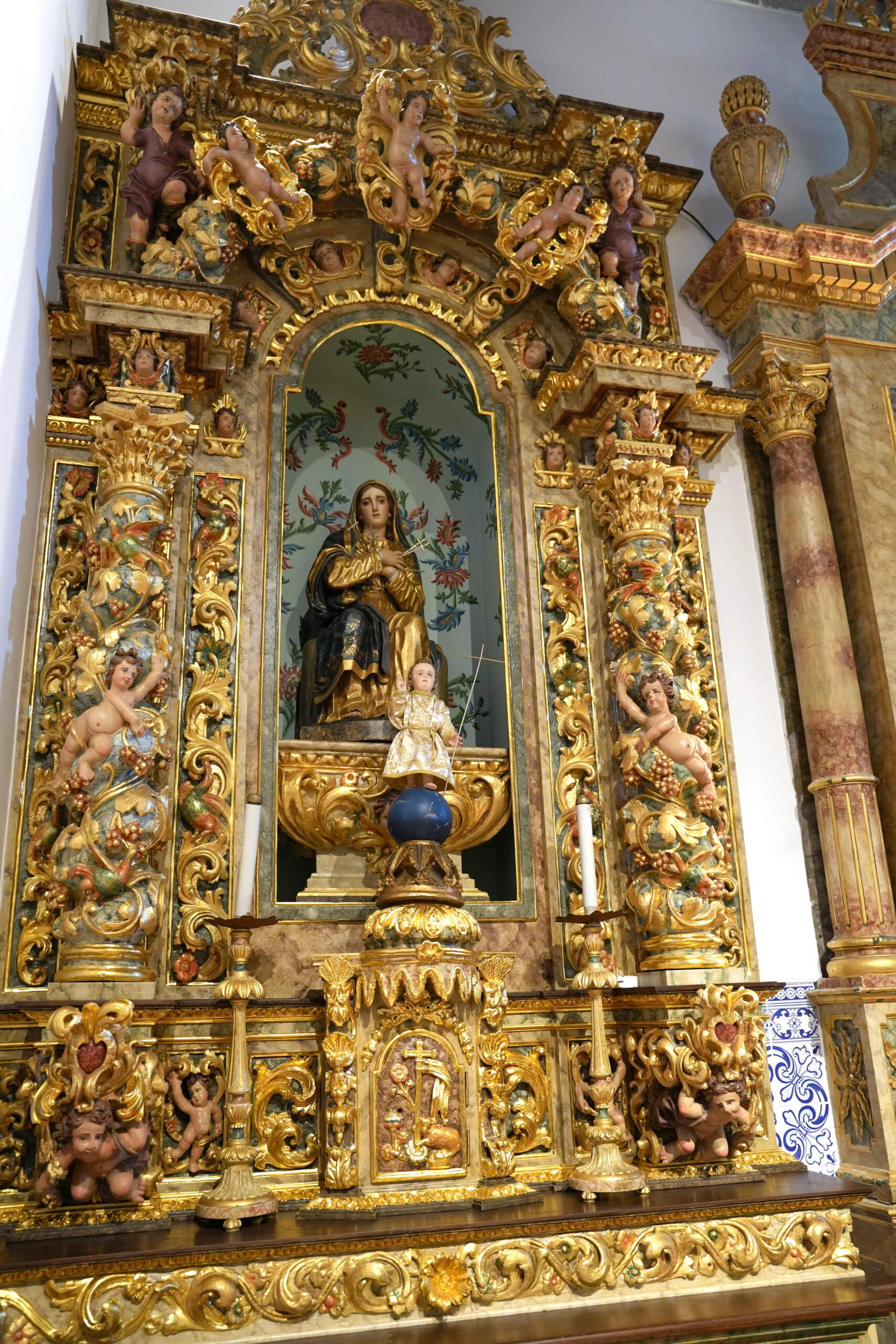
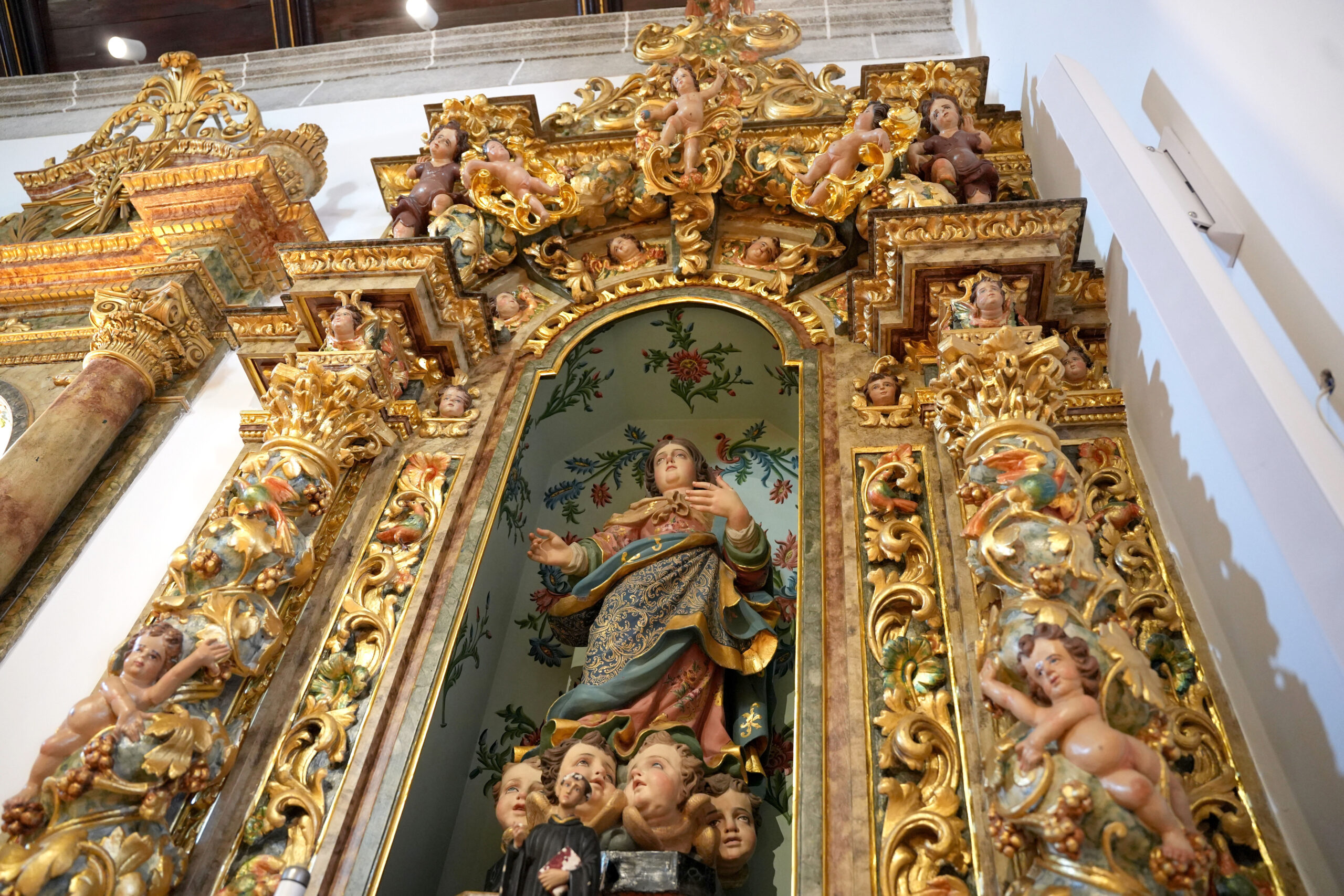
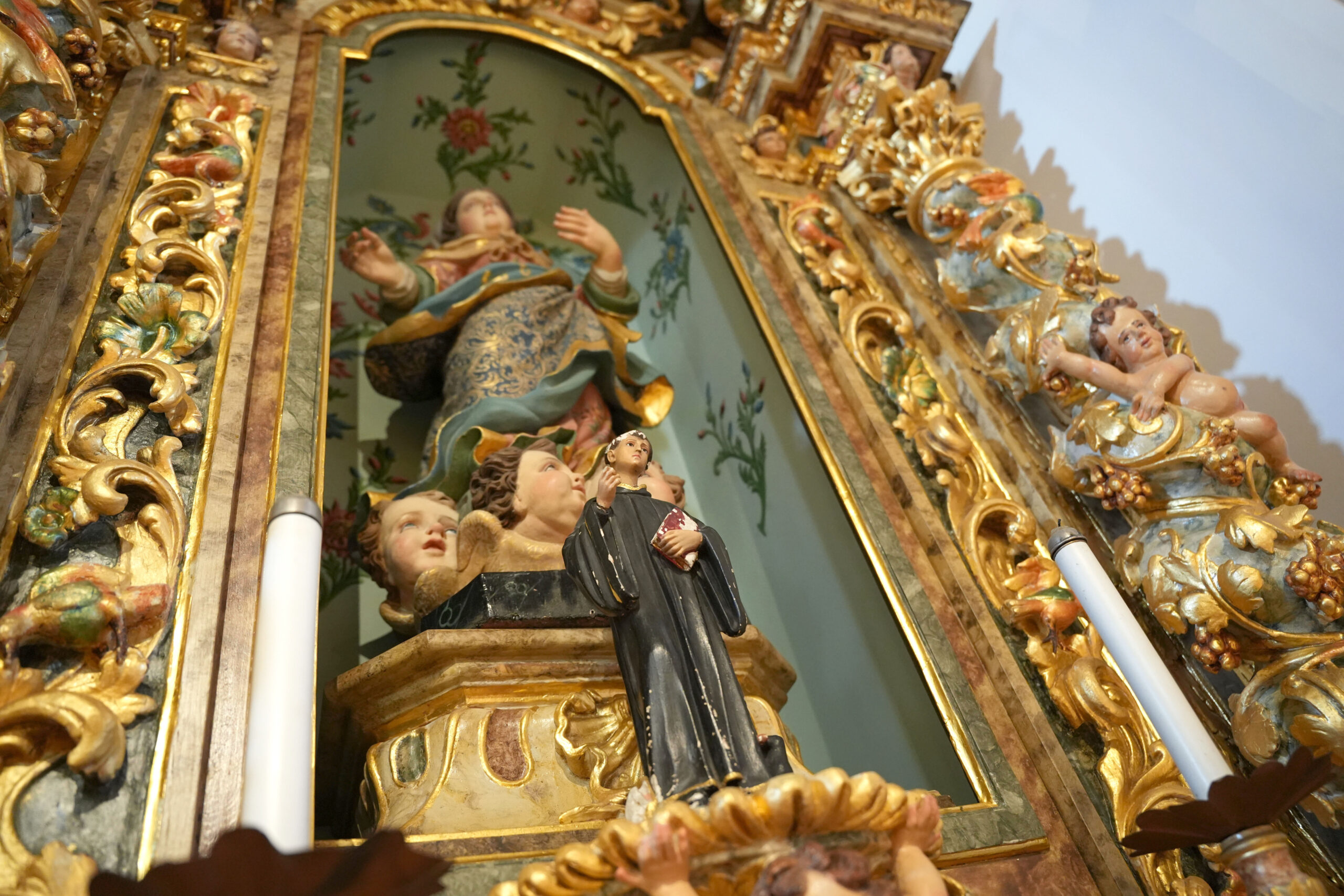
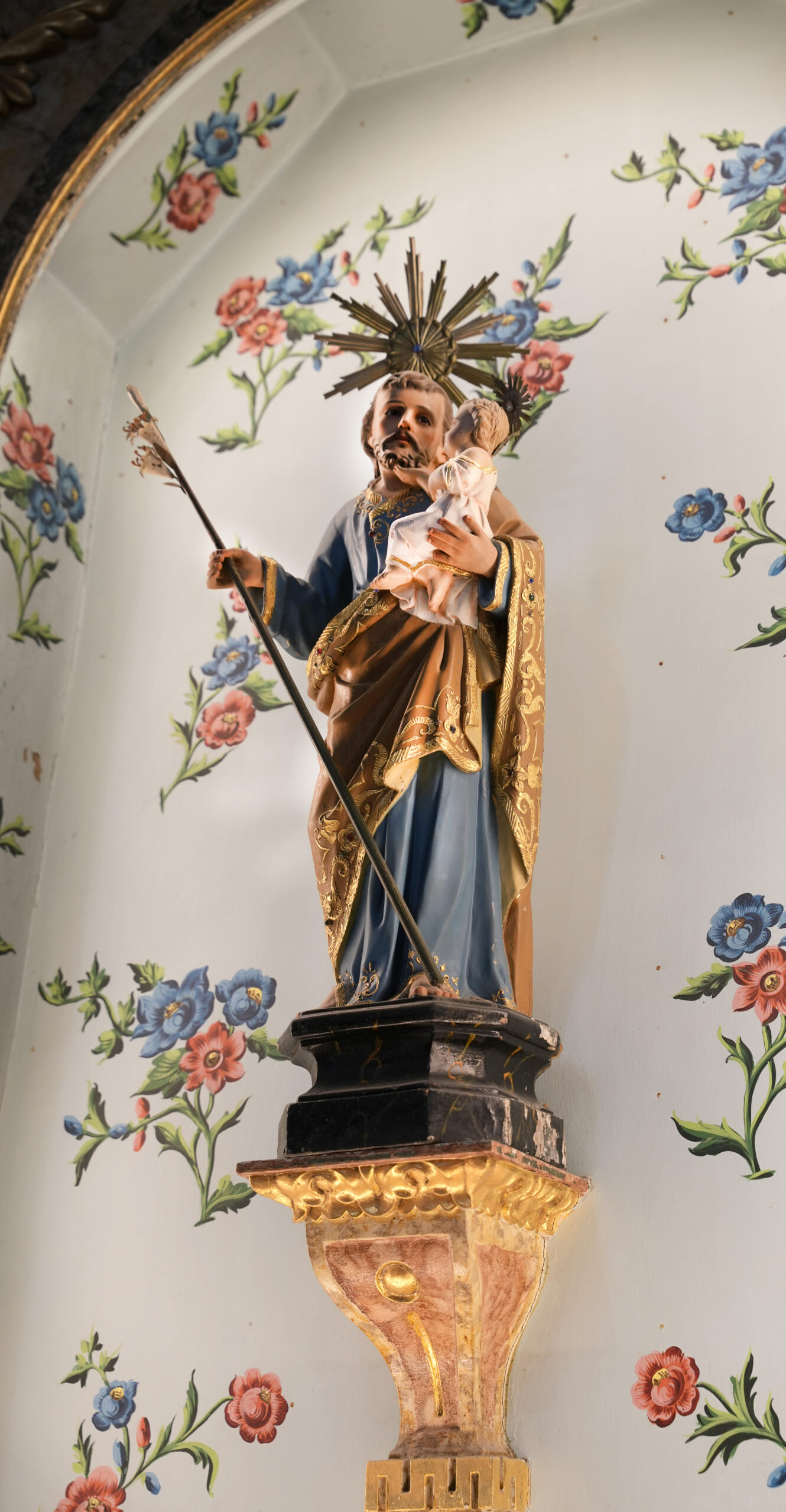
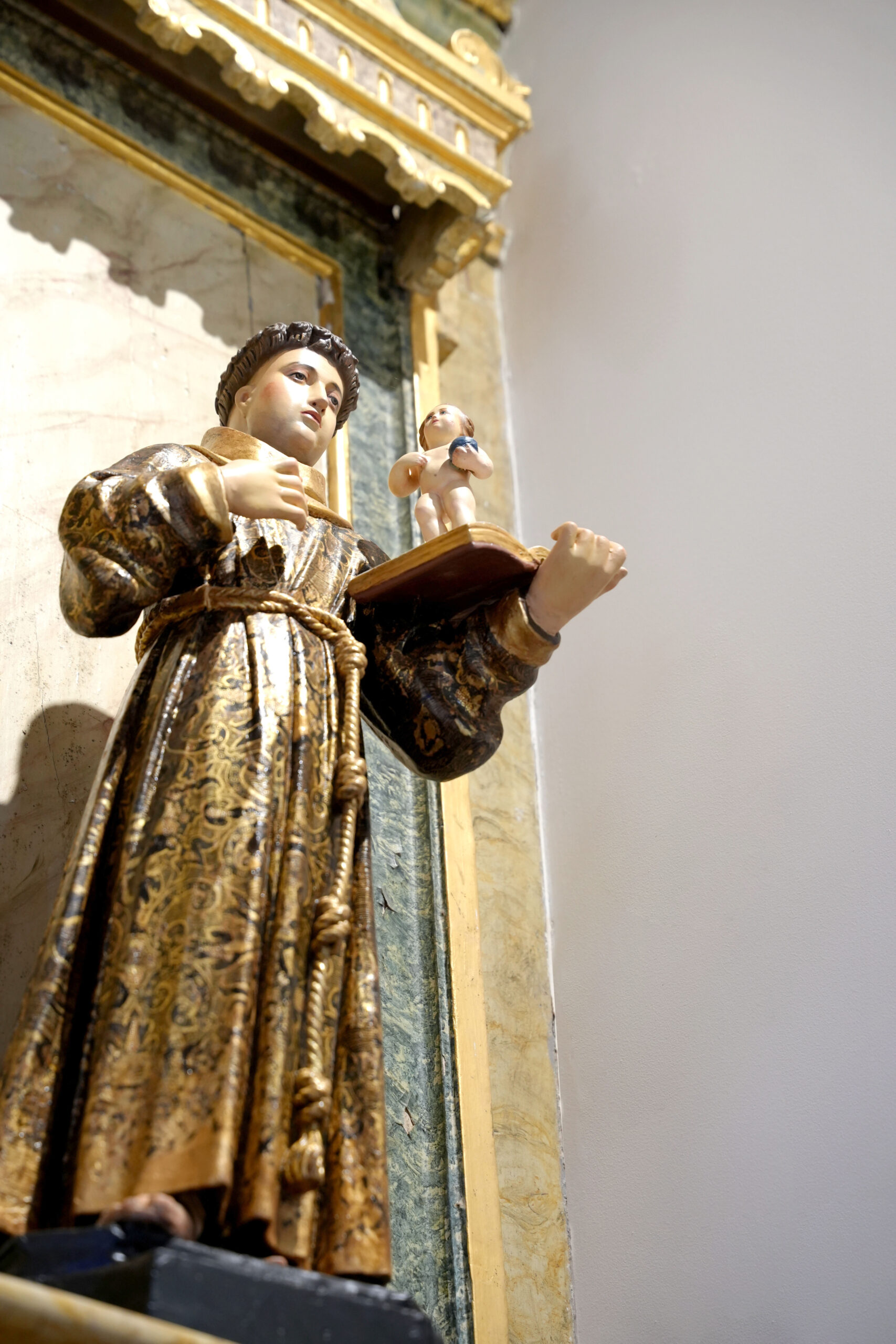
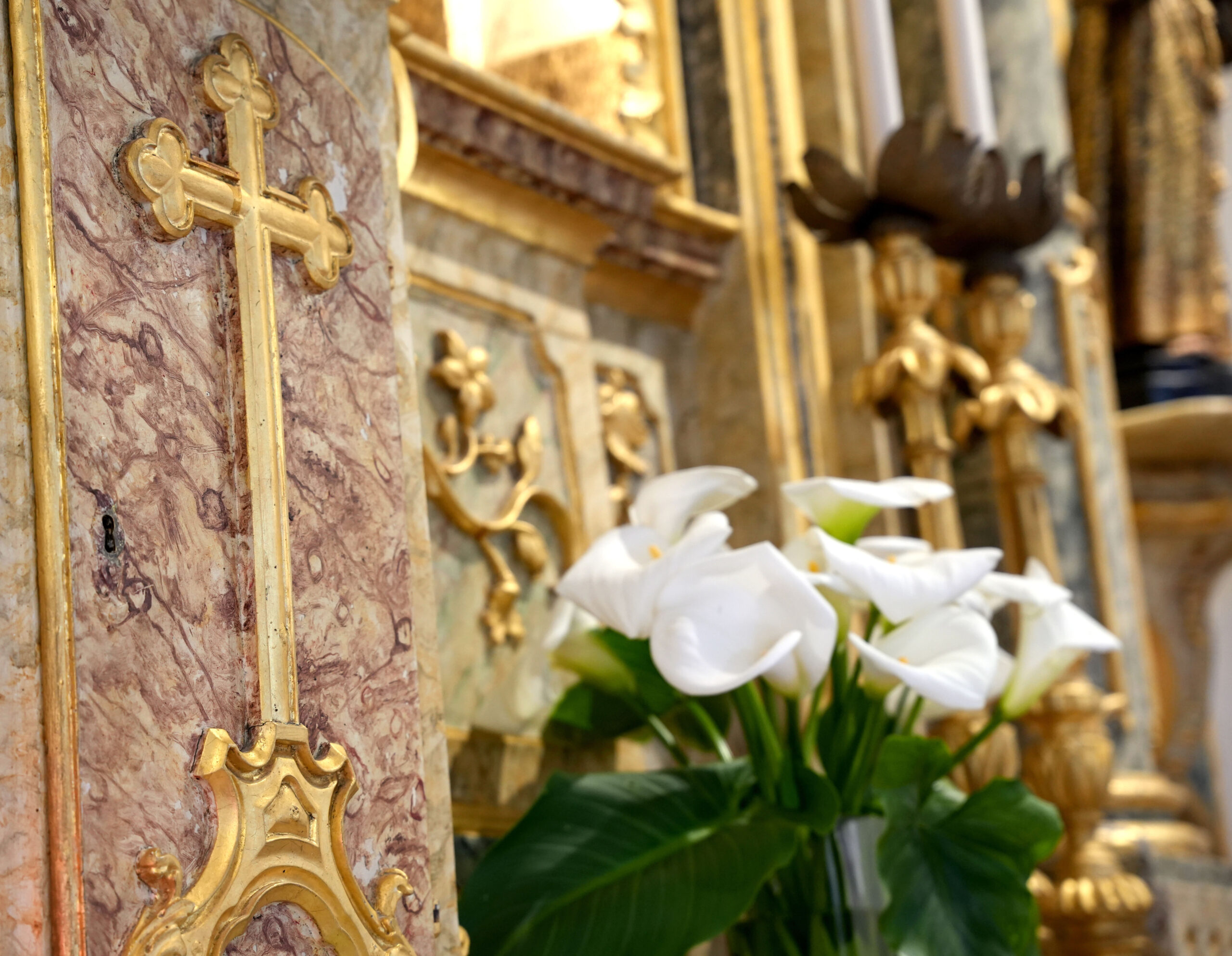
The main church building is relatively small and simple in terms of art; However, it has a valuable collection of images and altars.
The main one, in the style of D. João V throughout its elevation, has a stone table covered in wood; the canopy is of recent construction. At the ends of the altar, two seraphim, very ancient sculptures, hold torches adapted to electrical energy.
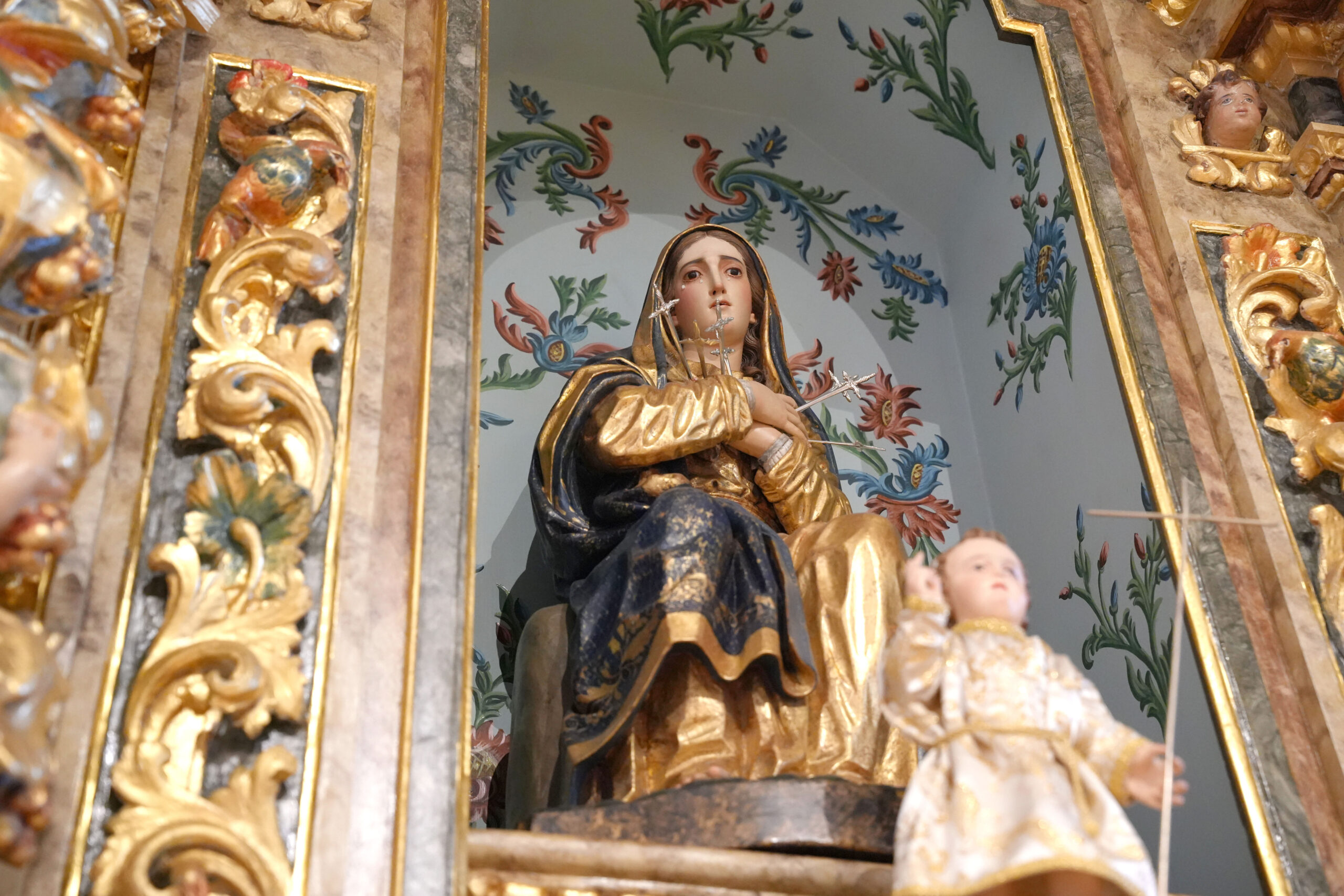
Of the four side altars, placed against the walls of the church, the first, on the Gospel side, is dedicated to N. Senhora do Rosário and is opposite that of N. Senhora das Dores; the respective images challenge each other in beauty and sculpture. Both are Renaissance style and very well preserved; at the top each of them is topped by a pelican, with its seraph on its back.
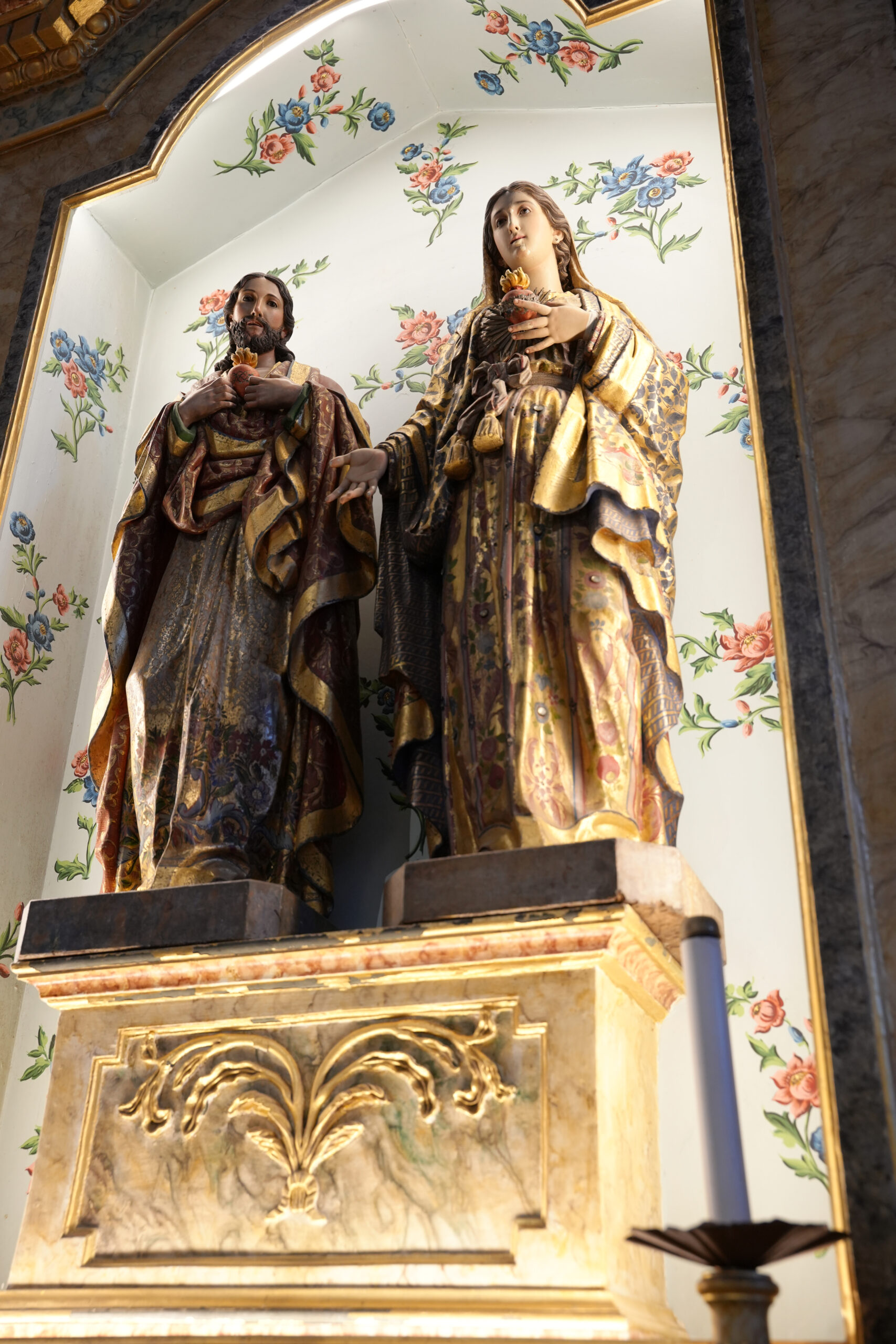
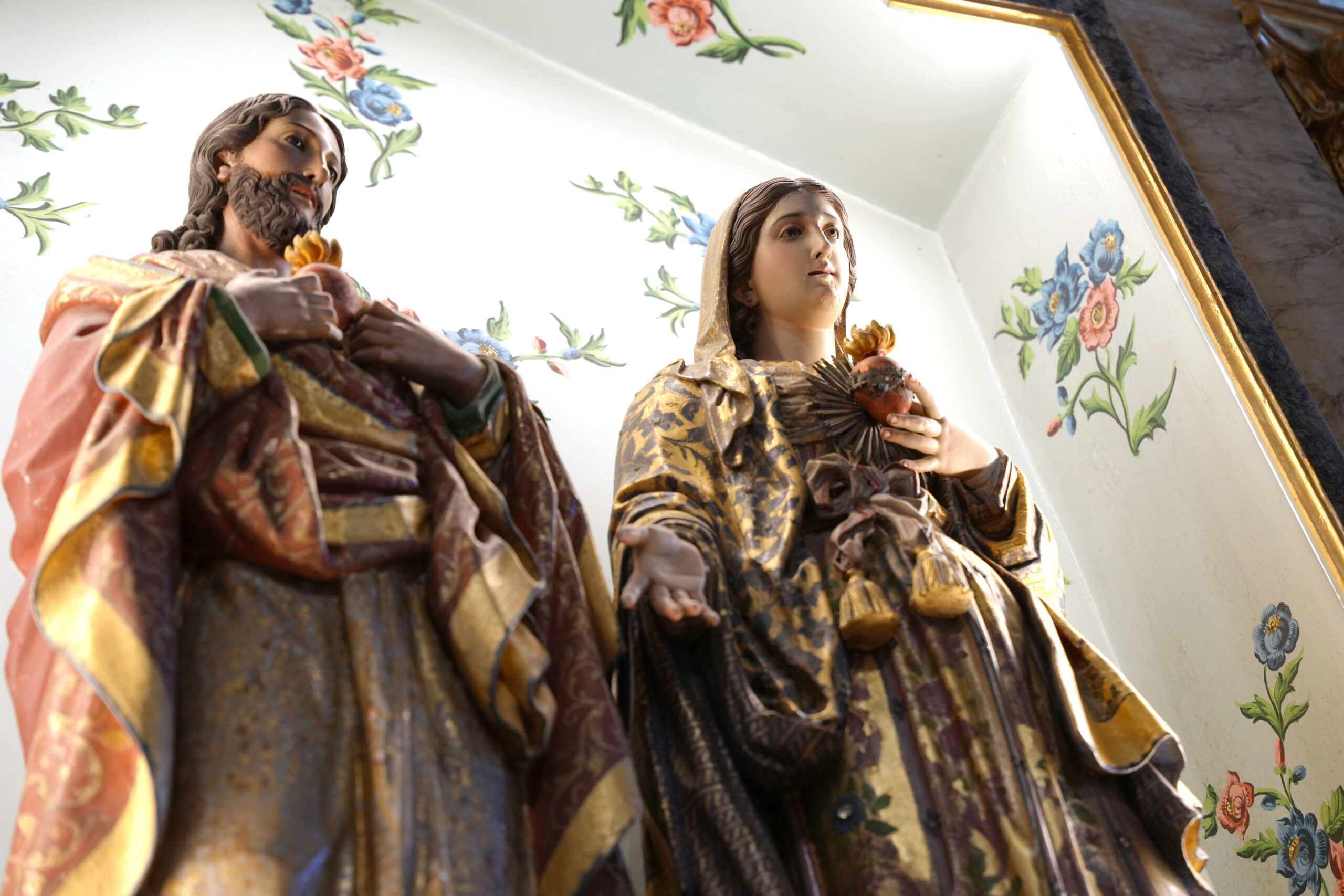
The other two, in the style of D. João V, are on the side of the Gospel, that of São José, and in front, that of the Heart of Jesus and Mary.
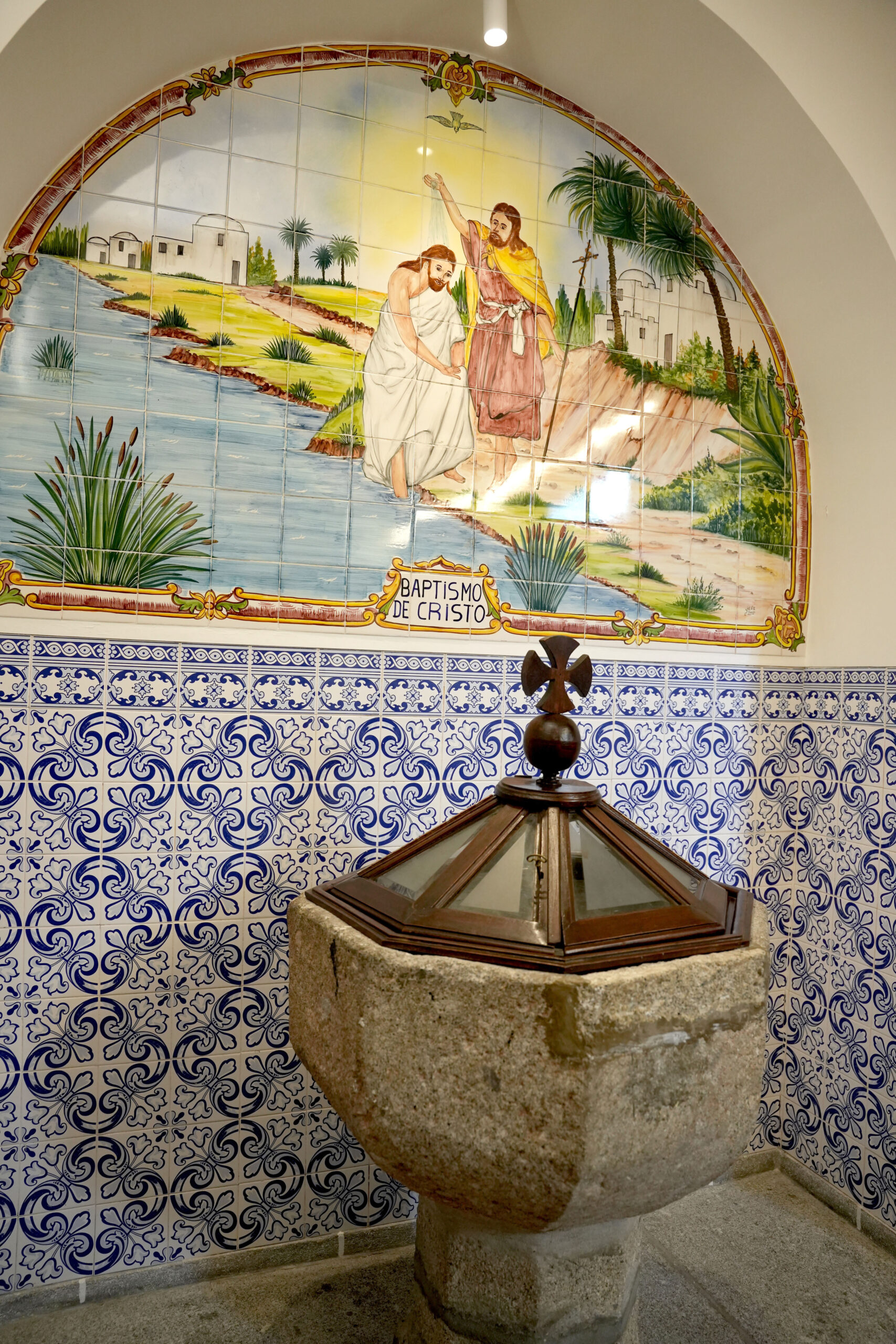
The baptismal font is octagonal in shape from the bowl to the base and is completely housed in arches embedded in the thickness of the wall.
It was floored in 1924; the cemetery had been built in 1913.
The urbanization of the area in front of the church, which became a regular and spacious churchyard, was due to the initiative of the late abbot Fernando Augusto de Araújo Azambuja; These works took place in 1886 and following.
In the background, and on the opposite side of the old path that connects to the Ponte do Porto road, is the parish cross, which has the following inscription on the face of the bulky stone of the plinth:
SEBASTIÃO V.ra DE CARV.o
DESTA FREG.ª MÃDOU FAZER
NO ANNO DE 1724 E
NO MESMO SE PÔS NESTA
IGR.ª O S. S.mo SACRAMENTO
P.ª O Q TÃBÊ DEU TO-
DOS OS PARAMENTOS
NECESSÁRIOS
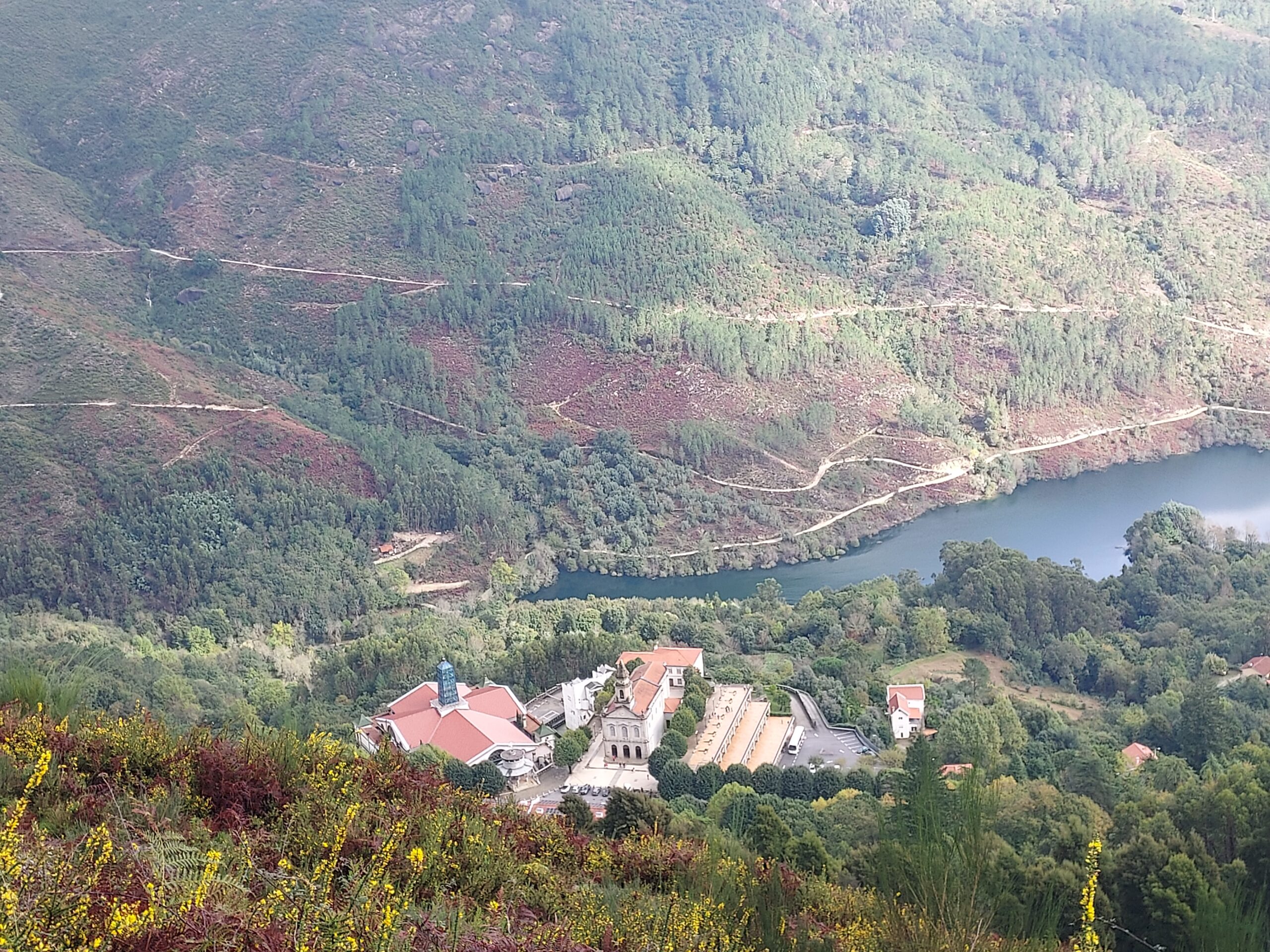
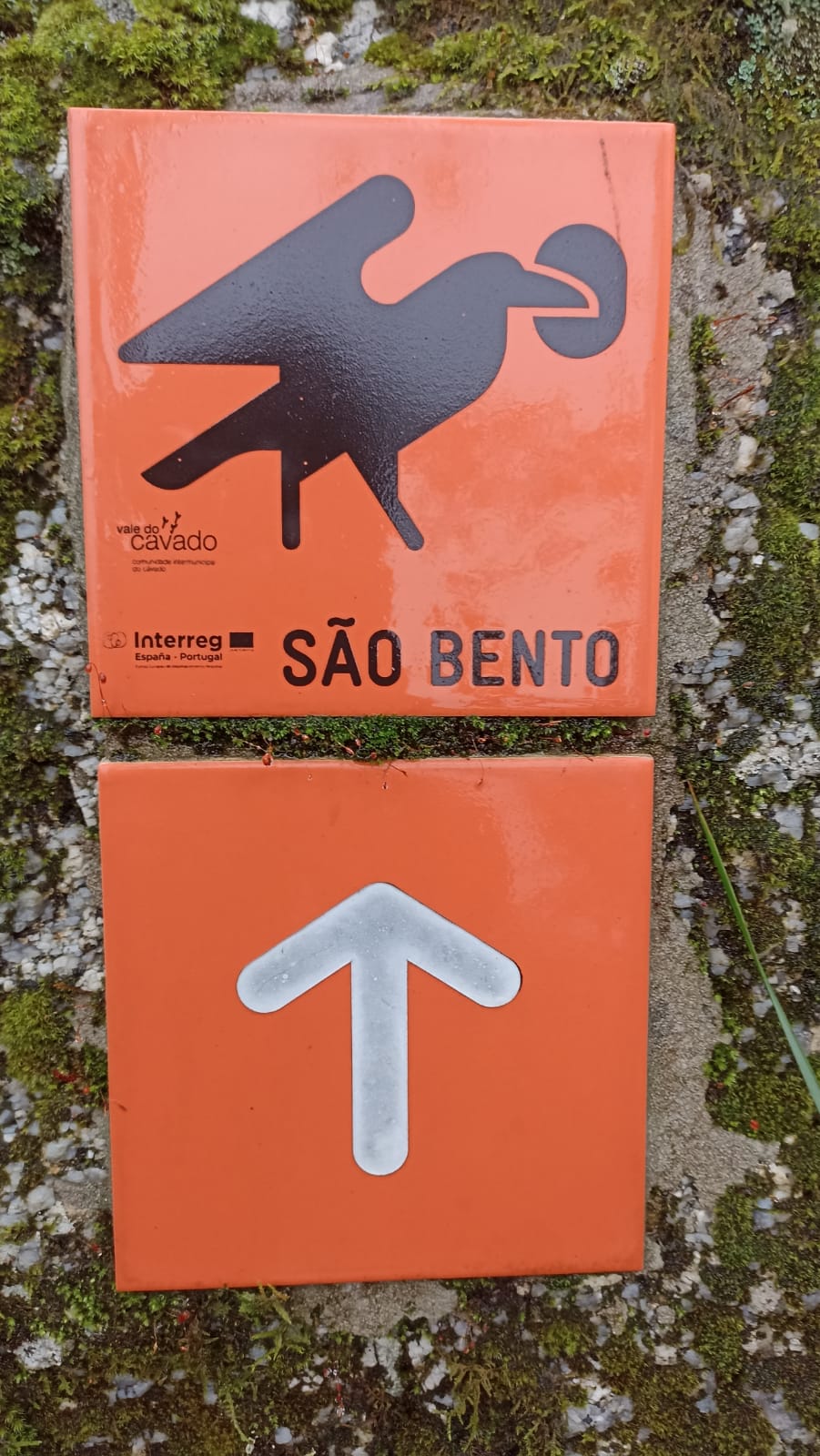
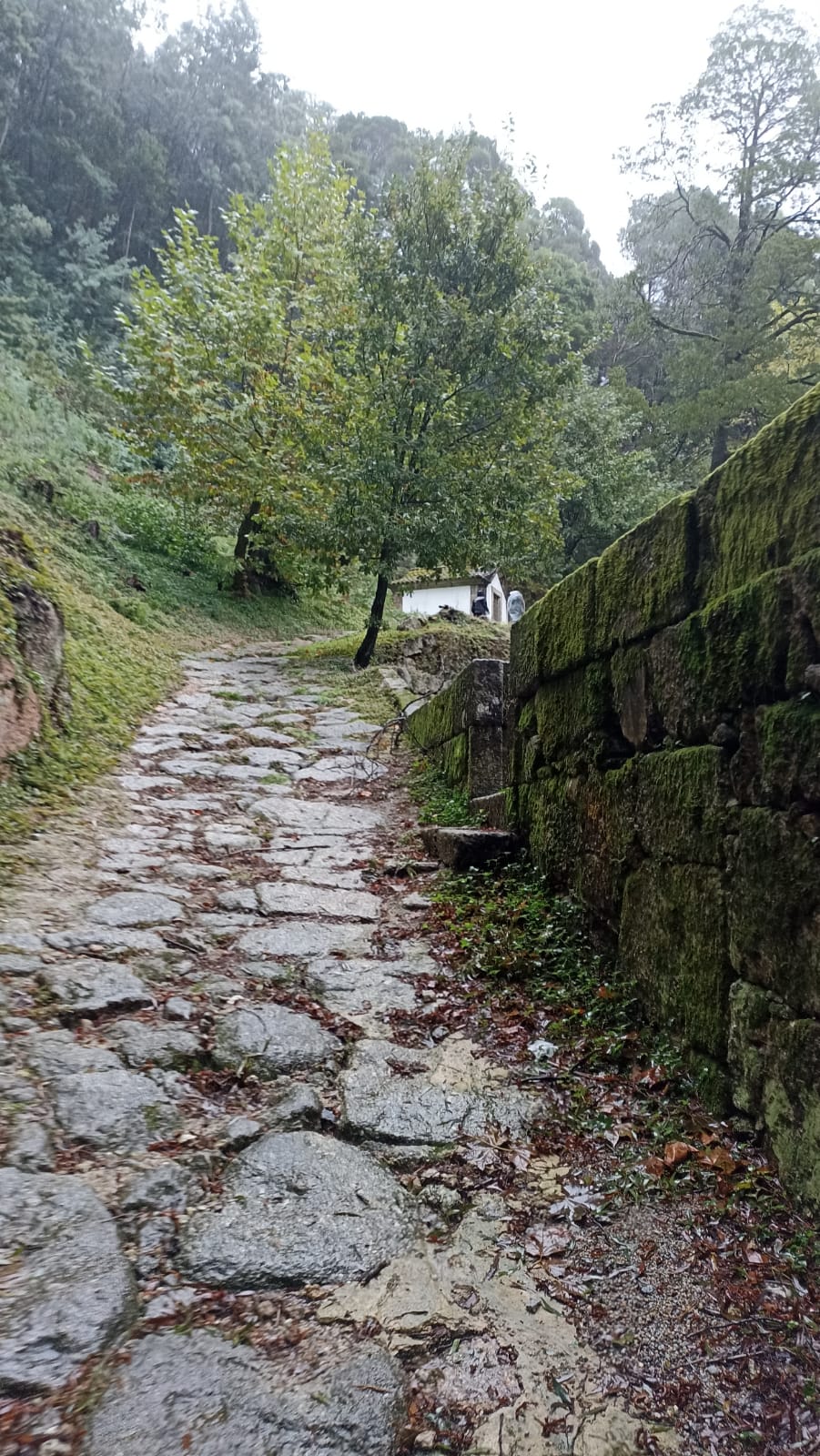
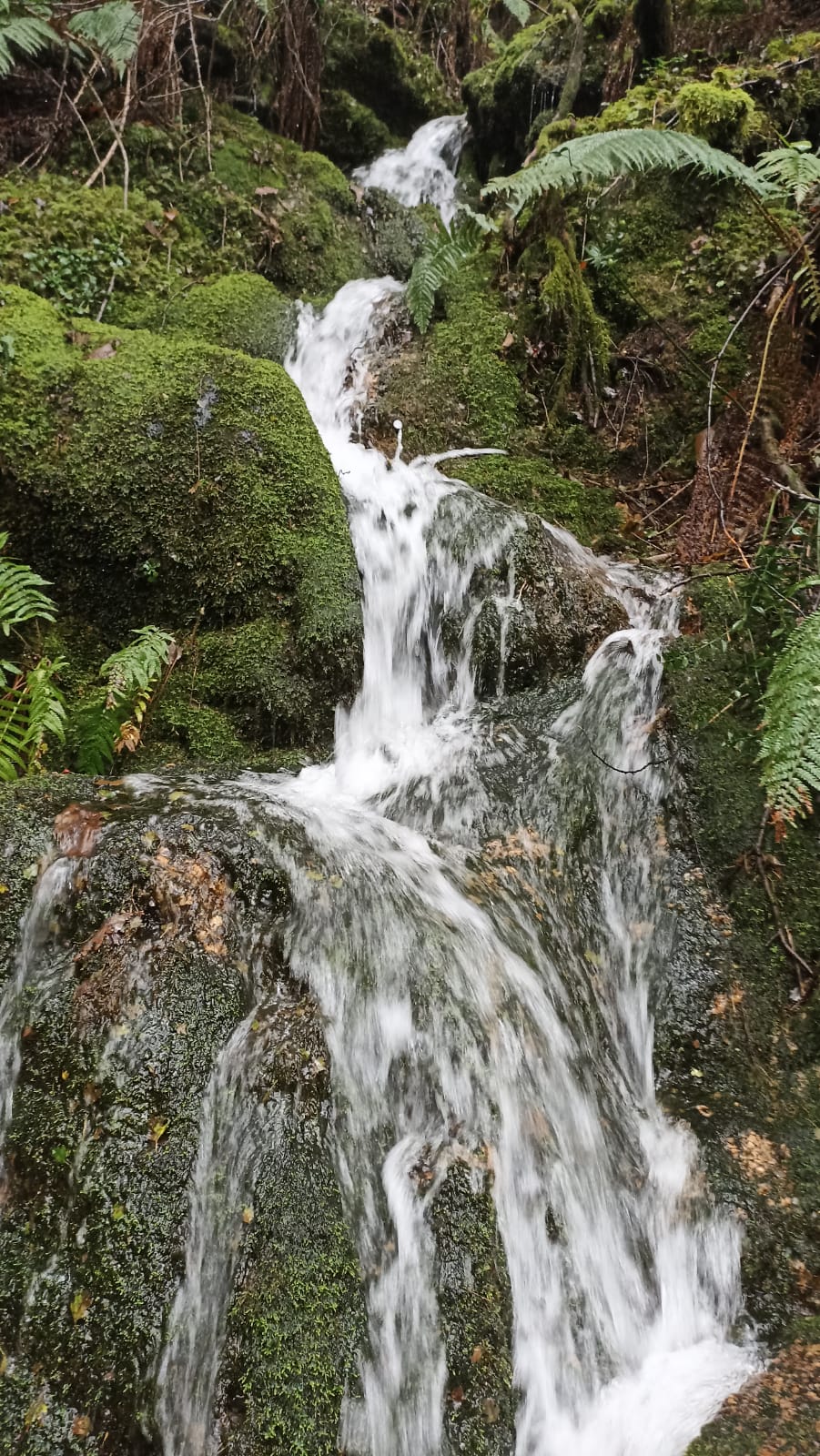
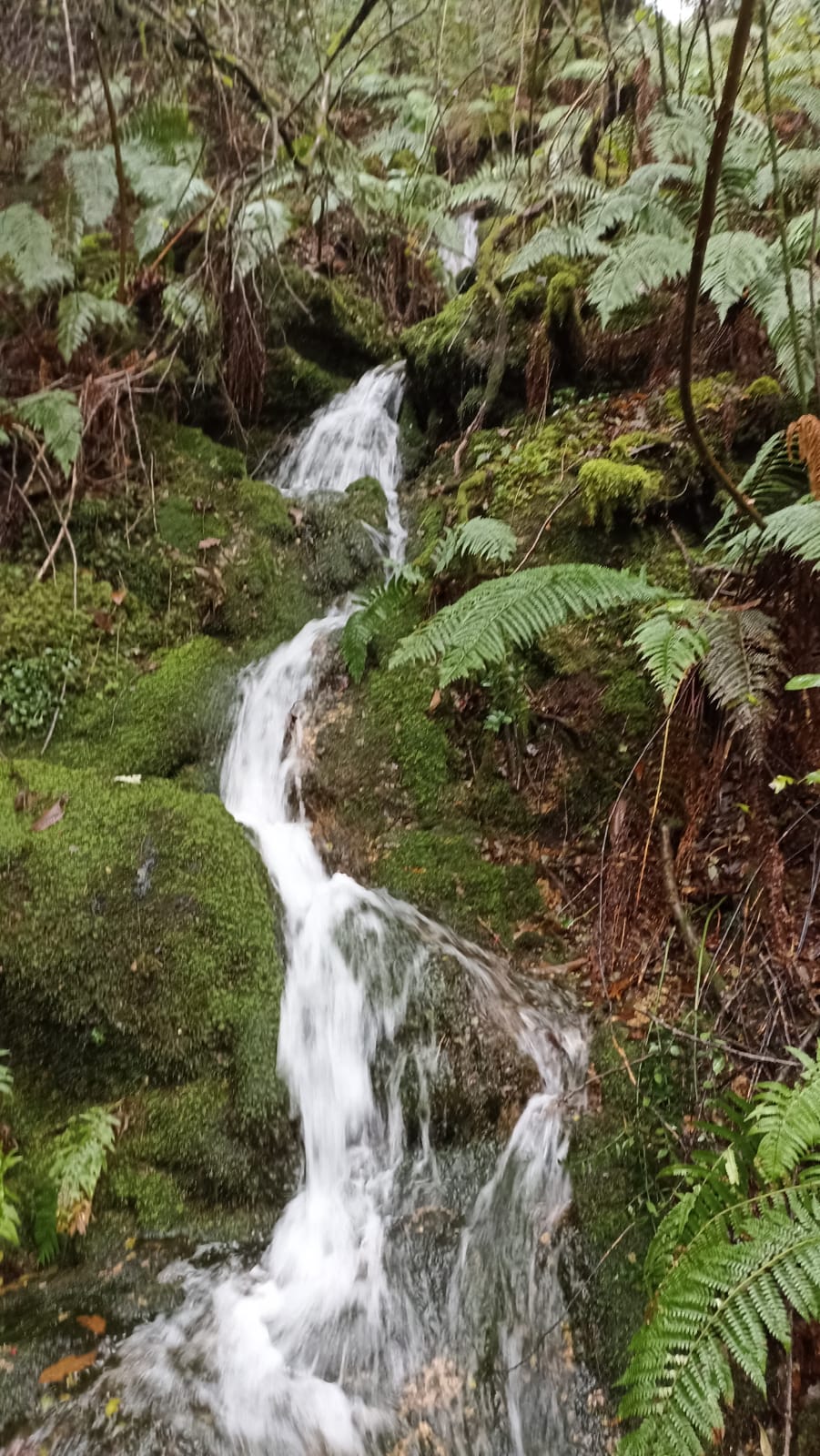
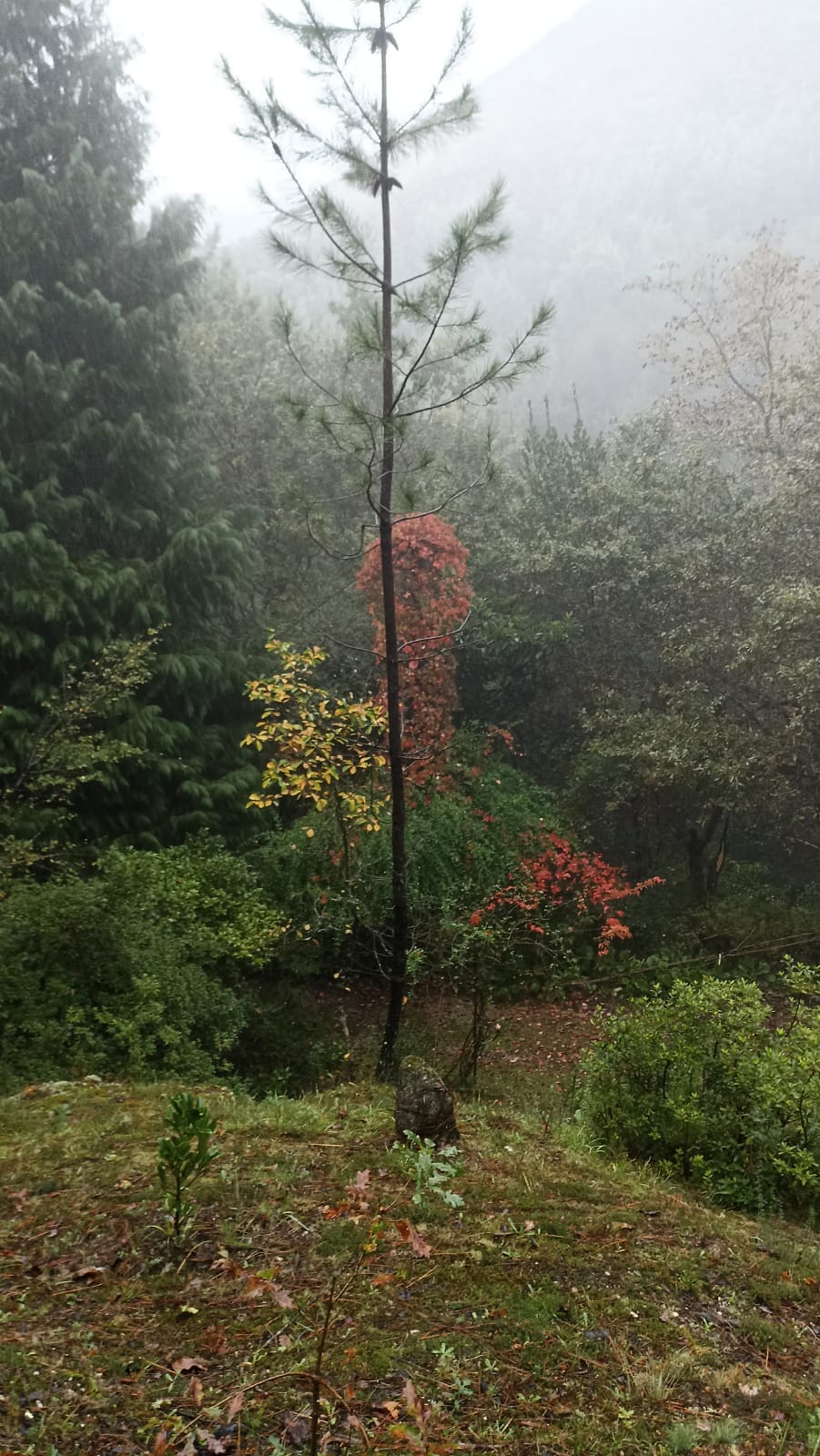
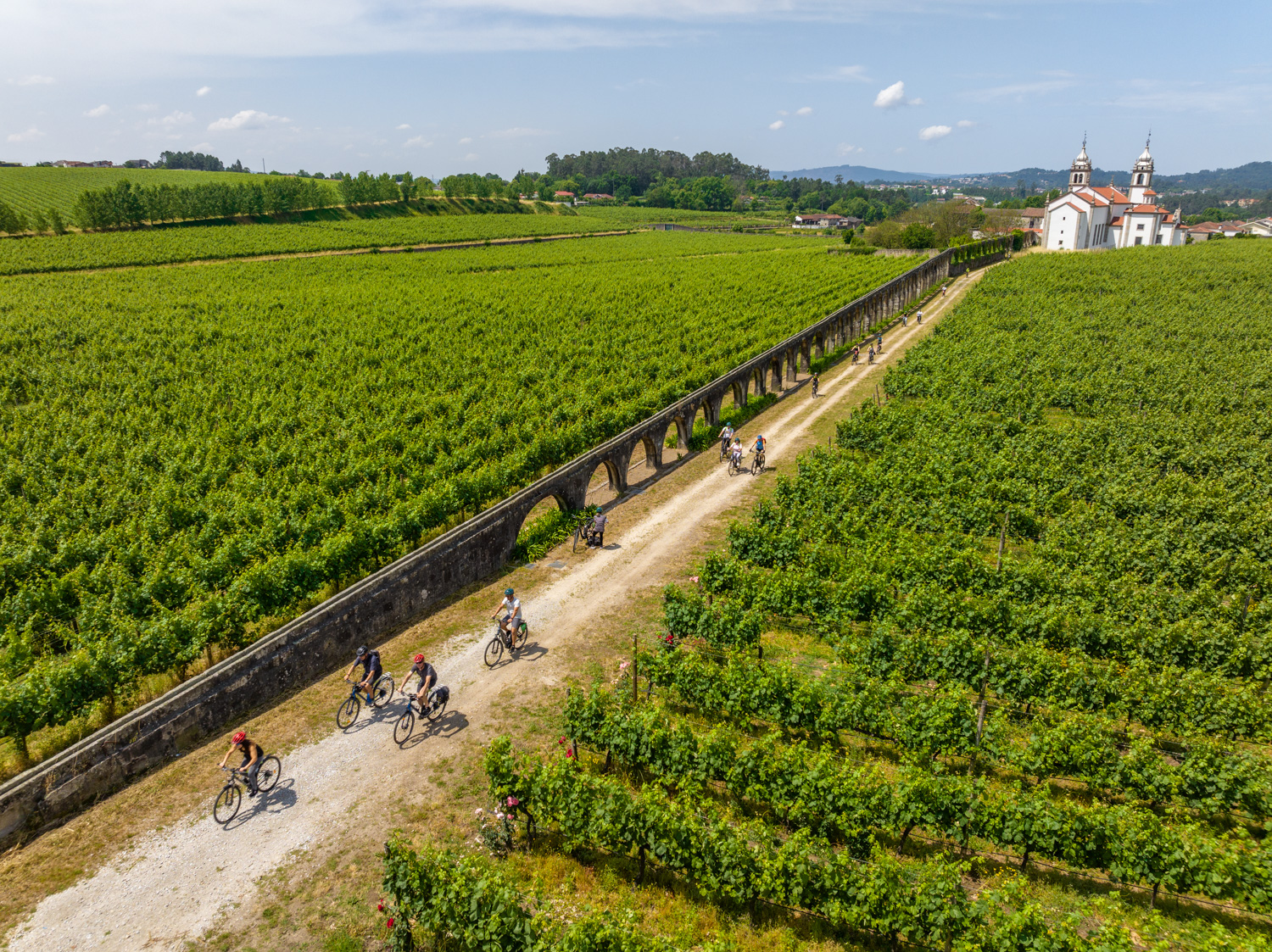
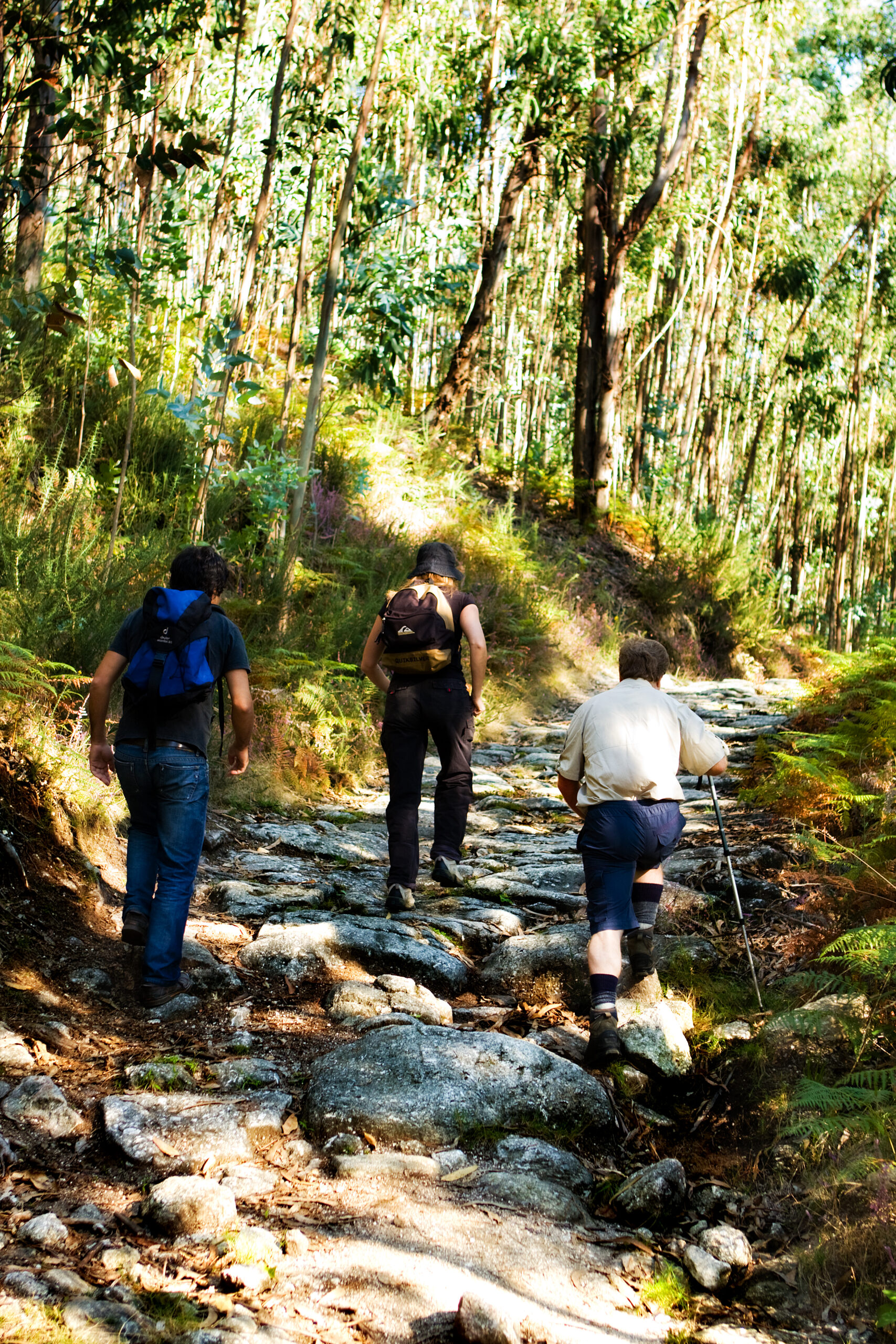
“The pilgrimage routes to São Bento da Porta Aberta originate all over the Minho region, with a predominantly religious motivation, but sometimes also a recreational one. Given the various paths that exist in NUT III Cávado, the challenge was to define a main path that would unite the territory of Cávado, from Esposende to São Bento da Porta Aberta, with about 70km, and 3 variant paths, thus uniting the 6 councils of NUT III Cávado. The pilgrims and walkers who take them are invariably graced with a rich cultural and natural heritage, with a unique natural landscape that culminates in the Sanctuary of São Bento da Porta Aberta, located in the municipality of Terras de Bouro, in the heart of the Peneda Gerês National Park.”
One of the main routes passes by the Sanctuary of Nossa Senhora da Abadia, visiting the various chapels that lead to the Sanctuary of São Bento da Porta Aberta.
(Source: CIM Cávado)
GUIA DO PEREGRINO: https://www.cimcavado.pt/wp-content/uploads/2020/07/GUIA_CSB_.pdf
https://www.cimcavado.pt/wp-content/uploads/2020/07/GUIA_CSB_.pdf
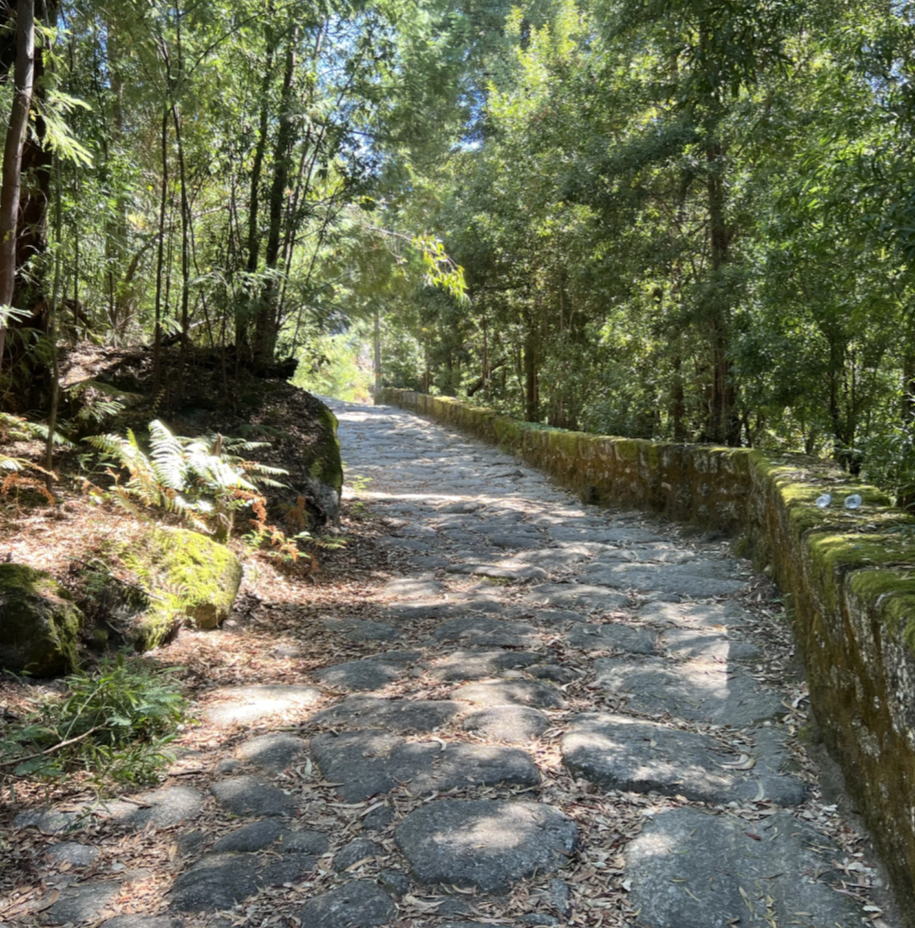
O Santuário da Nossa Senhora da Abadia, zona privilegiada onde a natureza impera no seu estado puro, oferece ao visitante dois Caminhos muito utilizados por peregrinos e caminheiros. Ao longo do percurso aparecem vários fontanários onde o visitante se poderá refrescar da subida íngreme que o traçado apresenta. Este caminho apresenta um grau de dificuldade moderado.
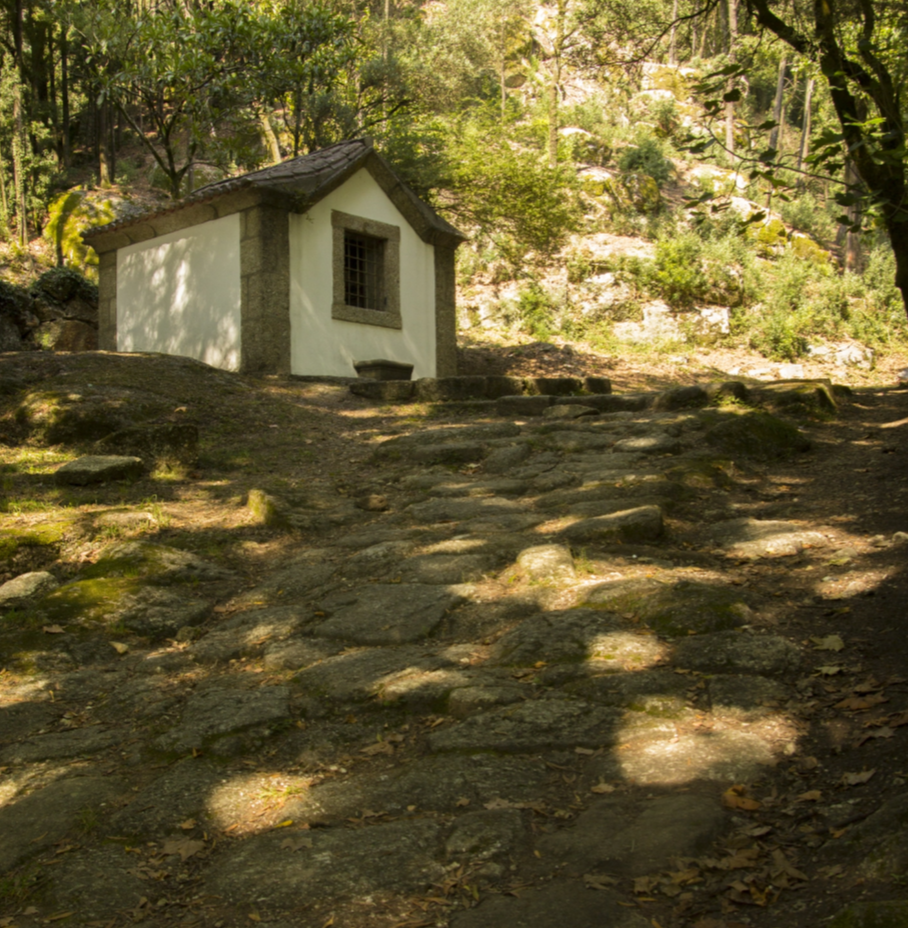
Outro caminho que complementa o traçado geral é o Caminho do Formigueiro. Este caminho tem um grau de dificuldade menos acentuado, mas oferece o mesmo encanto.
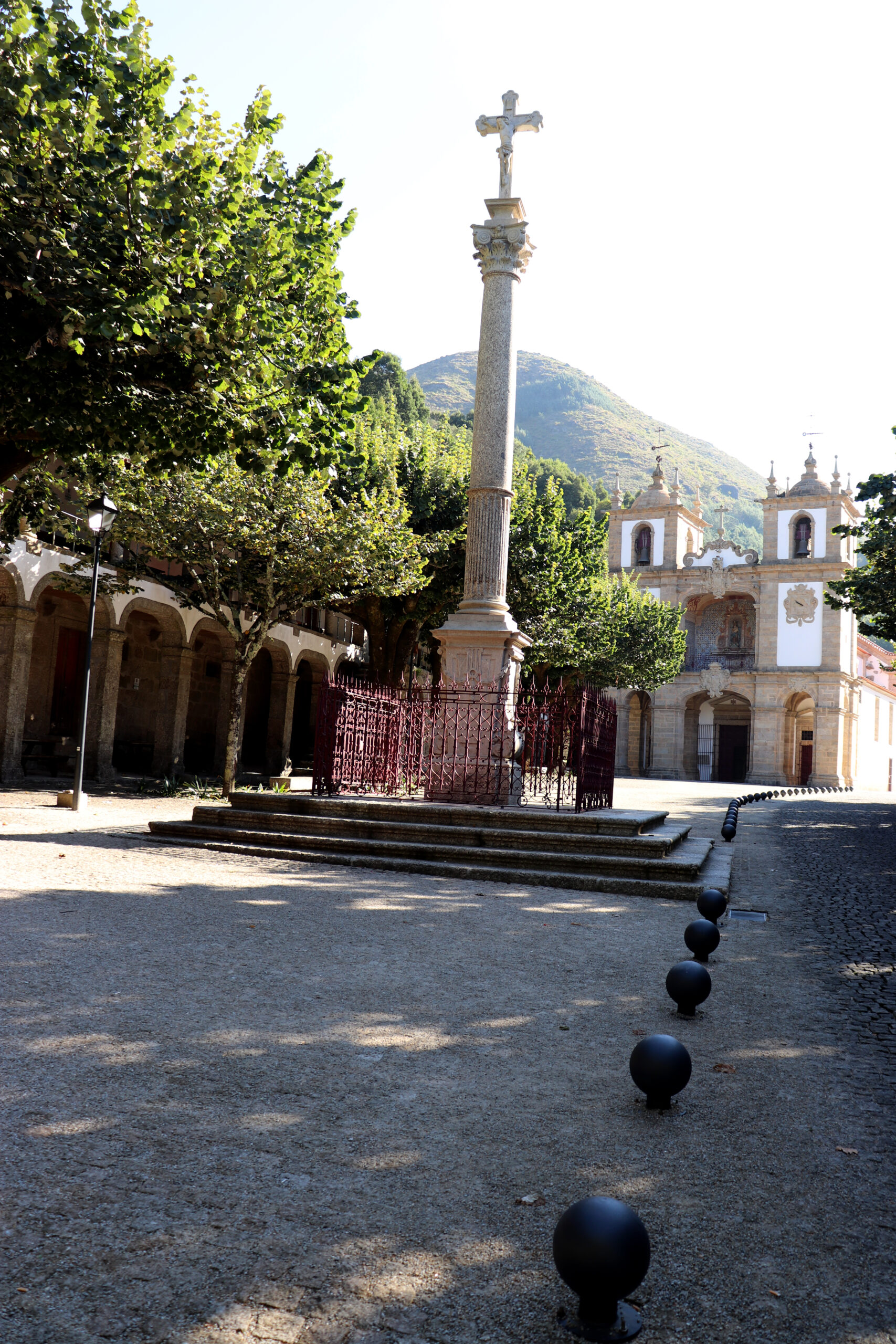
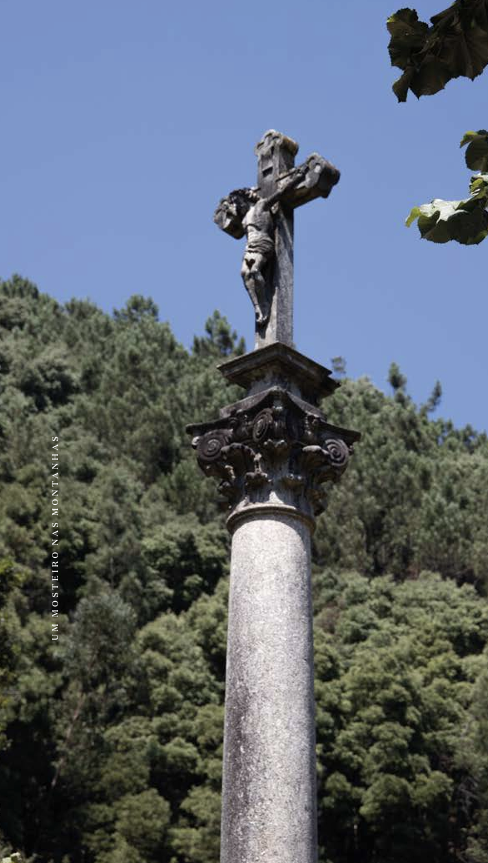
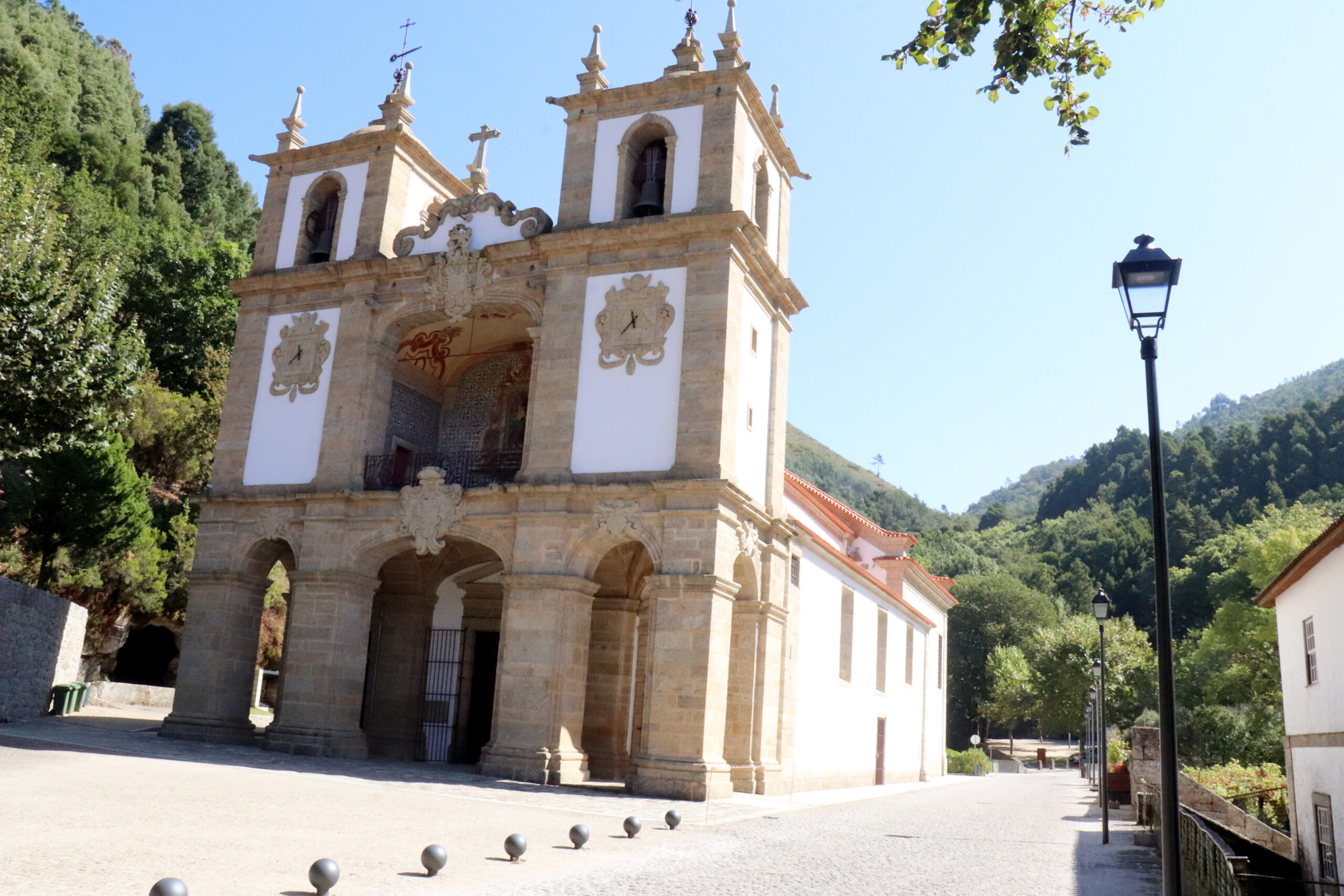
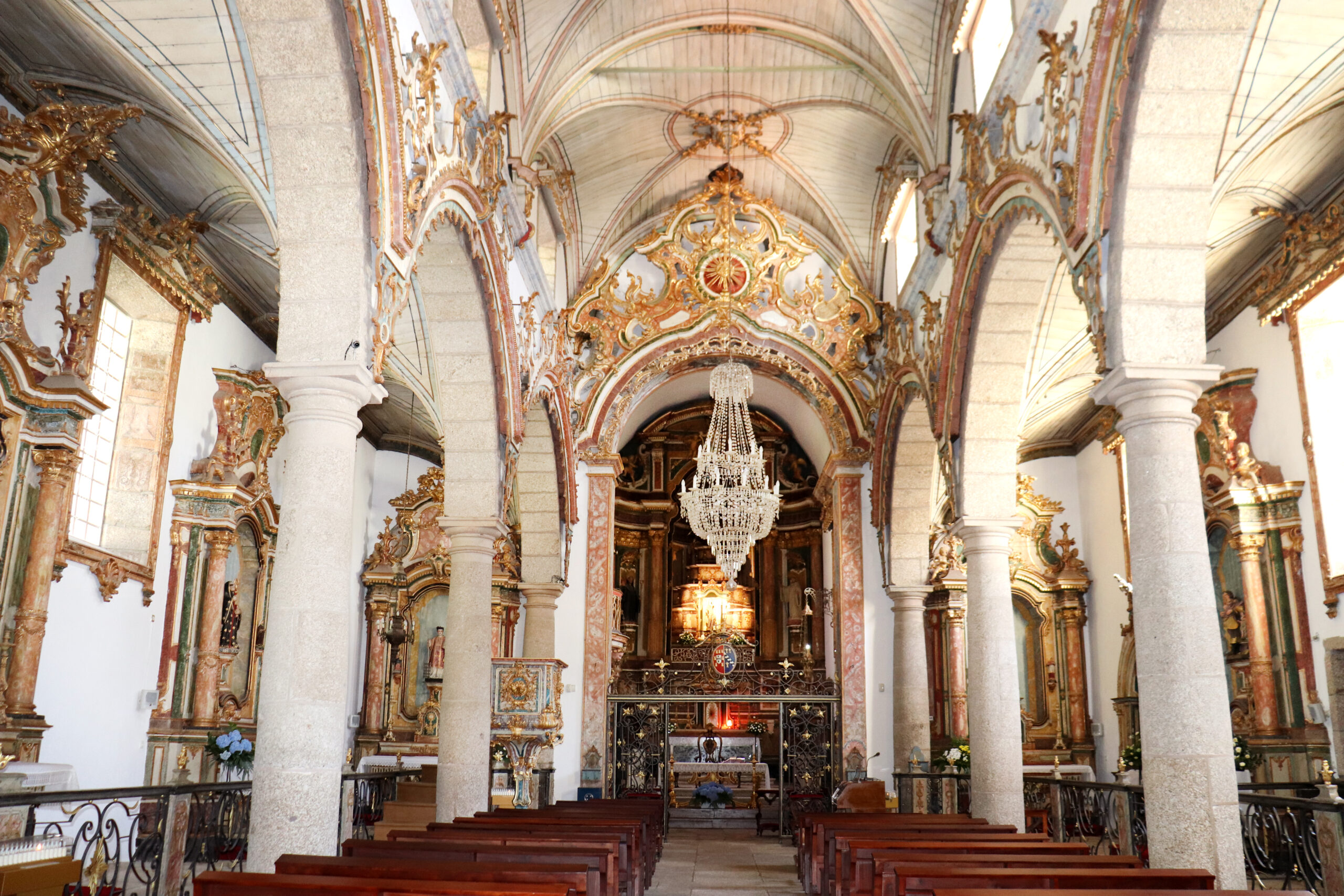
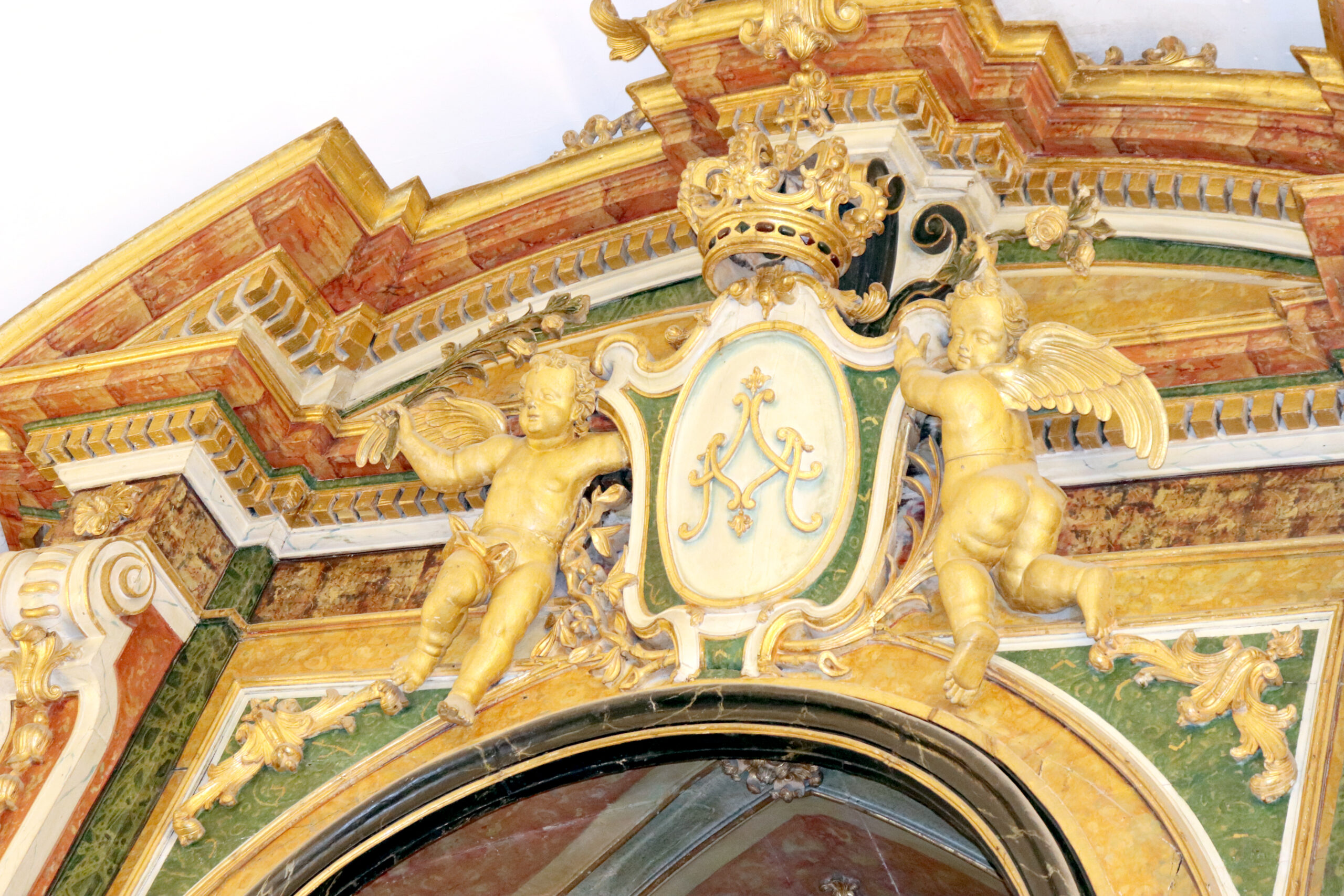
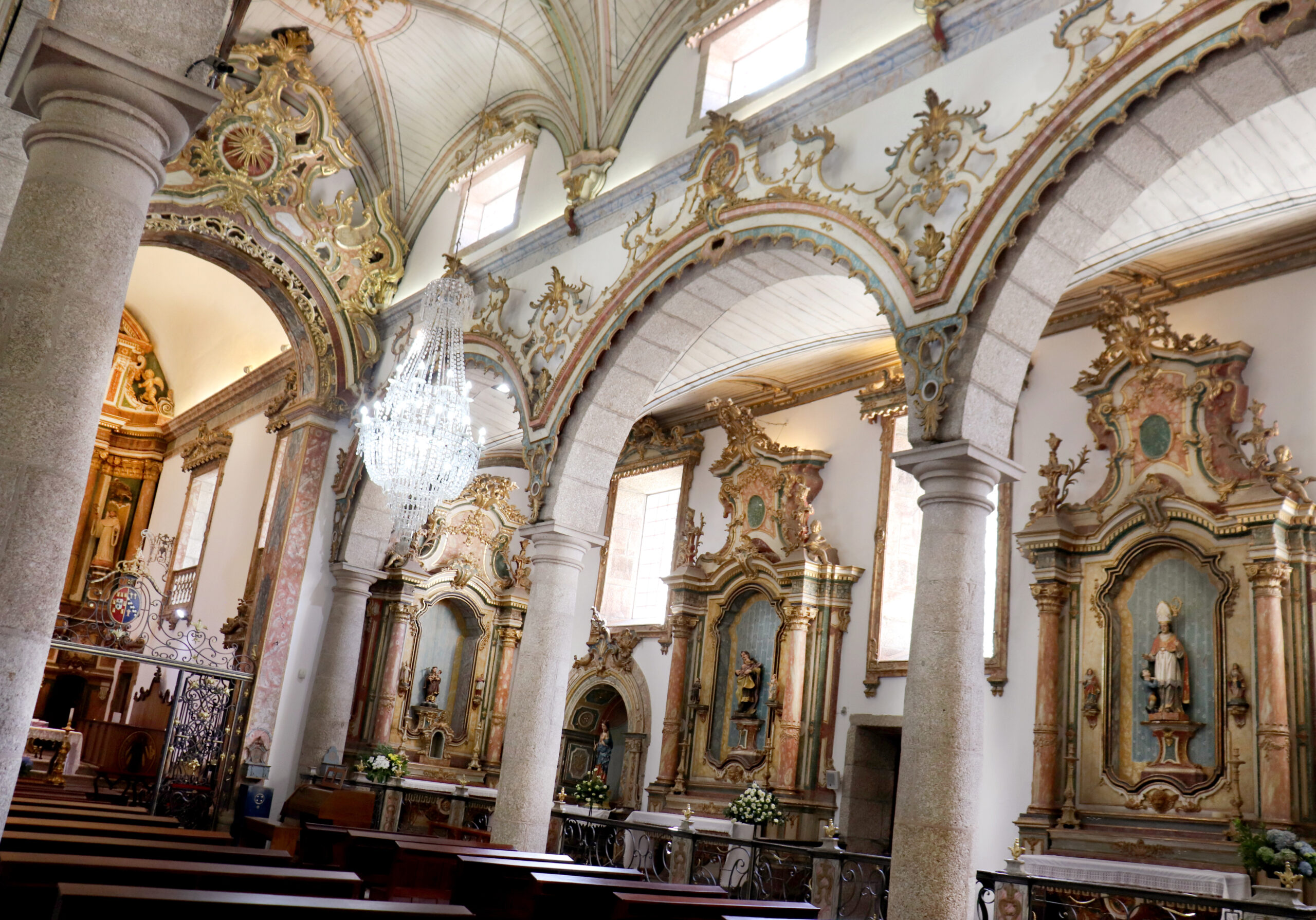
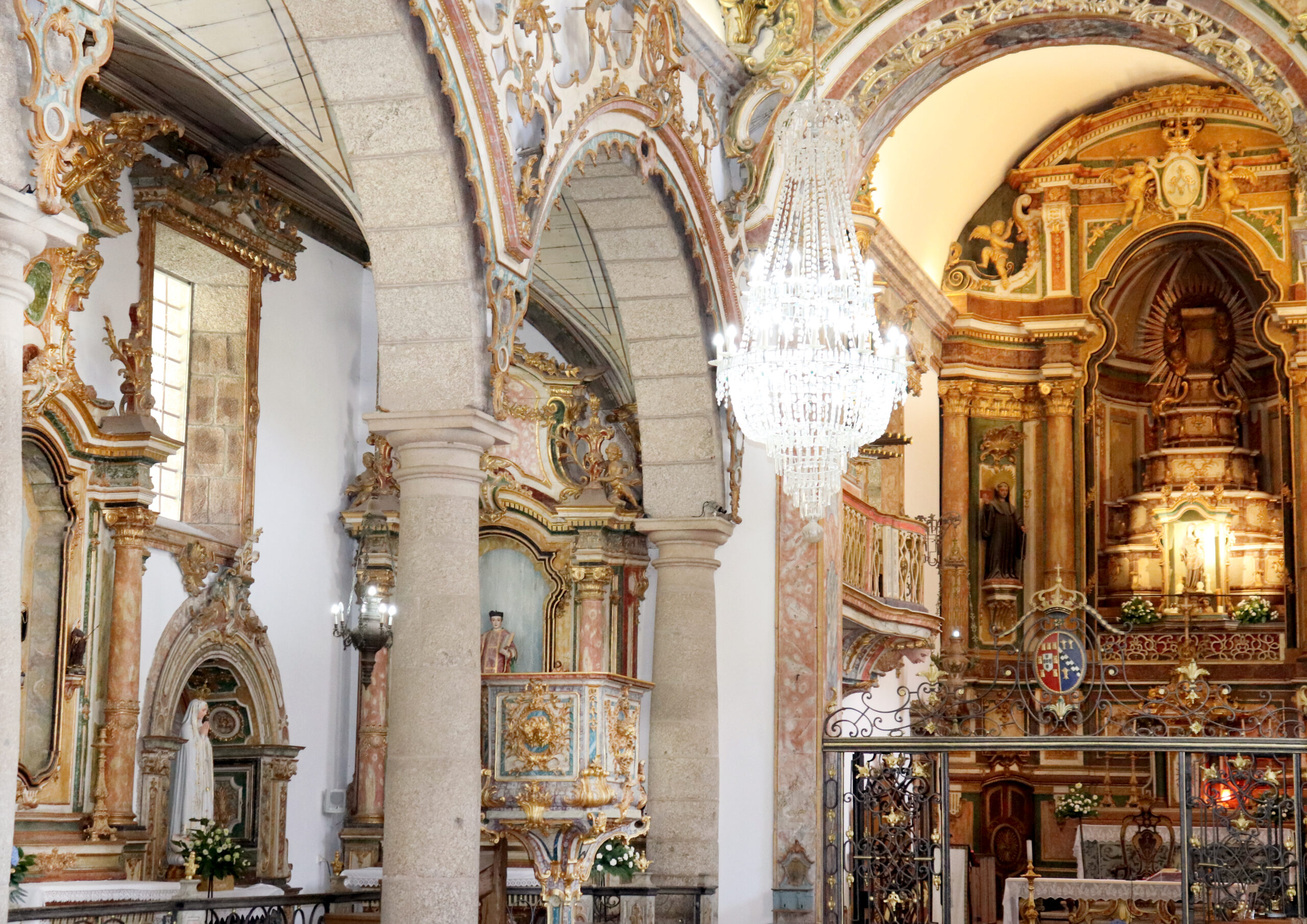
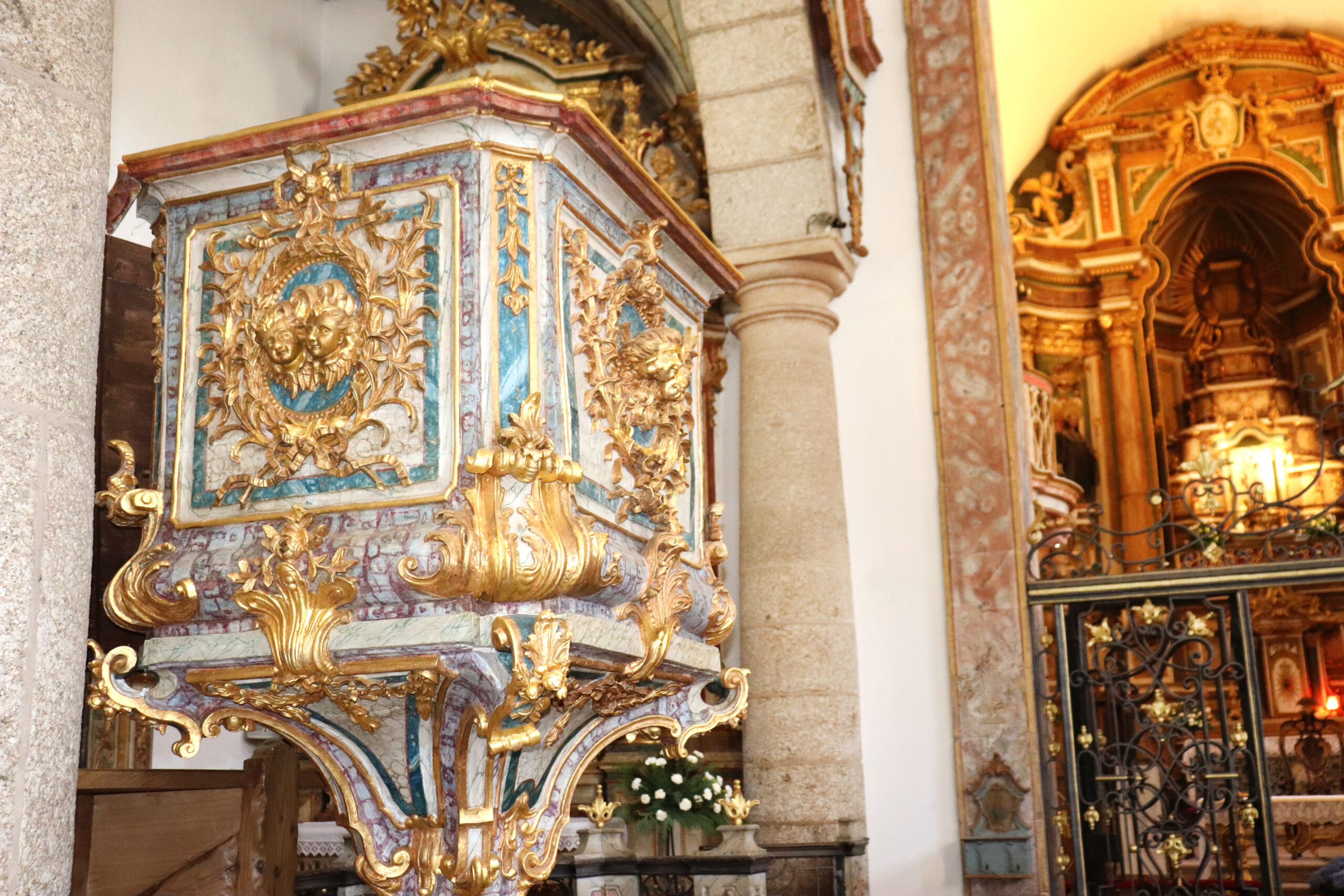
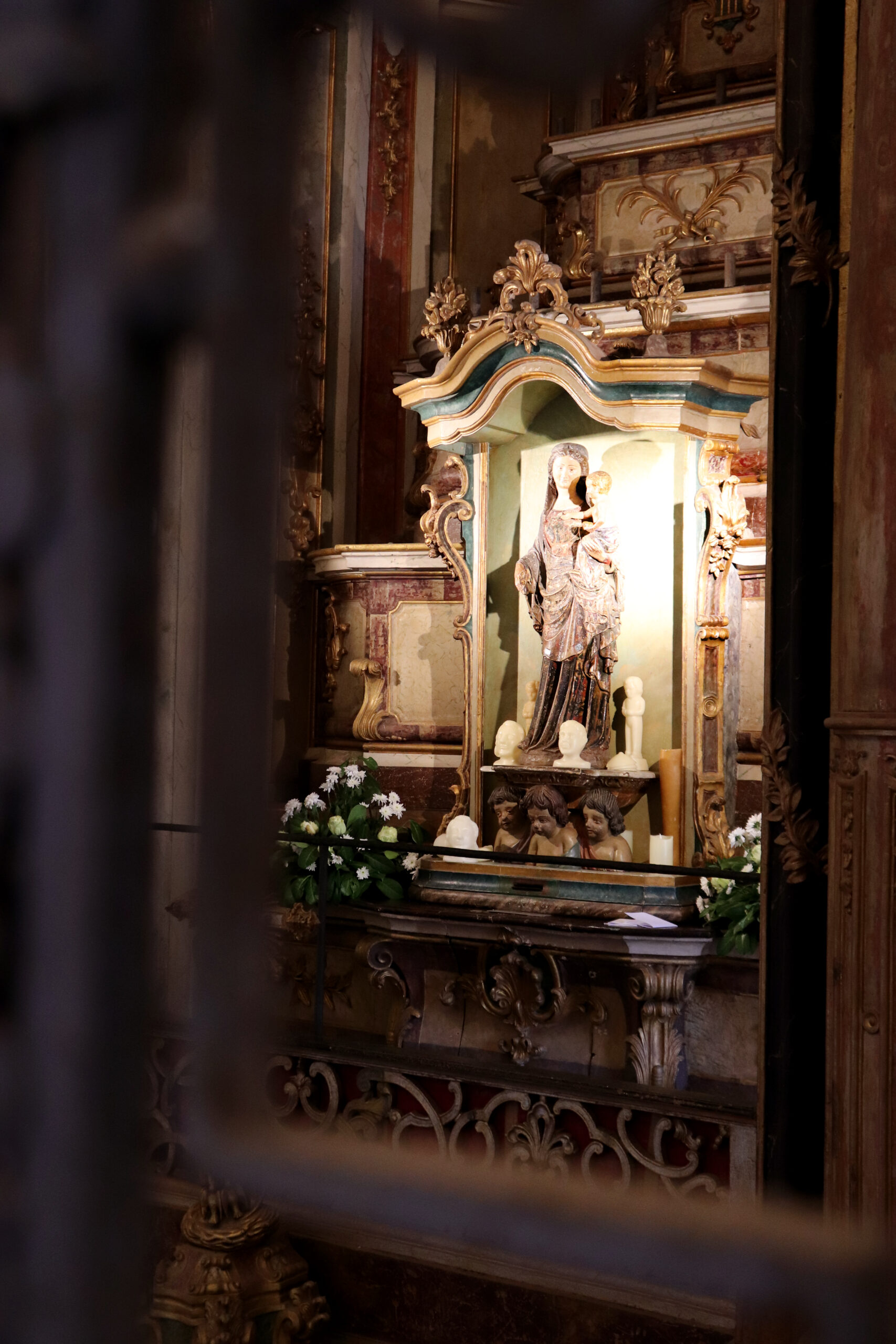
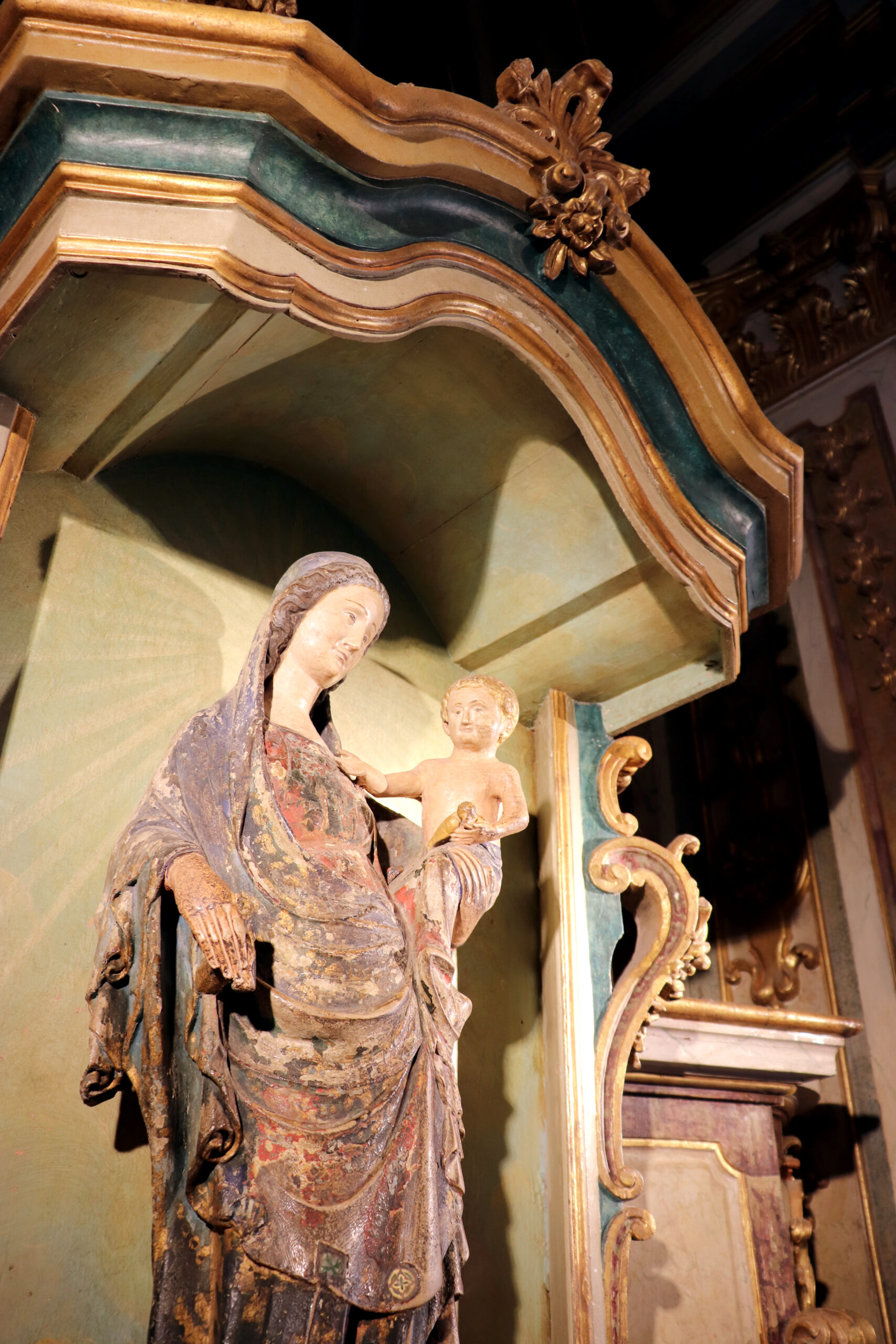
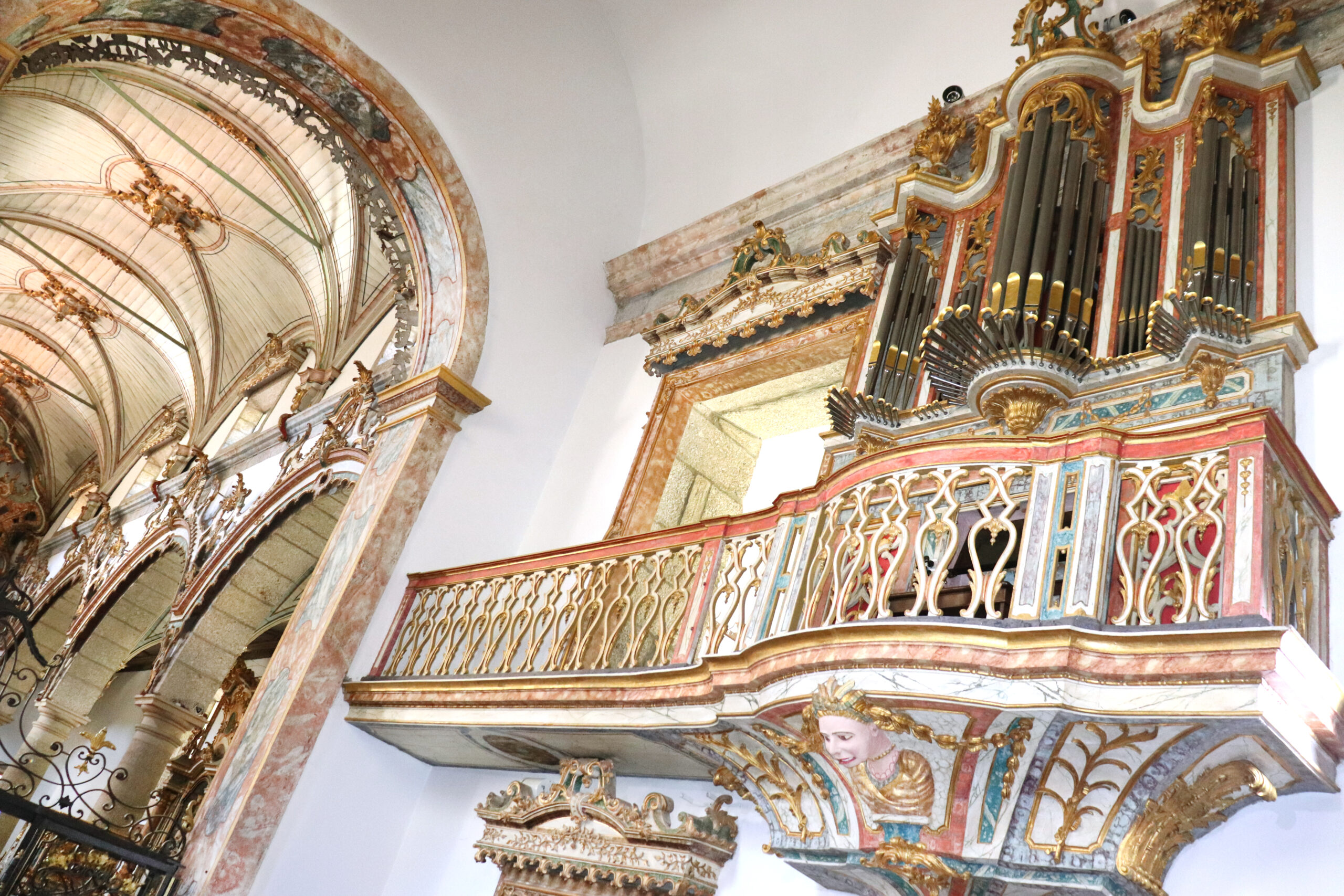

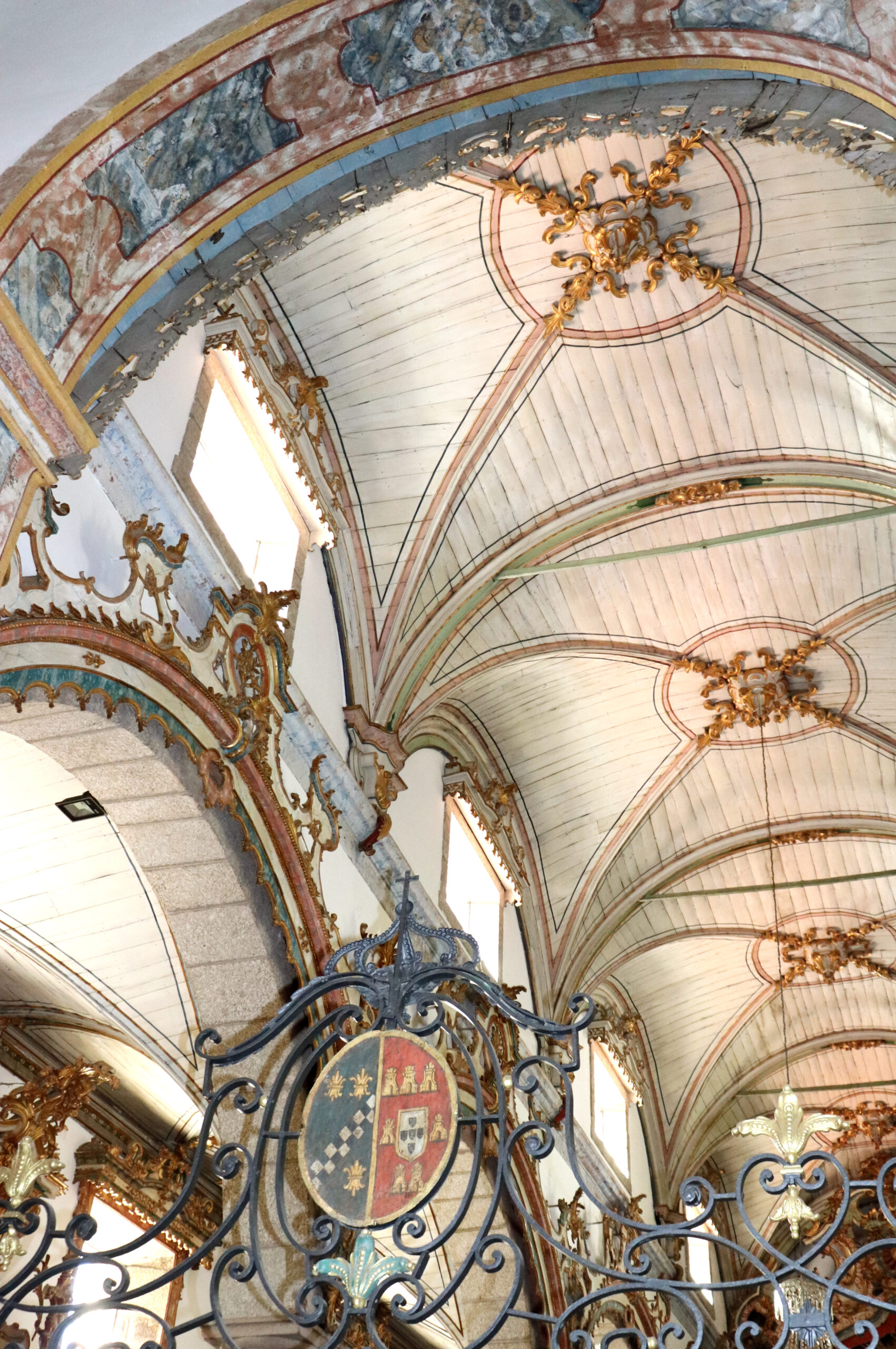
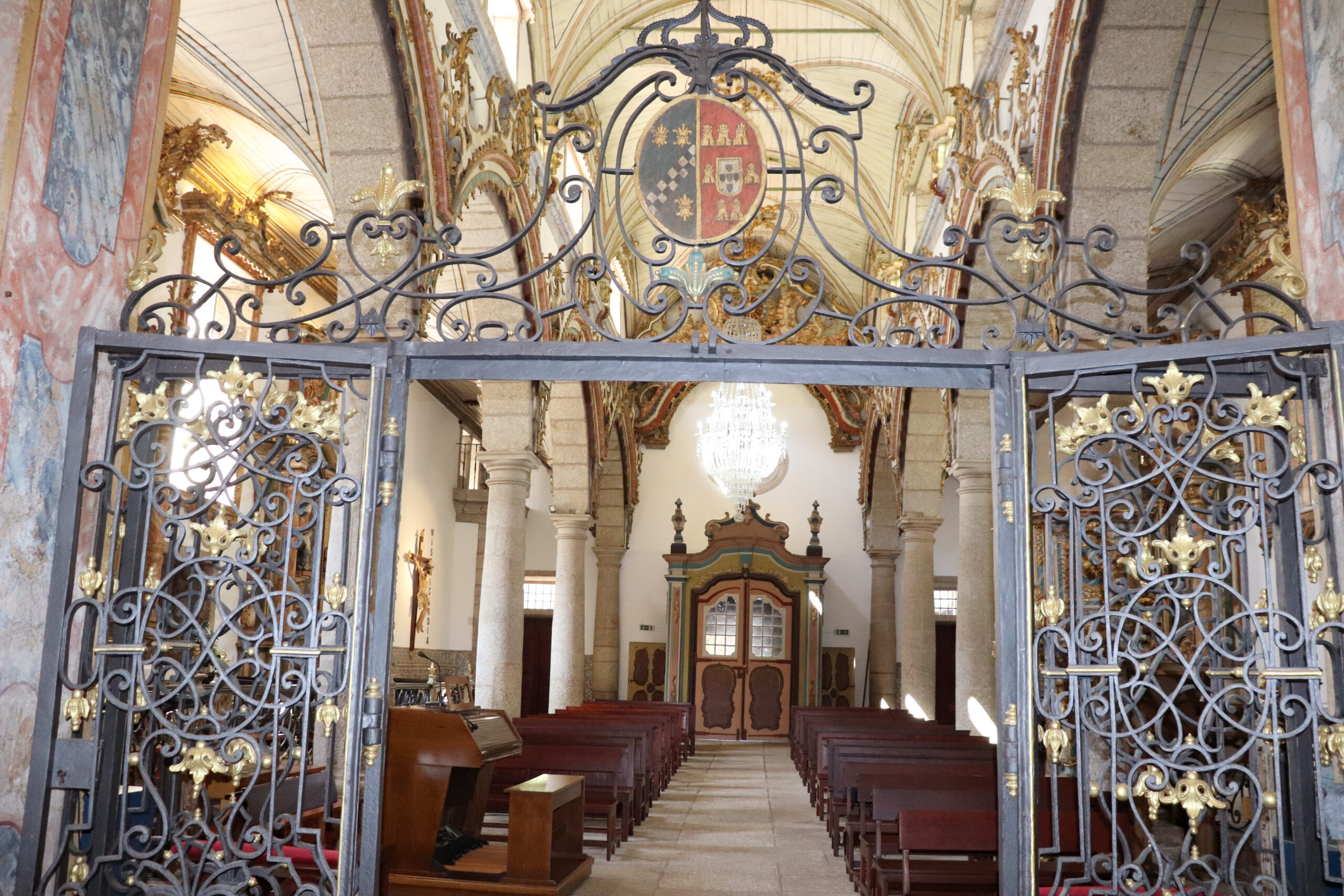
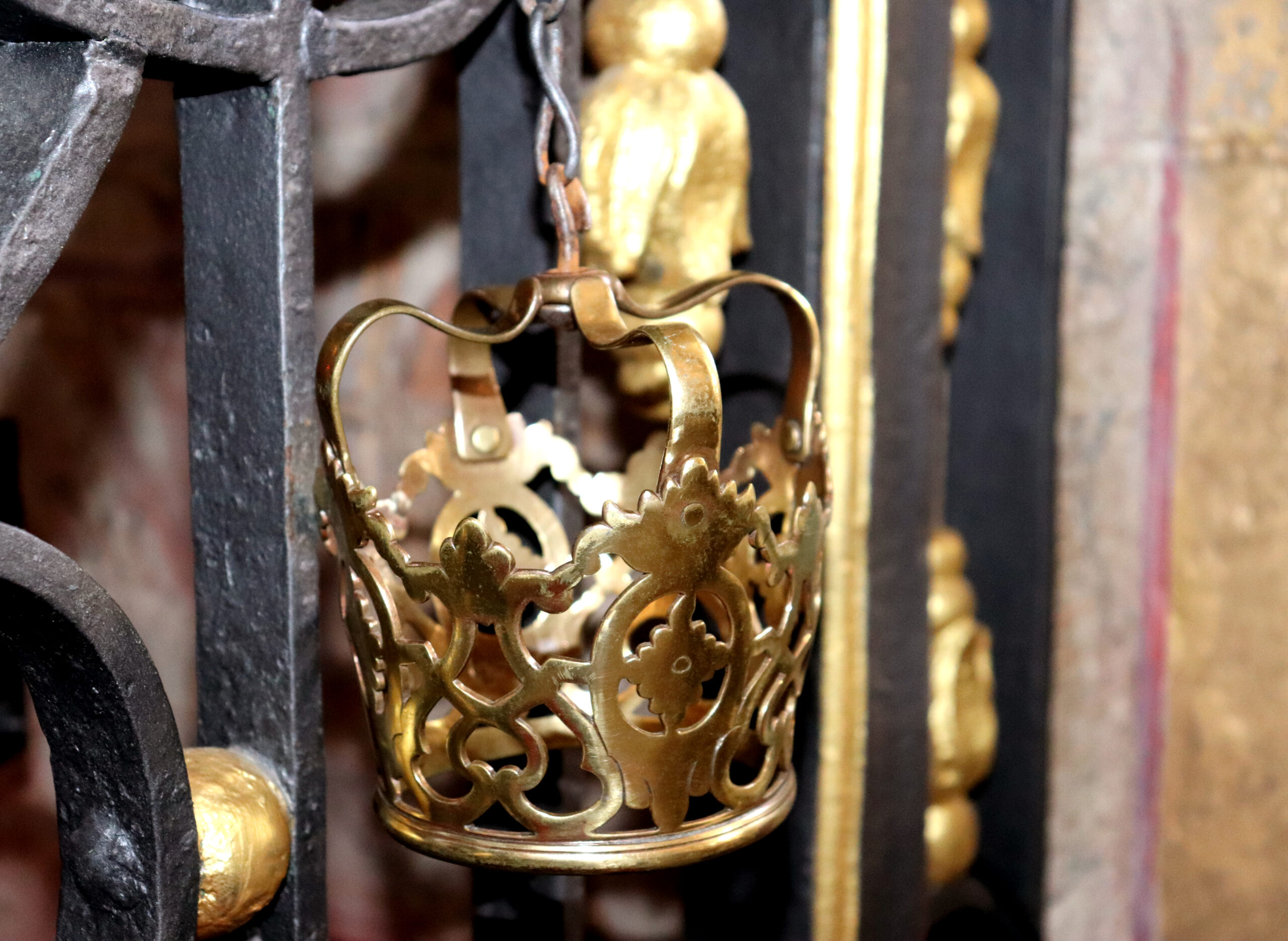
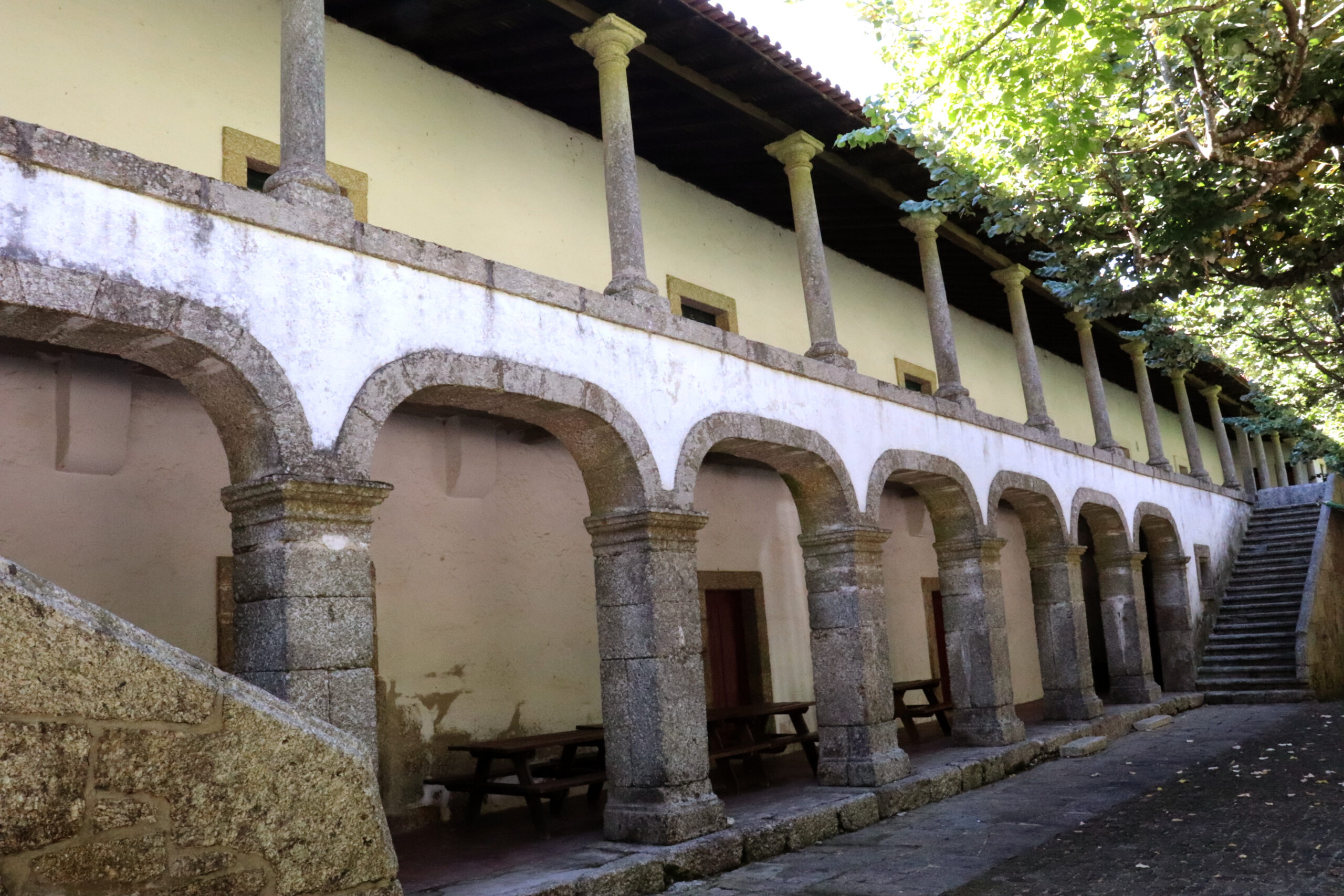
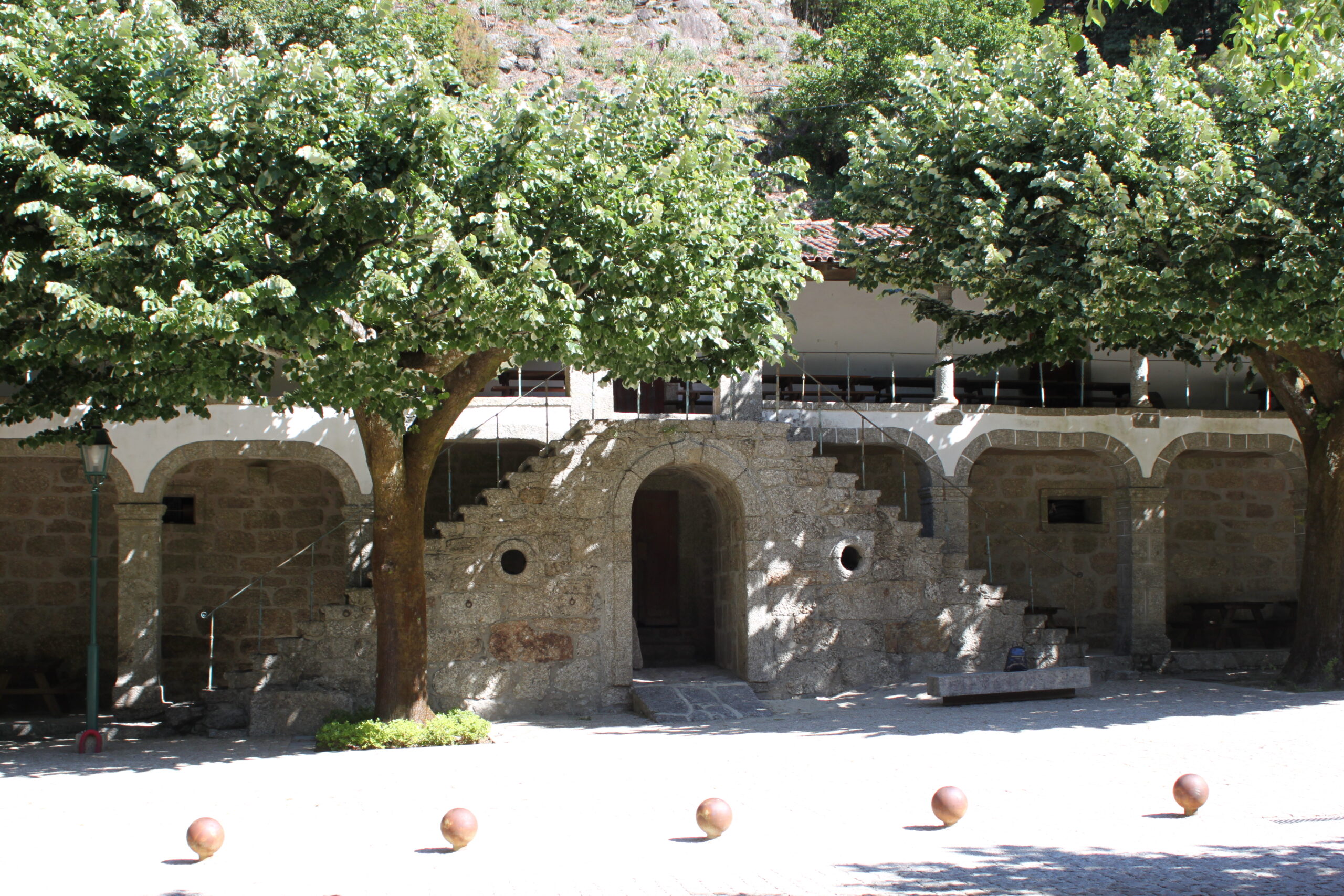
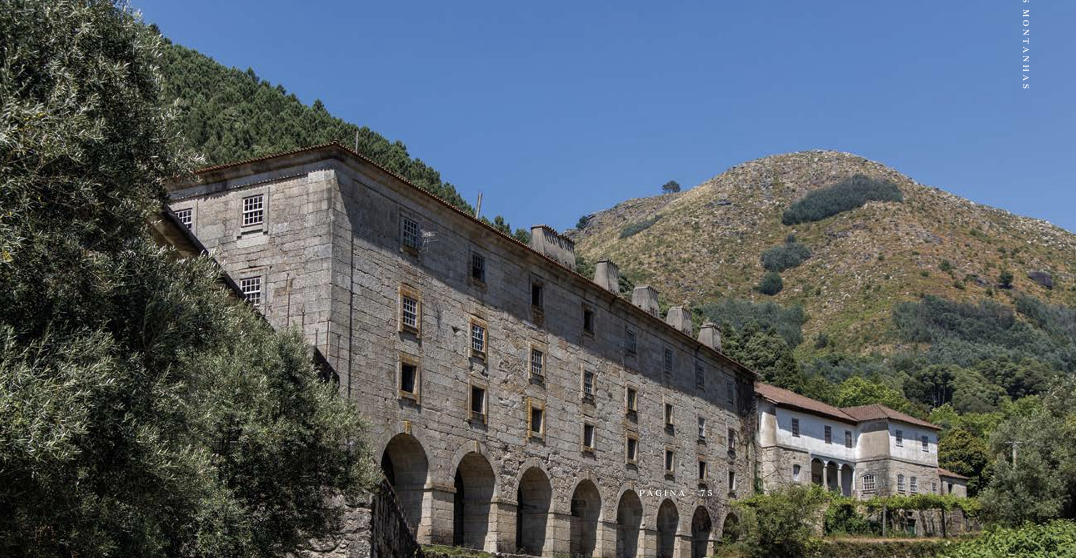
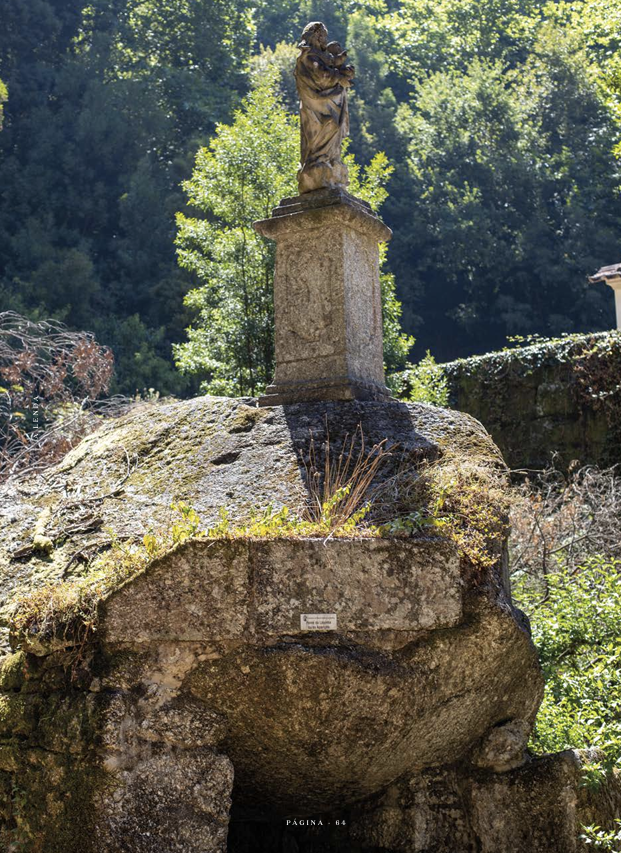
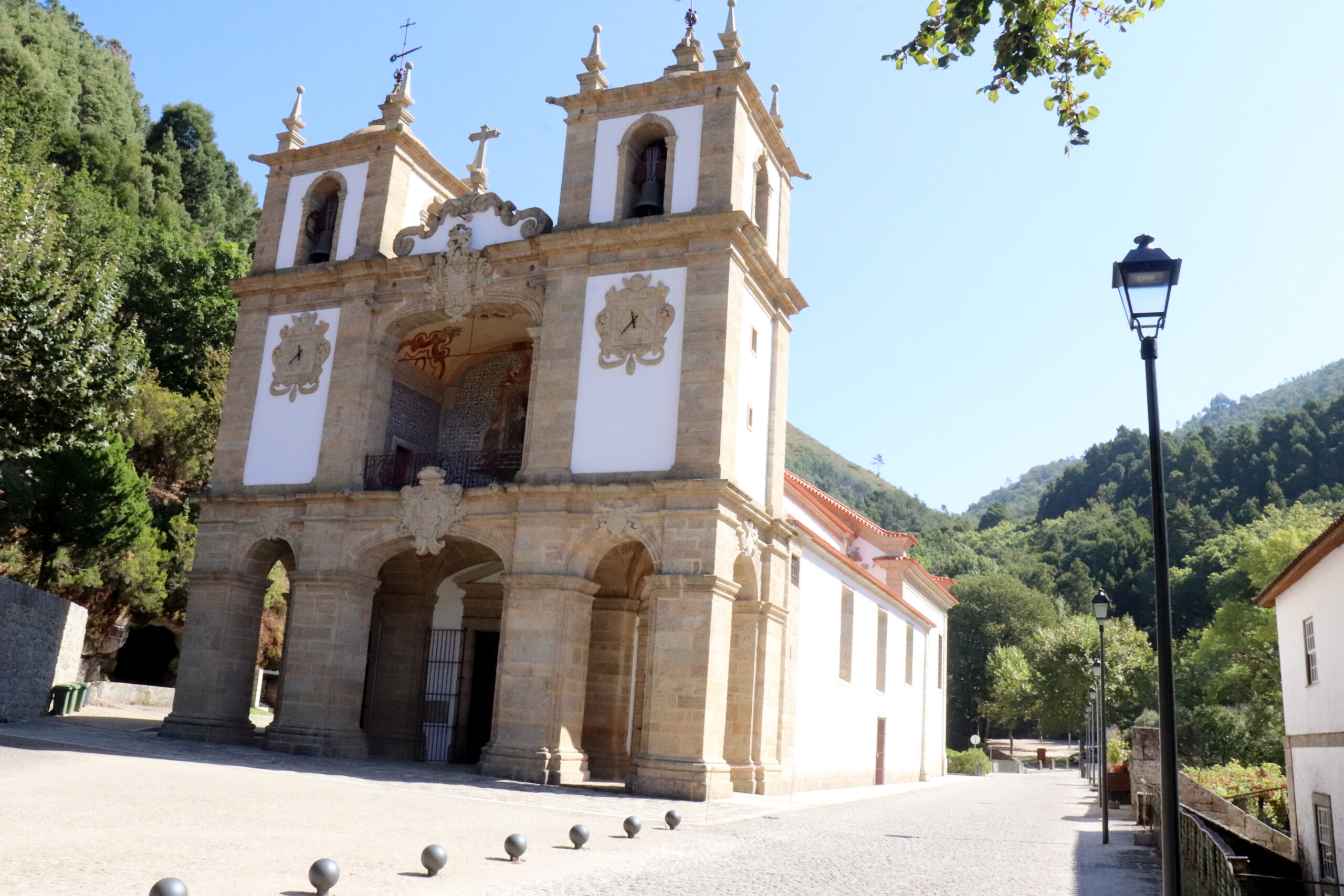
The Sanctuary of Nossa Senhora da Abadia is built on the mountainside, surrounded by vast vegetation, with the river flowing through the mountains and silence reigning throughout the space. The cross from the end of the 18th century, located in the center of the church’s large courtyard, indicates our arrival. On both sides of the square in front of the church, there are two buildings: the Casa das Ofertas dos Romeiros and the Barracks where, in times past, pilgrims spent the night. Today, it has been transformed into the Museum of Sacred Art of the Brotherhood of Nossa Senhora da Abadia. In the background, the Sanctuary stands out, considered by many to be the oldest Marian sanctuary in the Iberian Peninsula.
It was built in the first quarter of the 18th century, replacing a small medieval chapel built there in the 12th century, after the apparition of Nossa Senhora at the site of Abadia. The Sanctuary was integrated into the Monastery of Santa Maria de Bouro, built at the end of the 12th century by Benedictine monks who had occupied Monte de S. Miguel since the 9th century. A few years later, it began to be governed by the order of São Bernardo, remaining Cistercian until its extinction in 1834.
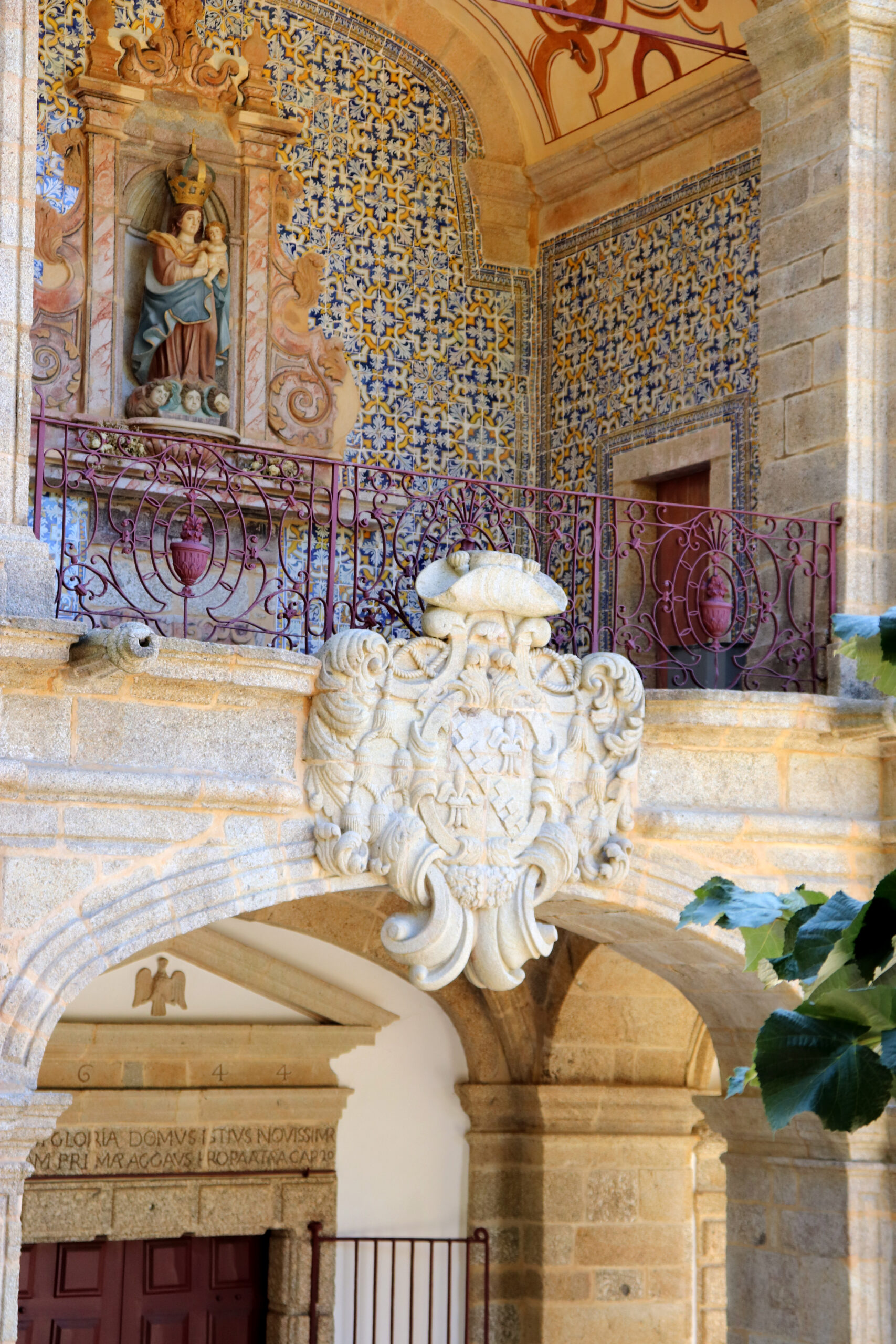
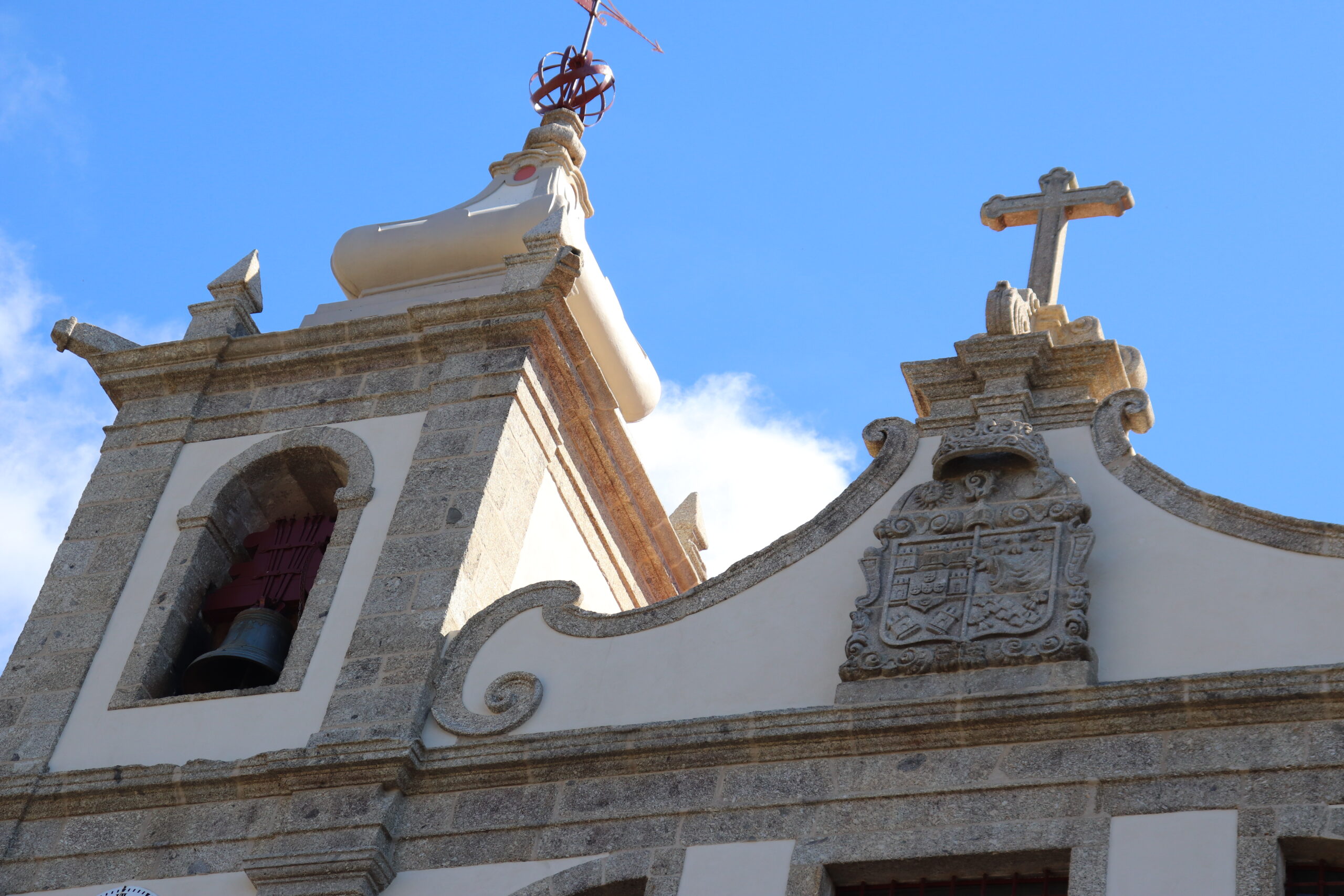
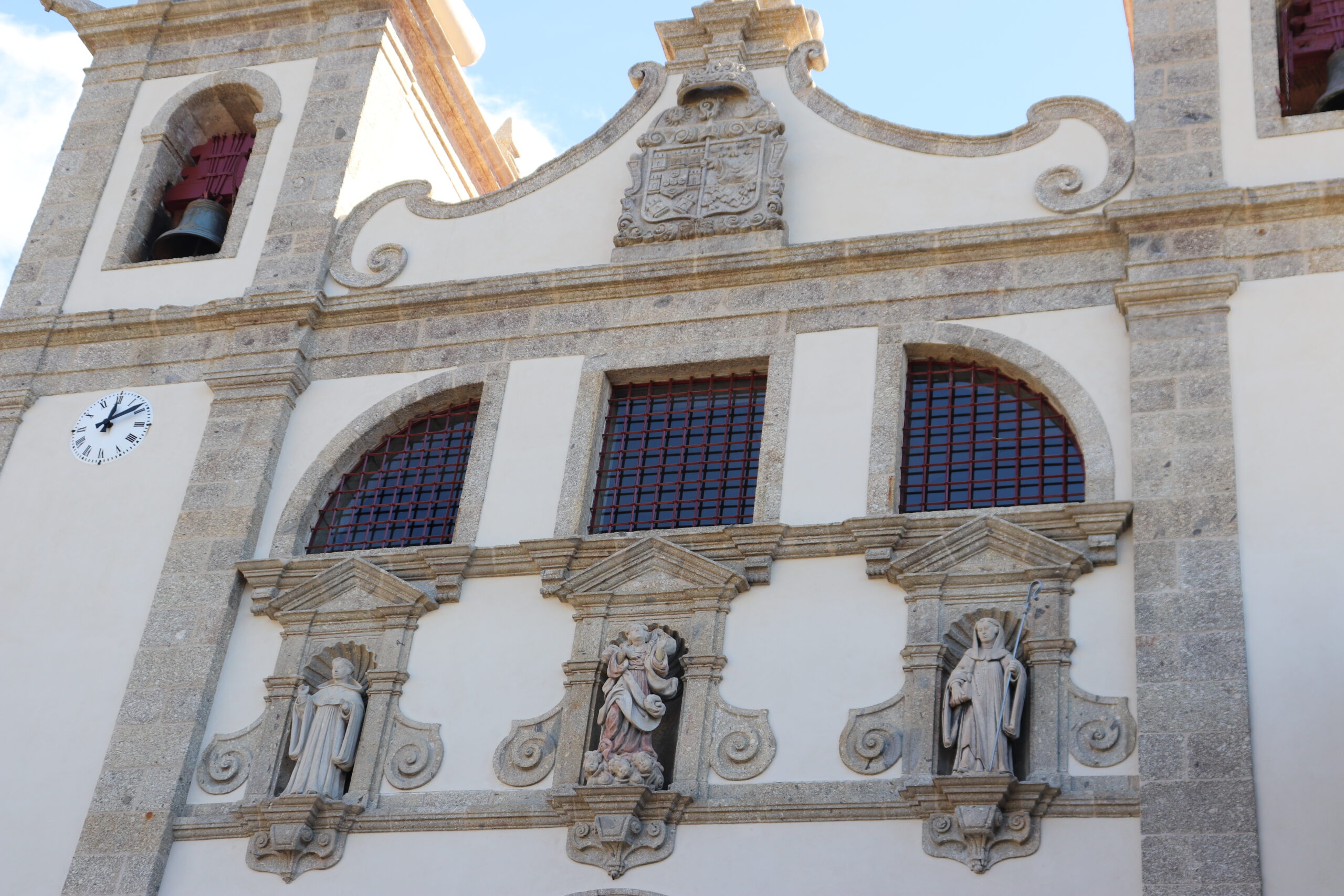
The main façade of the church is preceded by two granite bell towers with clock cartouches. In the center, a depressed arch with a coat of arms at the base, and at the top, a niche with the image of Nossa Senhora da Abadia.
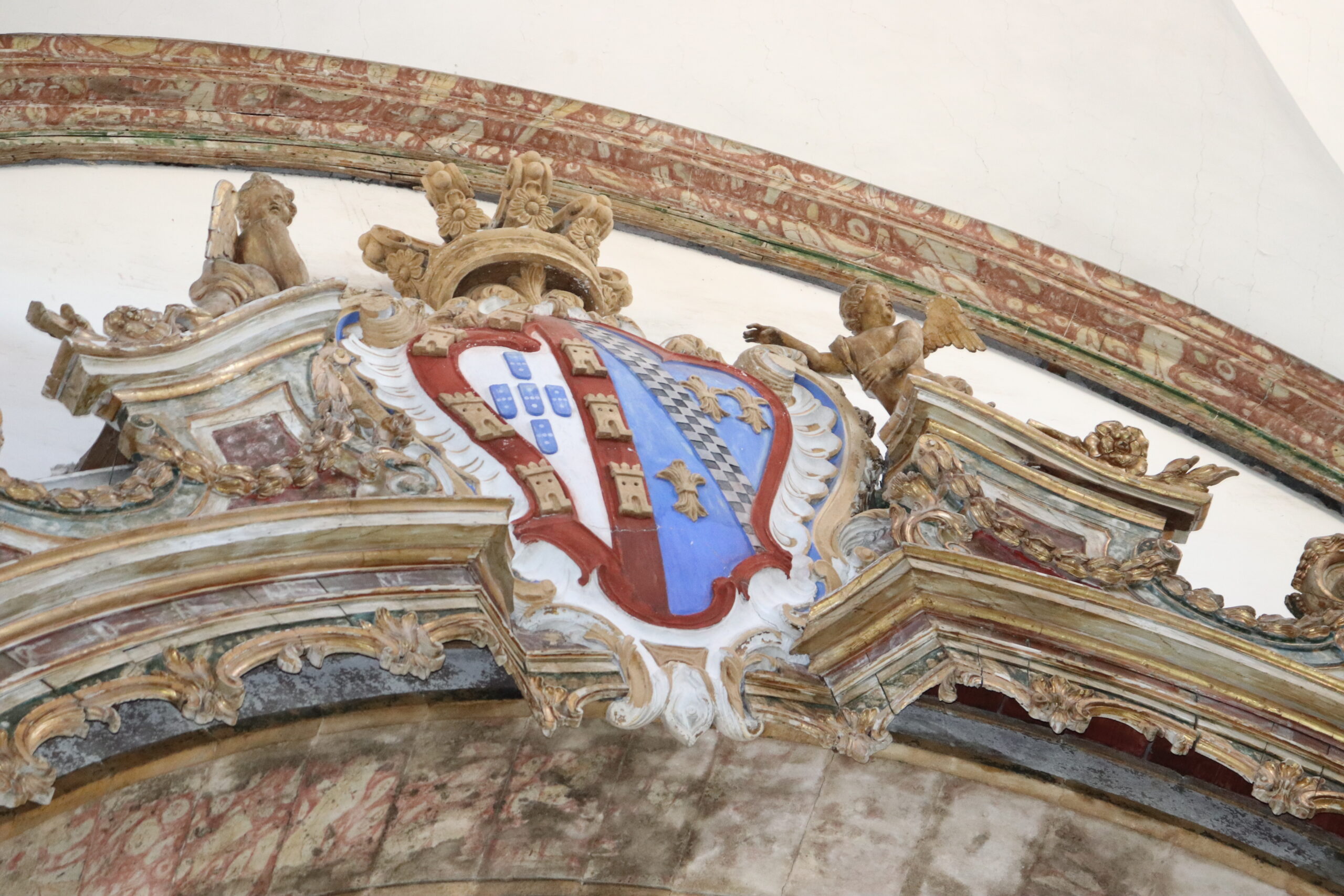
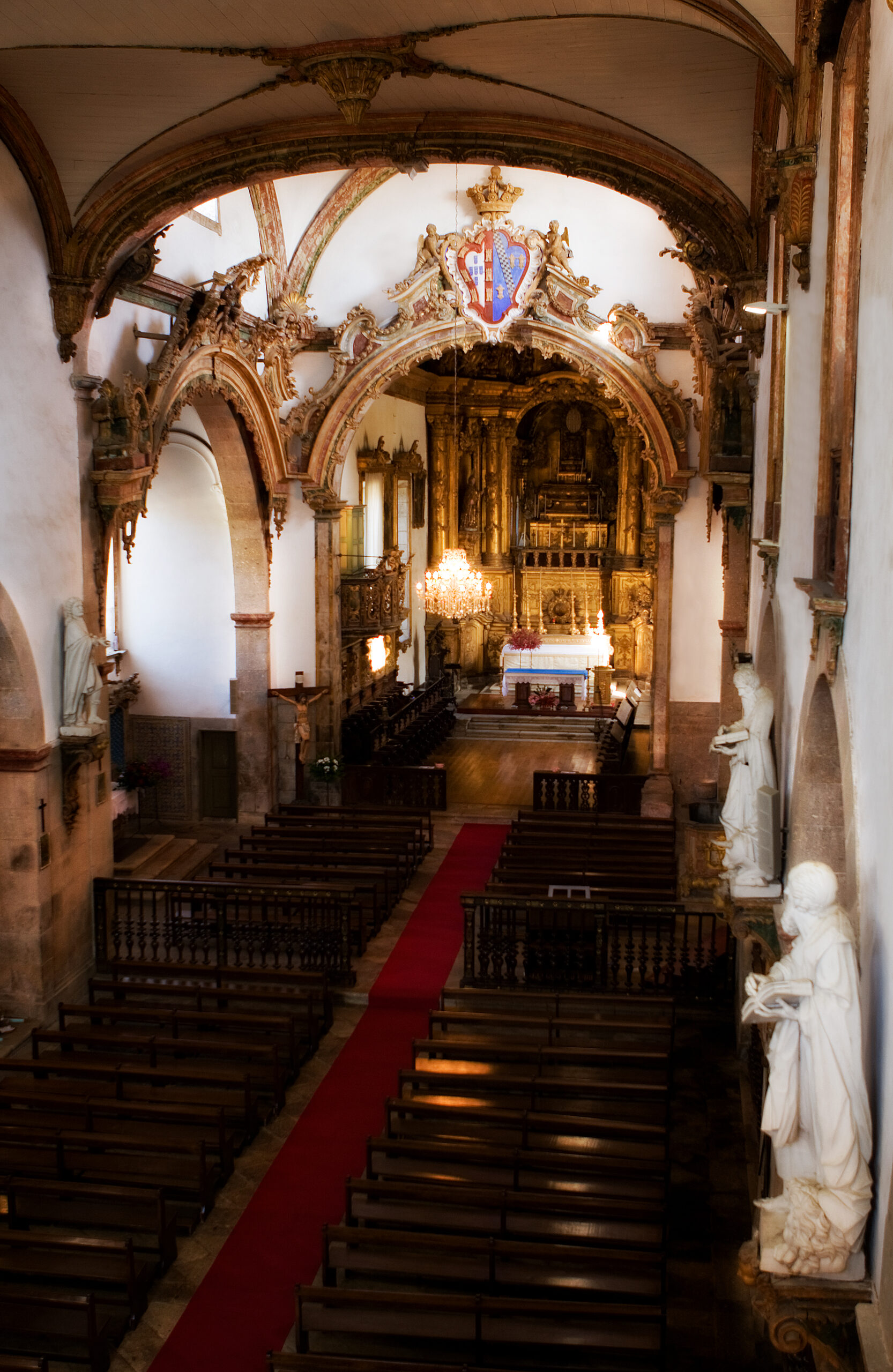
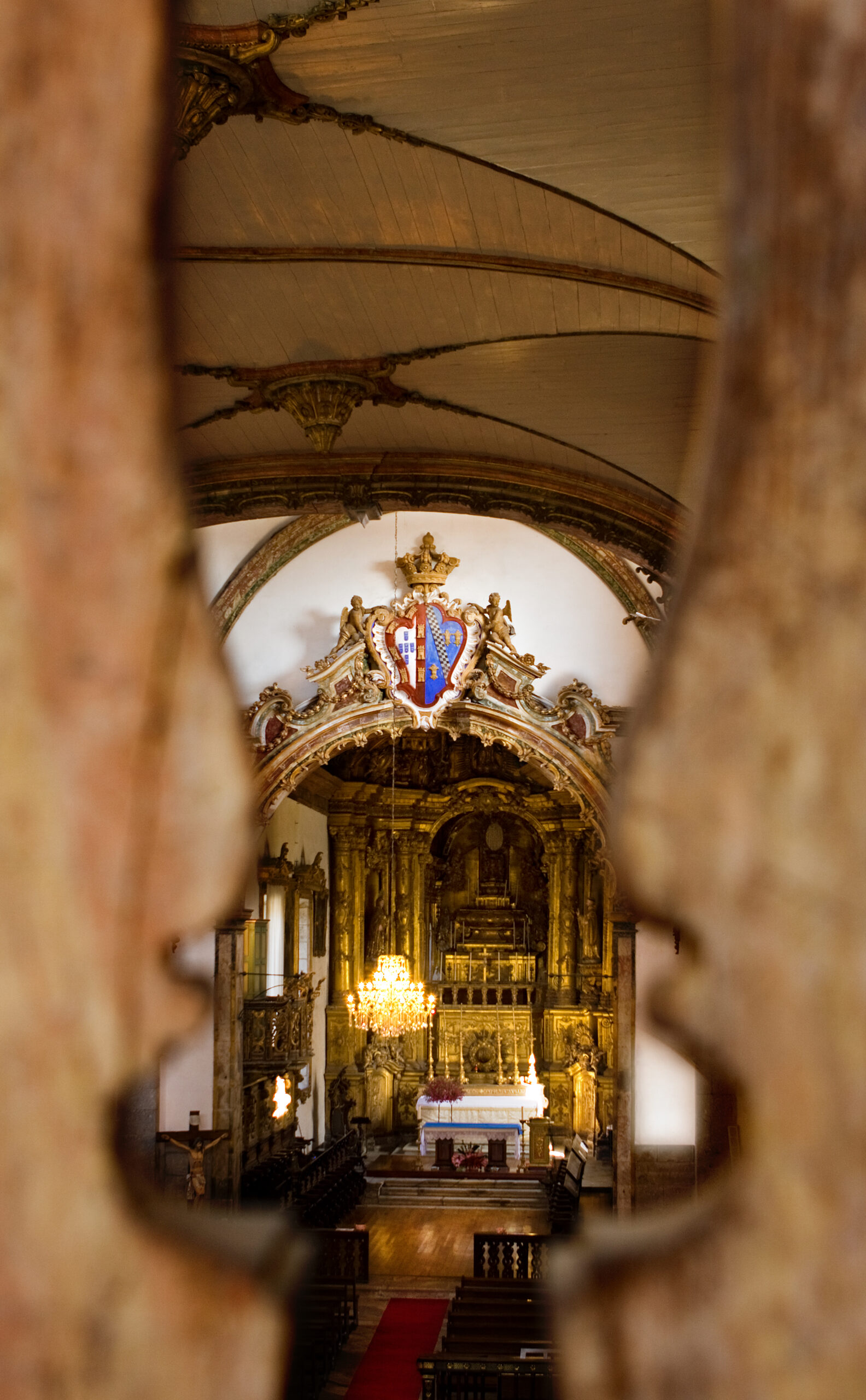
Inside, the numerous altars in the three side naves stand out, separated by round arches which, together with the main altar, impress with their grandeur and the beauty of their gilded carving. Also noteworthy is the 18th century organ, hand-carved, with the particularity of having a figurehead whose mouth moves simultaneously with the sound.
On the main altar, it is possible to climb up to the secular image of Nossa Senhora da Abadia with the Child in her arms, which is venerated by thousands of pilgrims who come there, mainly on the last Sunday of May and on August 15th. This sanctuary was classified as being of public interest in 2016.
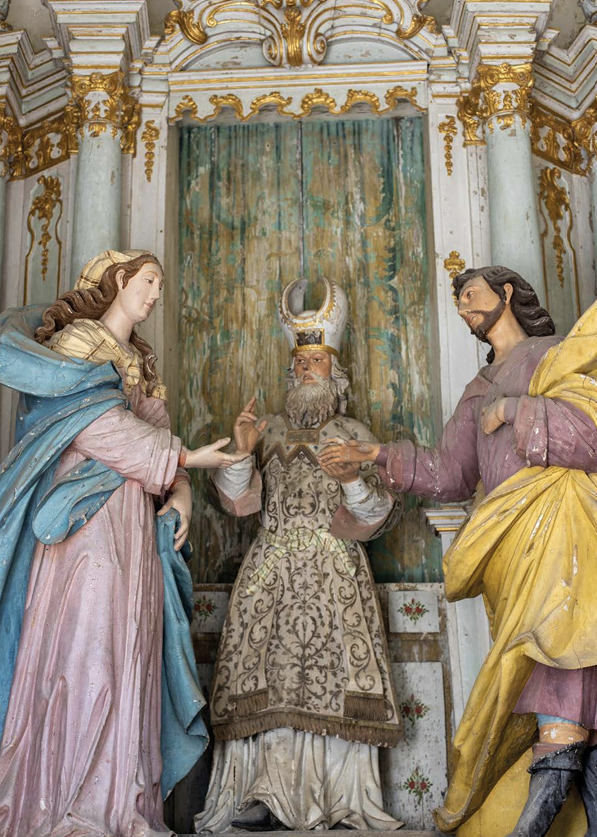
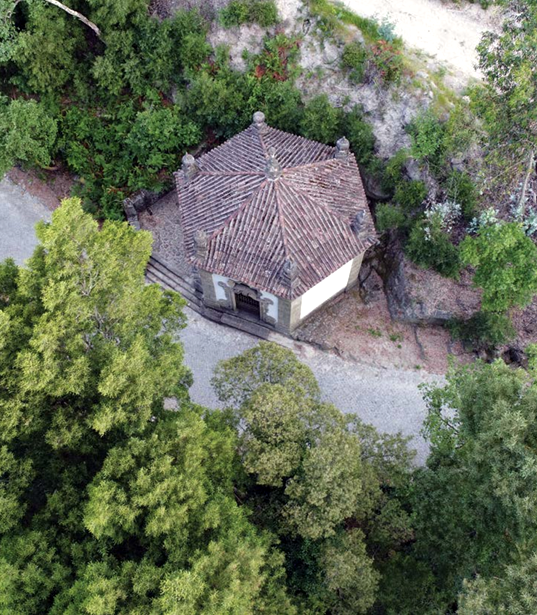
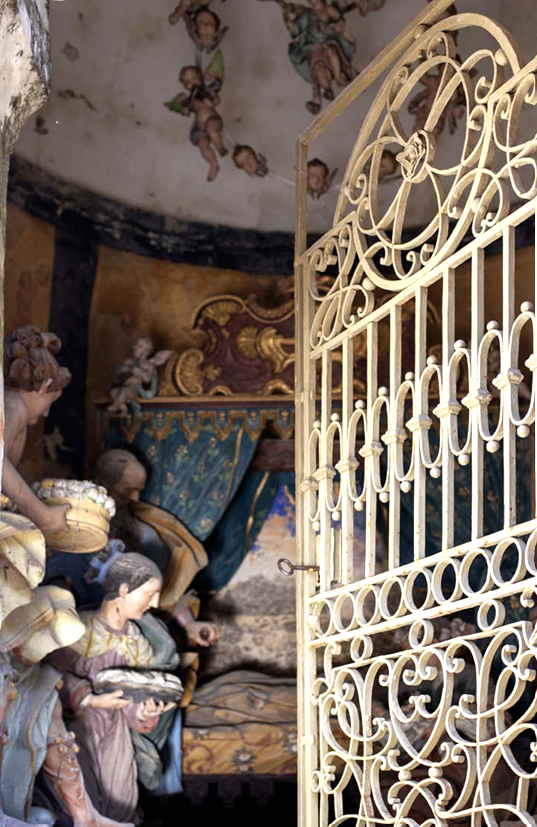
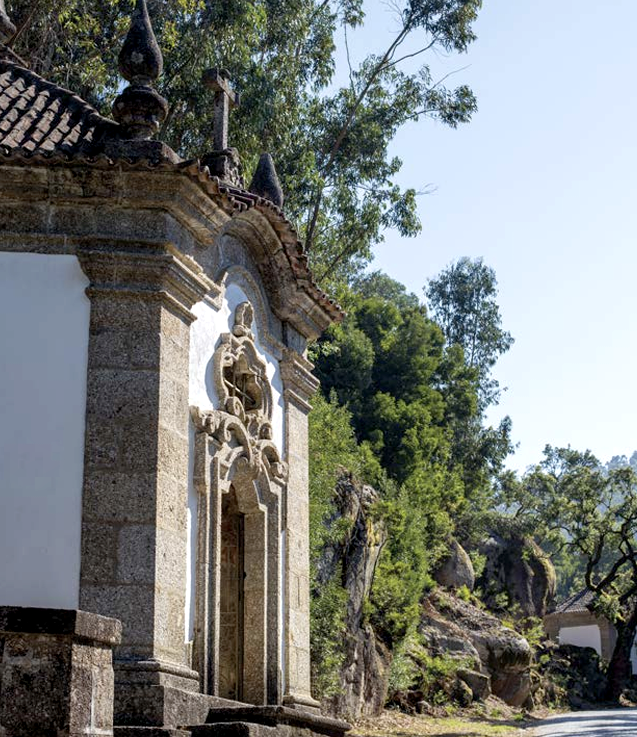
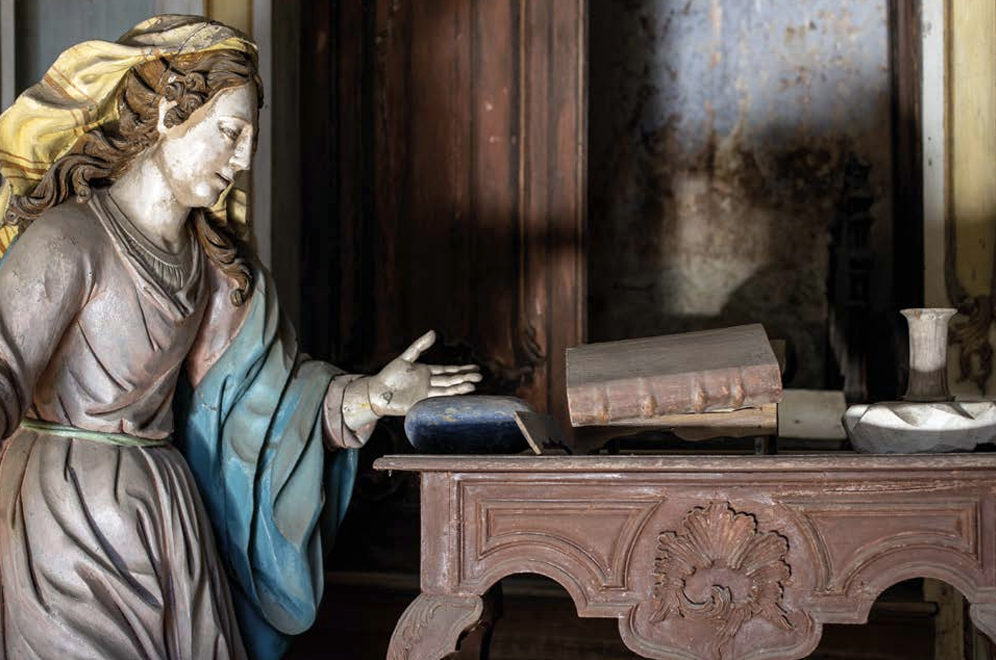
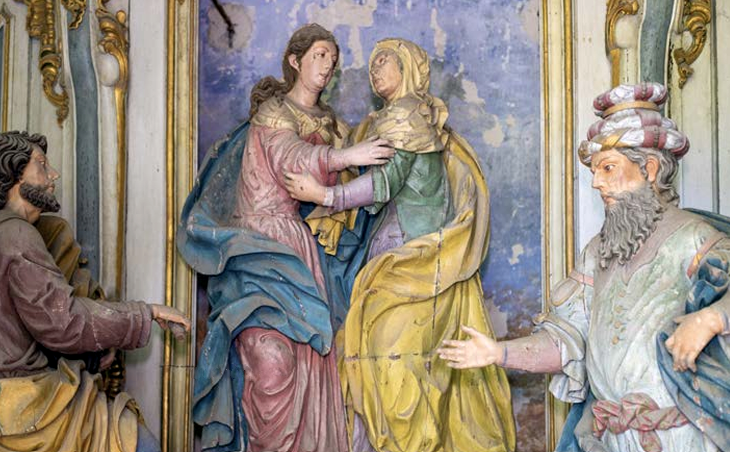
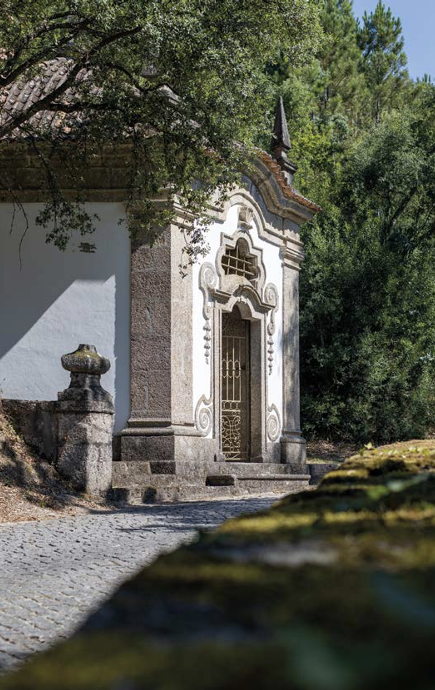
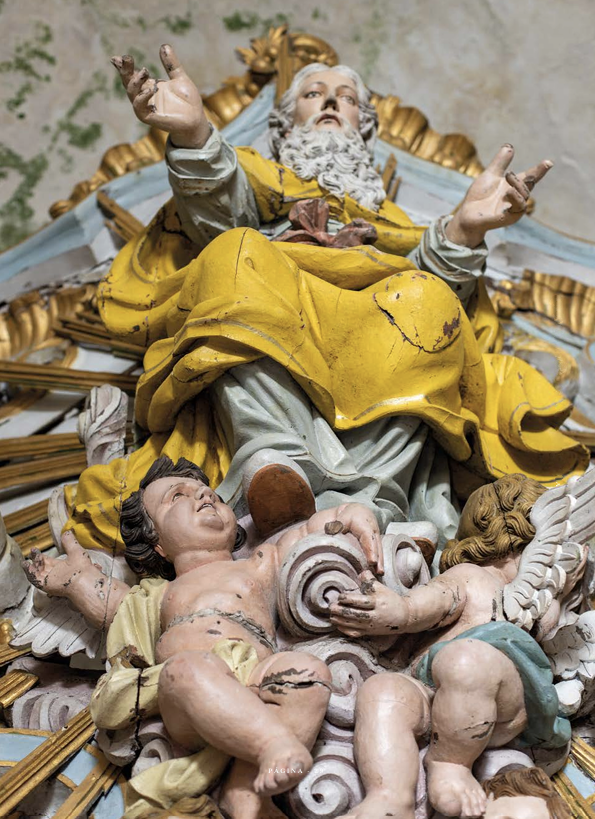
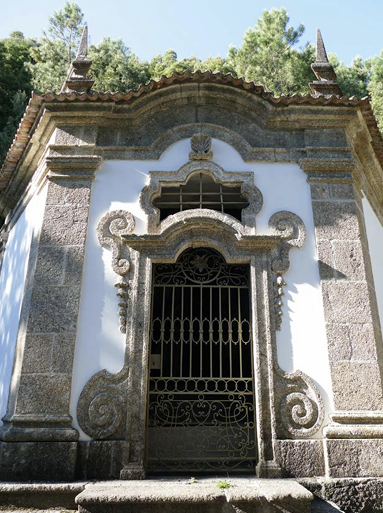
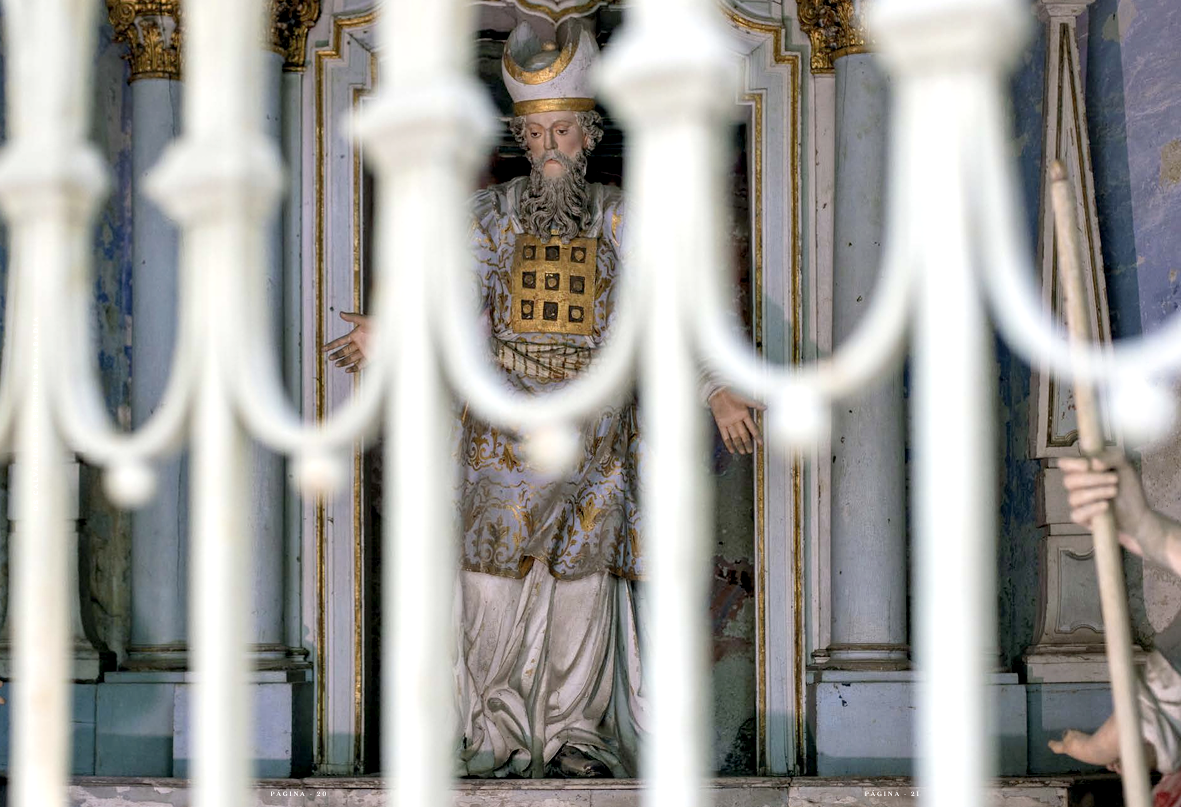
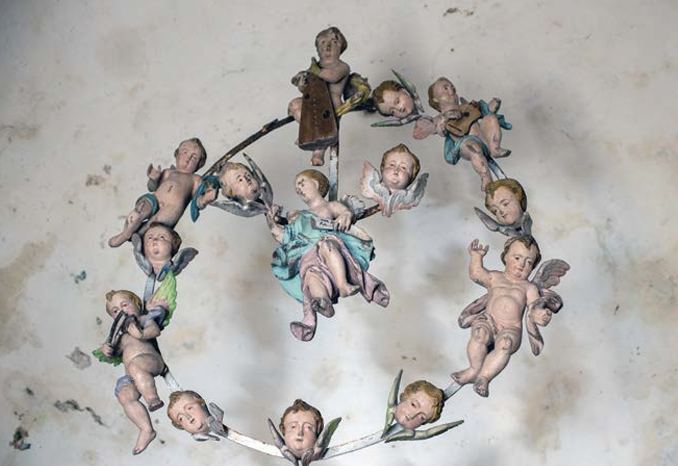
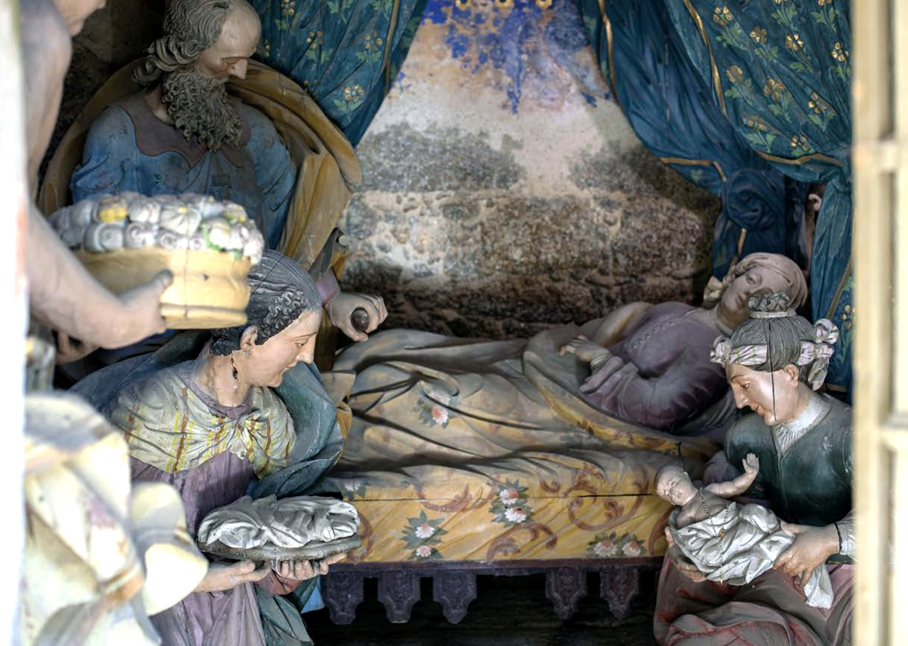
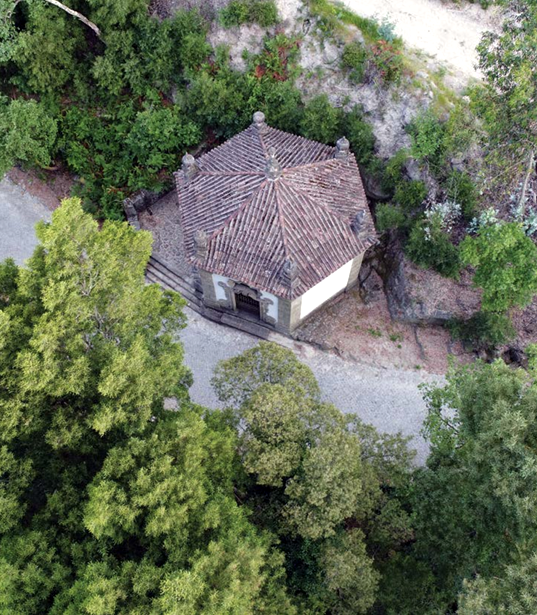
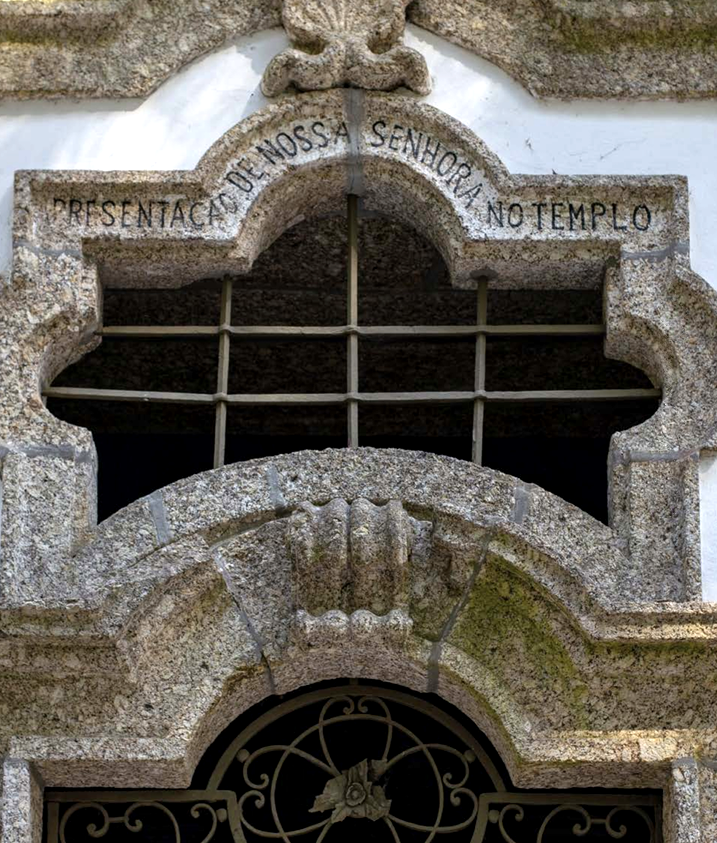
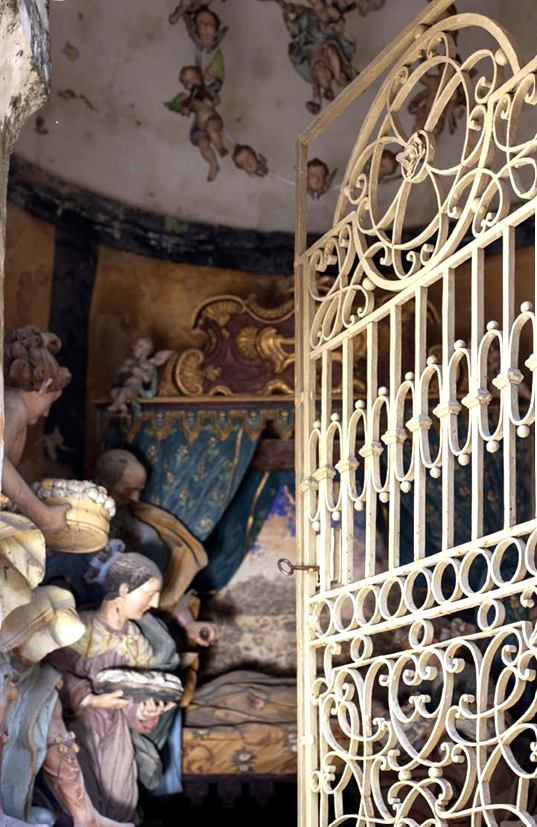
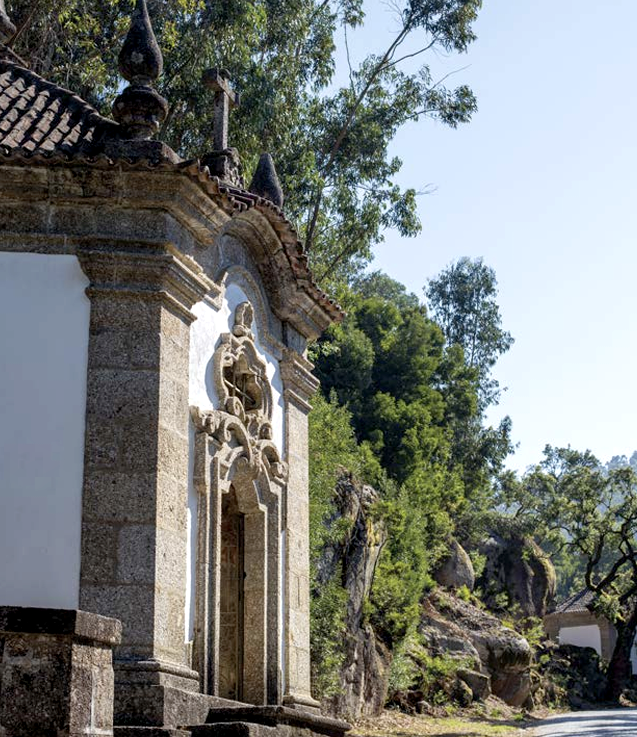
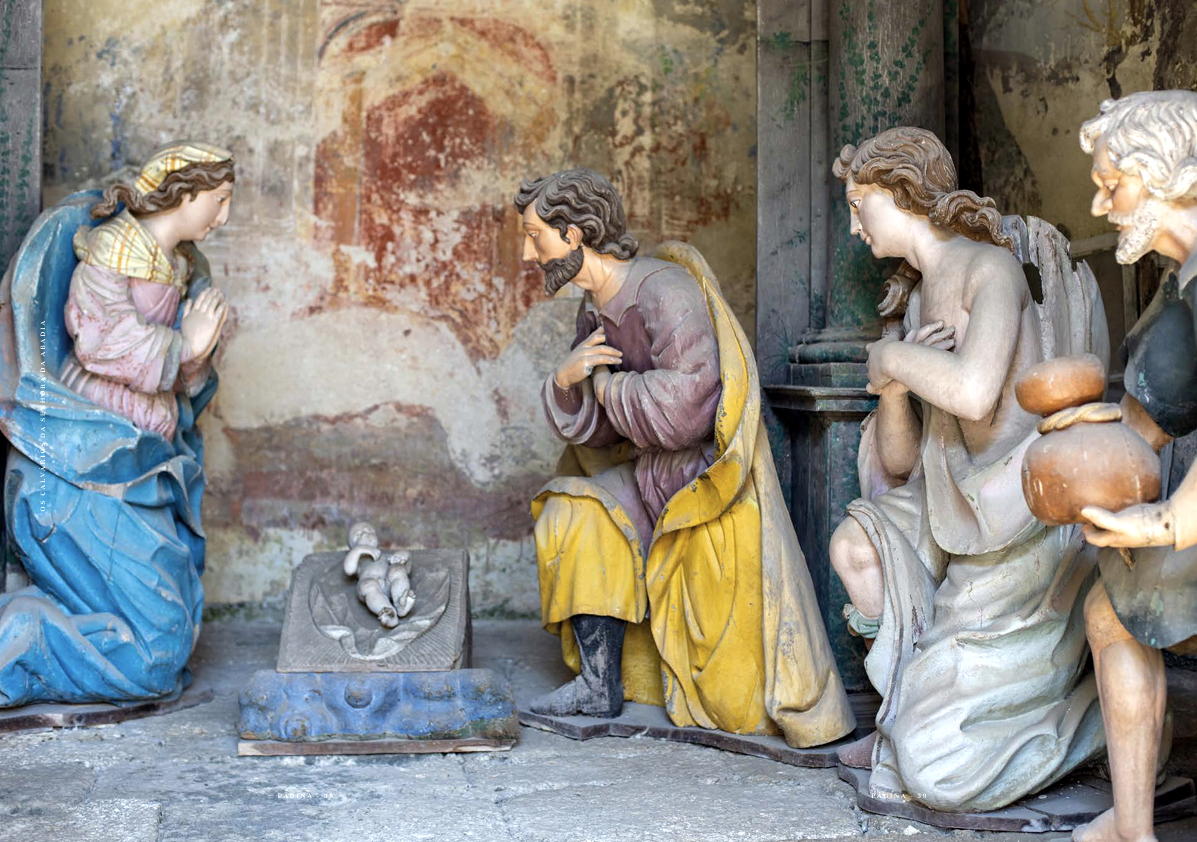
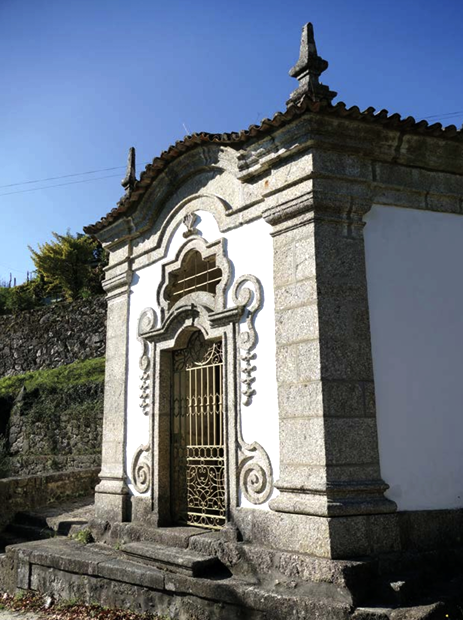
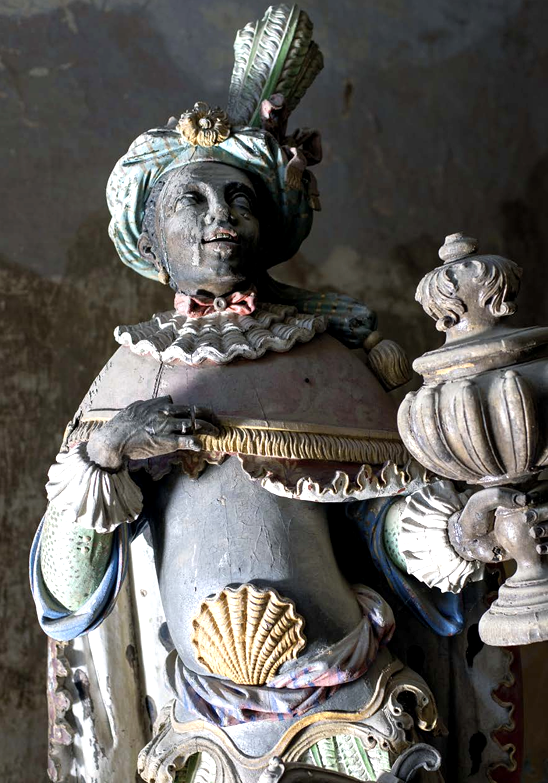
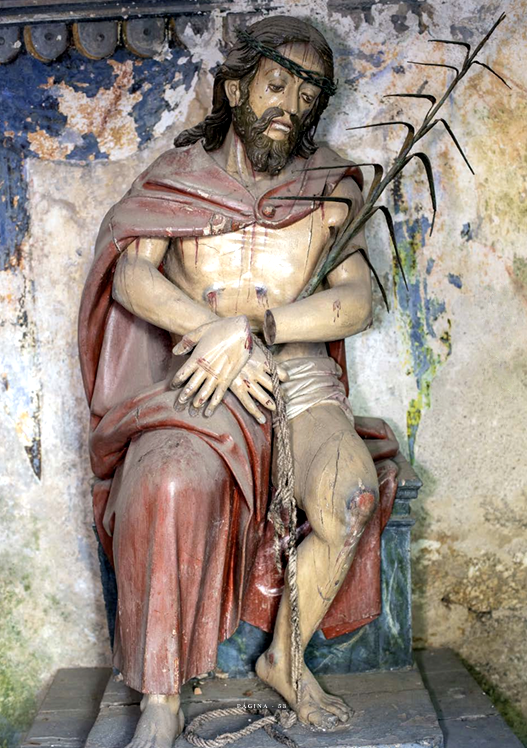
About a kilometer before the Santuário da Abadia, you can see the chapels corresponding to the paths of the “Passion of Christ” and the “Life of Mary”, popularly known as “Calvários da Senhora da Abadia” or “Caminhos de Belém”. A visit to the 15 chapels: seven rectangular and eight hexagonal with late Baroque façades, built mainly on the left side of the path, is a must, whether on a pilgrimage or just to enjoy nature. The rectangular chapels correspond to the main steps of the Passion of Christ, while the hexagonal ones represent the life of the Virgin Mary.
It is assumed that the chapels were built in the 18th century, after the visit of Archbishop D. Rodrigo de Moura Teles. Rodrigo de Moura Teles, responsible for the construction of the Bom Jesus do Monte staircase, in Braga.
The route is highly recommended for those who want to immerse themselves in the silence of the mountain, lulled by the singing of birds and the lapping of water, which are an uninterrupted feature throughout the Abadia.
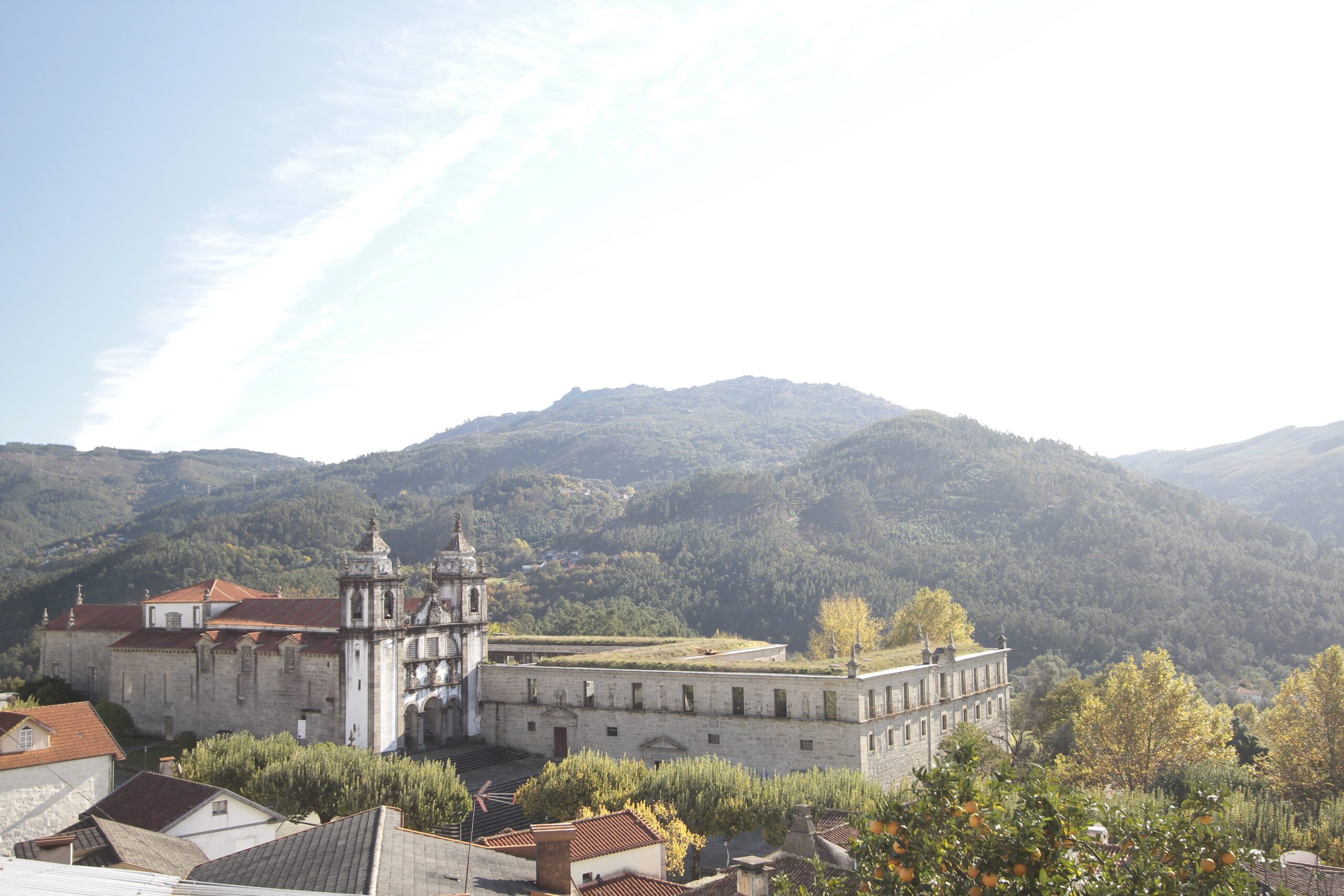
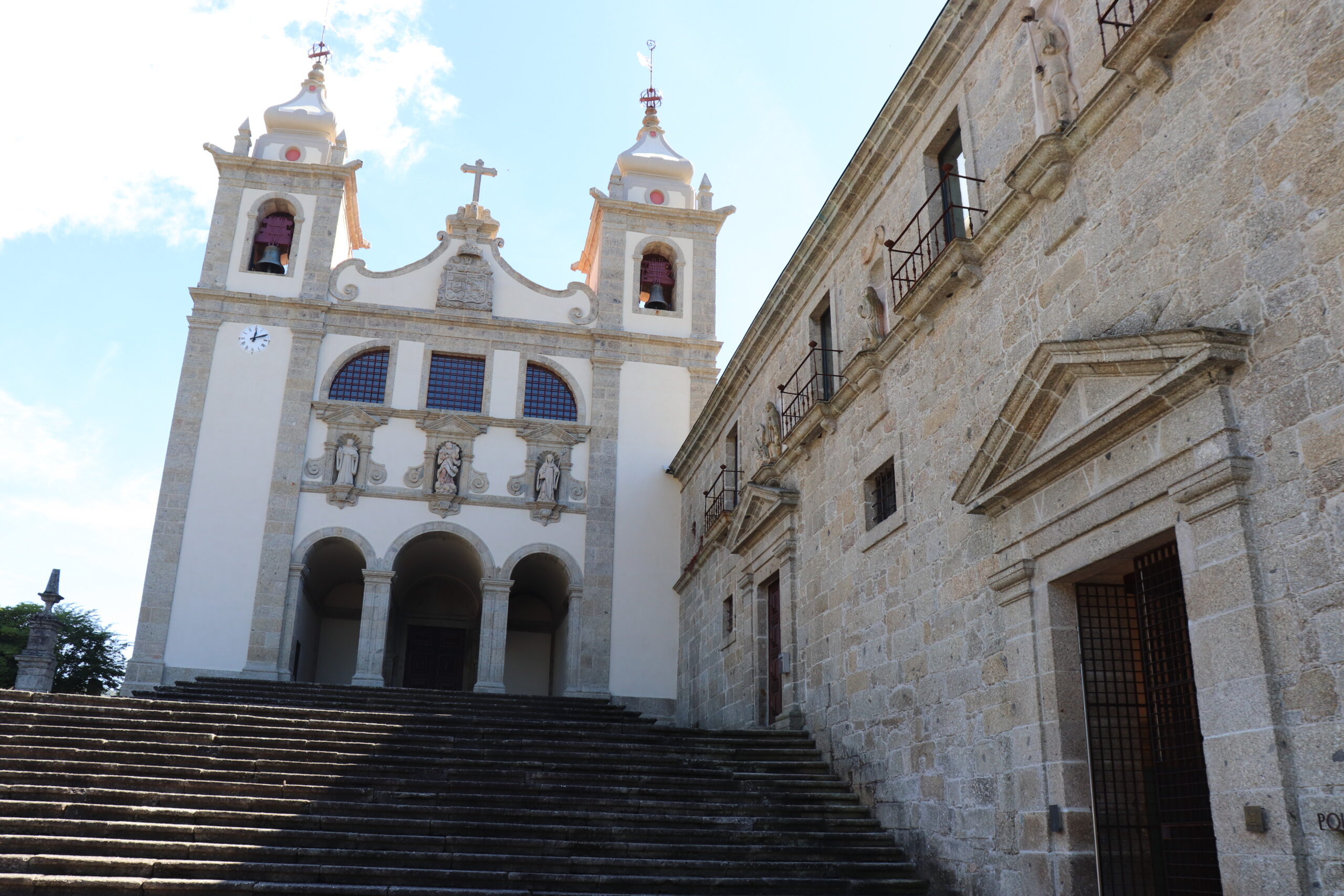
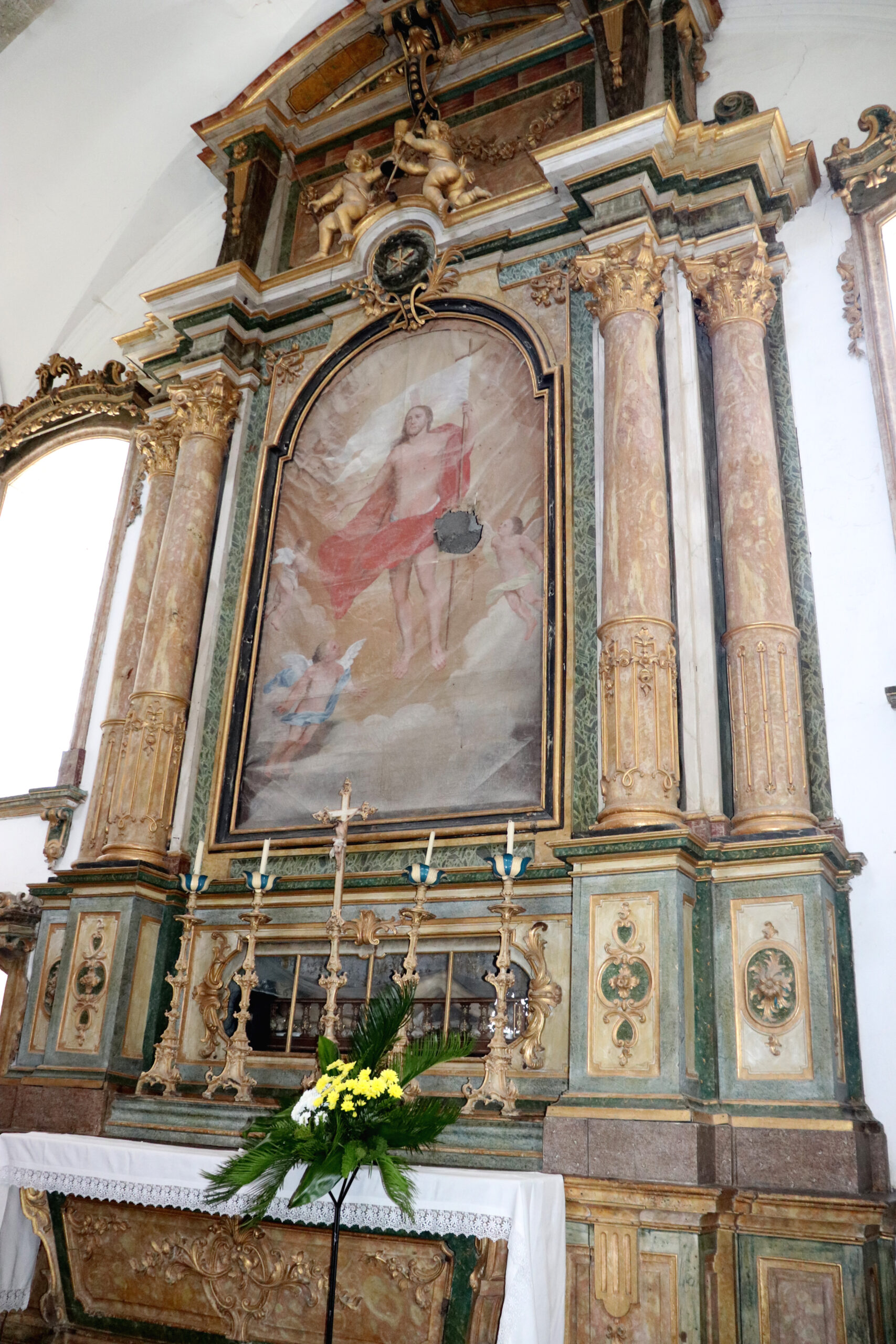
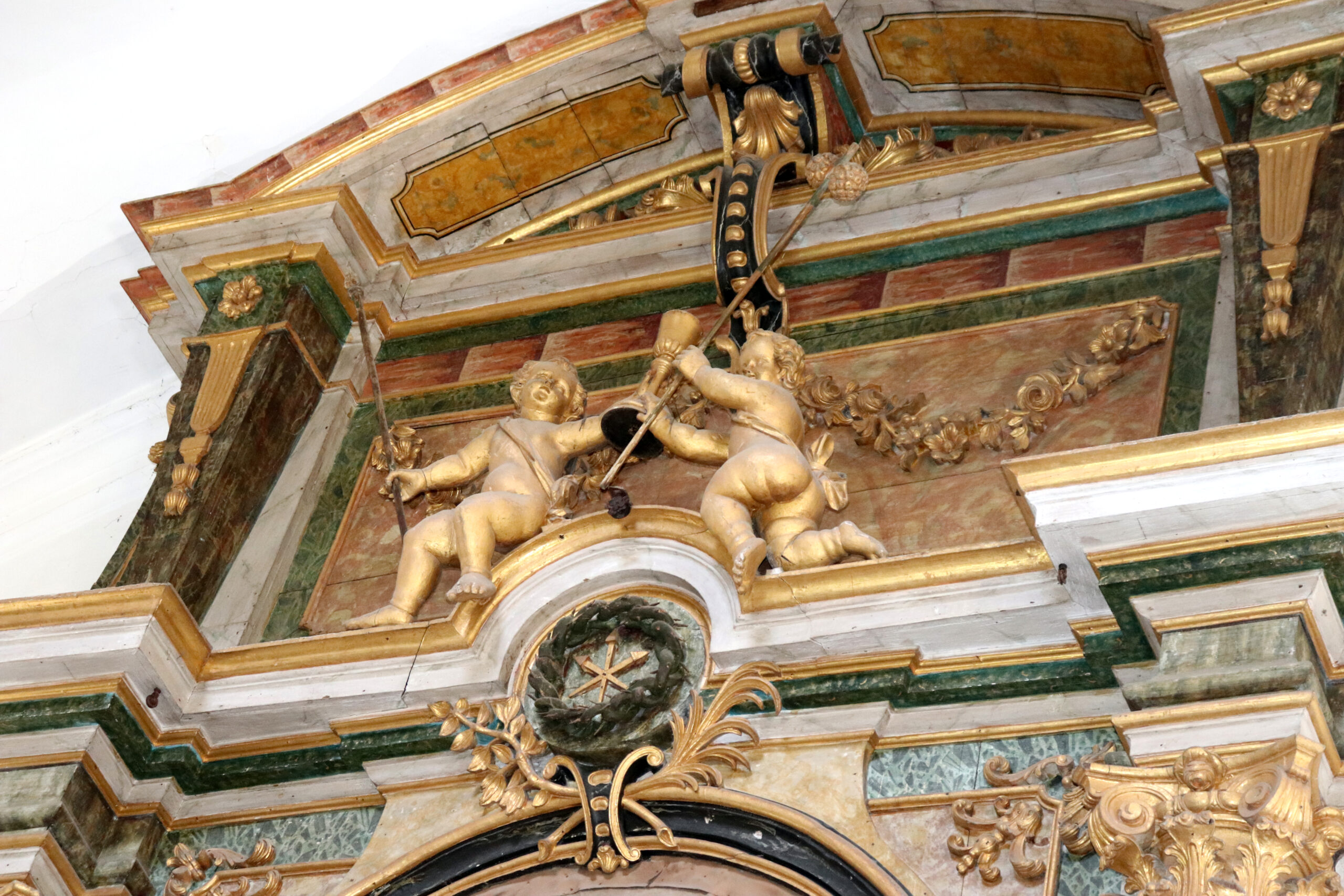
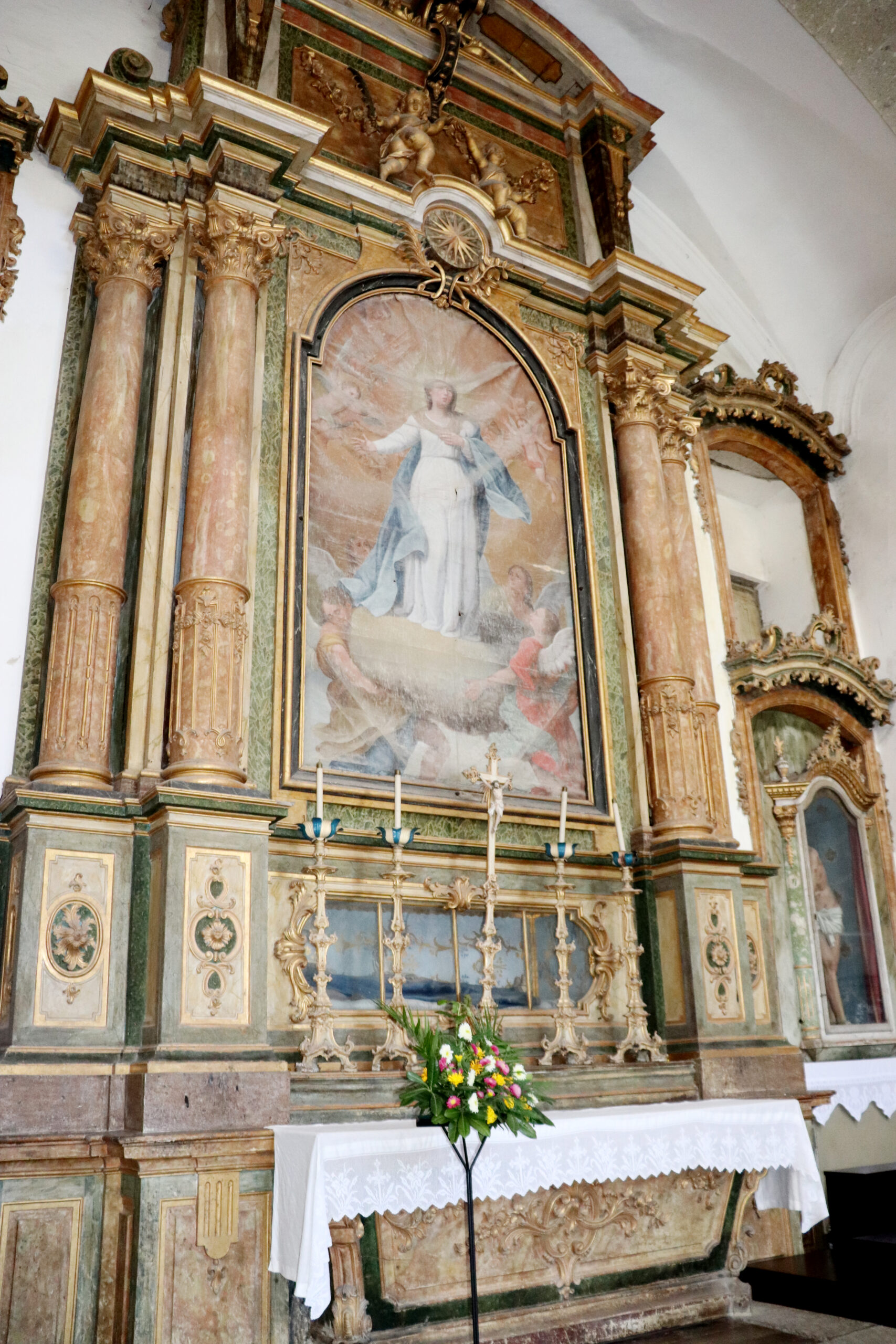
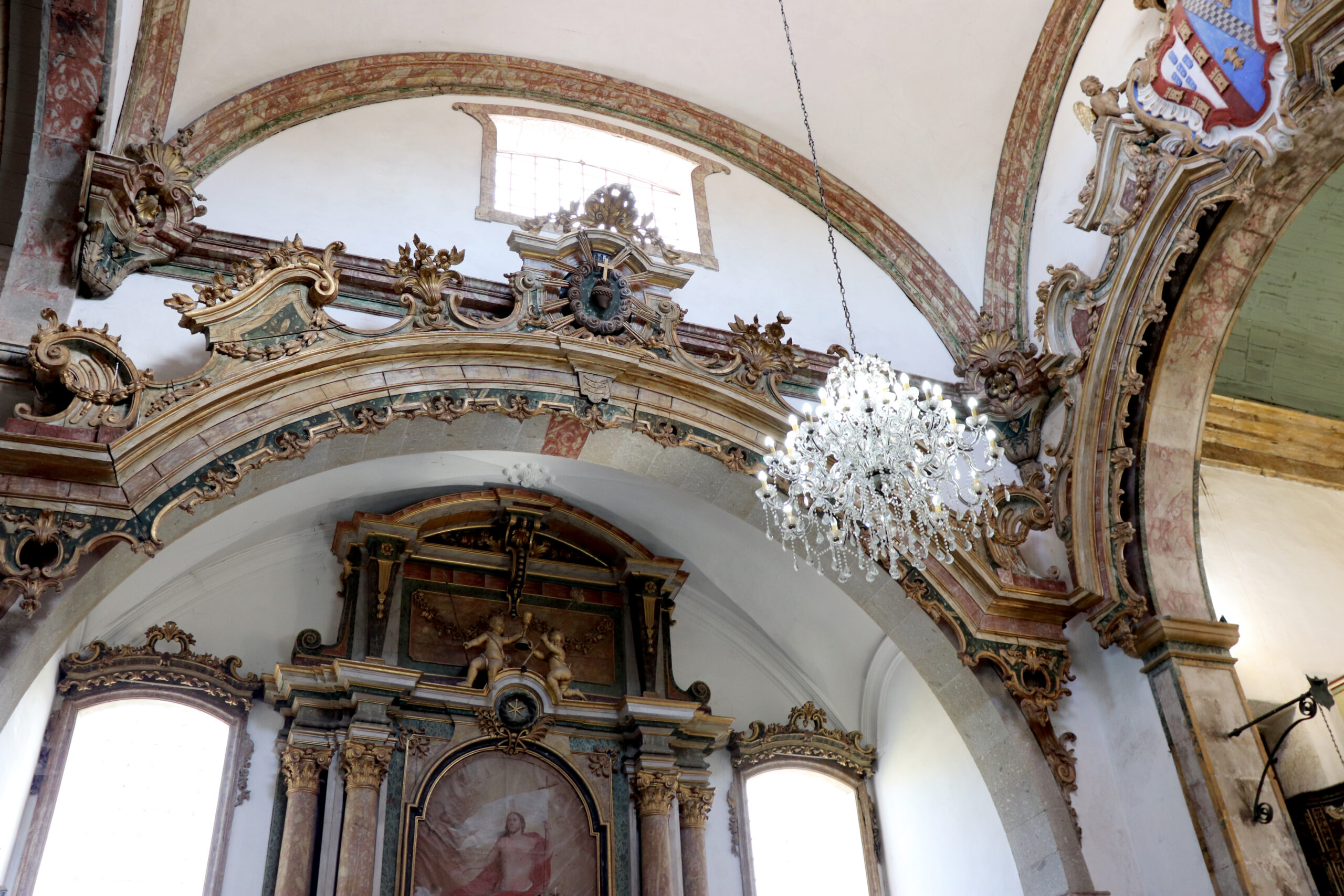
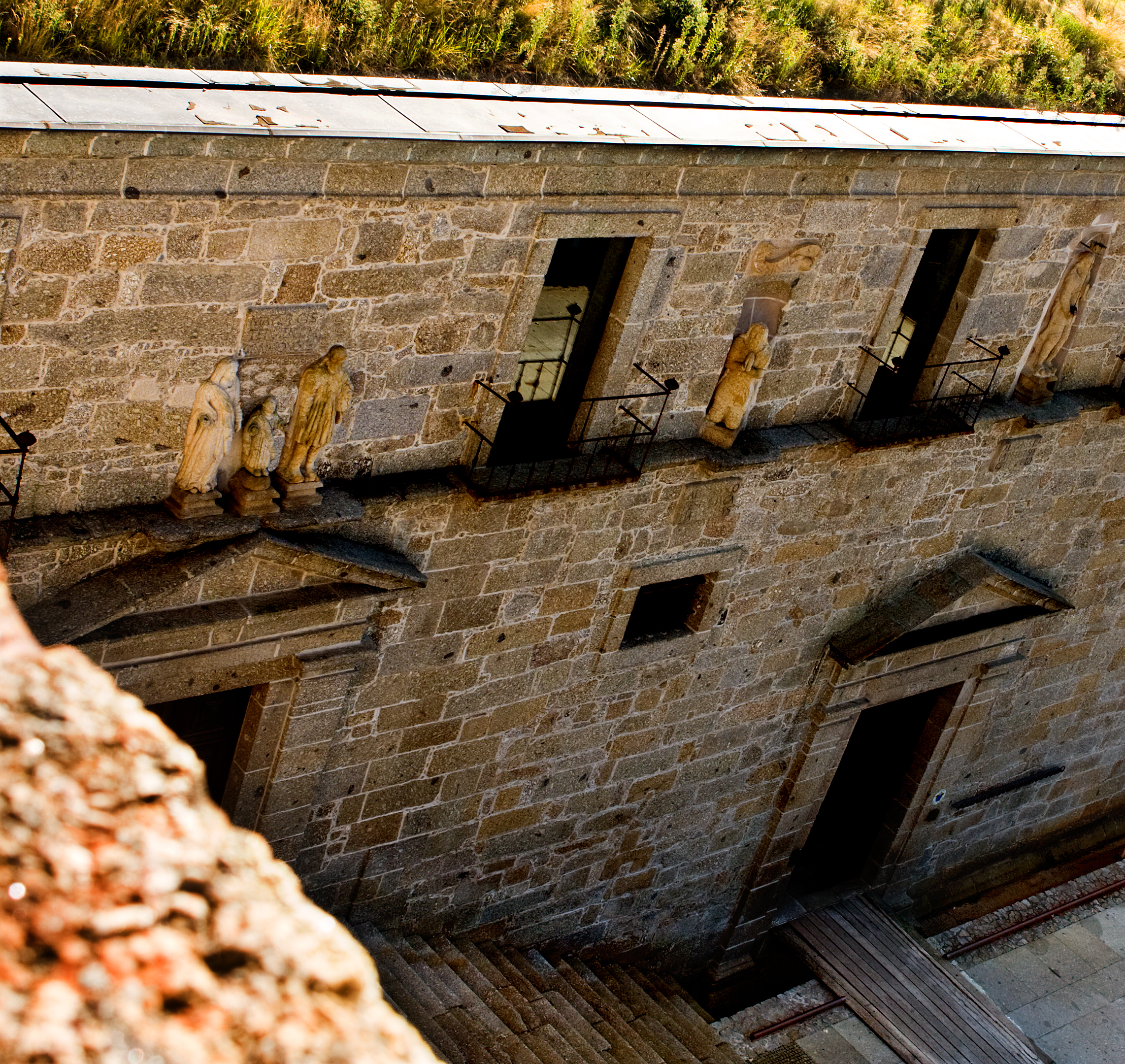
Over the years, several monarchs supported this Monastery, with successive donations, making it one of the most important in the country. However, in the 15th century and part of the 16th century, the Monastery of Santa Maria de Bouro entered a phase of decline, reducing the number of monks. After these turbulent times, at the end of the 16th century, the monastery began to recover its autonomy and prosperity. There were several reforms that helped restore the Cistercian monasteries to their former glory.
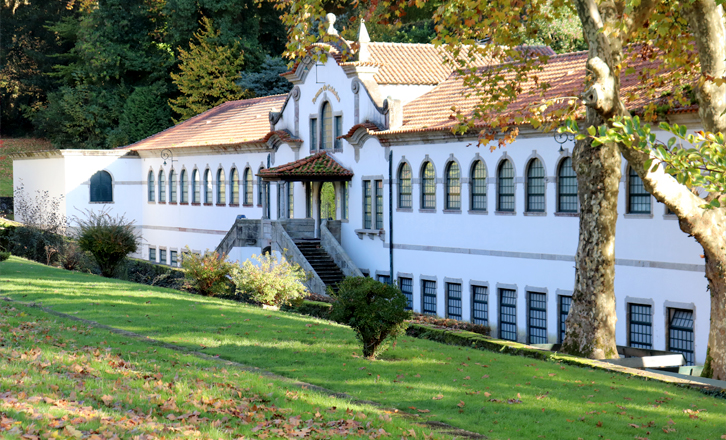
Currently, part of the convent has been adapted into a Pousada de Portugal, where the conservation of the original design and the severity of the old Monastery make it a national reference. Designed by architect Souto Moura, this Pousada de Portugal stands out for its distinctive and innovative concept, inspired by times long gone by.
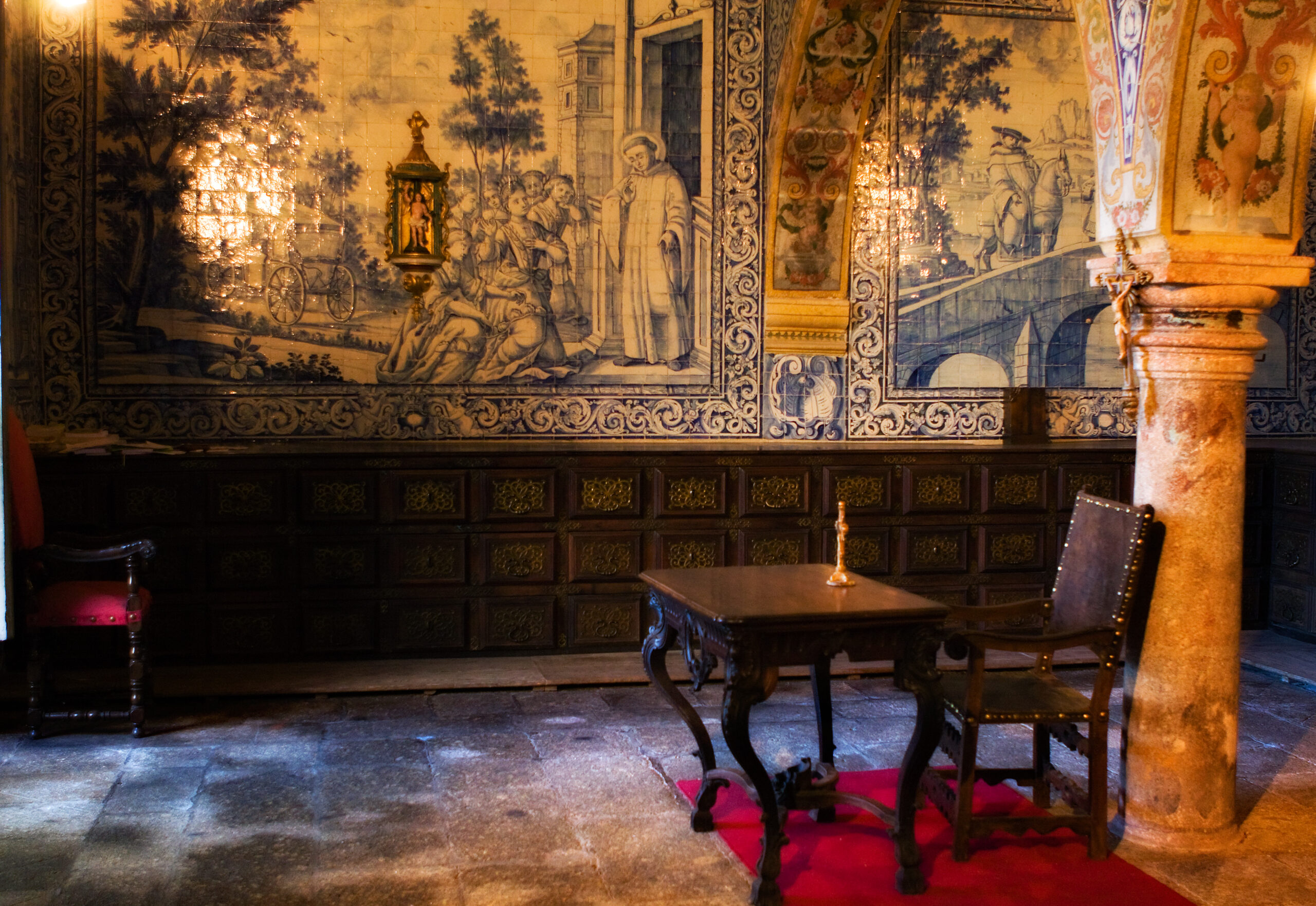
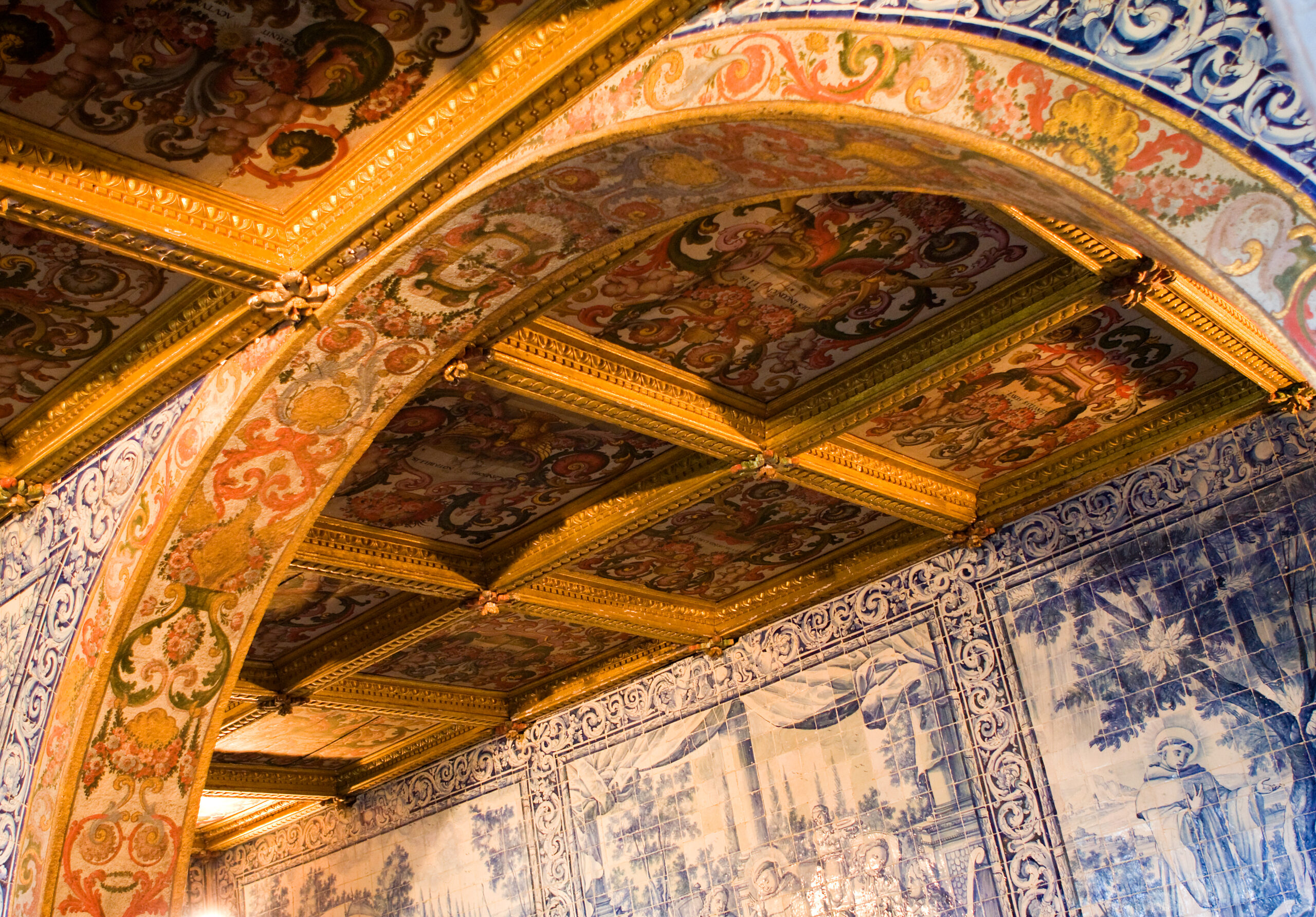
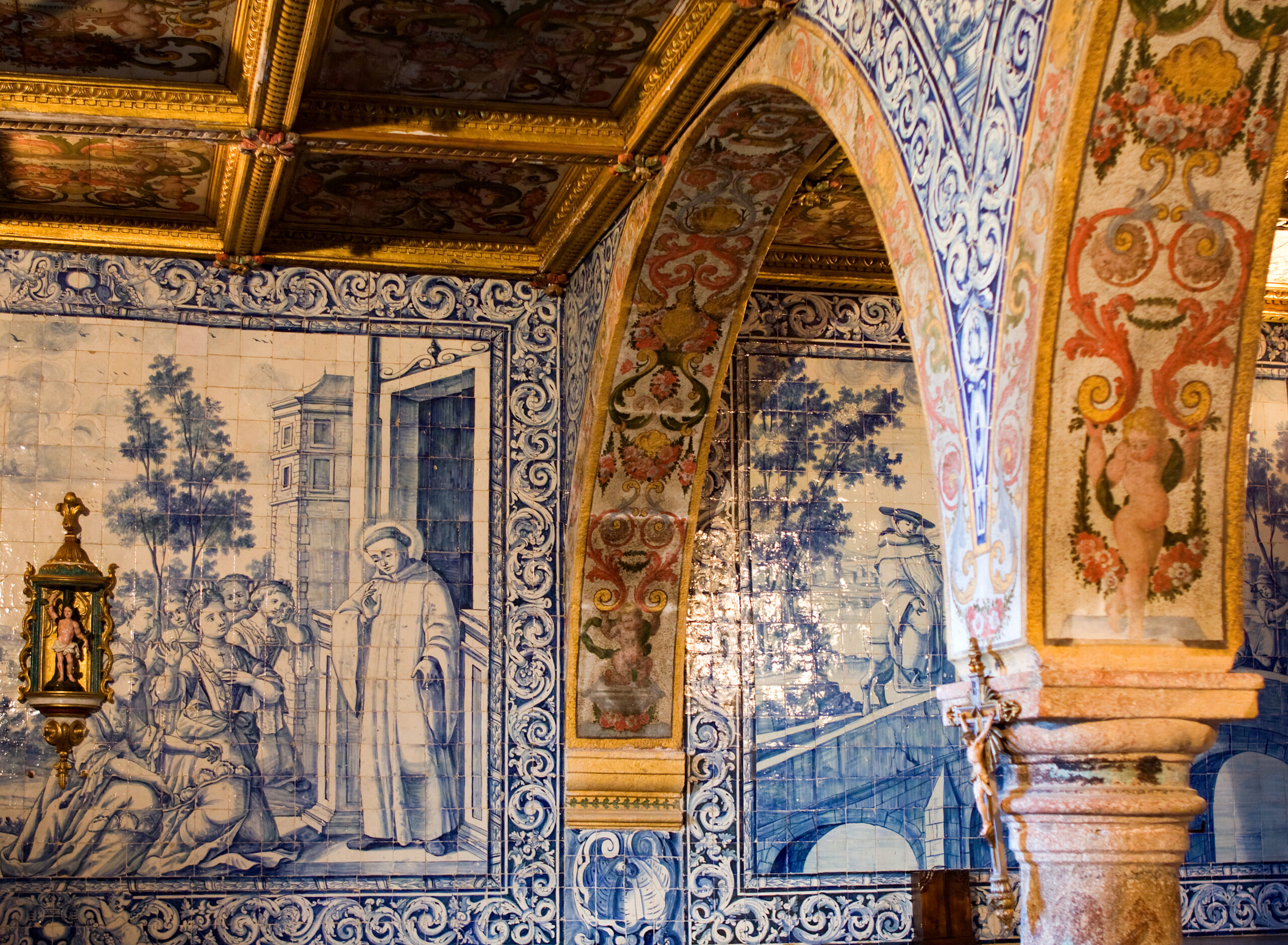
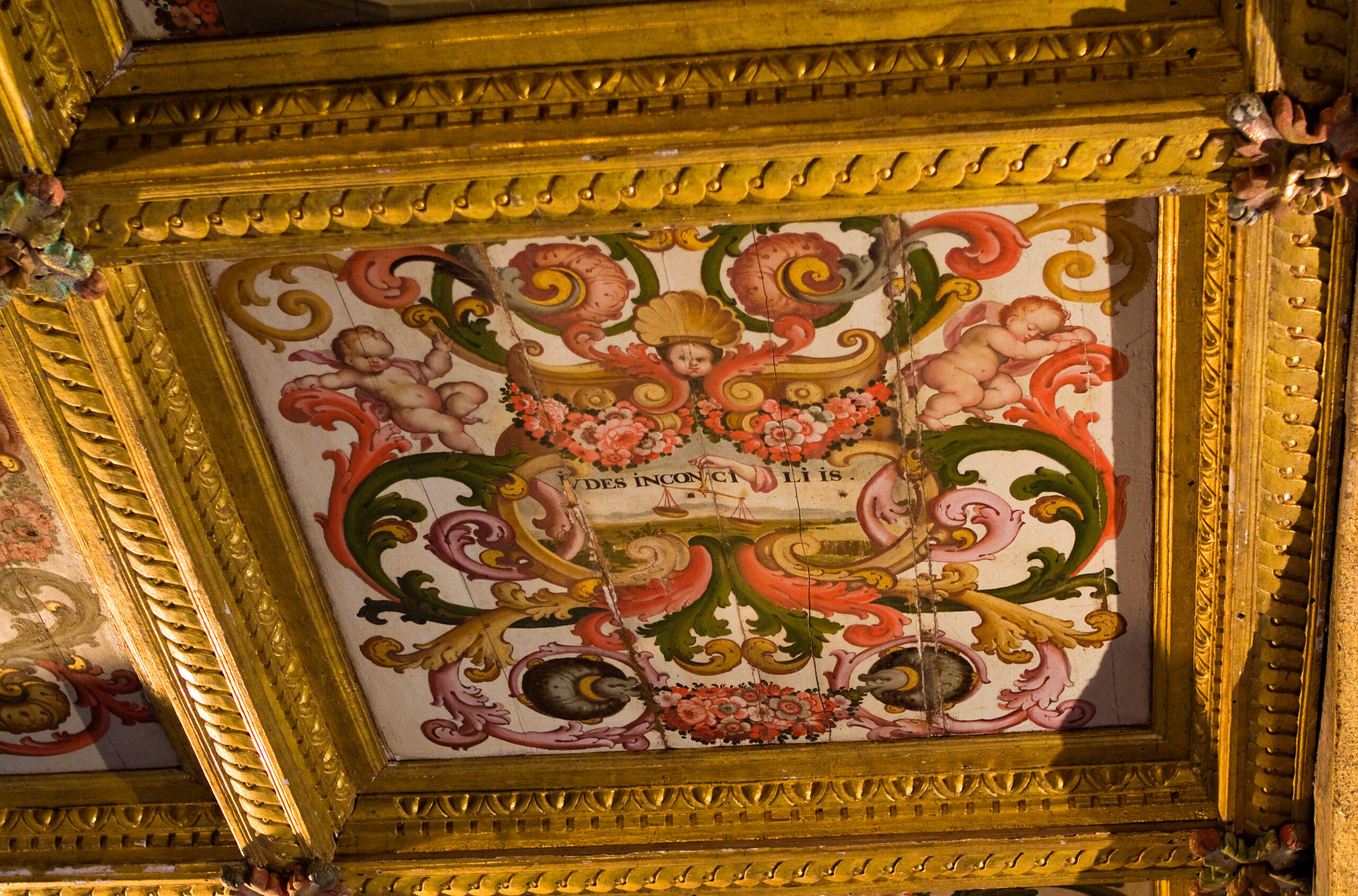
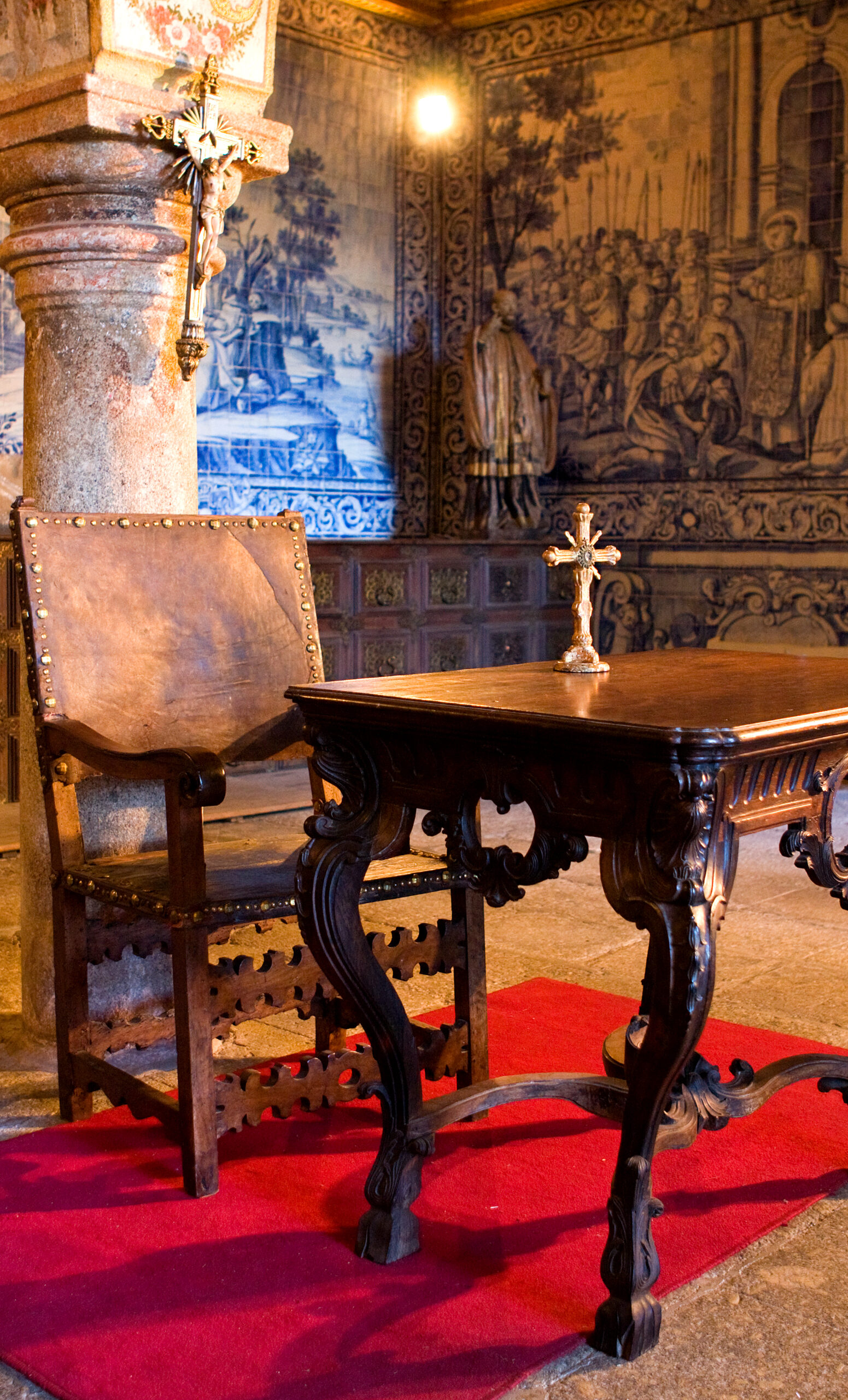
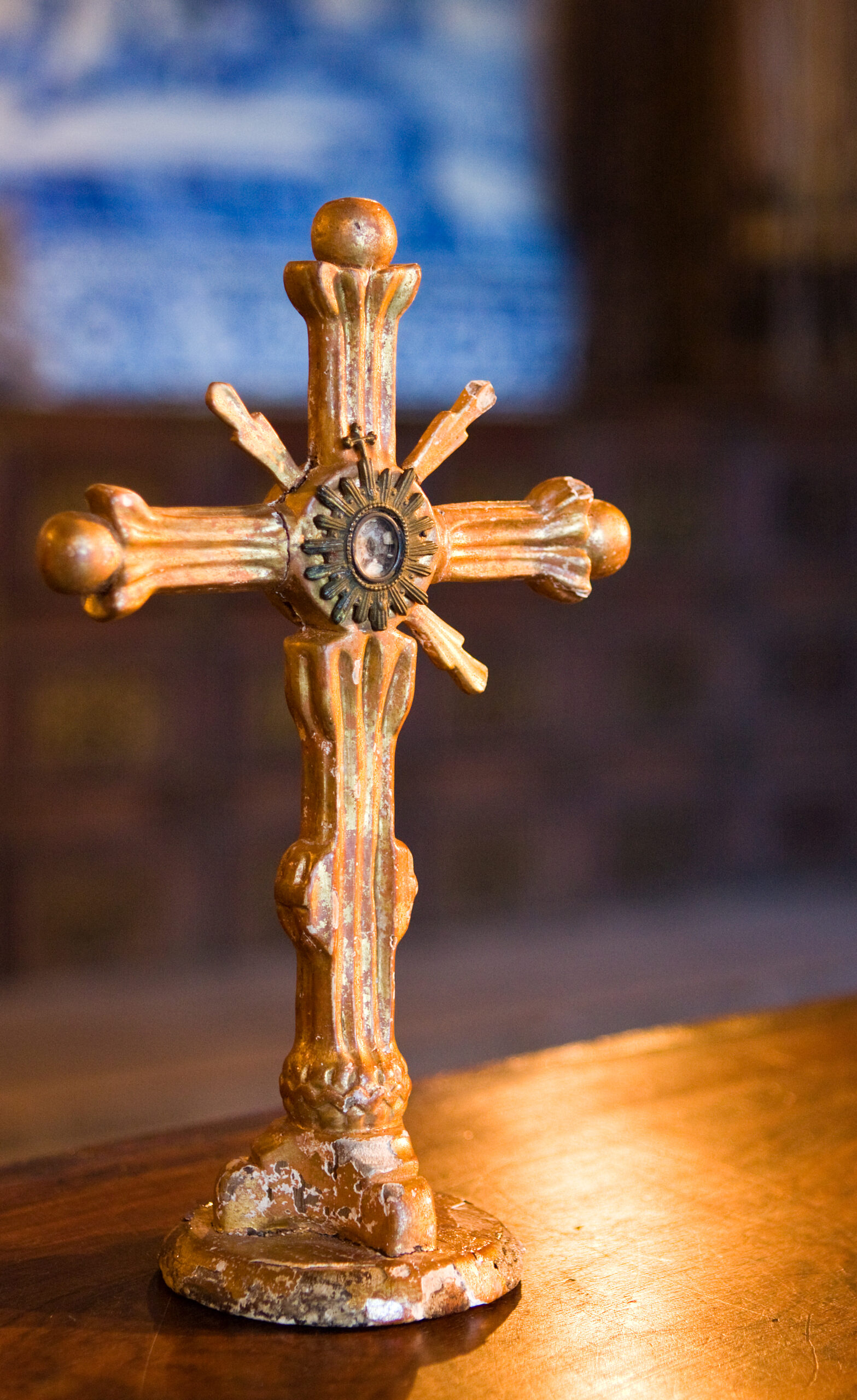
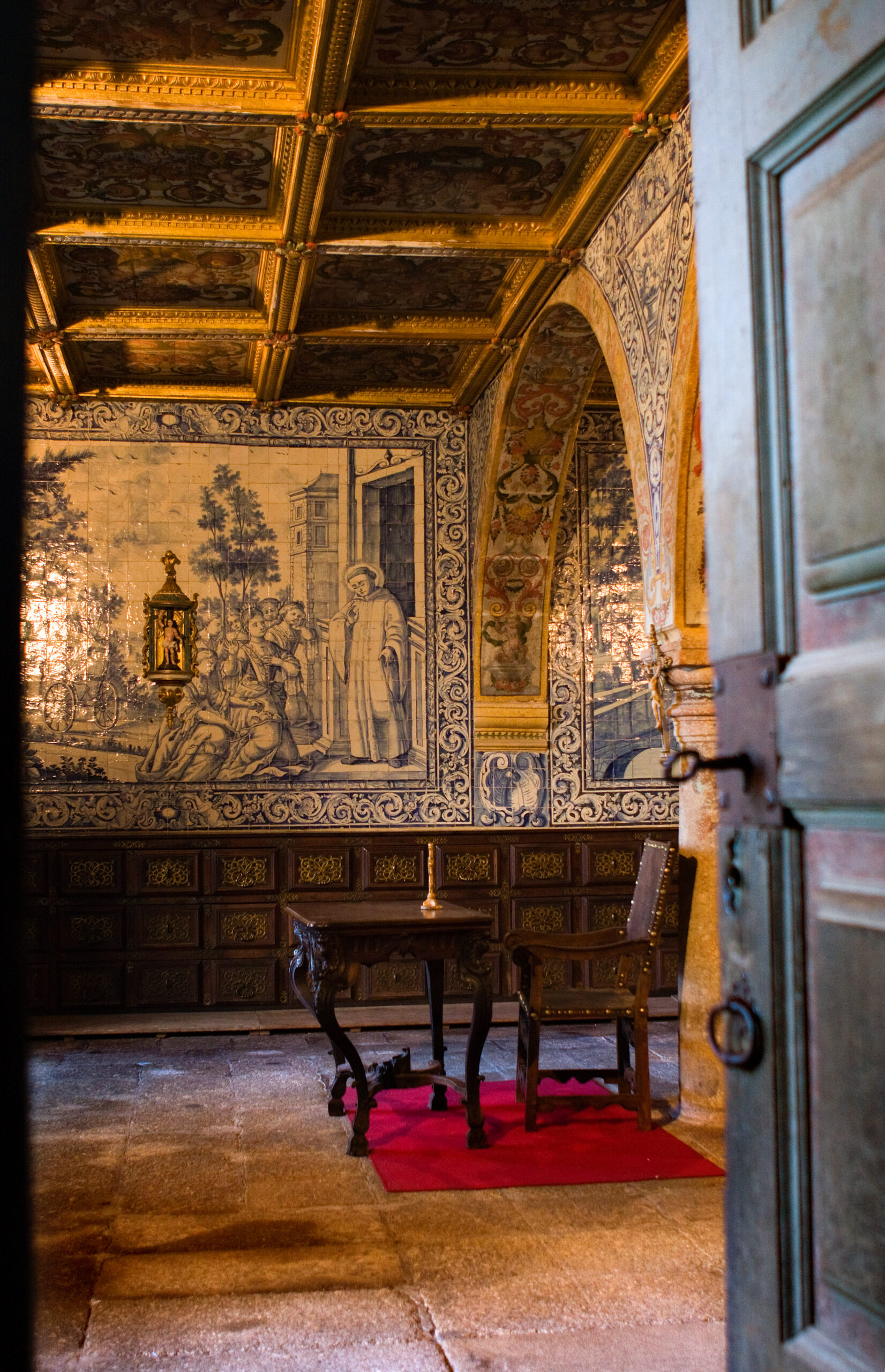
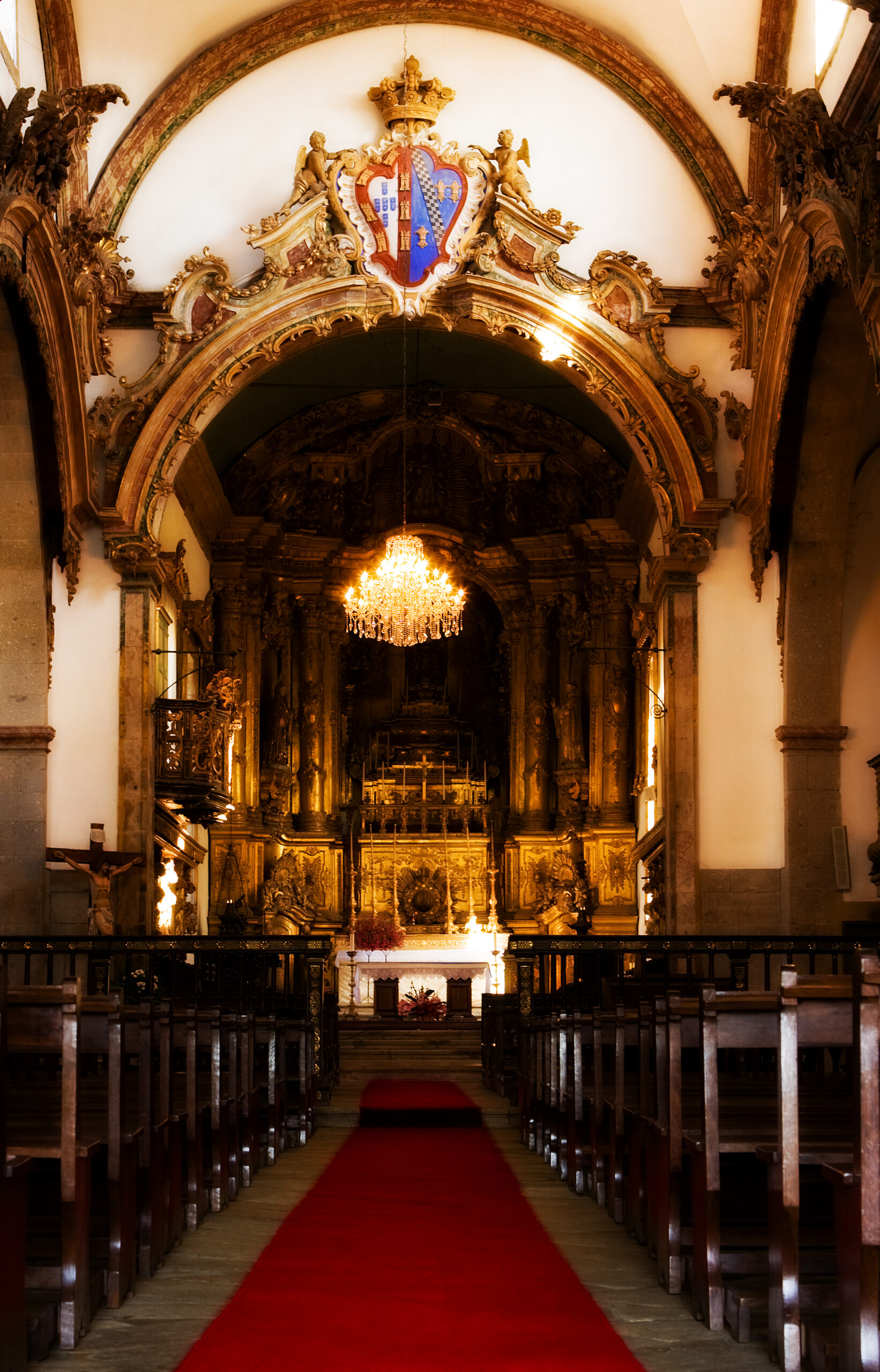
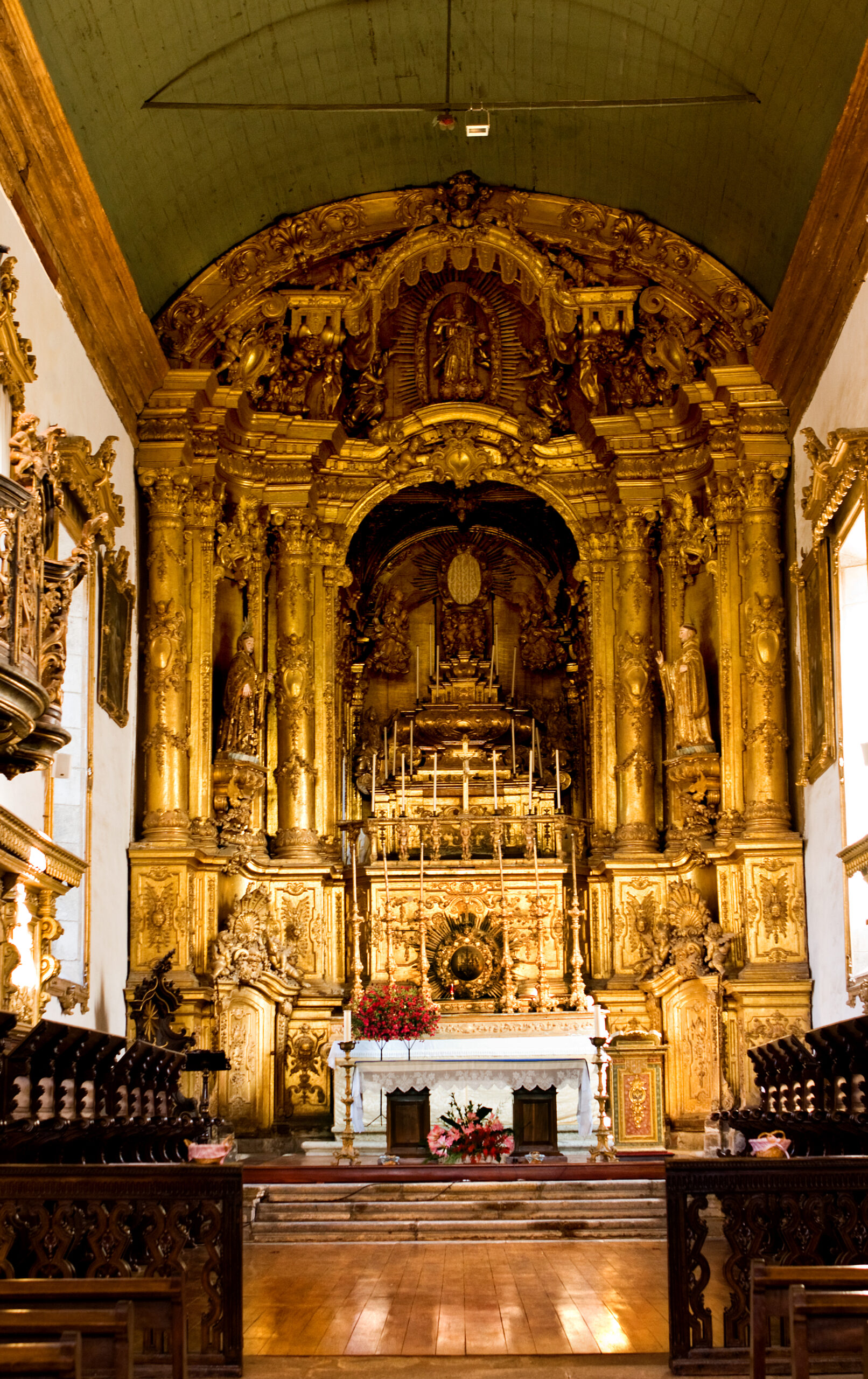
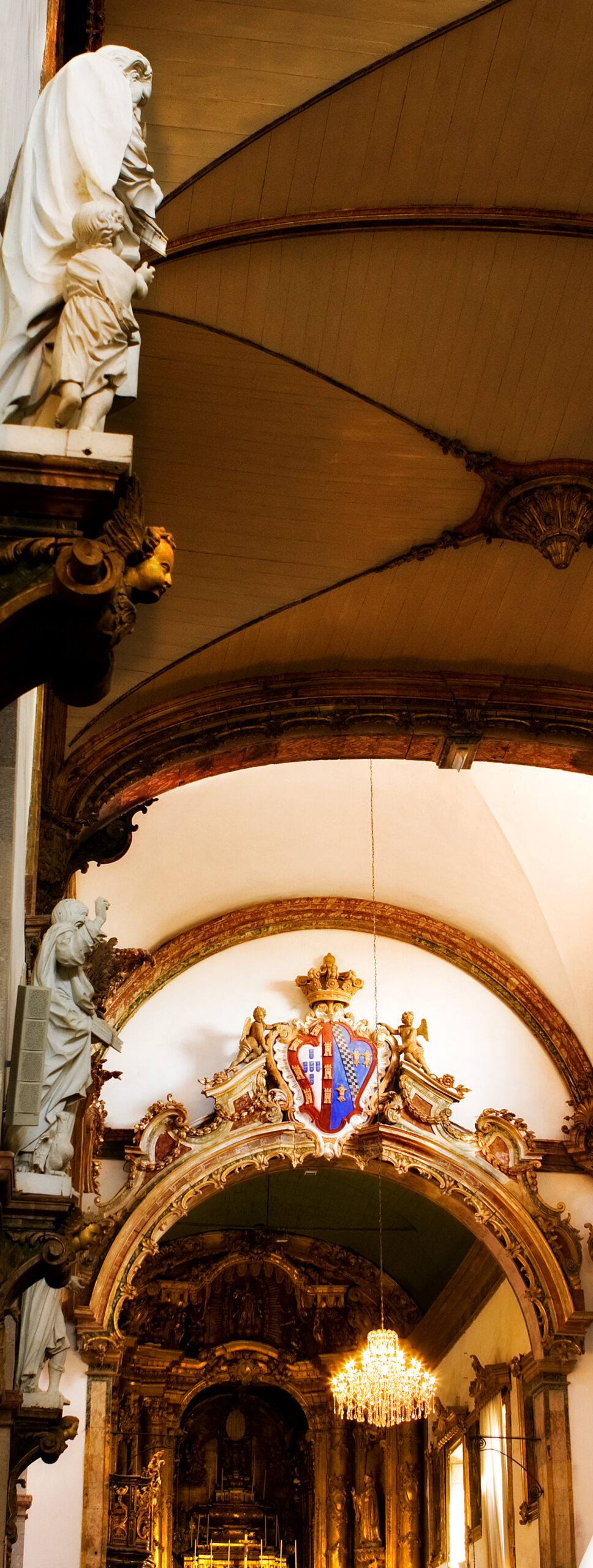
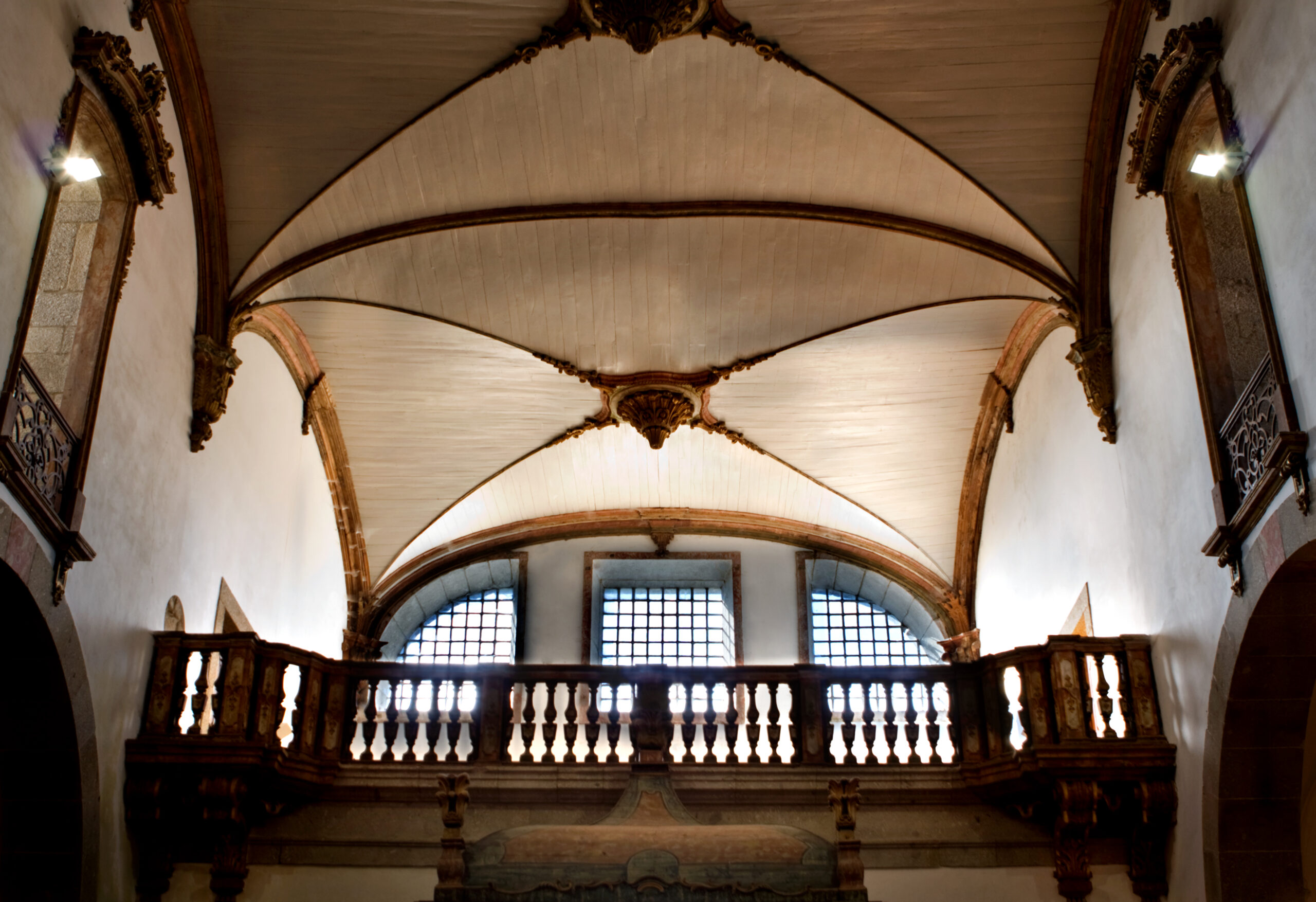
The Monastery belonged to the Cistercian Order and is characterized by its religious, Romanesque, Mannerist, Baroque, Rococo, Neoclassical and contemporary architecture. The Sacristy stands out in this property, divided by two painted arches, with a coffered ceiling decorated with paintings.It is worth highlighting the walls of the sacristy lined with 18th century tiles that depict the life of S. Bernardo, an artistic treasure bequeathed by our ancestors and unknown to the most attentive eyes.
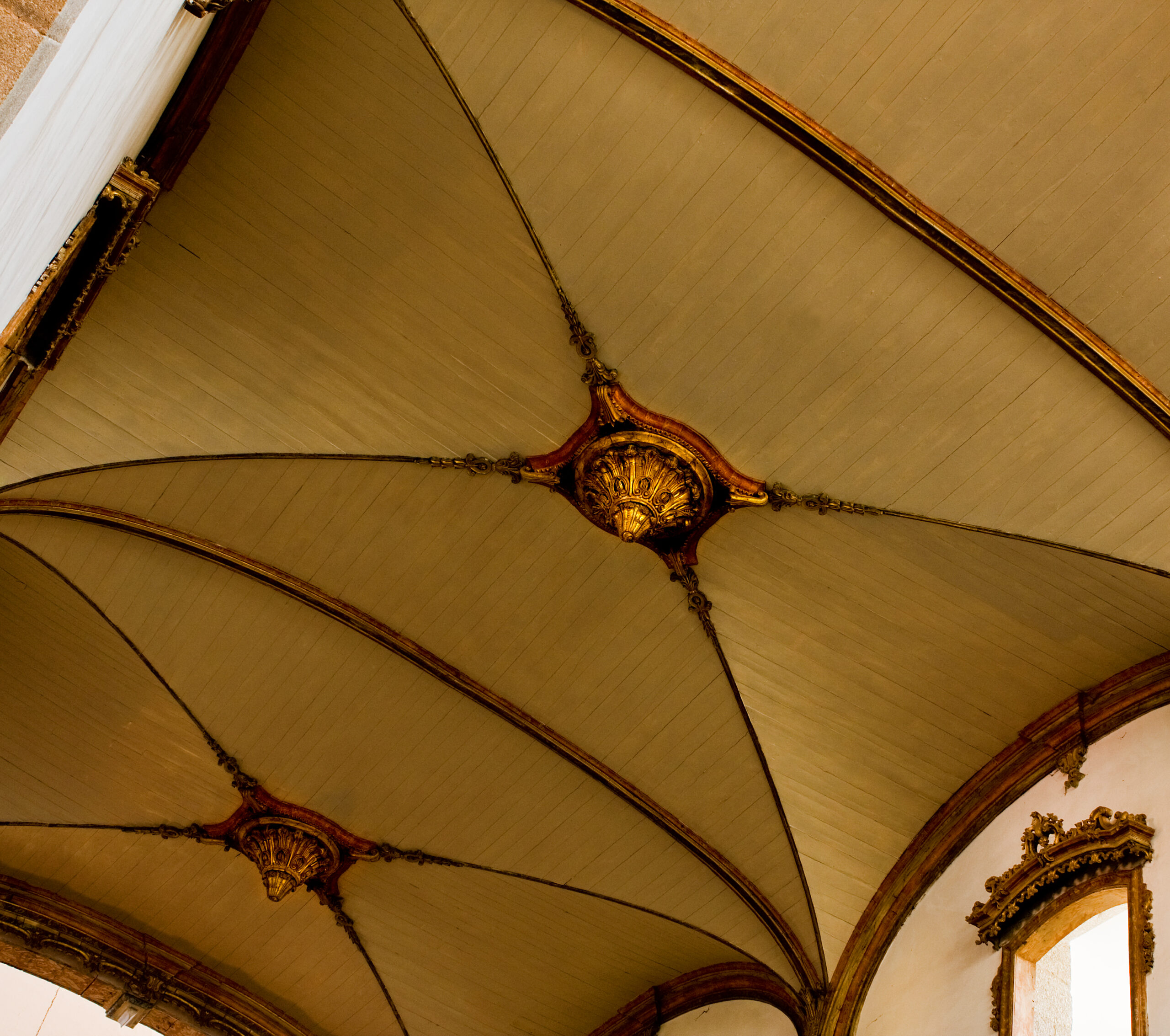
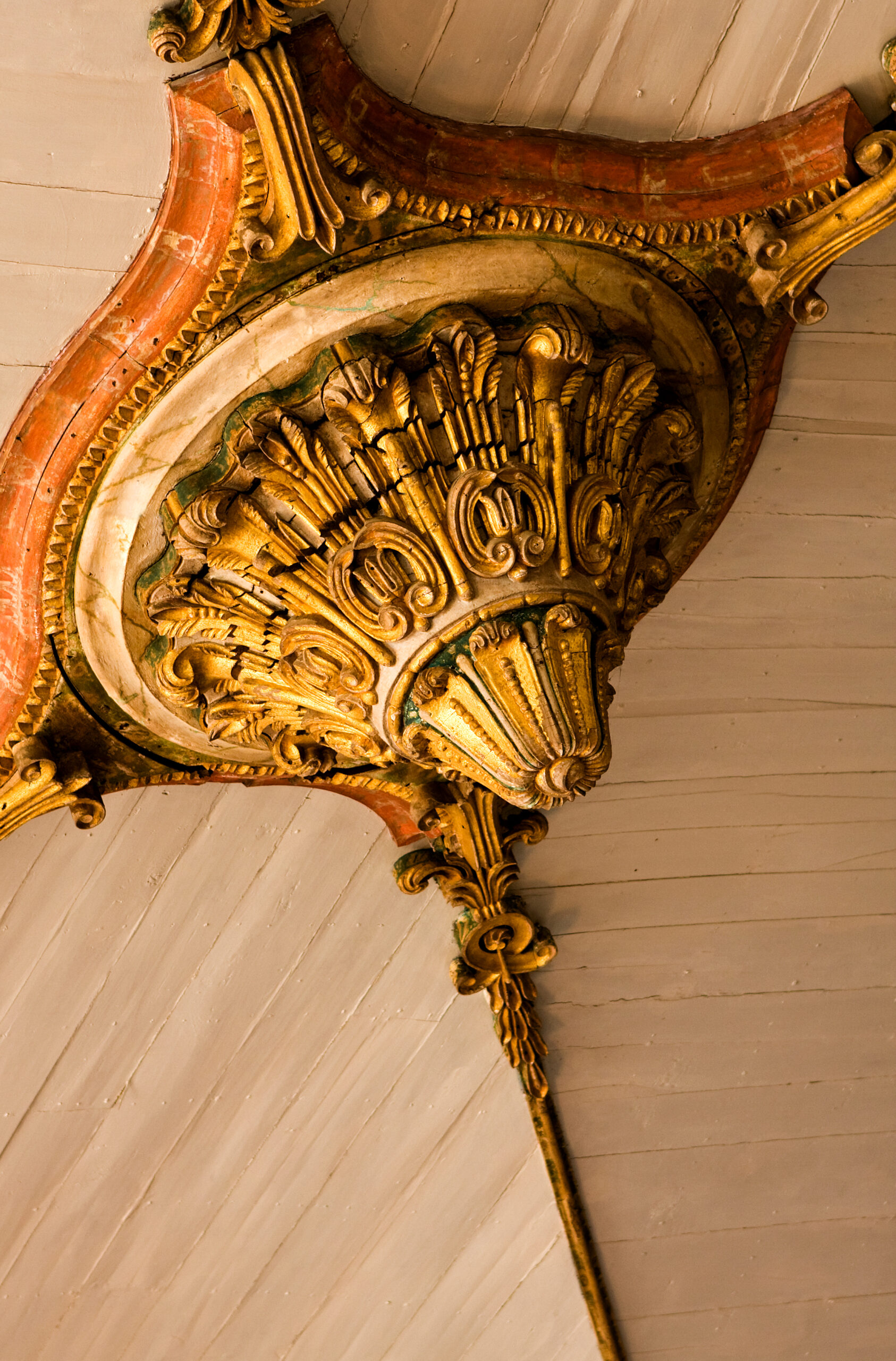
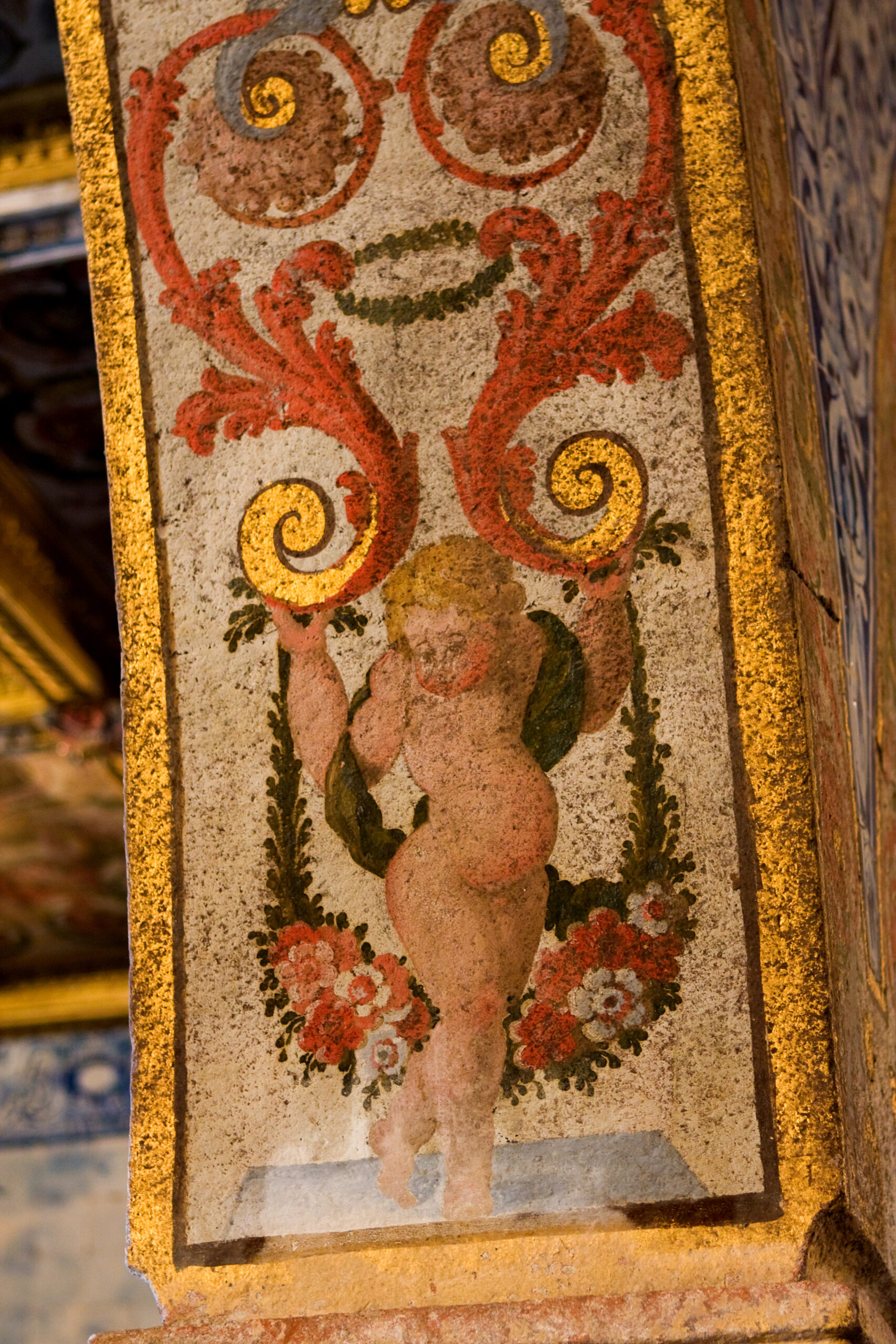
“The sacristy, which is preserved in an almost impeccable state, is the best, the most admirable piece of the entire convent complex; a true masterpiece of art, certainly unique.” These words are from Domingos M. Silva, and represent a little of the general feeling of those who visit the place. It is a rectangular space divided into two spans by a pillar, where two round arches open, ending in an elegant column, duly decorated with ancient painting similar to frescoes. The greatest beauty is on the ceiling: it is presented in coffered ceilings, with “extremely delicate ornaments” and background paintings, with different symbolic motifs, namely about nature, foliage, scrolls and little angels; and a series of biblical verses or Latin captions and allegories about the life of Nossa Senhora.
A casual glance makes you think that all the coffins are the same, but on closer inspection you can see that each polychrome box is a different, carefully painted painting.
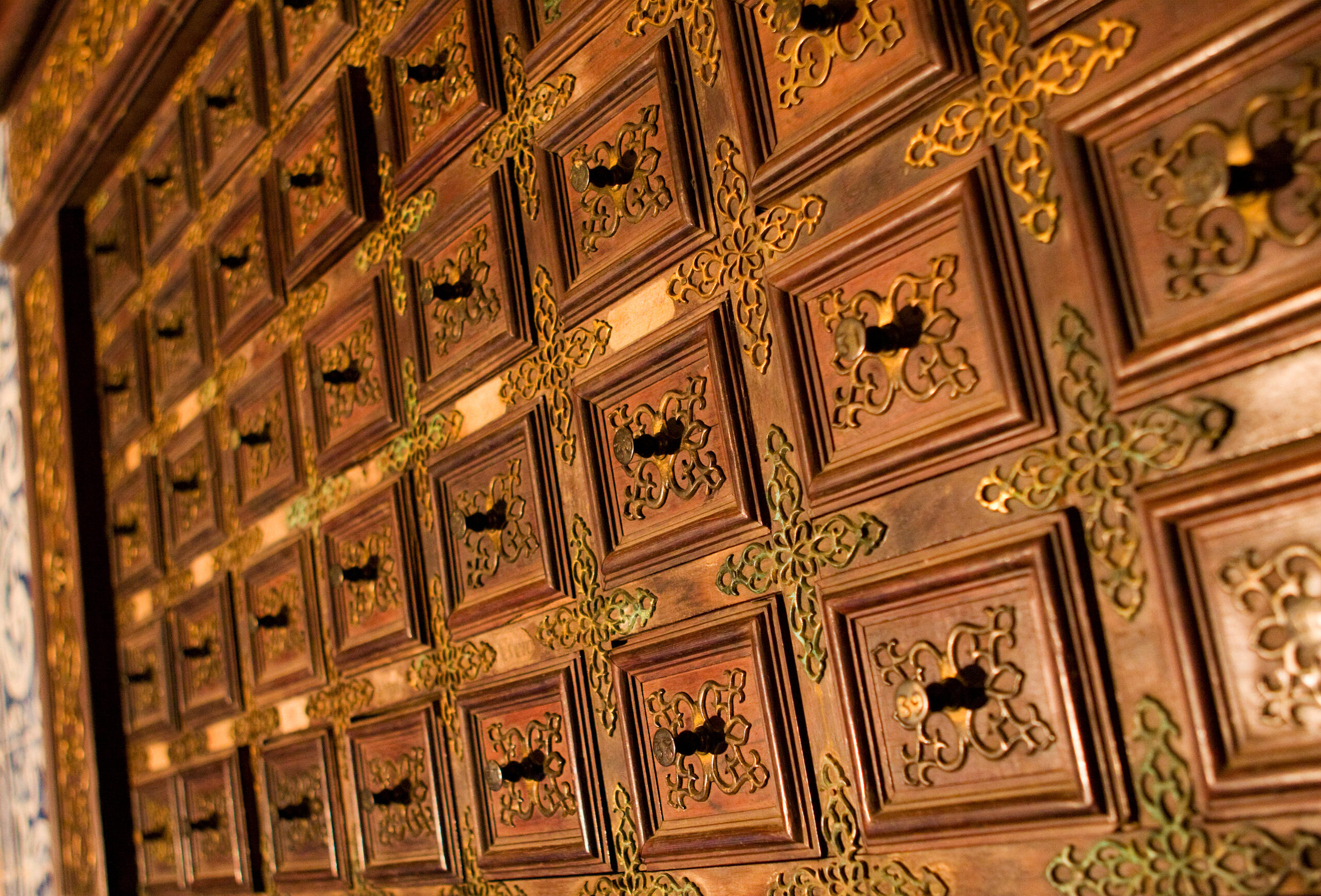
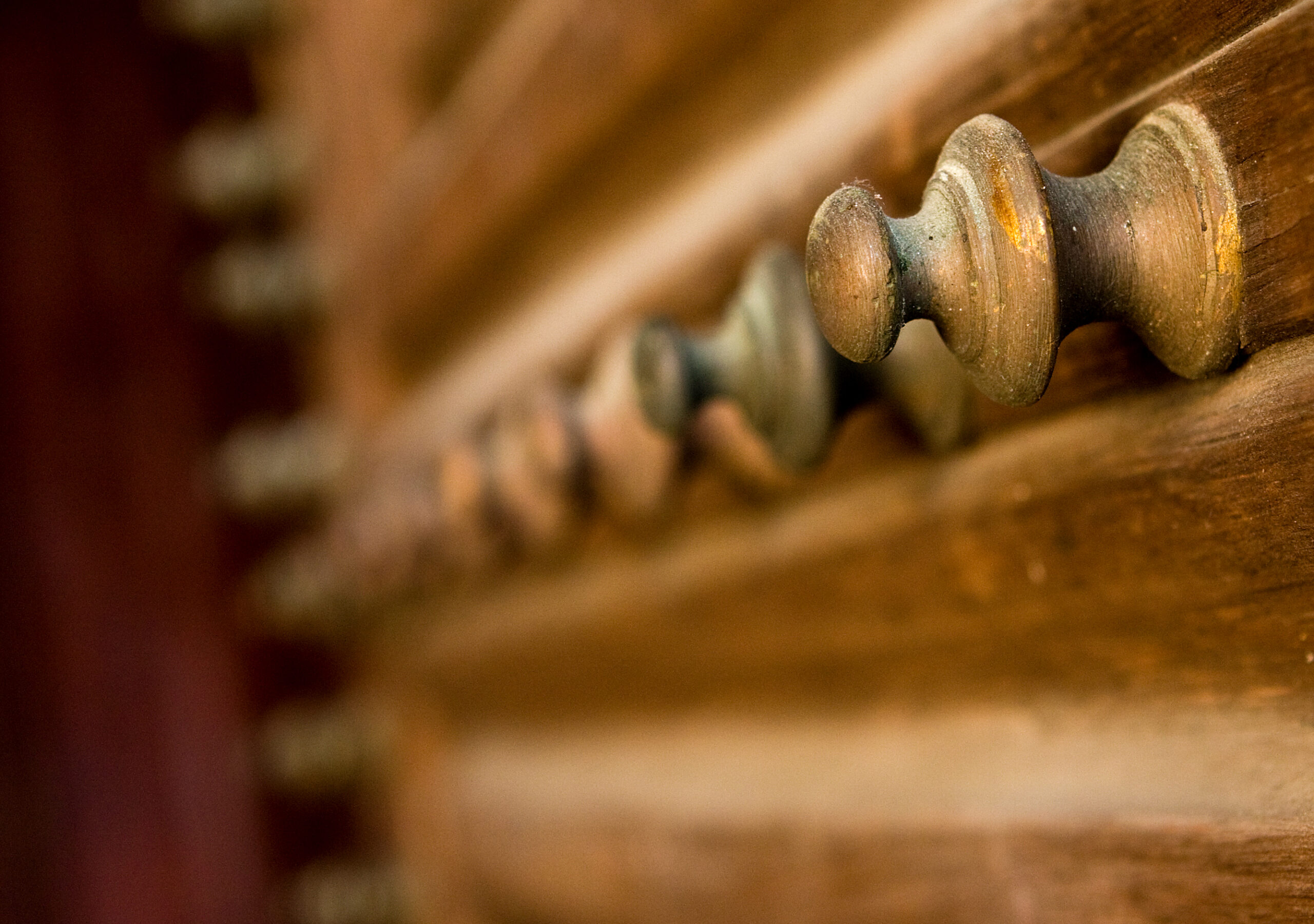
The furniture in the sacristy is another point of interest. All around and against the walls is a chain of large rosewood drawers, with artistic brass handles and inlays.
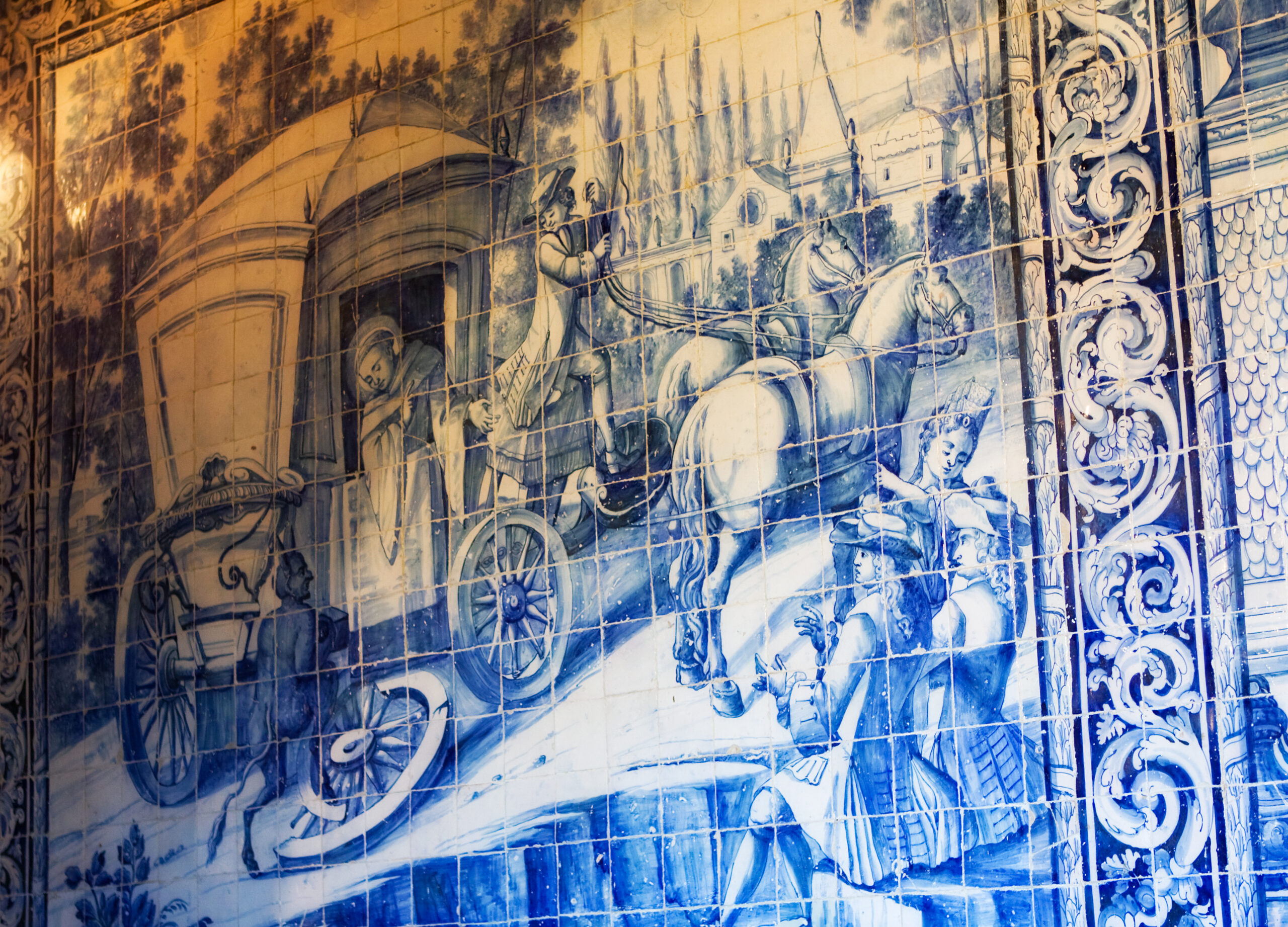
The artistic richness of the sacristy does not stop there. In addition to the ornaments, it is worth seeing and appreciating the quality of the tiles painted possibly by Teotônio dos Santos. The tiles tell the interesting legend of Umbelina, the sister of S. Bernardo, the abbot of Clairvaux.
In the brochure, “Real Mosteiro de Santa Maria de Bouro”, a collection by Father Carlos, the legend is described according to which S. Bernardo talks to his sister Umbelina; then refuses to receive her at Clairvaux, admonishing her for her luxurious attire. When crossing a bridge in the carriage on the way to the Council of Pisa, the devil appears harassing the saint. This forces him to throw himself into the river. But then, as revenge, the mafarrico breaks the wheels of the “cart”. As punishment, S. Bernardo forces the devil to use the wheel until the end of the journey. In other paintings it is possible to see the blessing of the cup and the miracle in which the saint keeps rainwater away from a scribe who is writing a letter to him, and from the respective parchment. The last painting refers to the conversion of Duke Guilherme da Aquitânia.
In the sacristy there were other paintings about the life of Nossa Senhora.
The date of the work in the sacristy is not known exactly, but the paintings on the ceiling must have been done in 1715, judging by an inscription on site. In addition to the artistic beauty of the place, it is also a space for reflection.
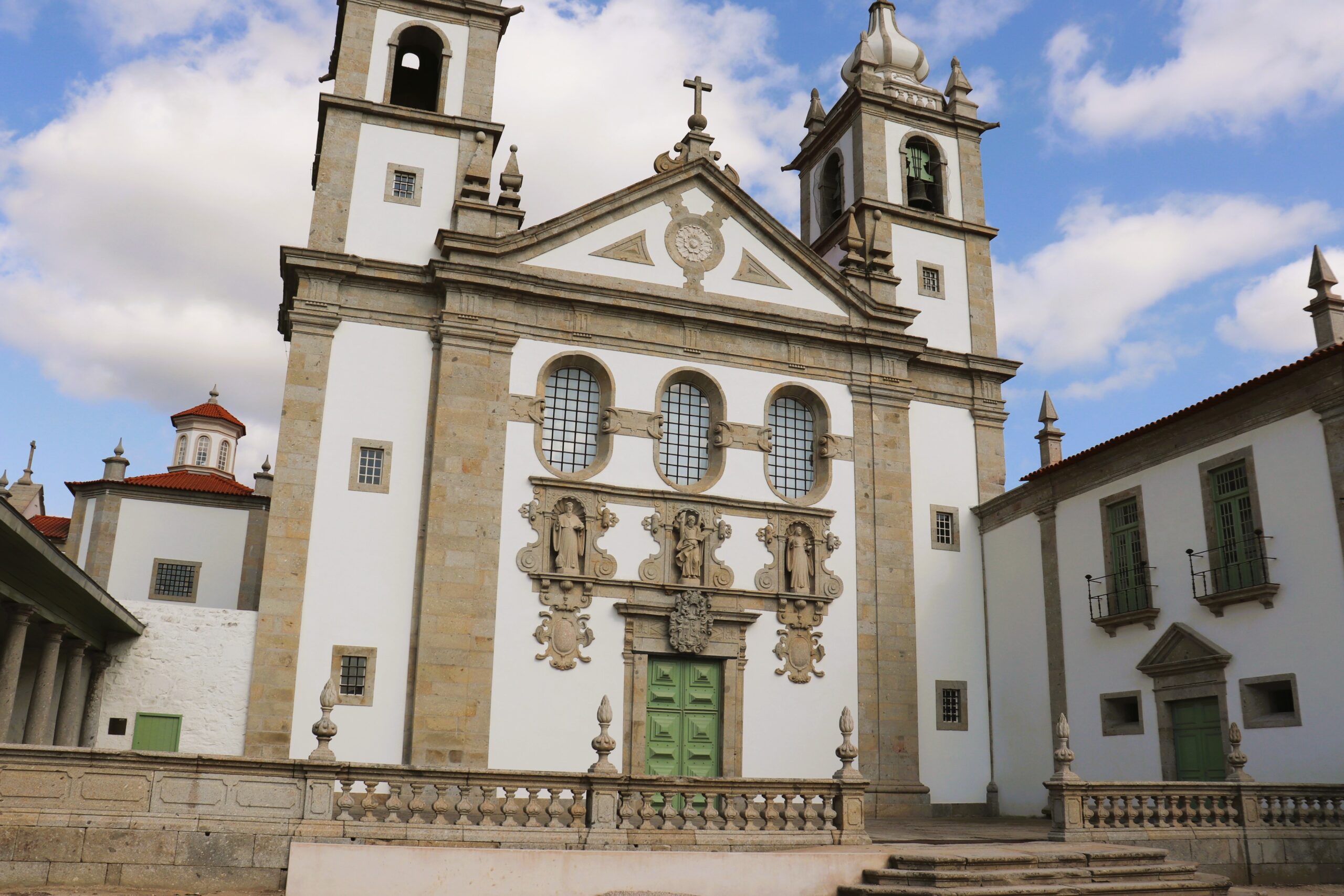
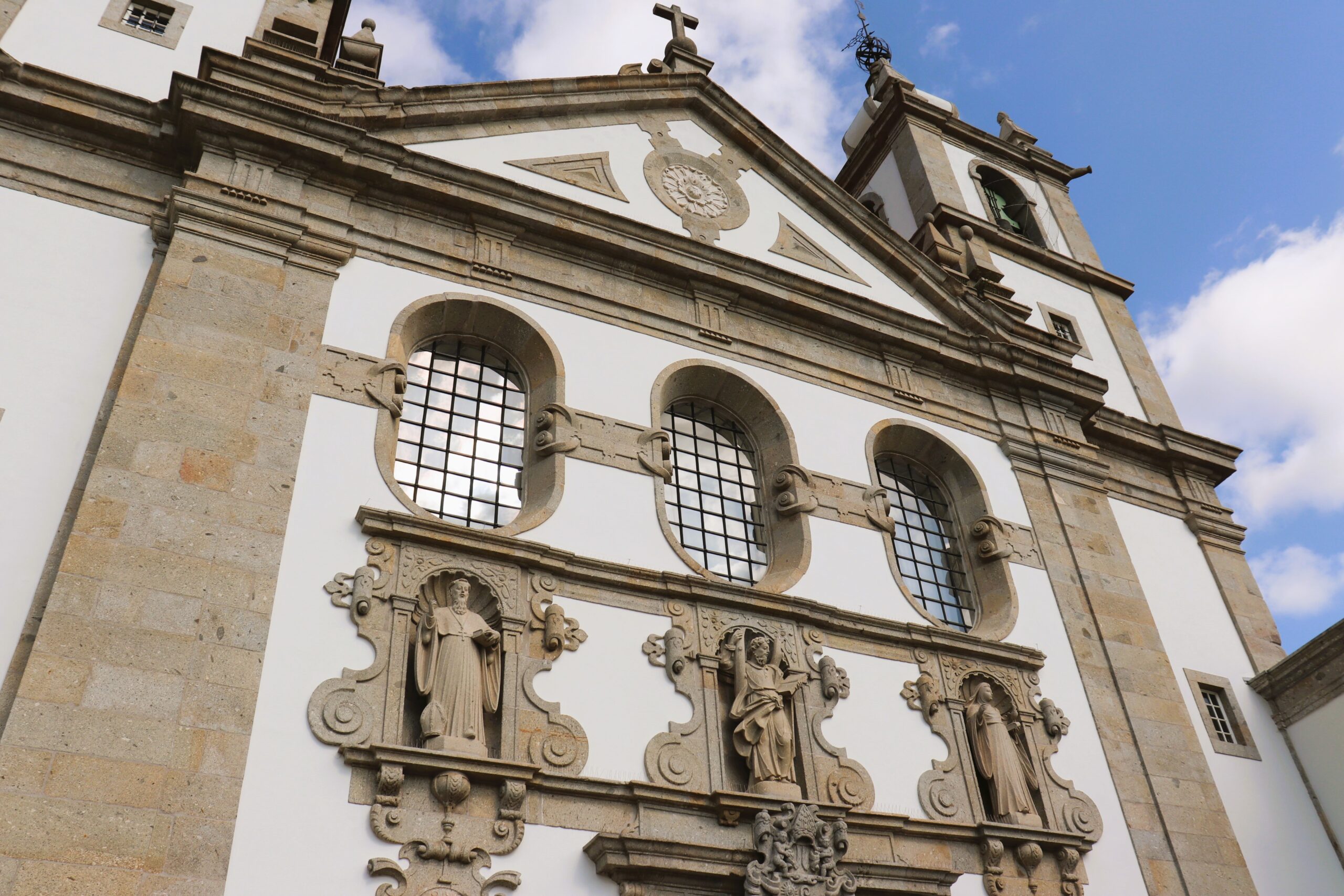
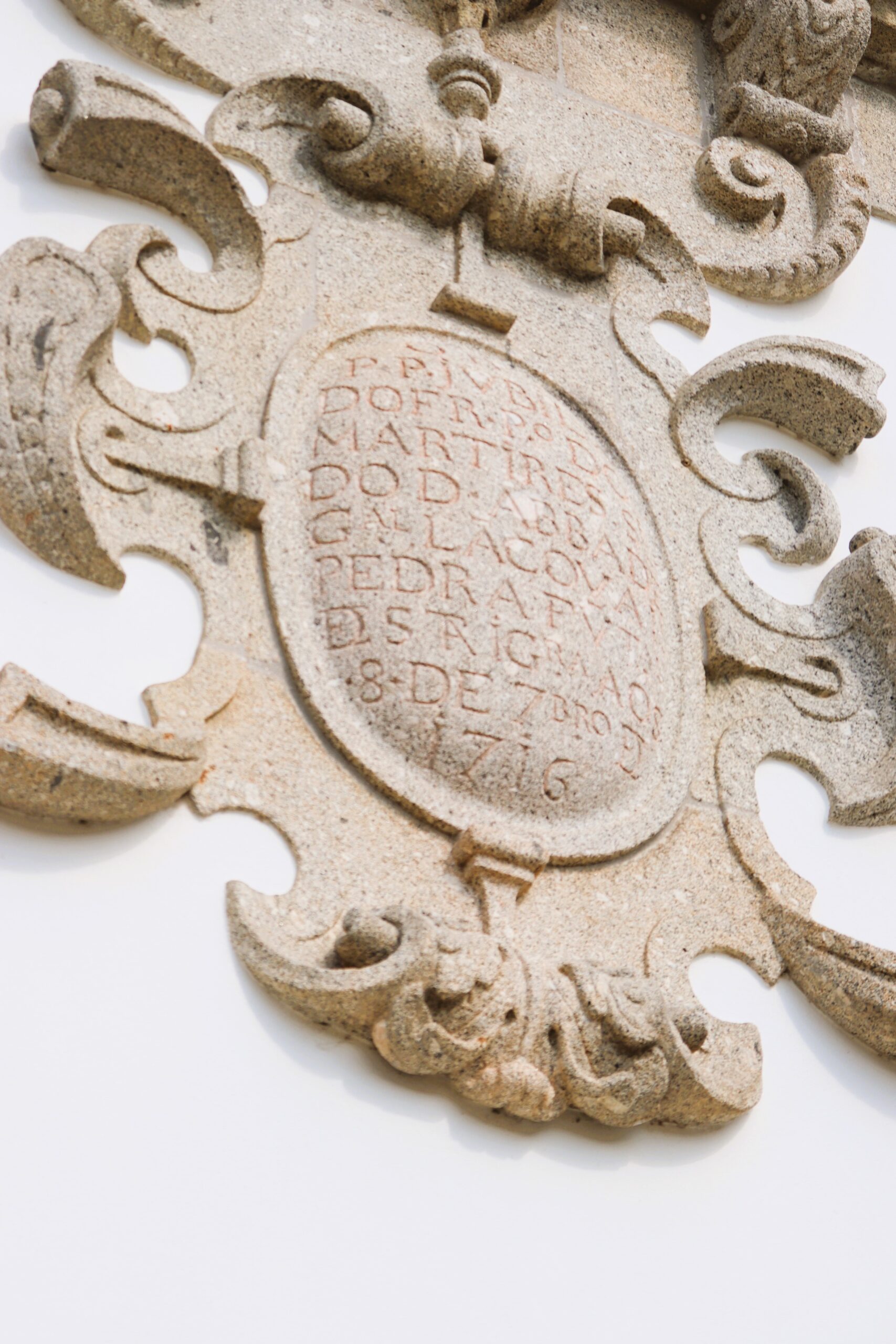
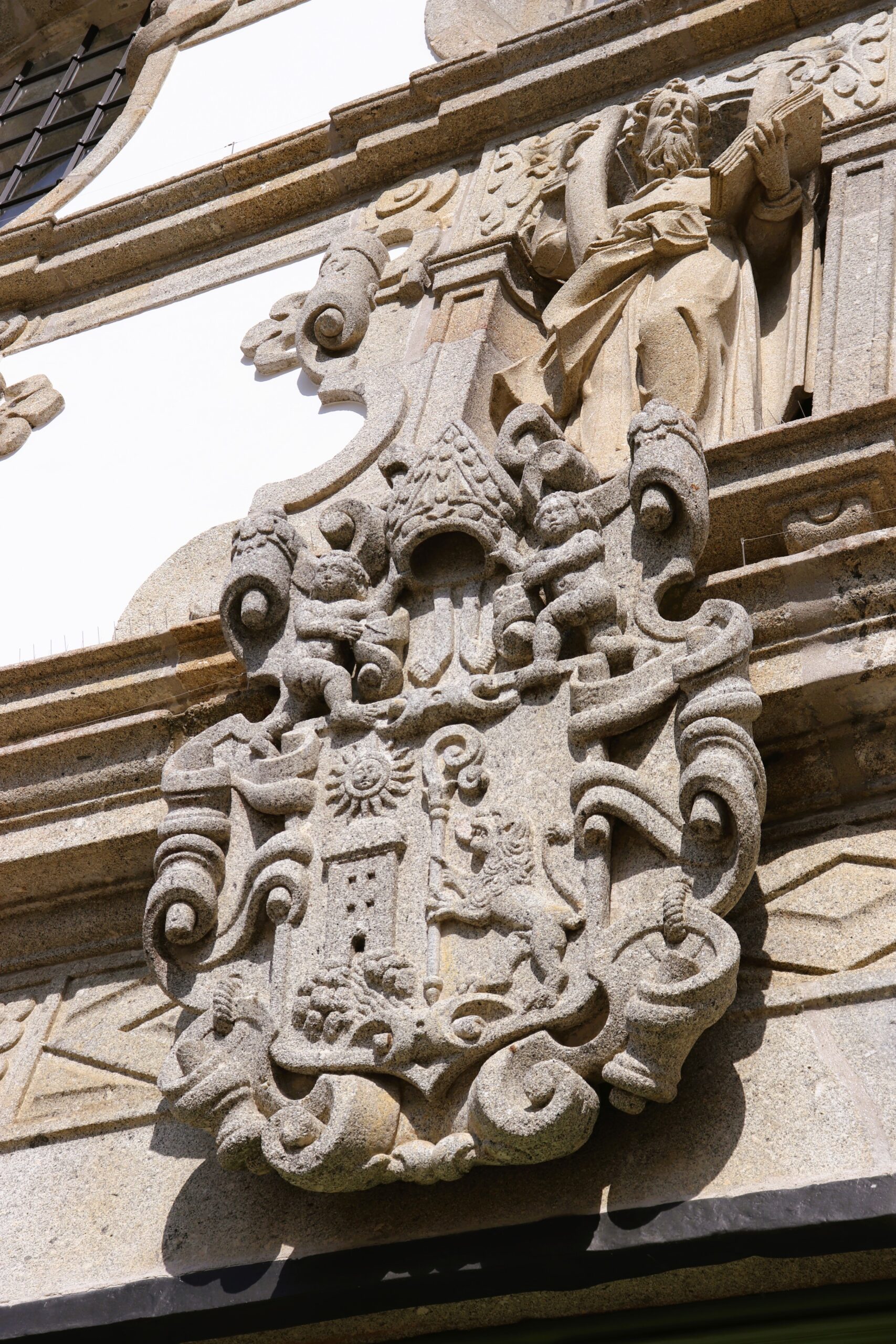
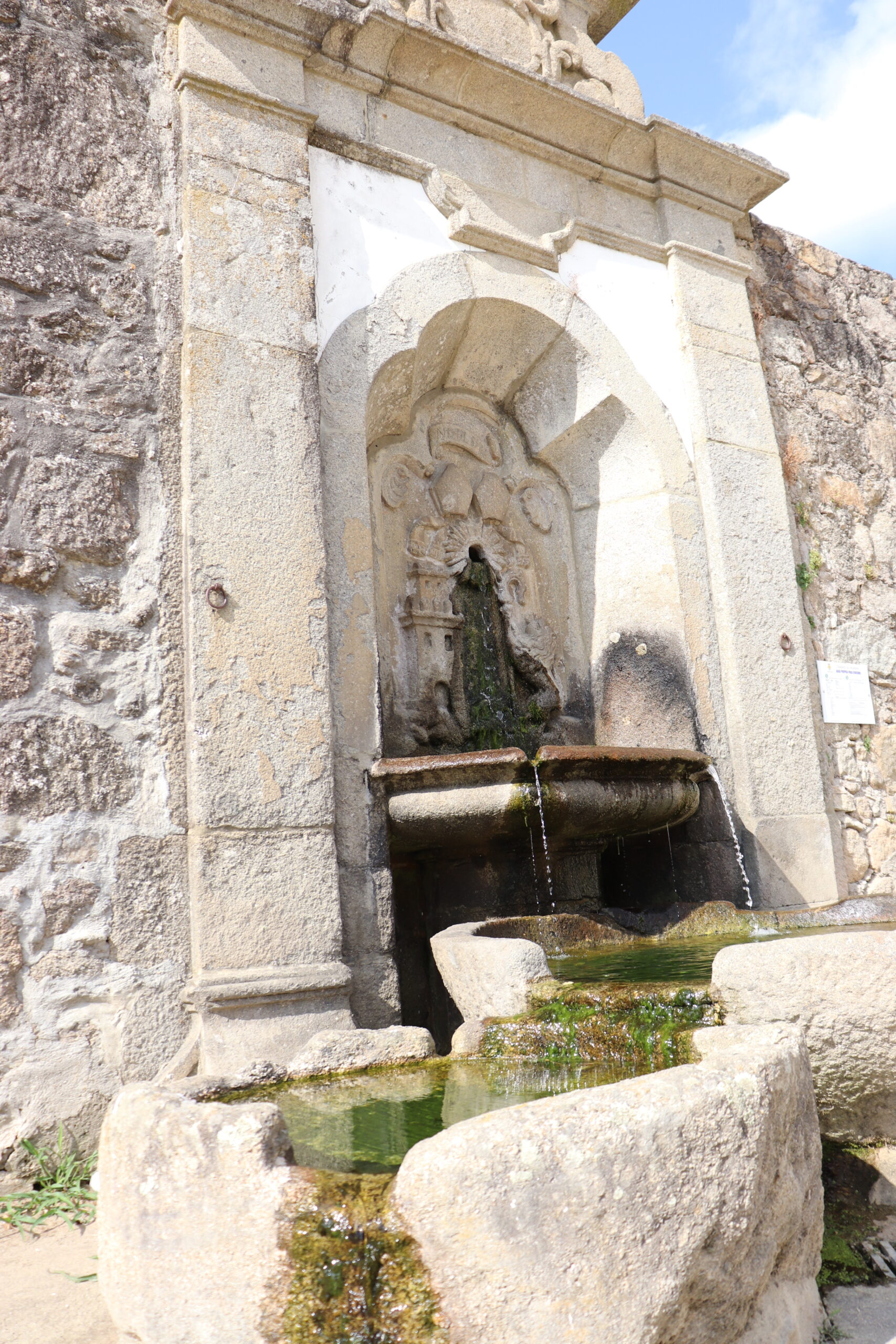
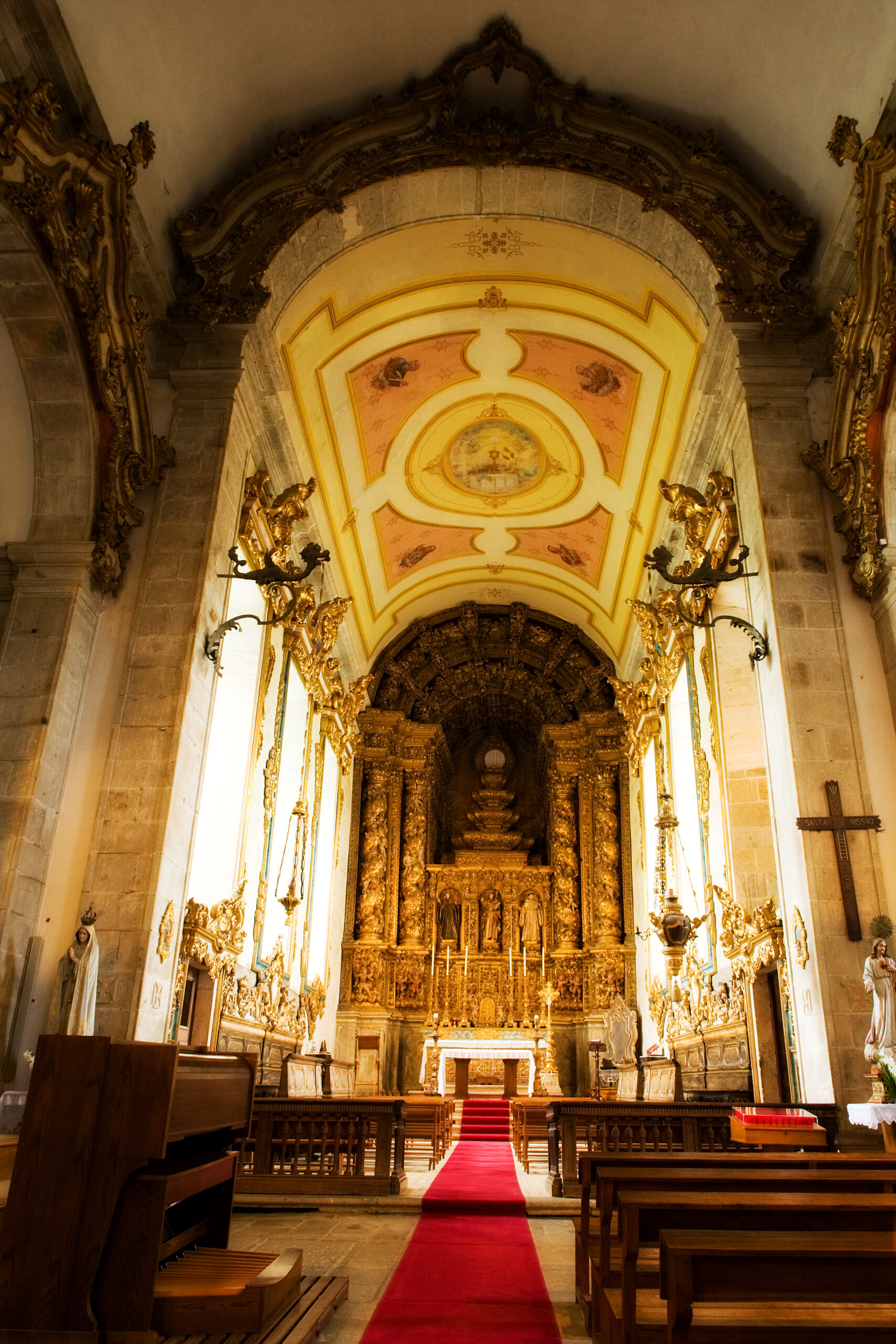
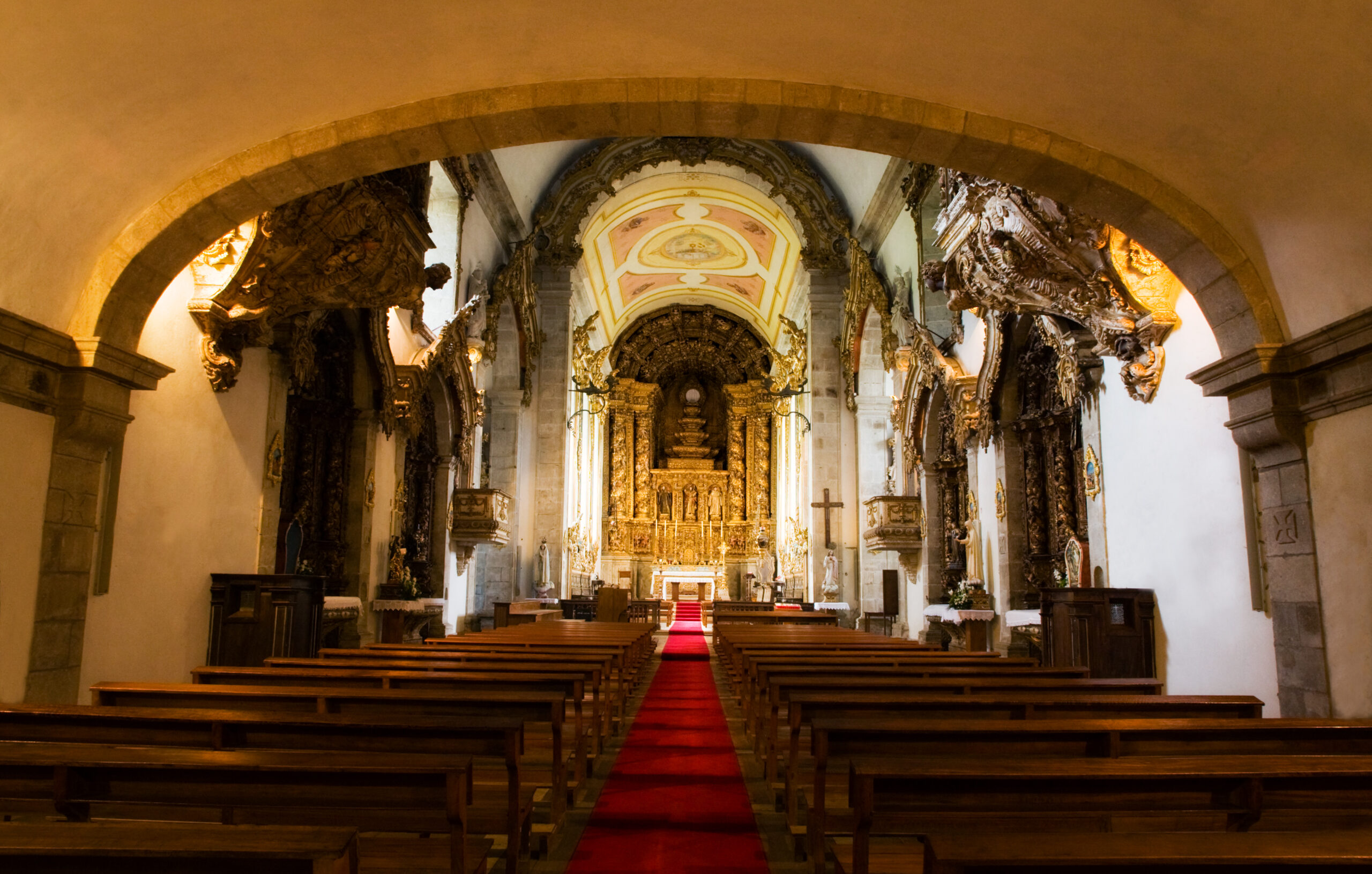
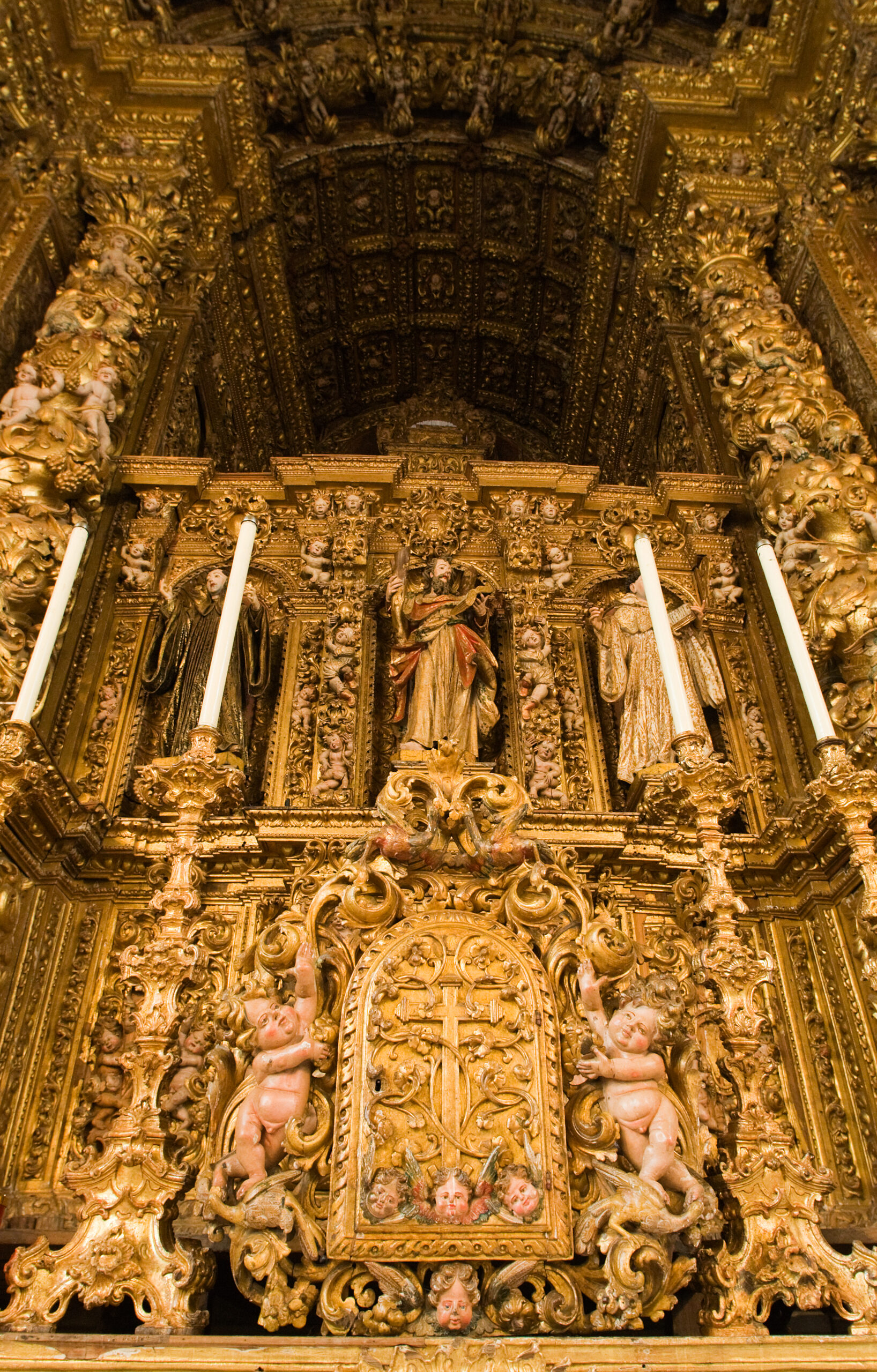
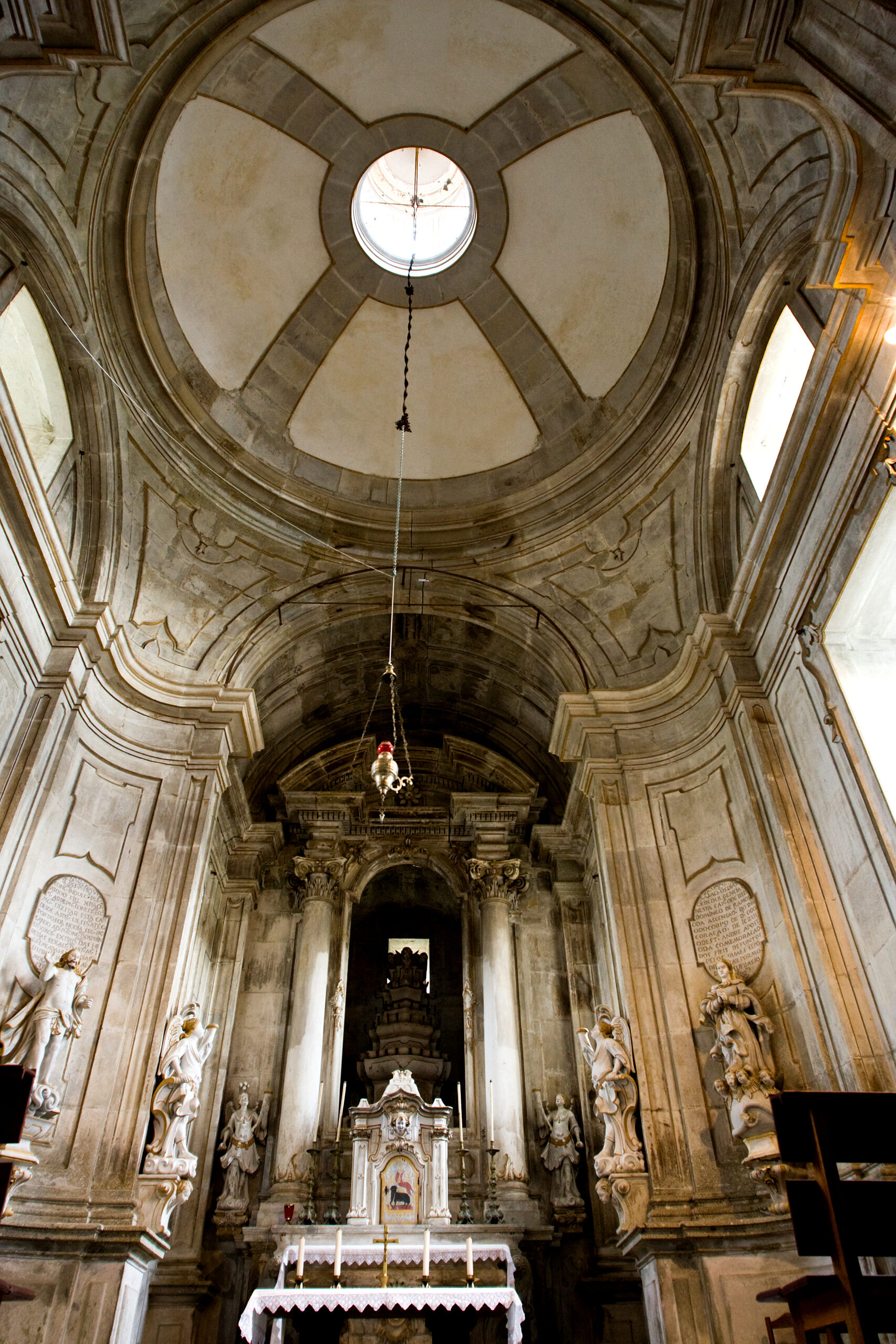
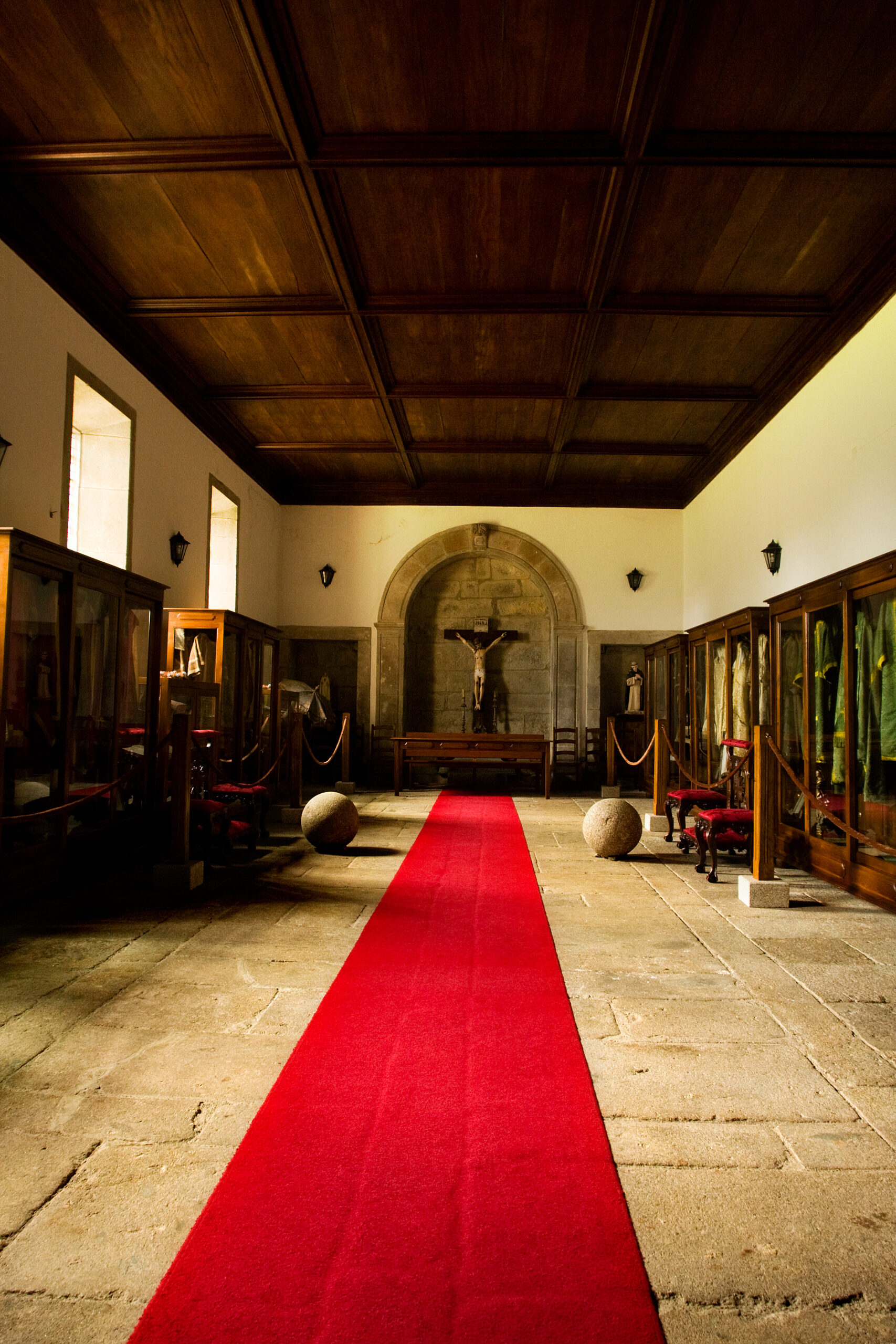
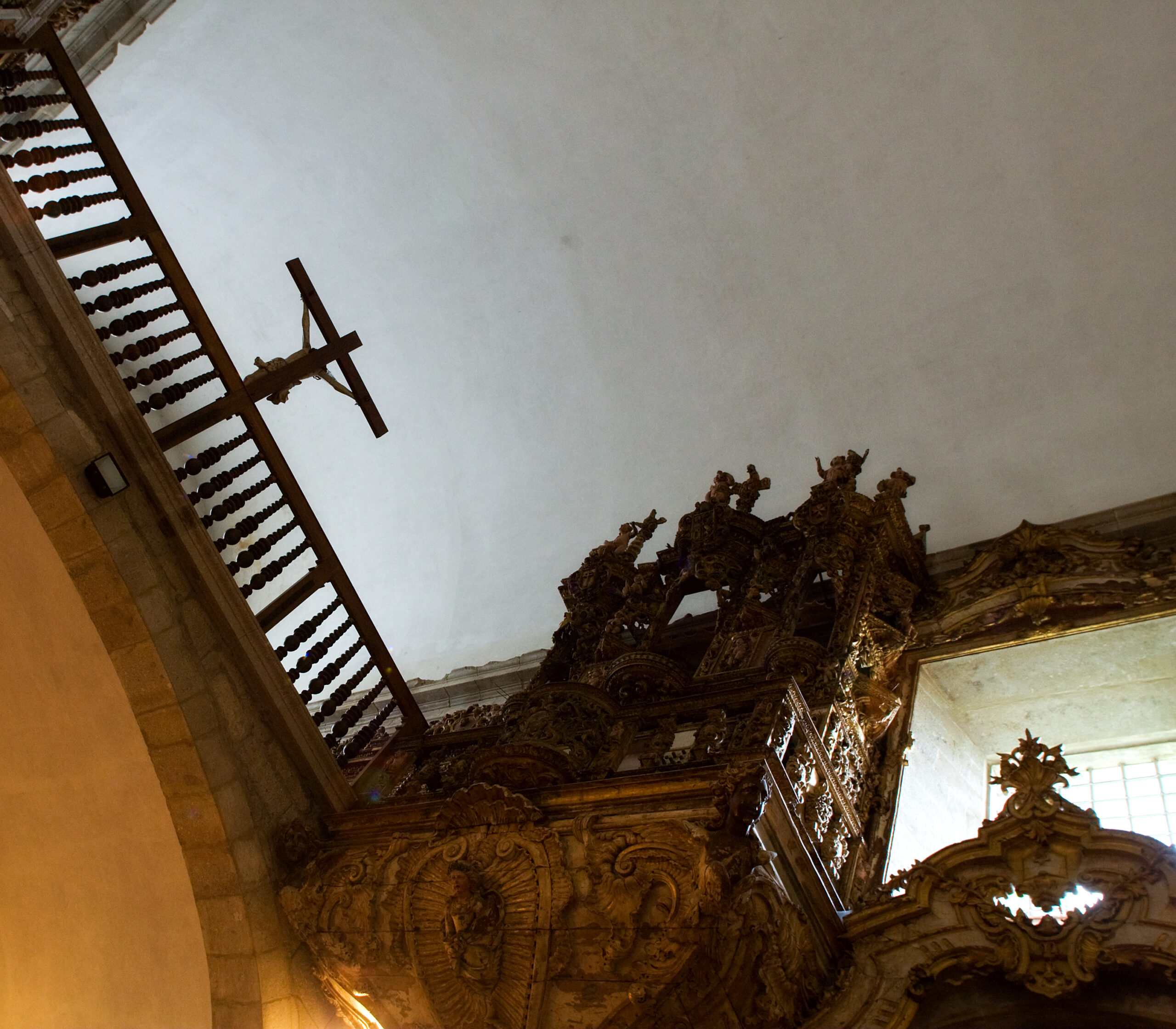
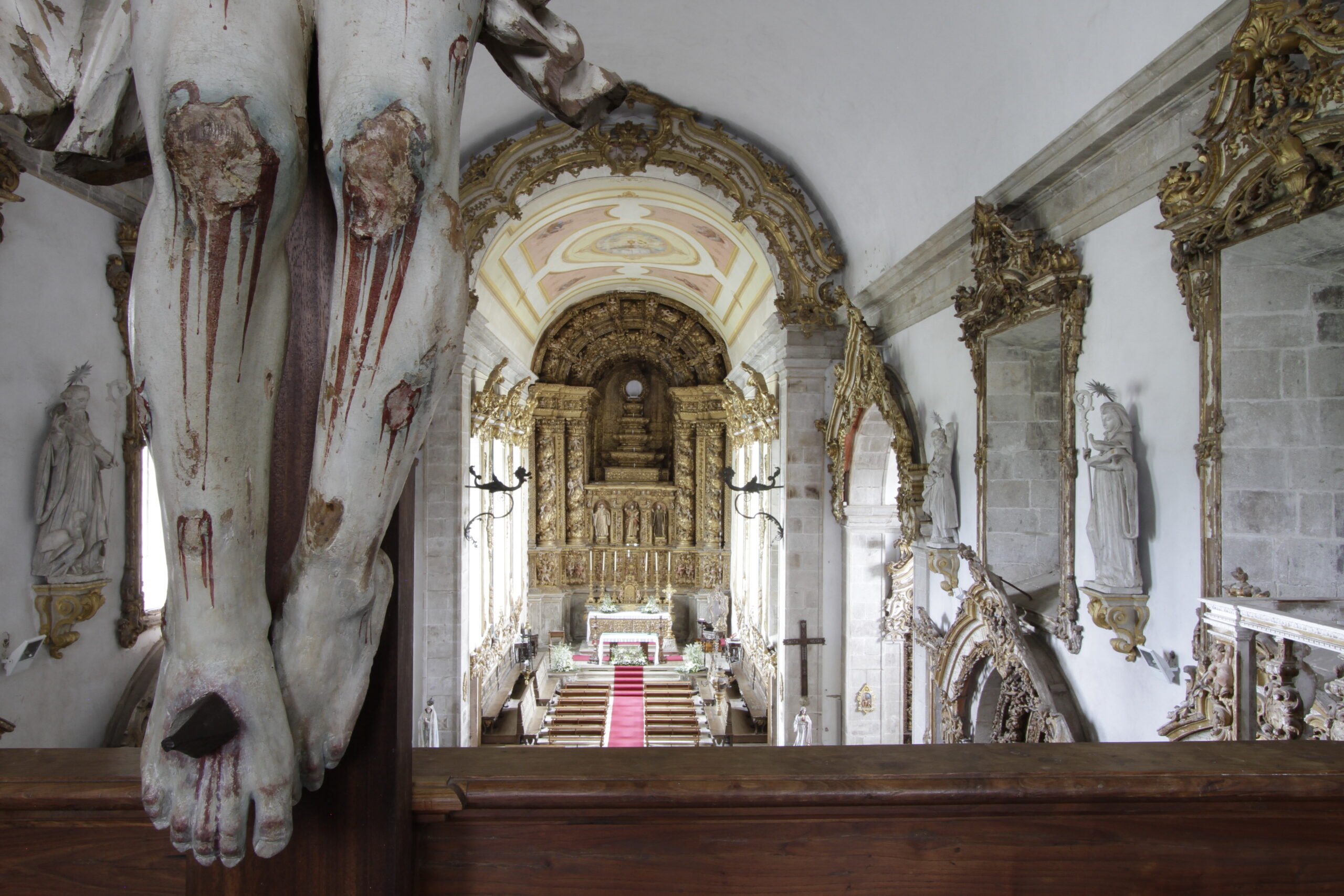
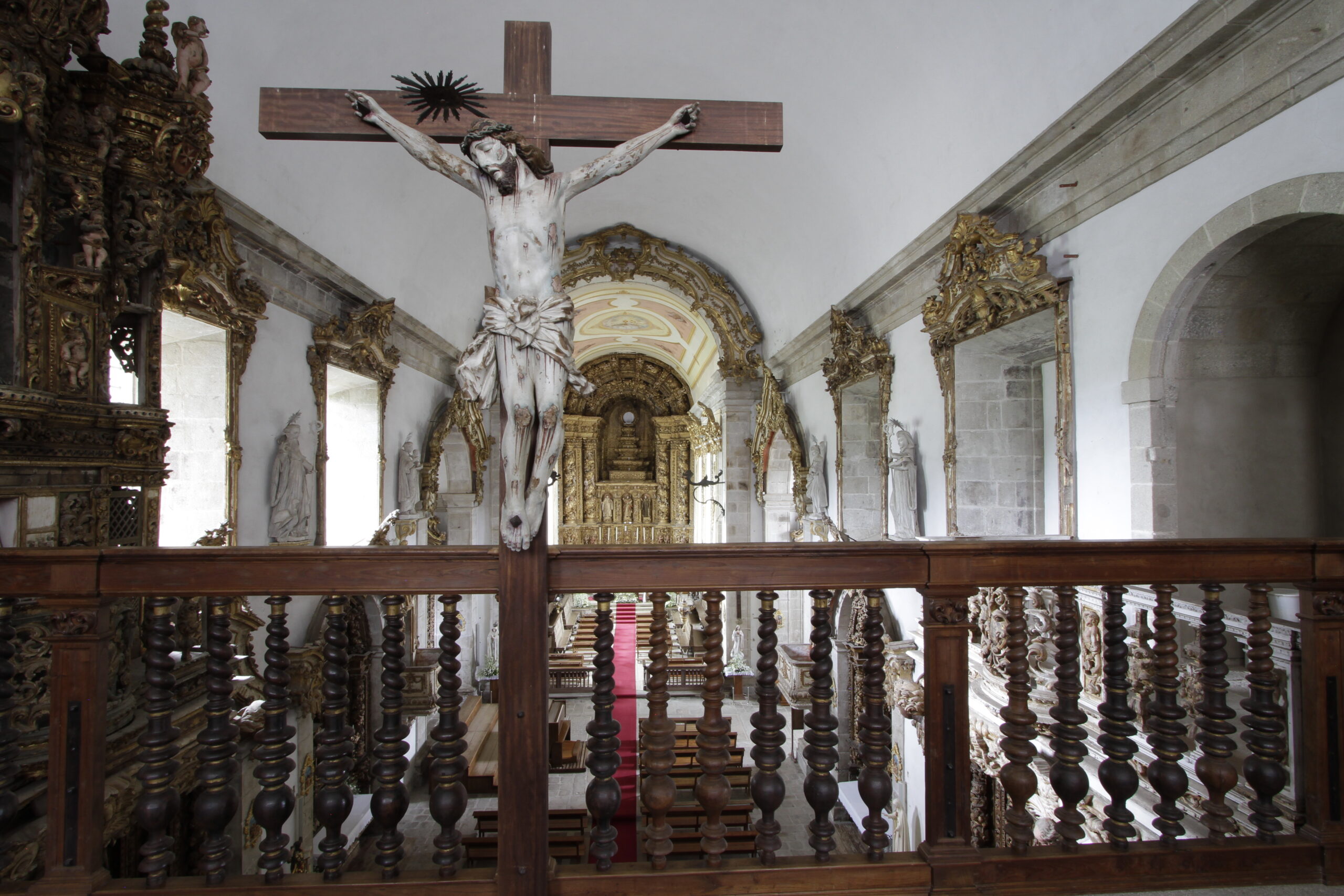
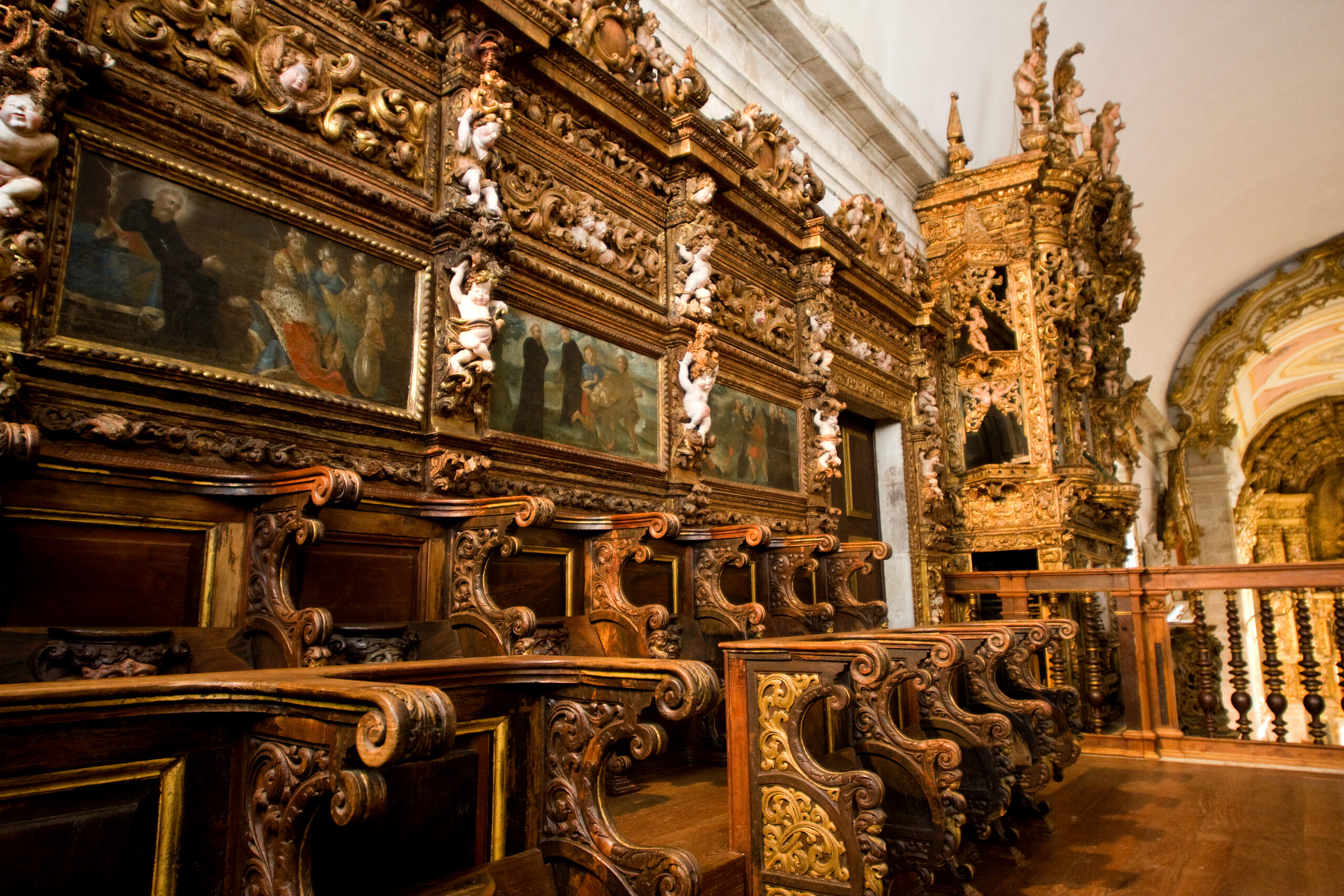
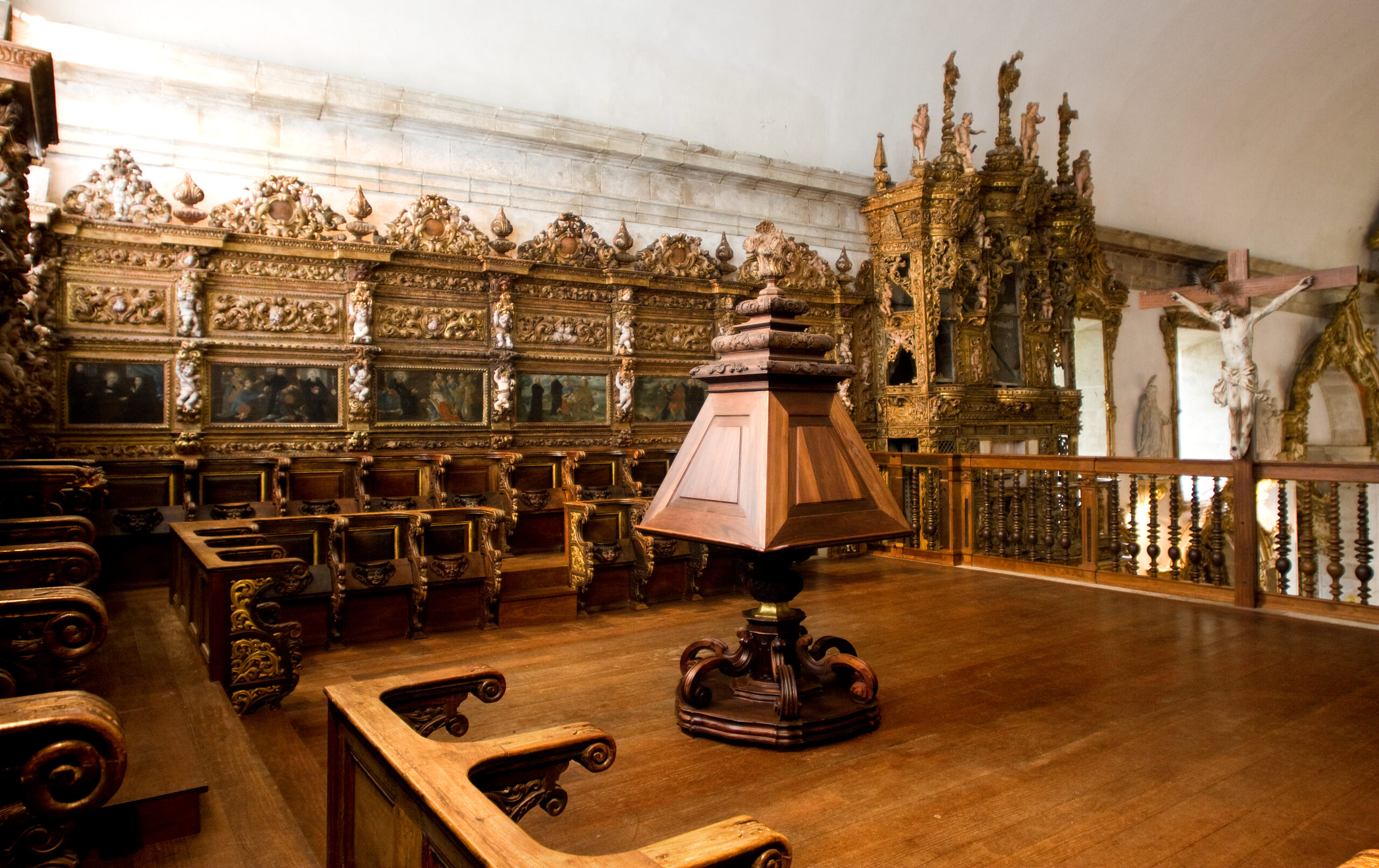
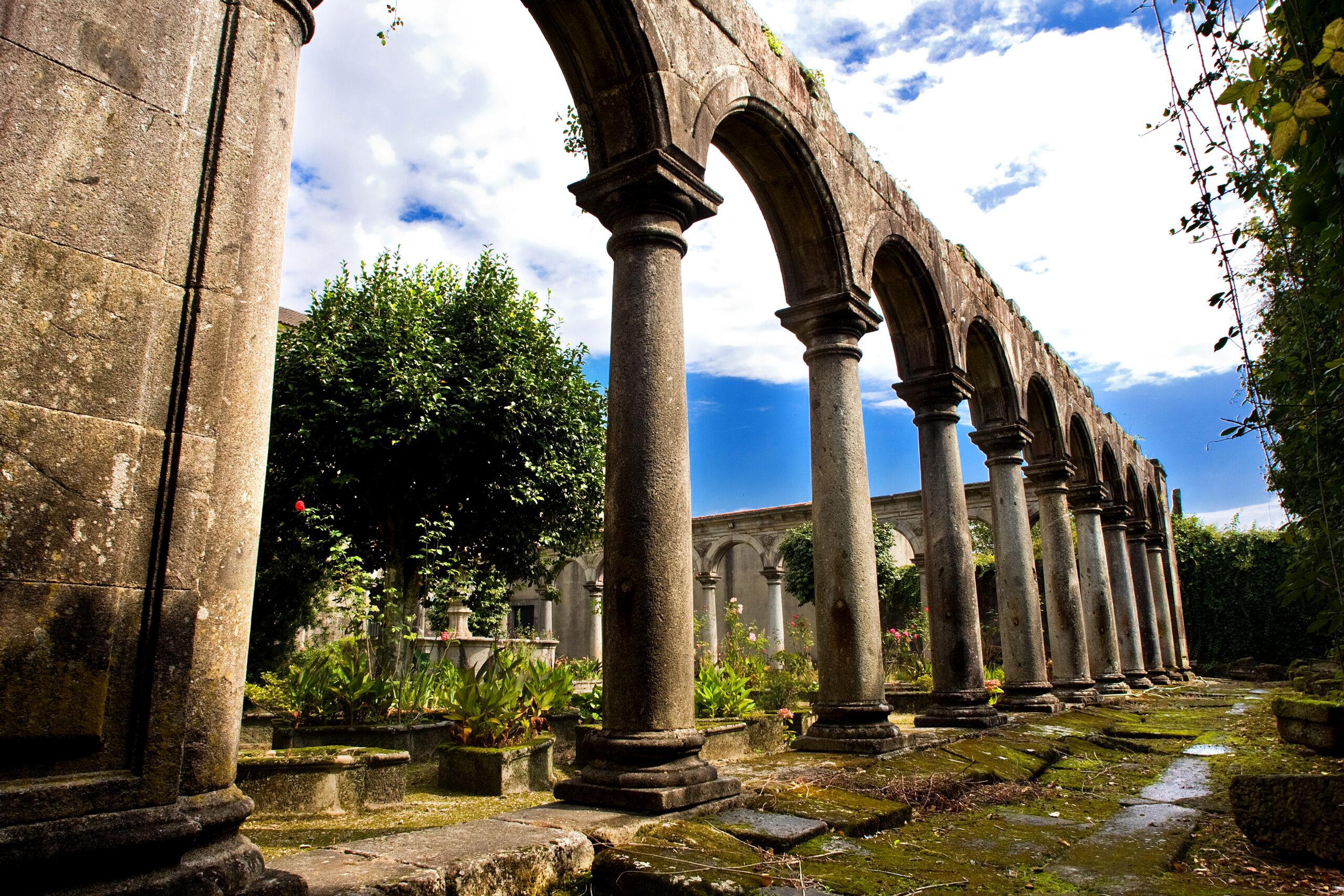
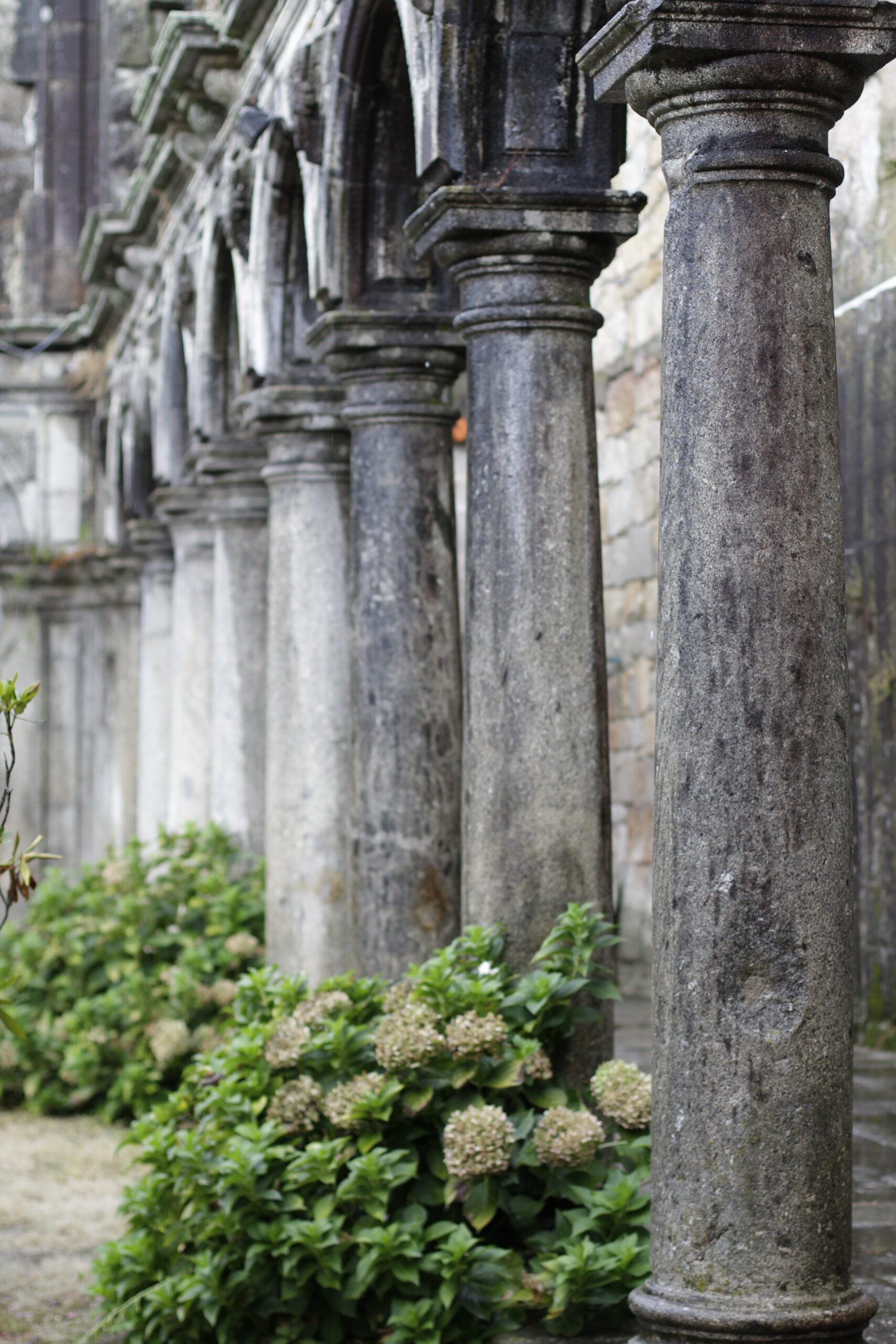
O Mosteiro de Santo André de Rendufe, localizado num vale, numa zona rural, isolado pela sua antiga cerca, foi mandado construir no séc. XII, na freguesia de Rendufe.
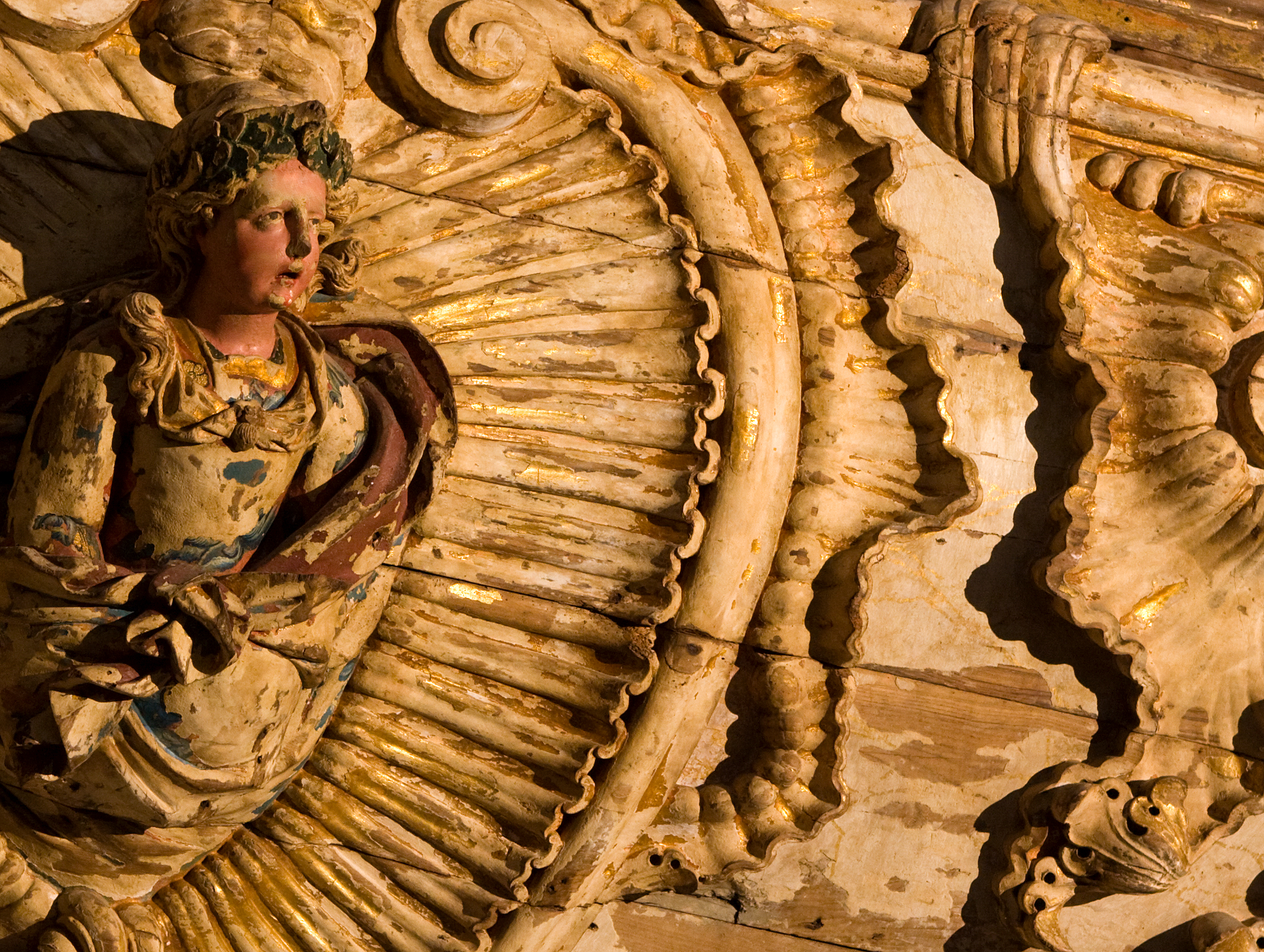
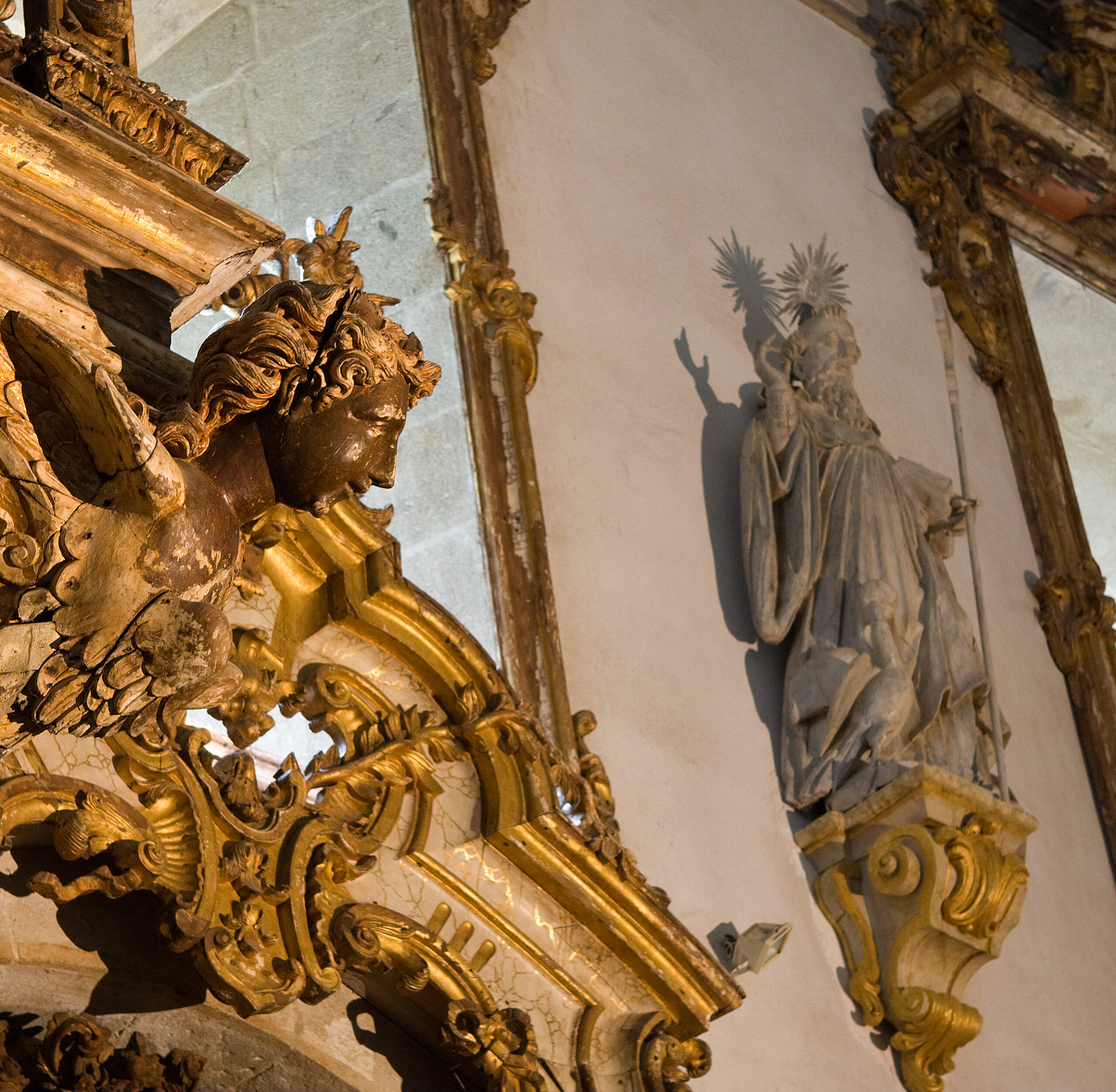
O Mosteiro beneditino masculino, onde se destaca a talha dourada, de estilo barroco nacional, está classificado como Imóvel de Interesse Público. Parte do mosteiro (dependências monacais e quinta da cerca) pertence a particulares, com uma importante produção de vinho verde.
Sendo uma das mais belas joias da arquitetura barroca do Concelho de Amares, o Mosteiro de Santo André de Rendufe proporciona, todavia, uma viagem pelos vários estilos arquitetónicos, onde podemos encontrar a energia e o movimento do barroco, por um lado, e a sobriedade do neoclássico, por outro.
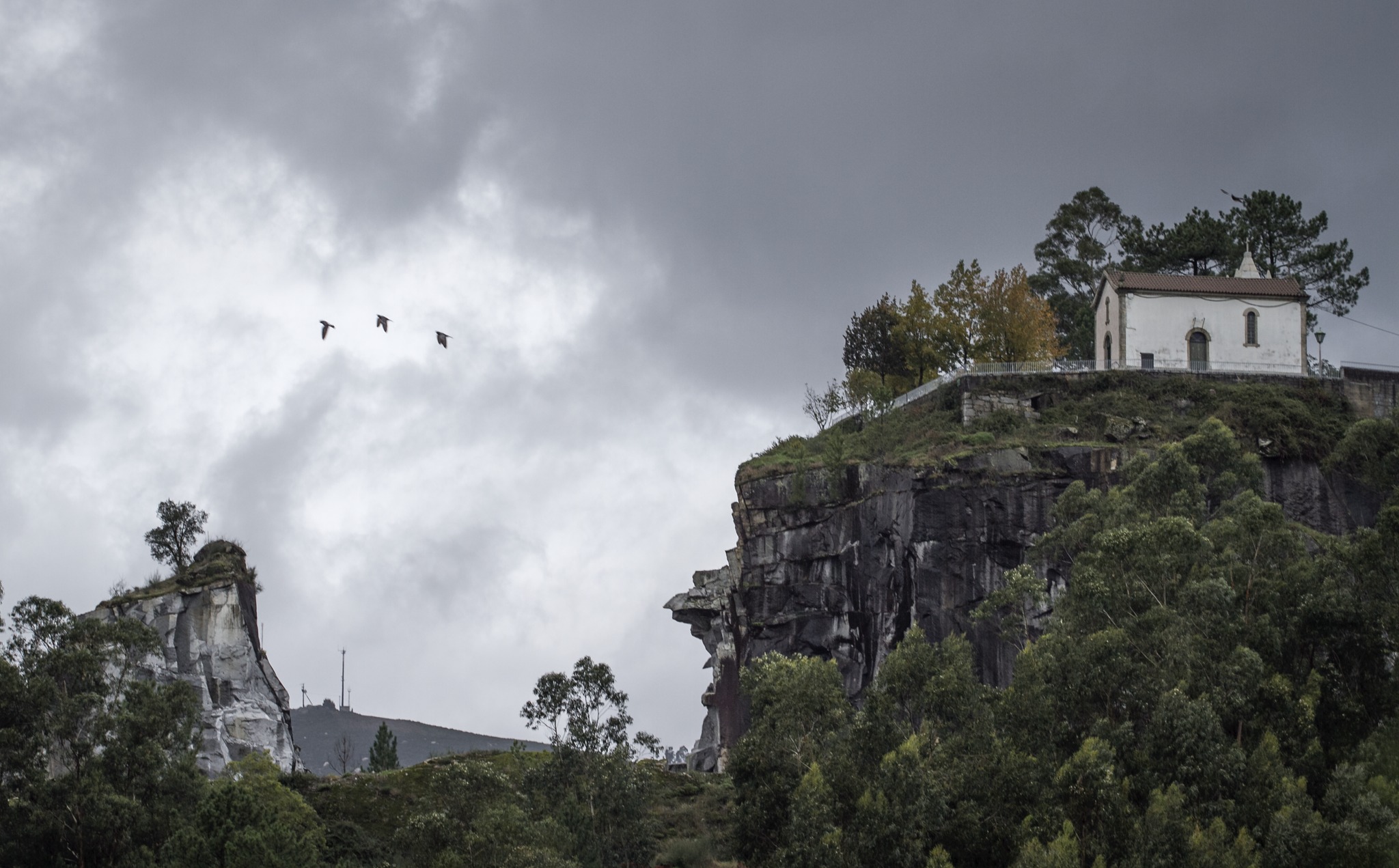
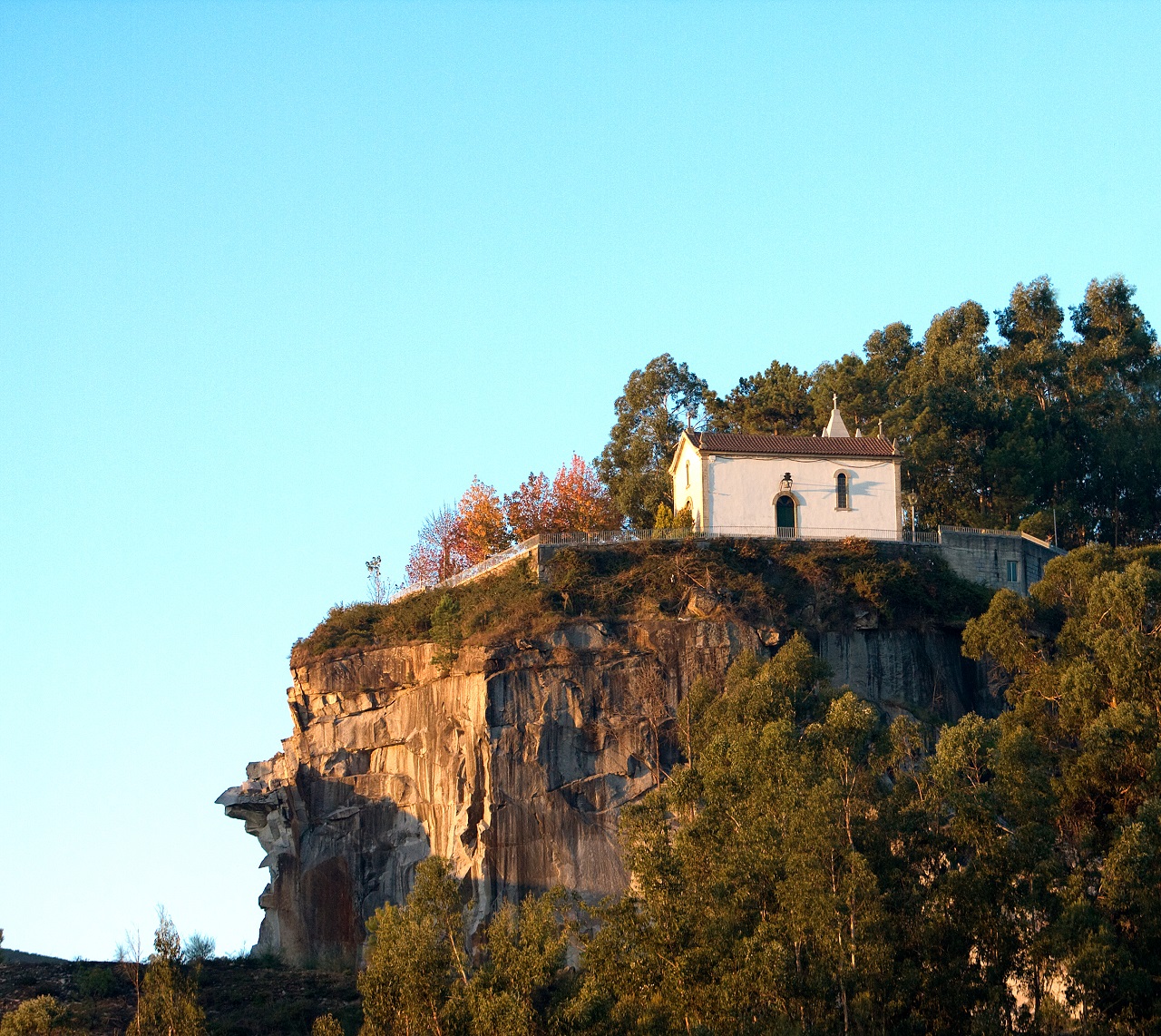
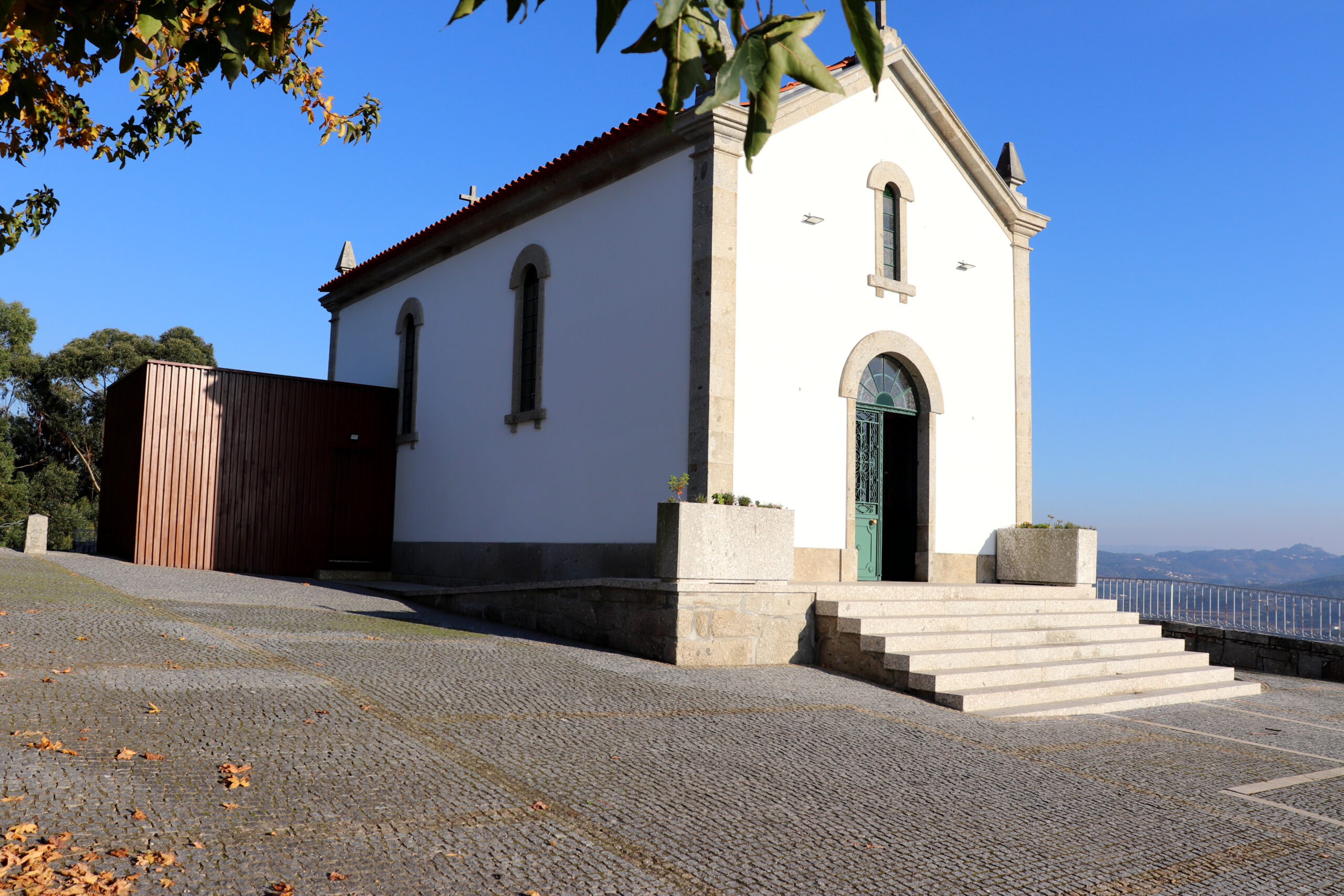
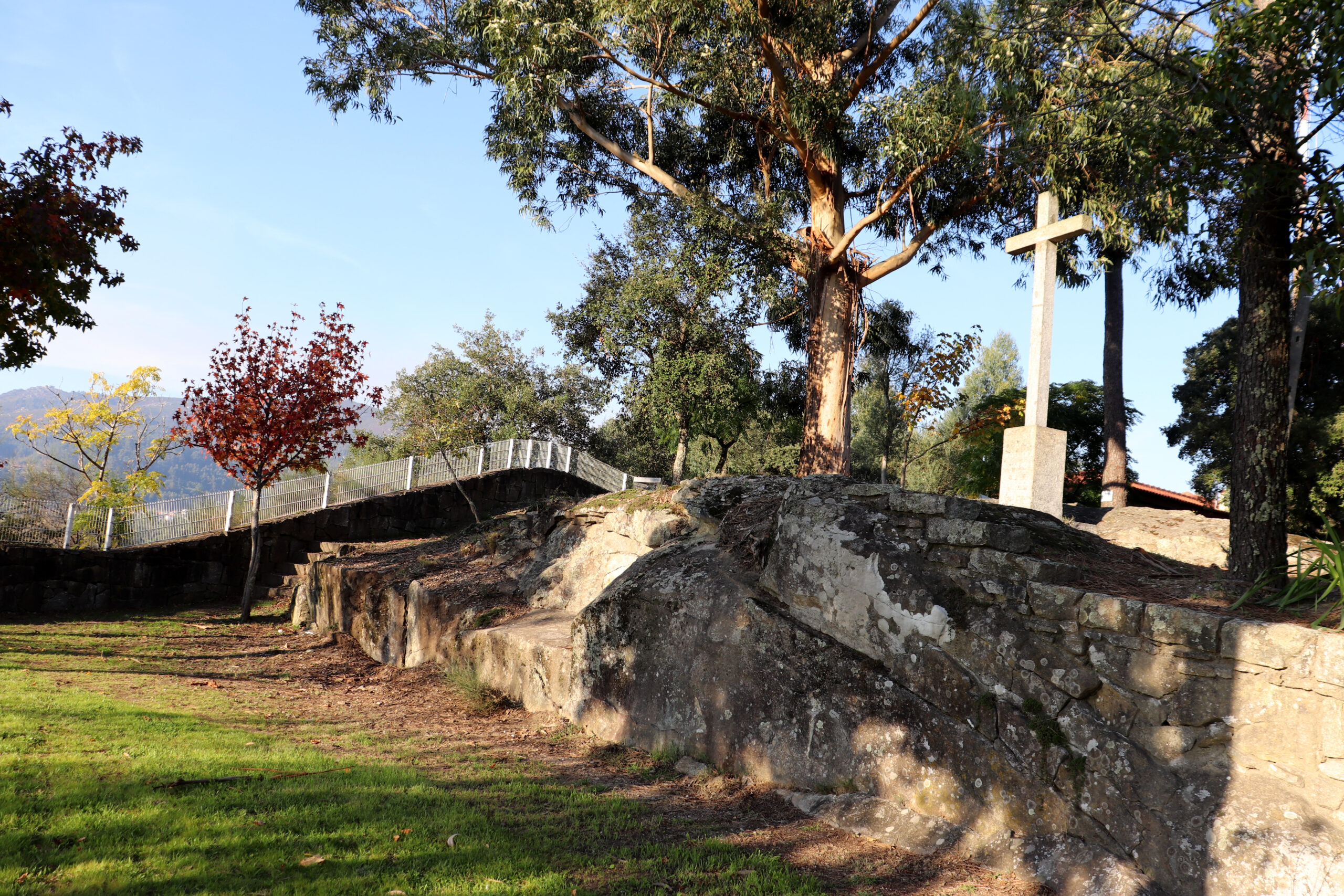
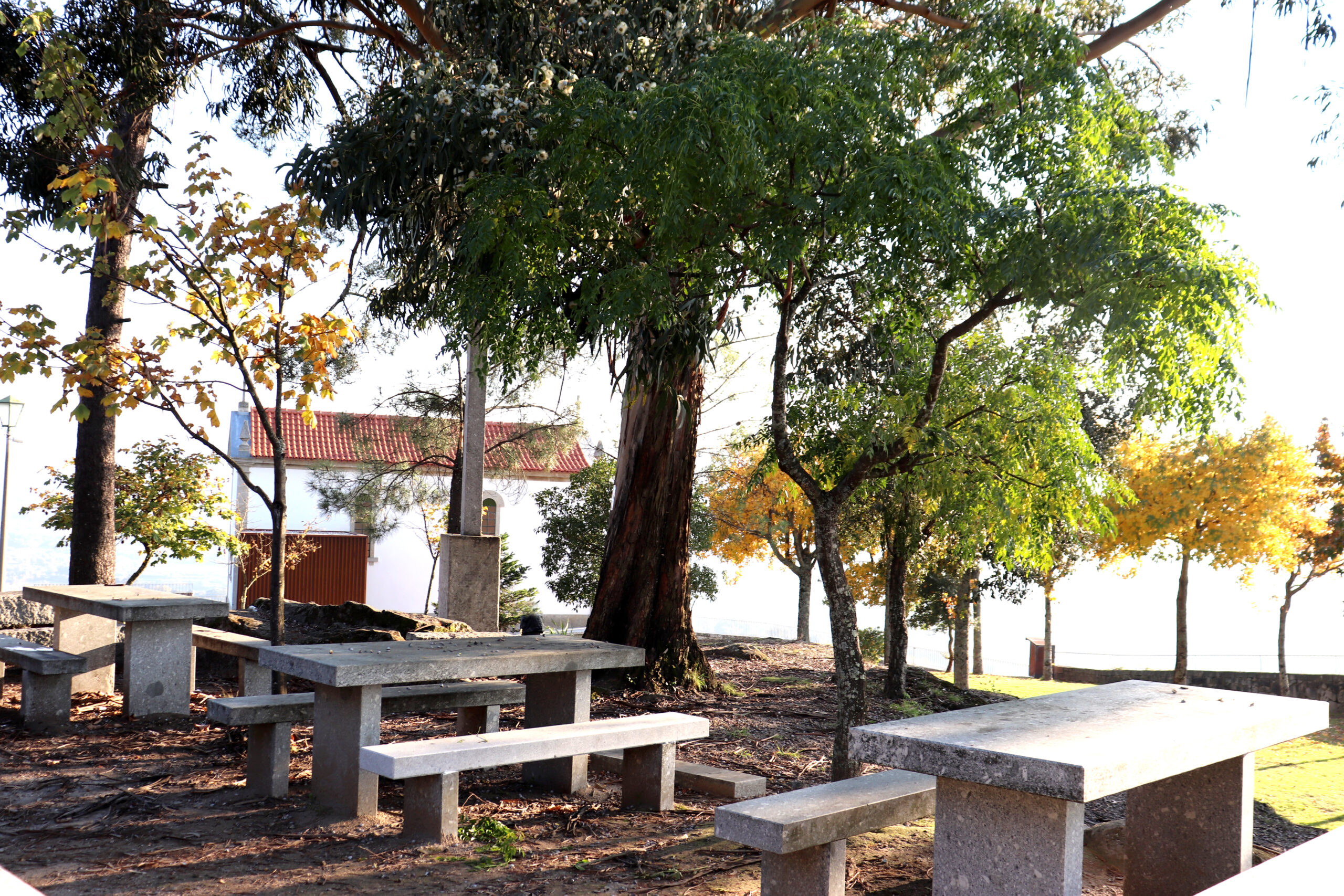
The chapel with its simple lines stands on a high point in the municipality, forming a viewpoint of rare beauty, which became important due to the various periods of occupation during the late Bronze Age. In the excavations carried out on site, it was not possible to portray the period of Prehistory in which it was occupied, however it was in the 10th century a.c. which confirms the first human presence on Monte da Santinha. Several remains were found on the acropolis that demonstrated how the town was organized, its activities and its rituals.
The second occupation of this site is proven by the appearance of three open pits, larger than the previous ones, and by the appearance of other remains. After this occupation the town was abandoned for many centuries.
This chapel has a longitudinal plan, with a single nave and a rectangular chancel, narrower, attached to the axis. The facades are made of granite, with Tuscan pilasters at the corners and crowned by tall pyramidal pinnacles.
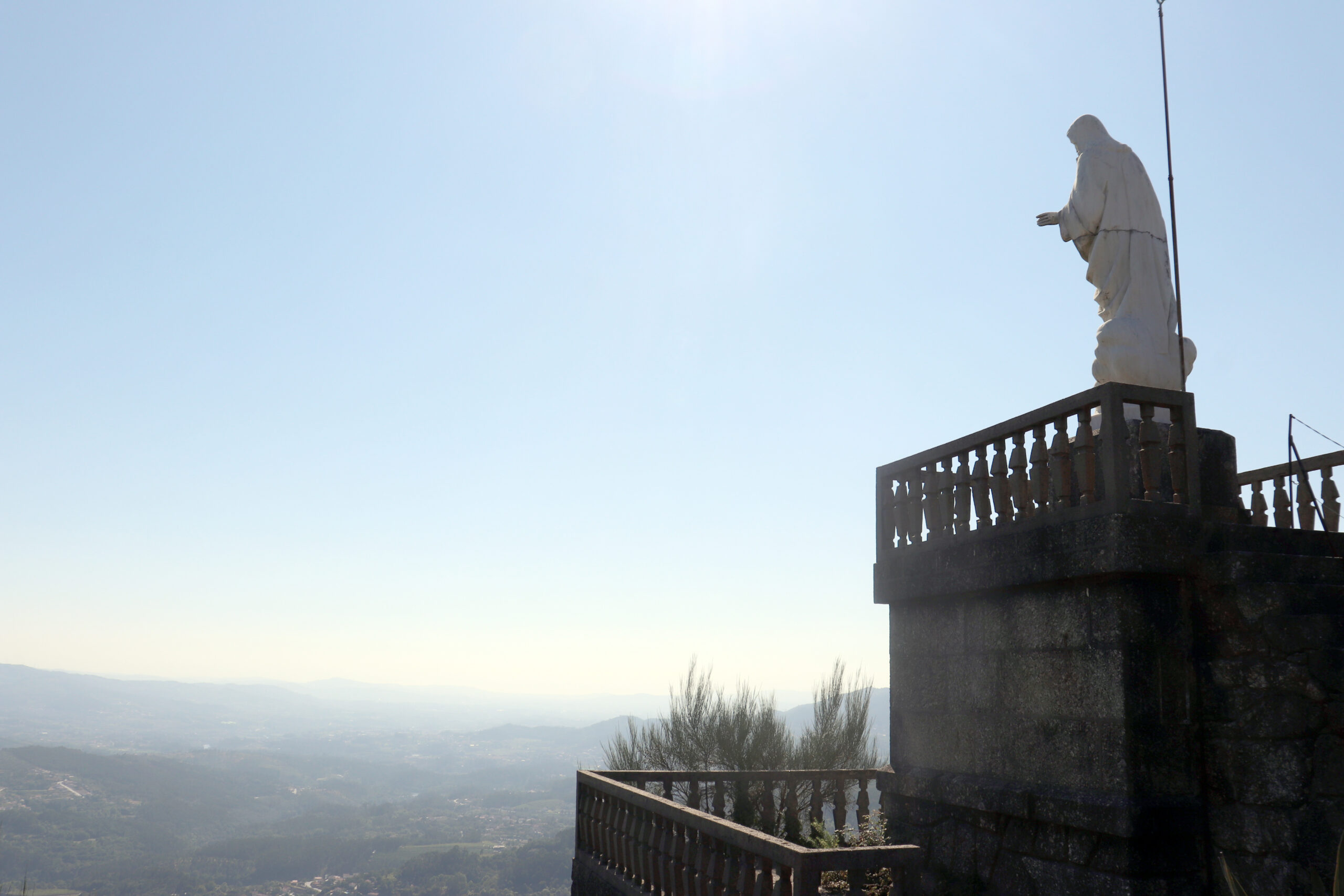
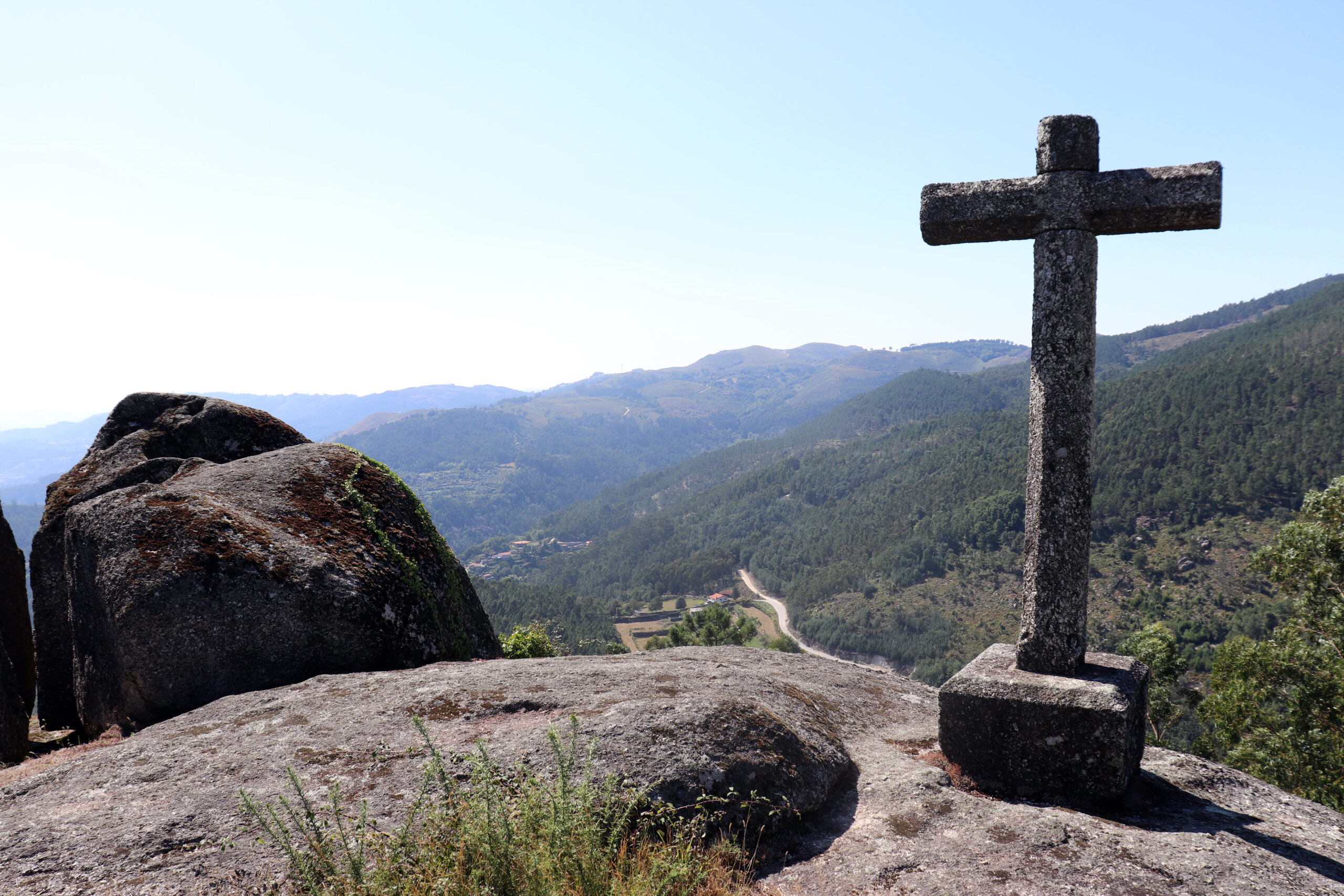
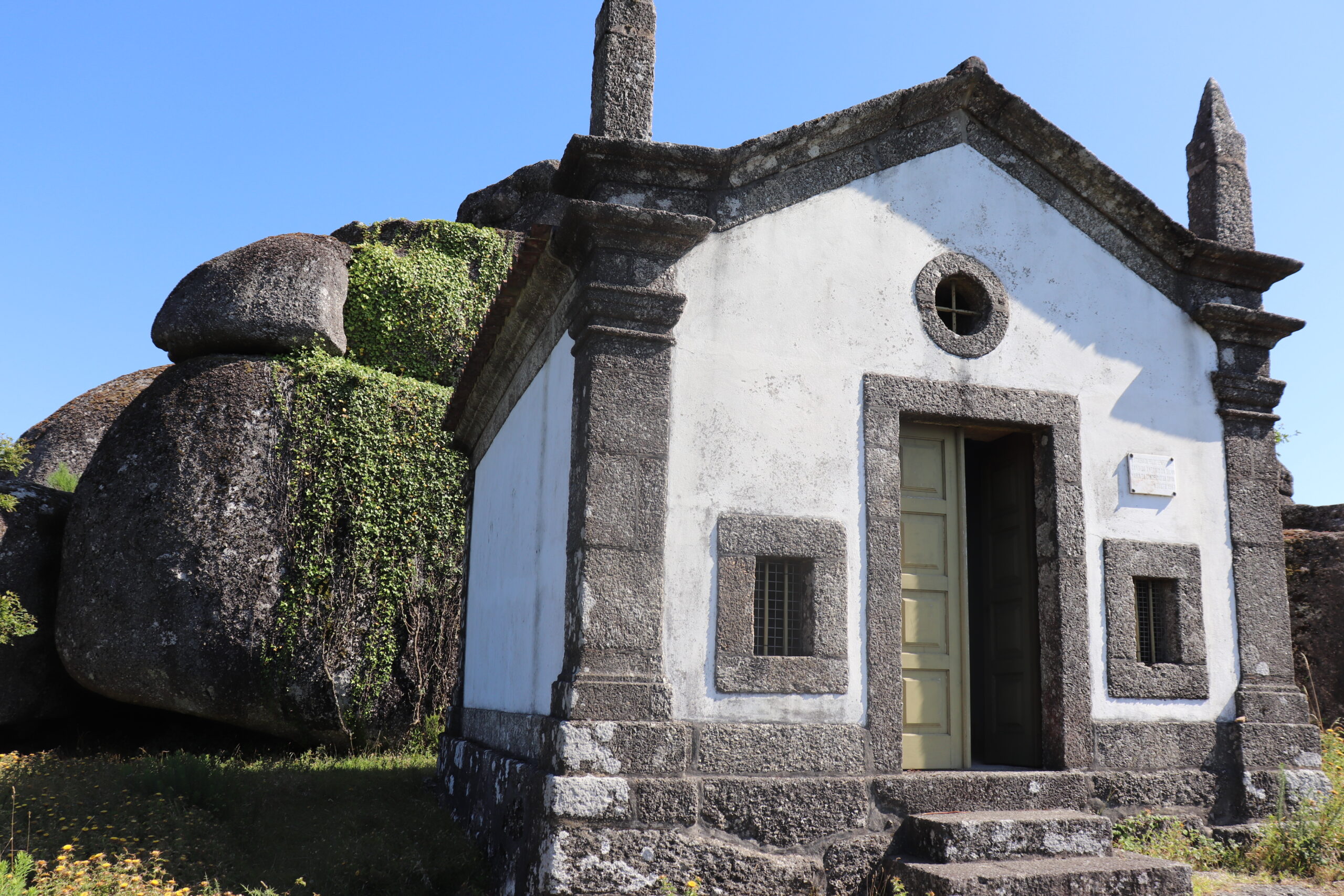
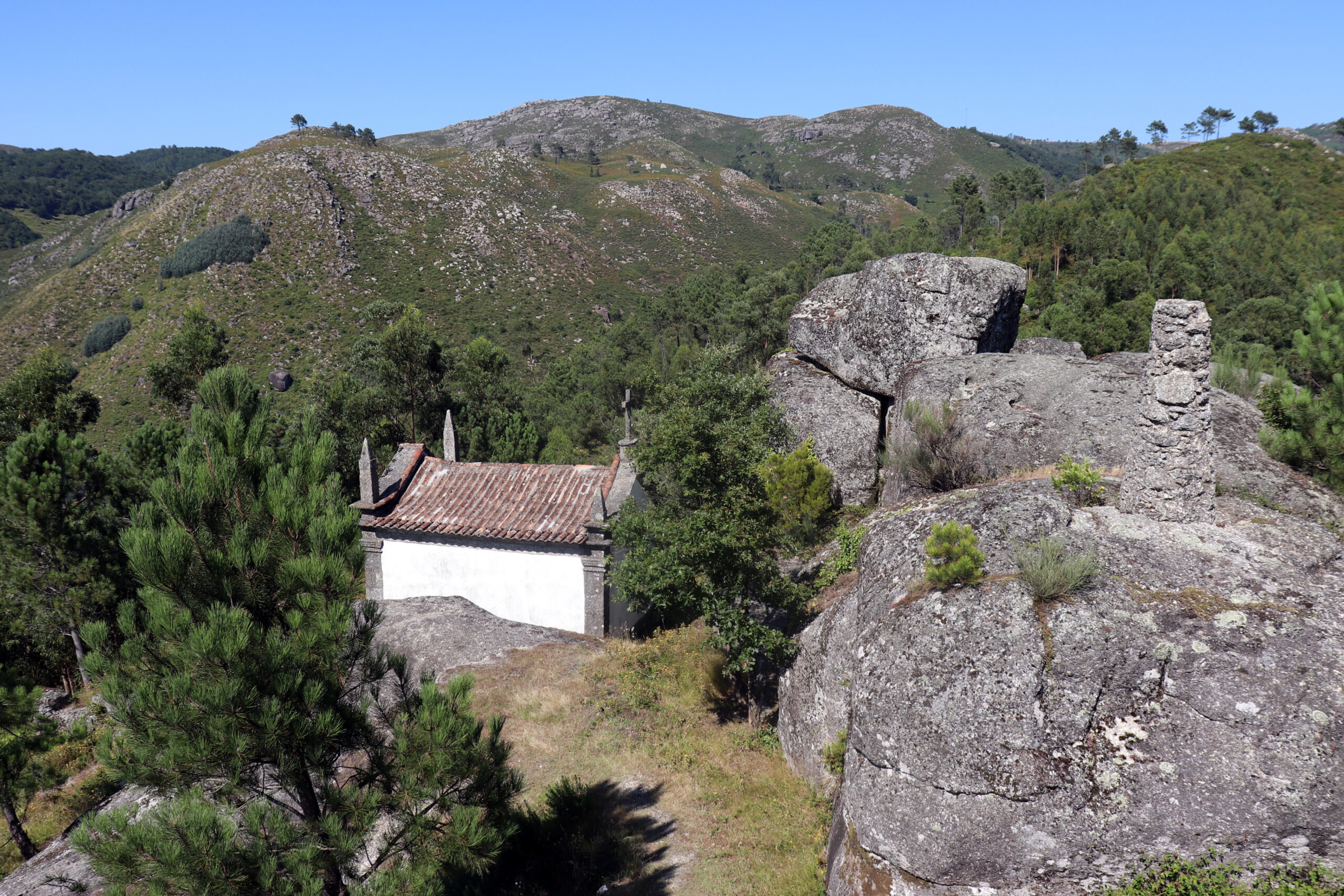
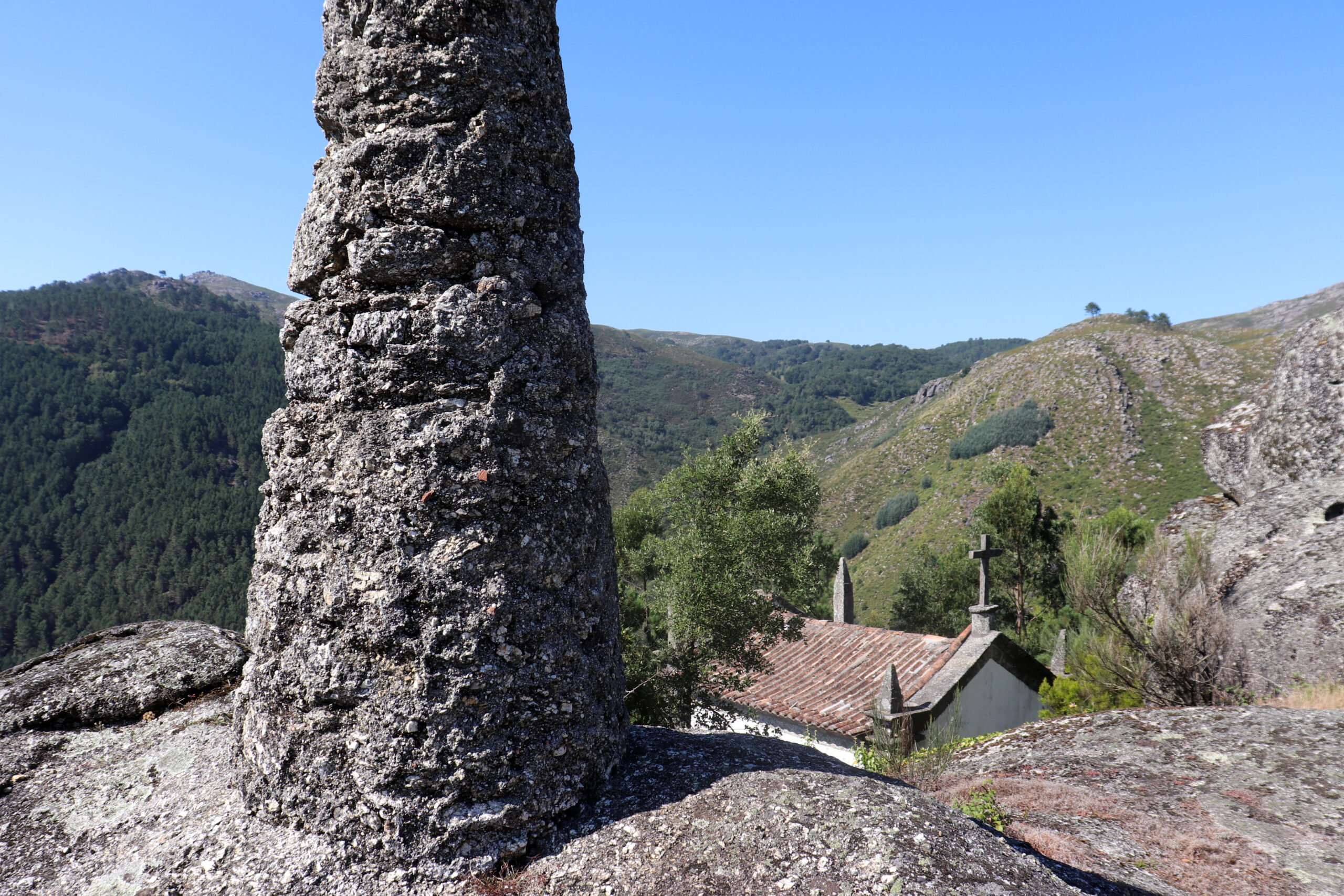
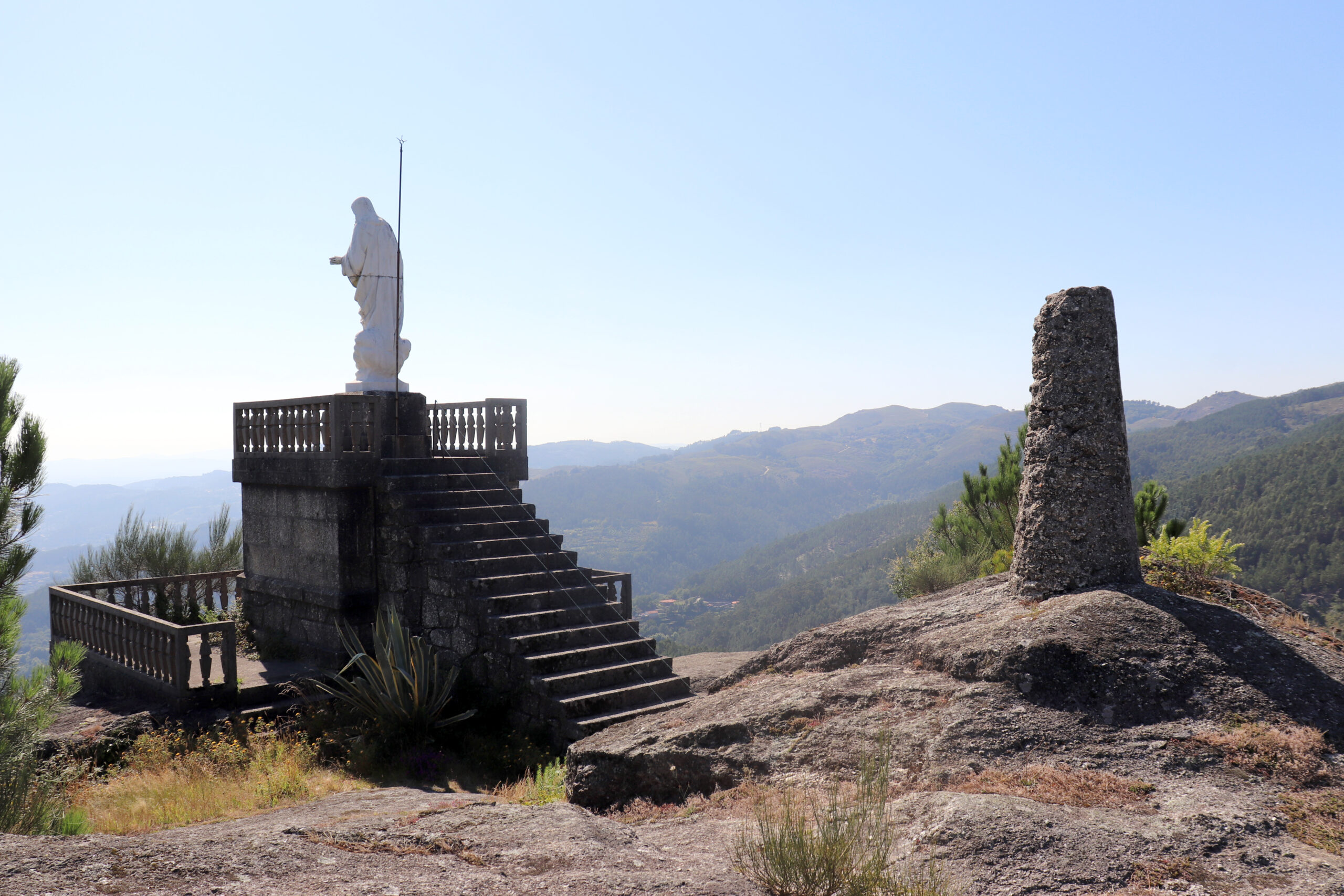
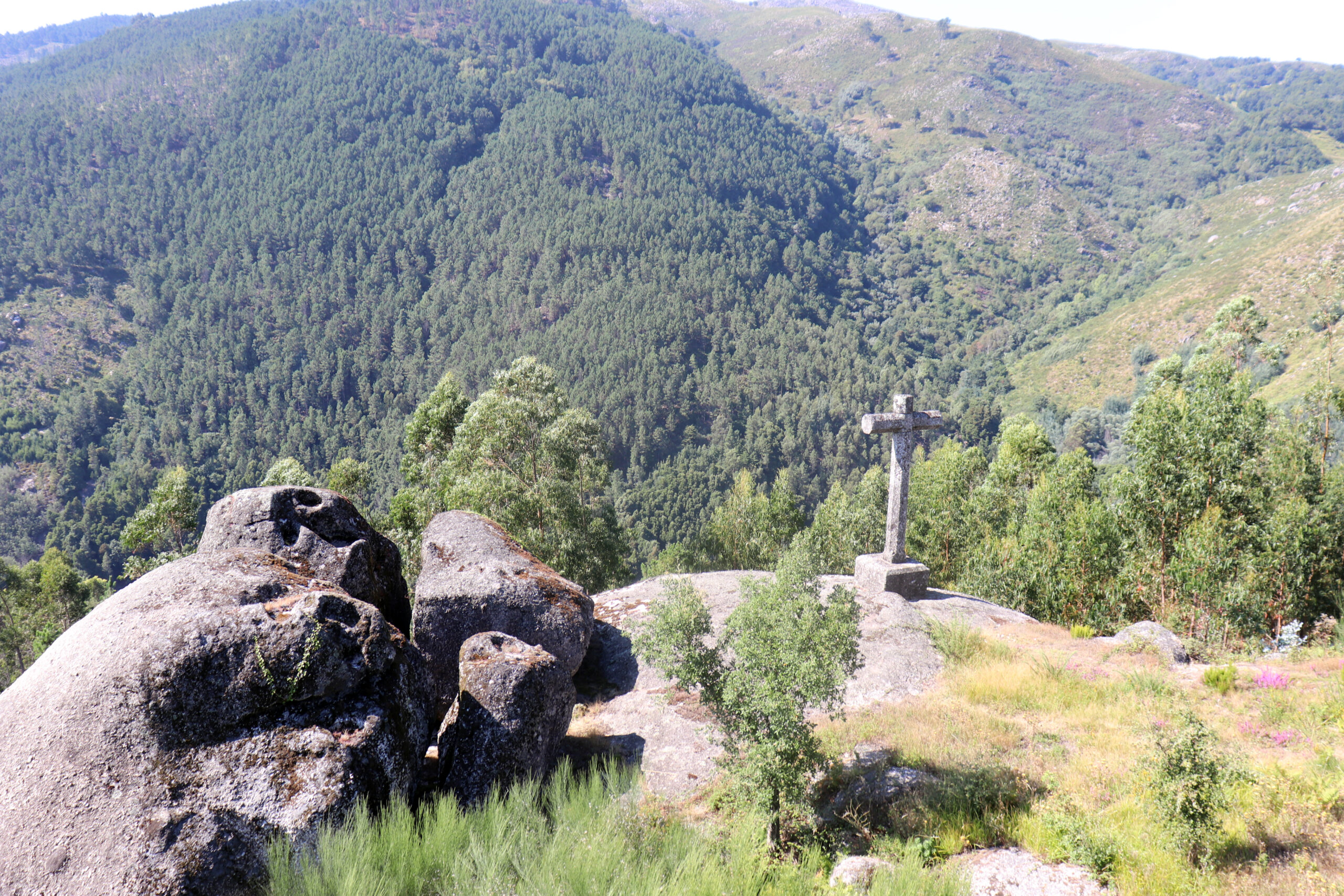
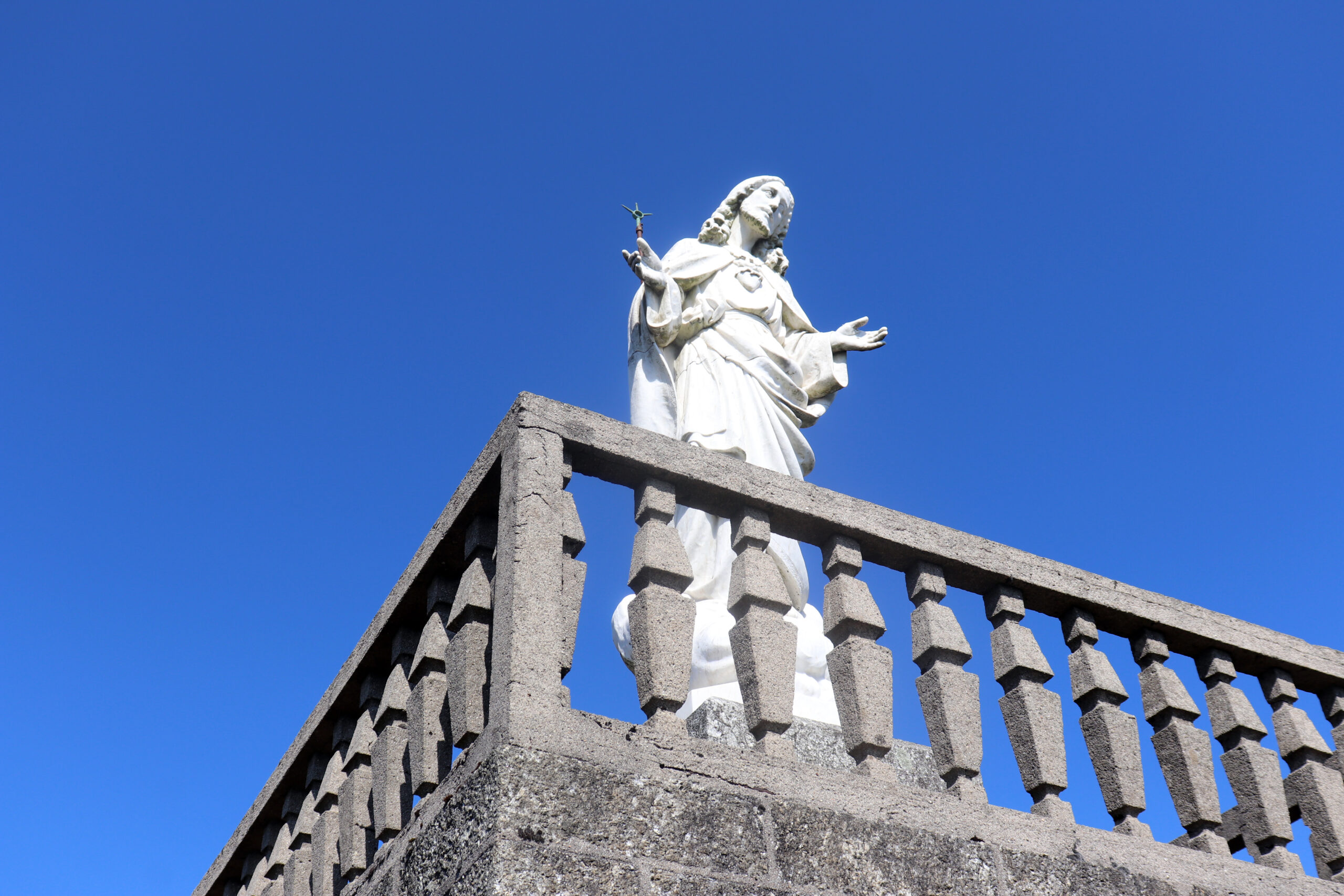
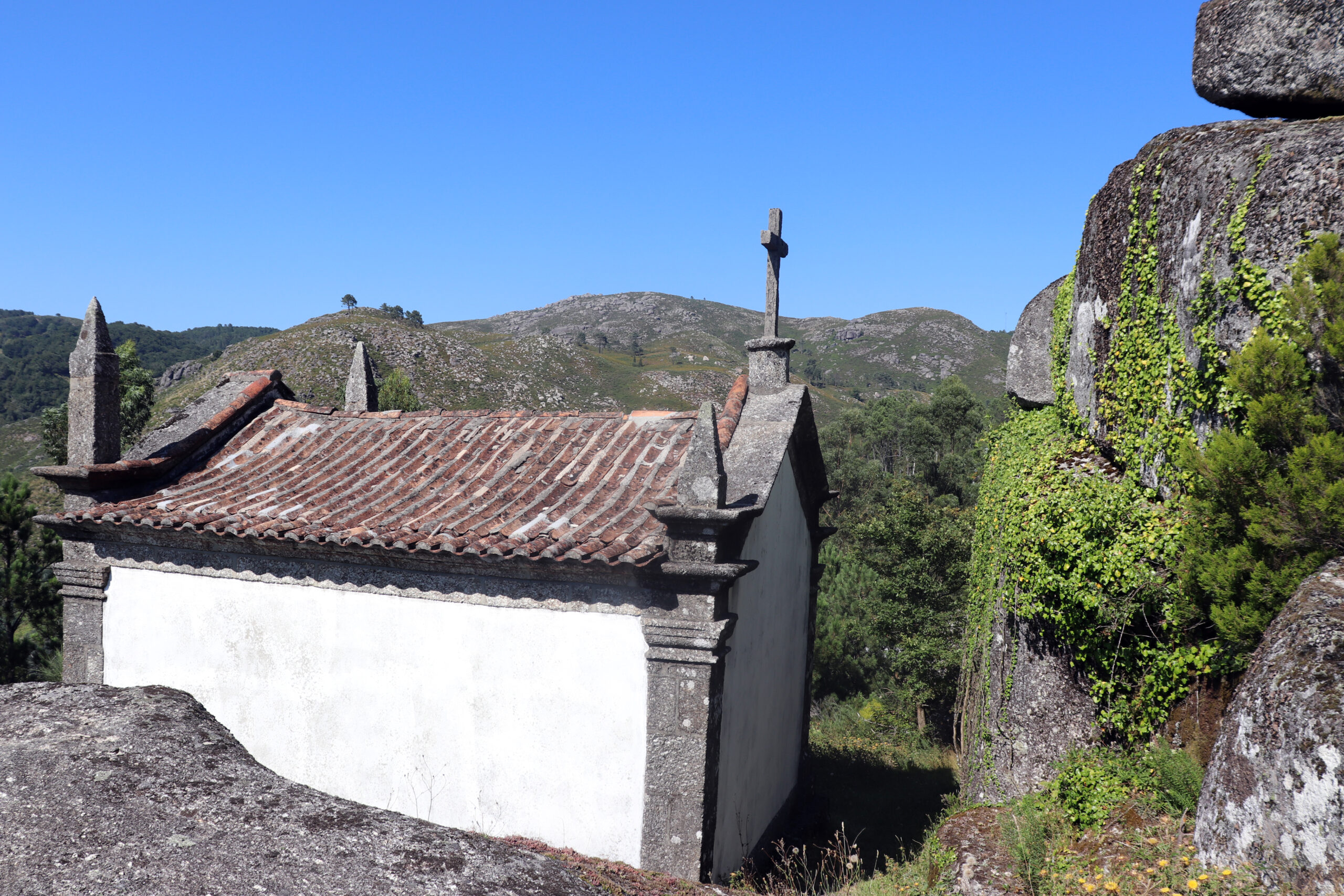
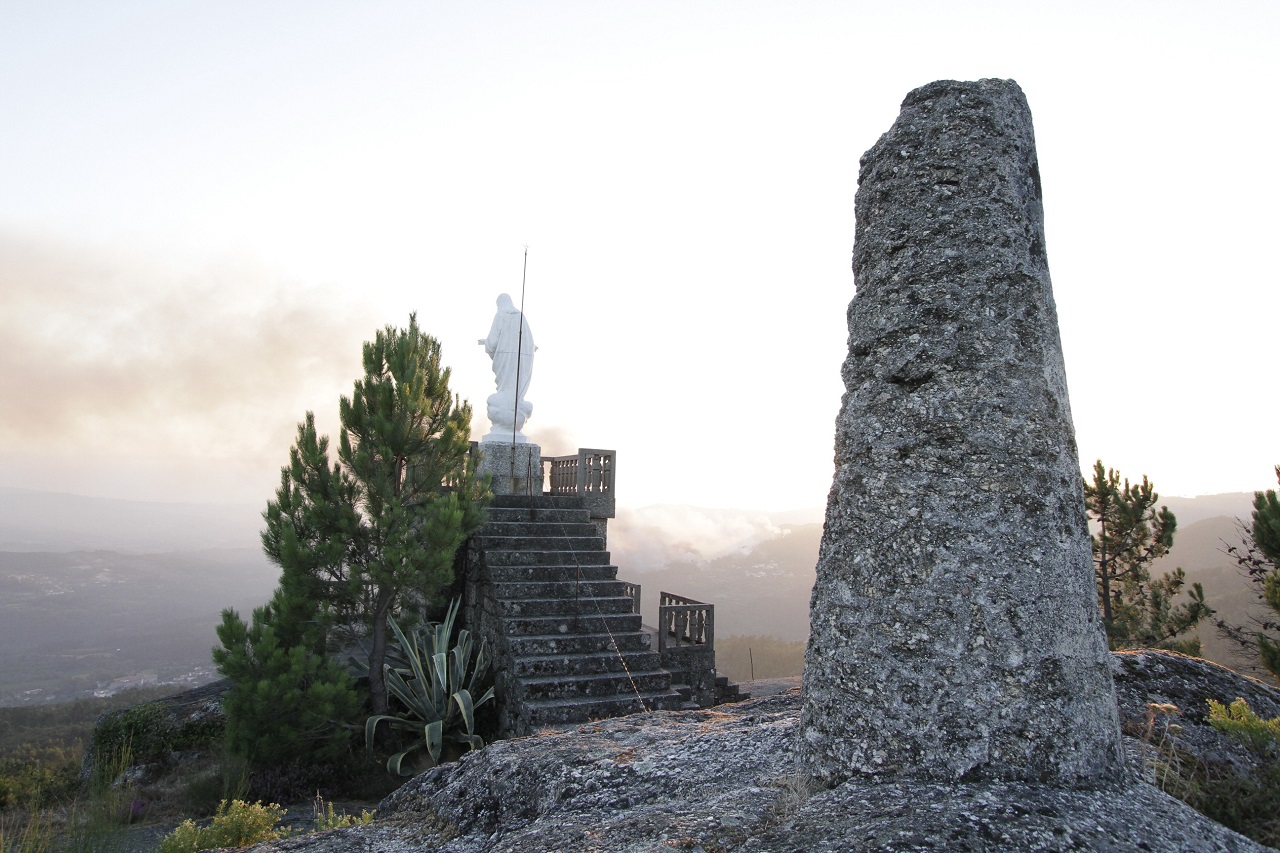
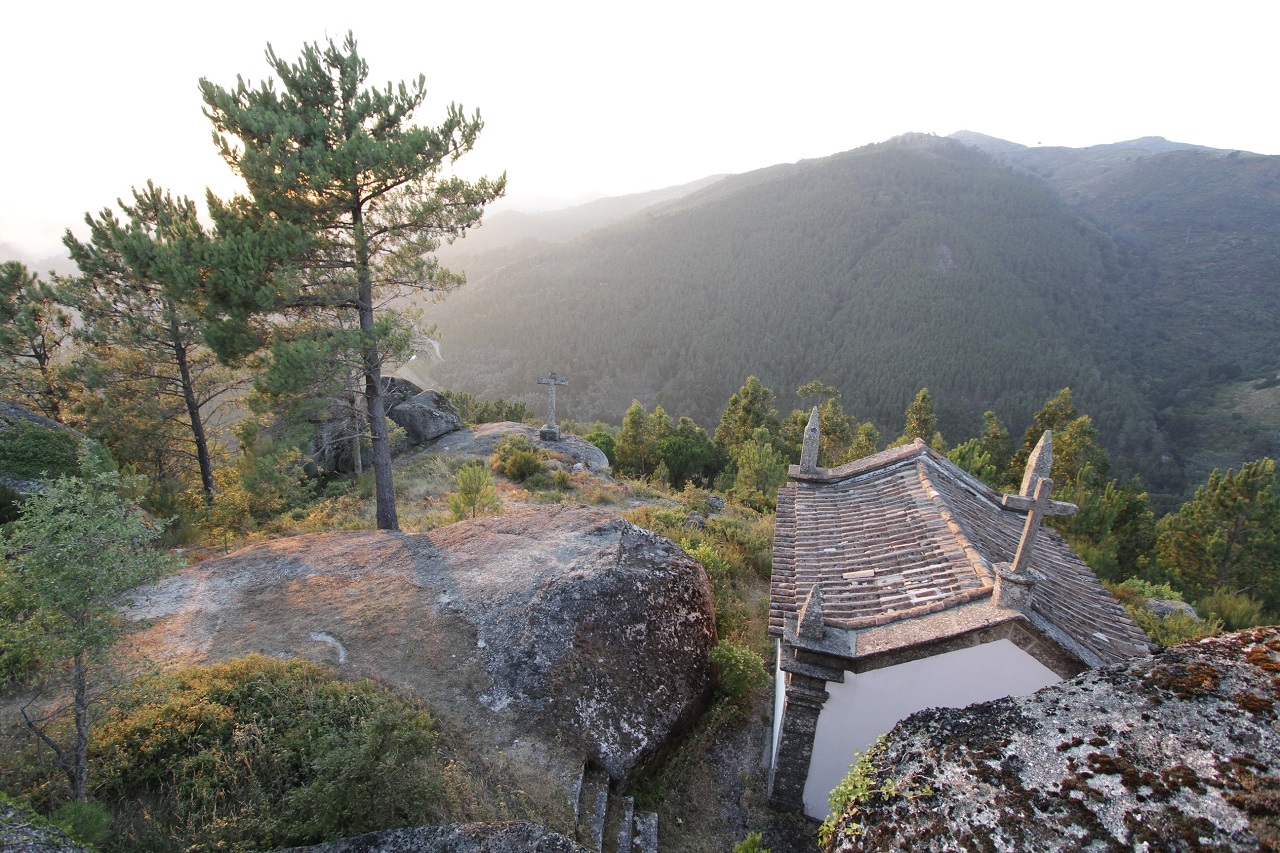
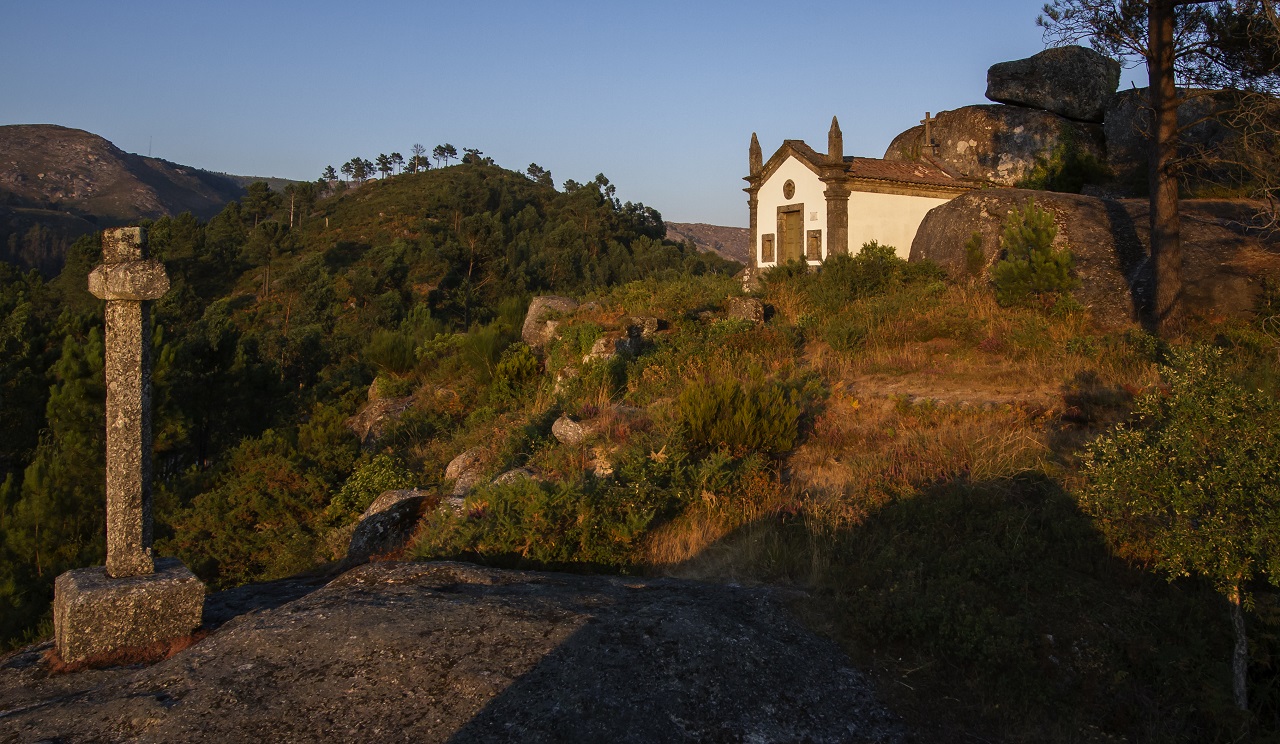
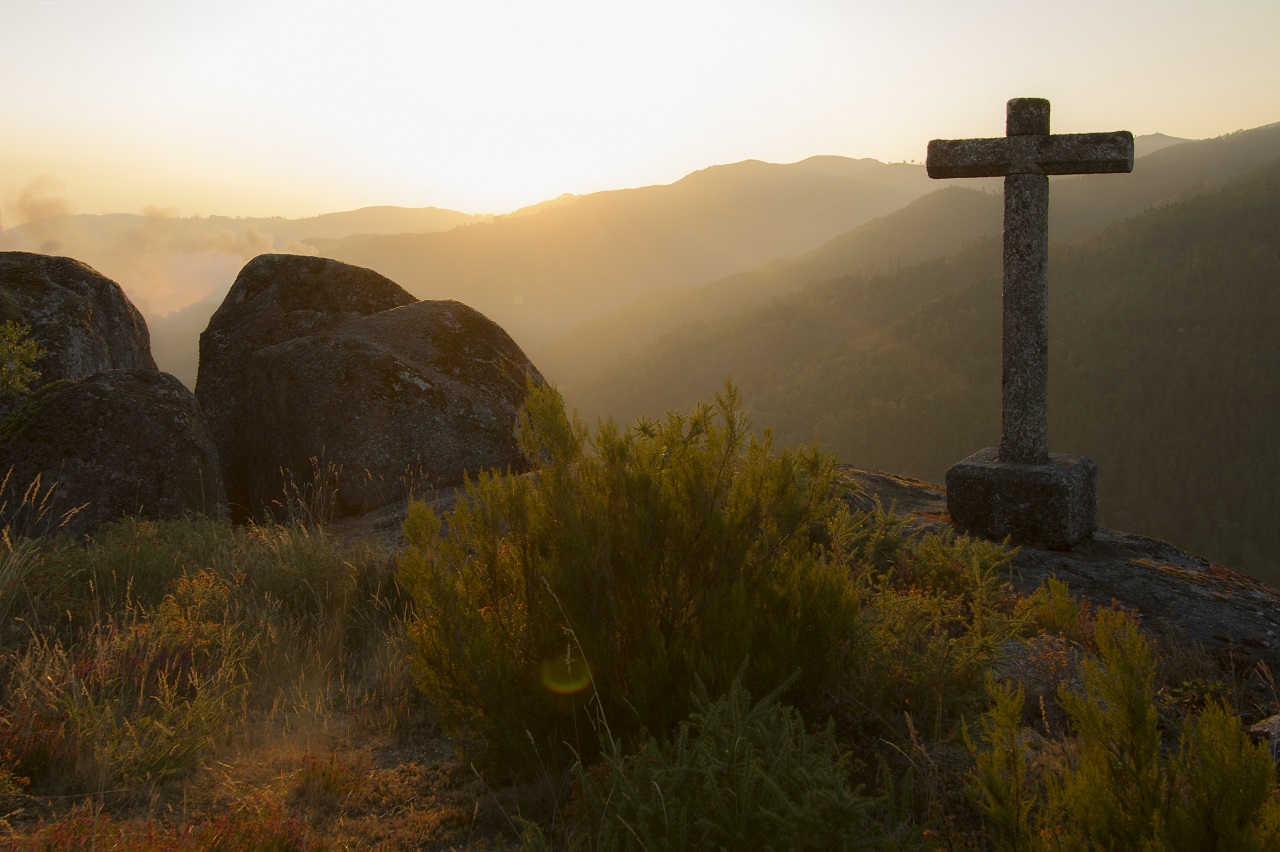
The mount of S. Miguel-o-Anjo is a viewpoint, framed by the rocky mountains of the Abadia, which gives it a good strategic position and excellent visibility over the Cávado valley.
Fragments of pottery from the Iron Age and Roman Period were found at this site.
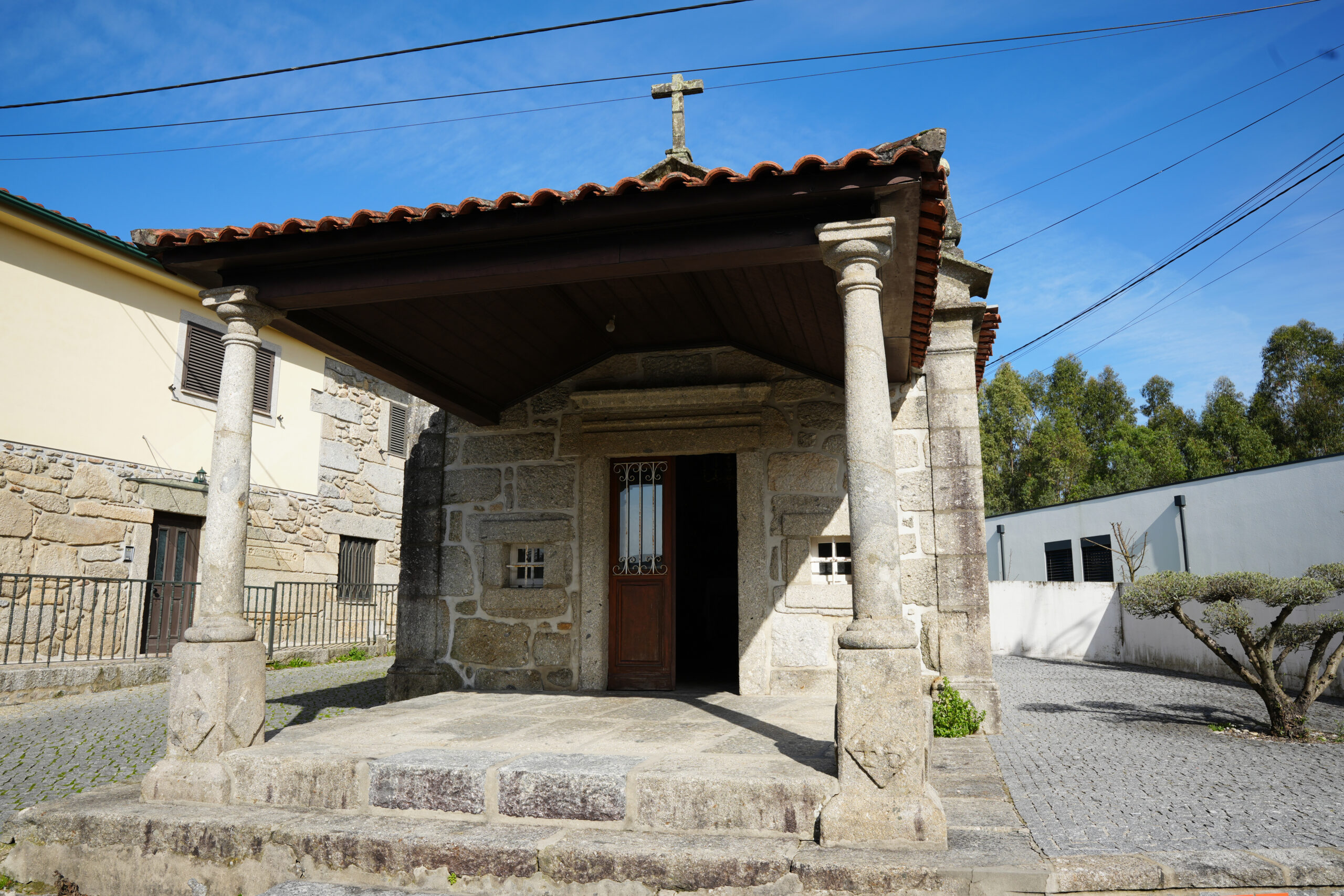
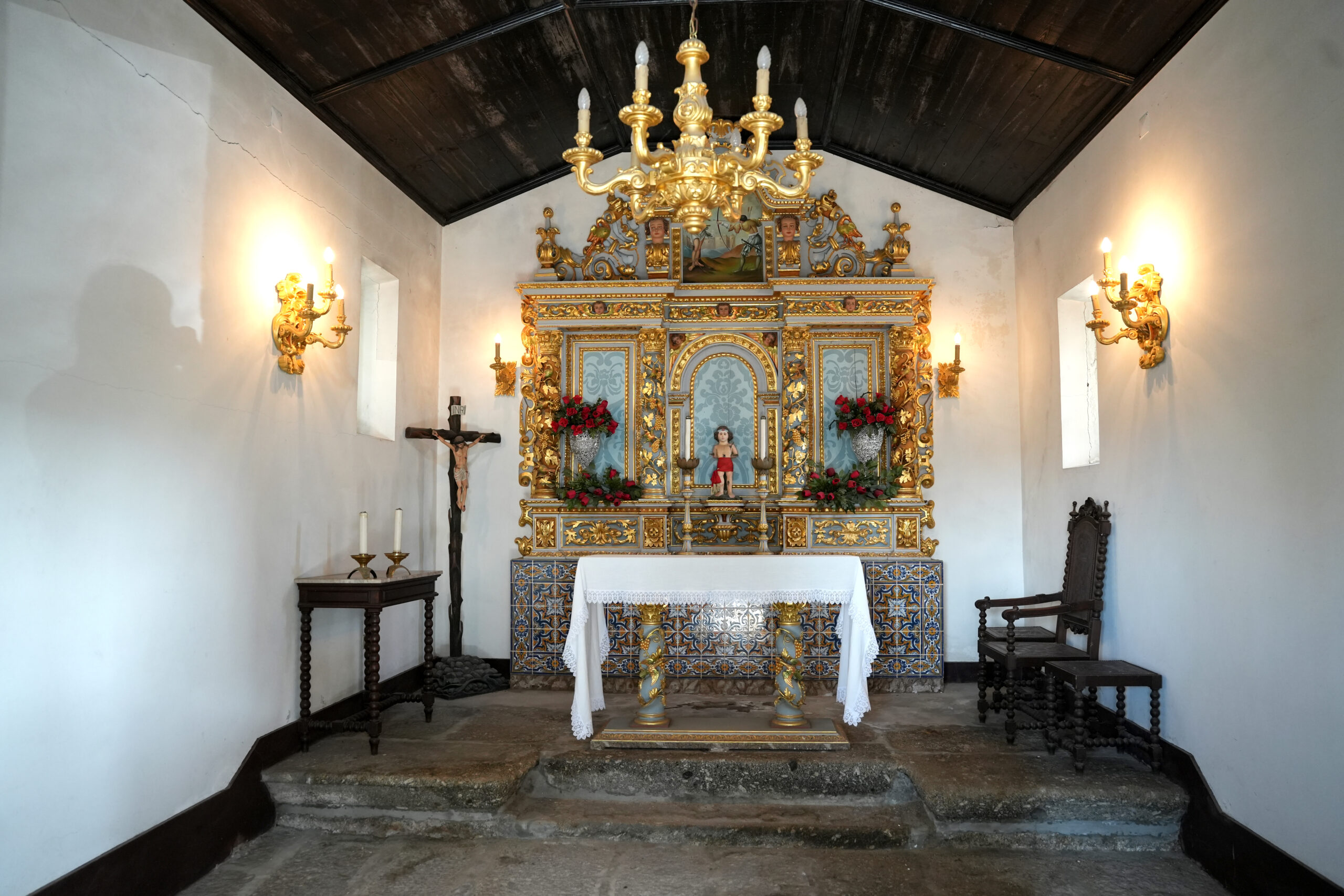
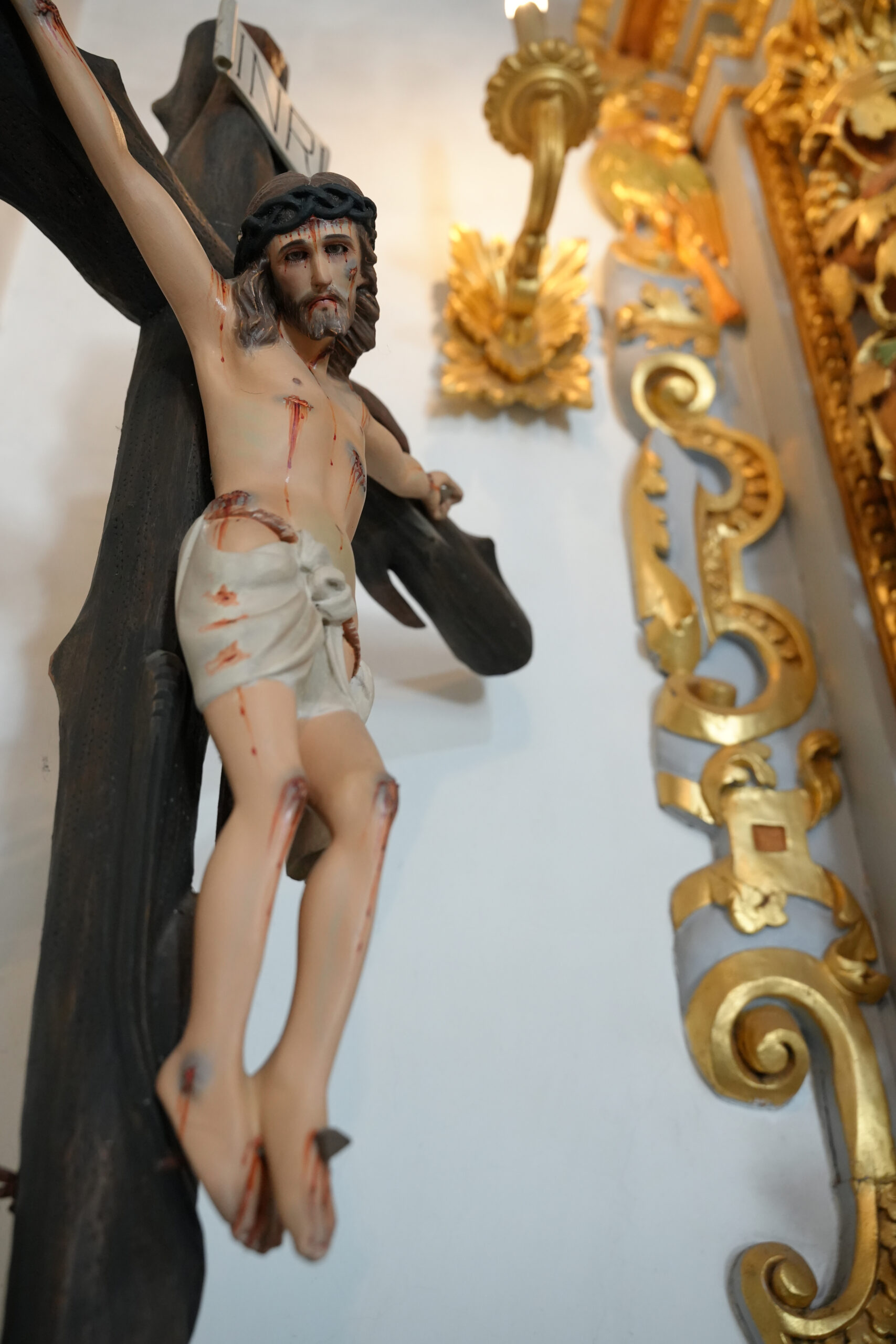
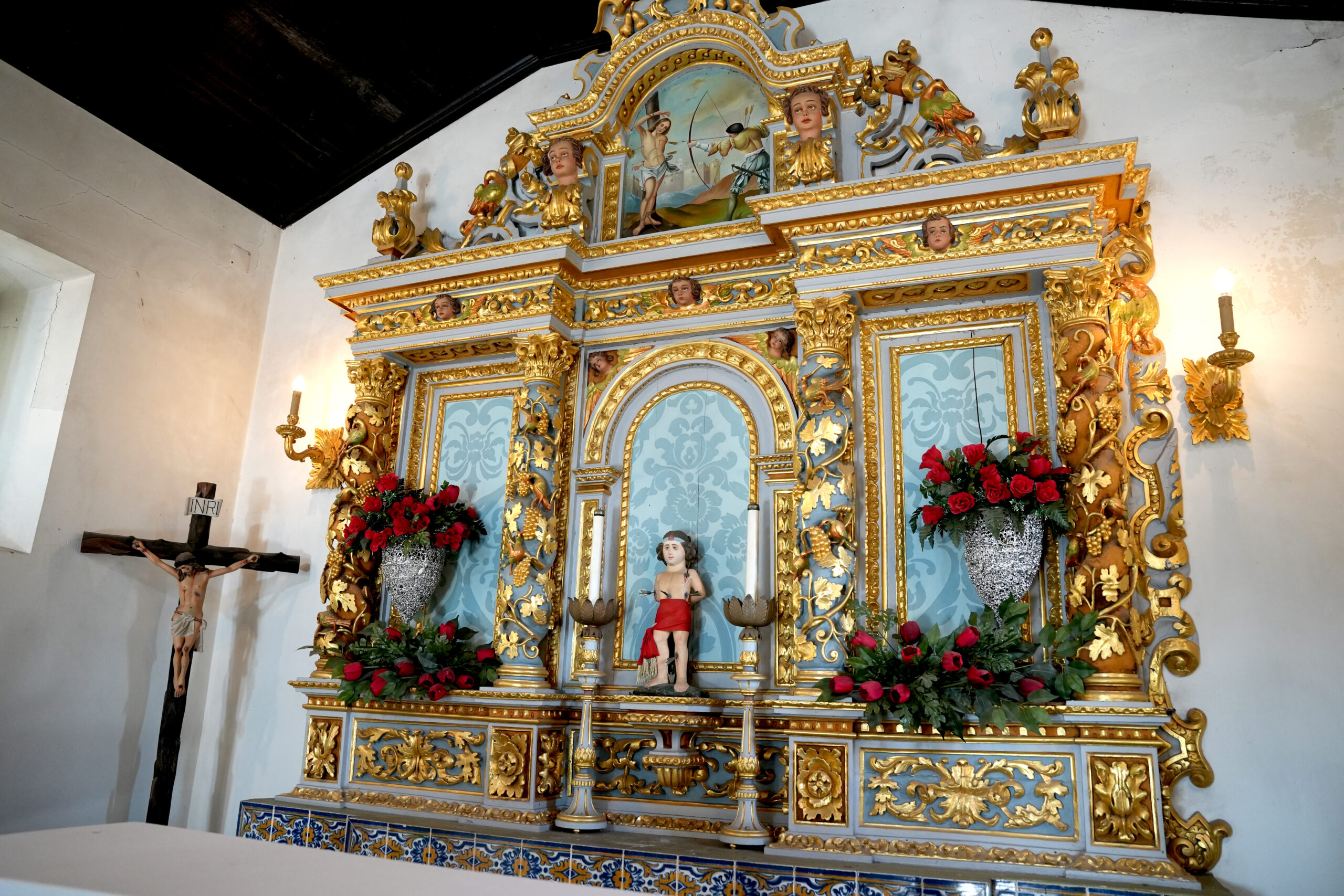
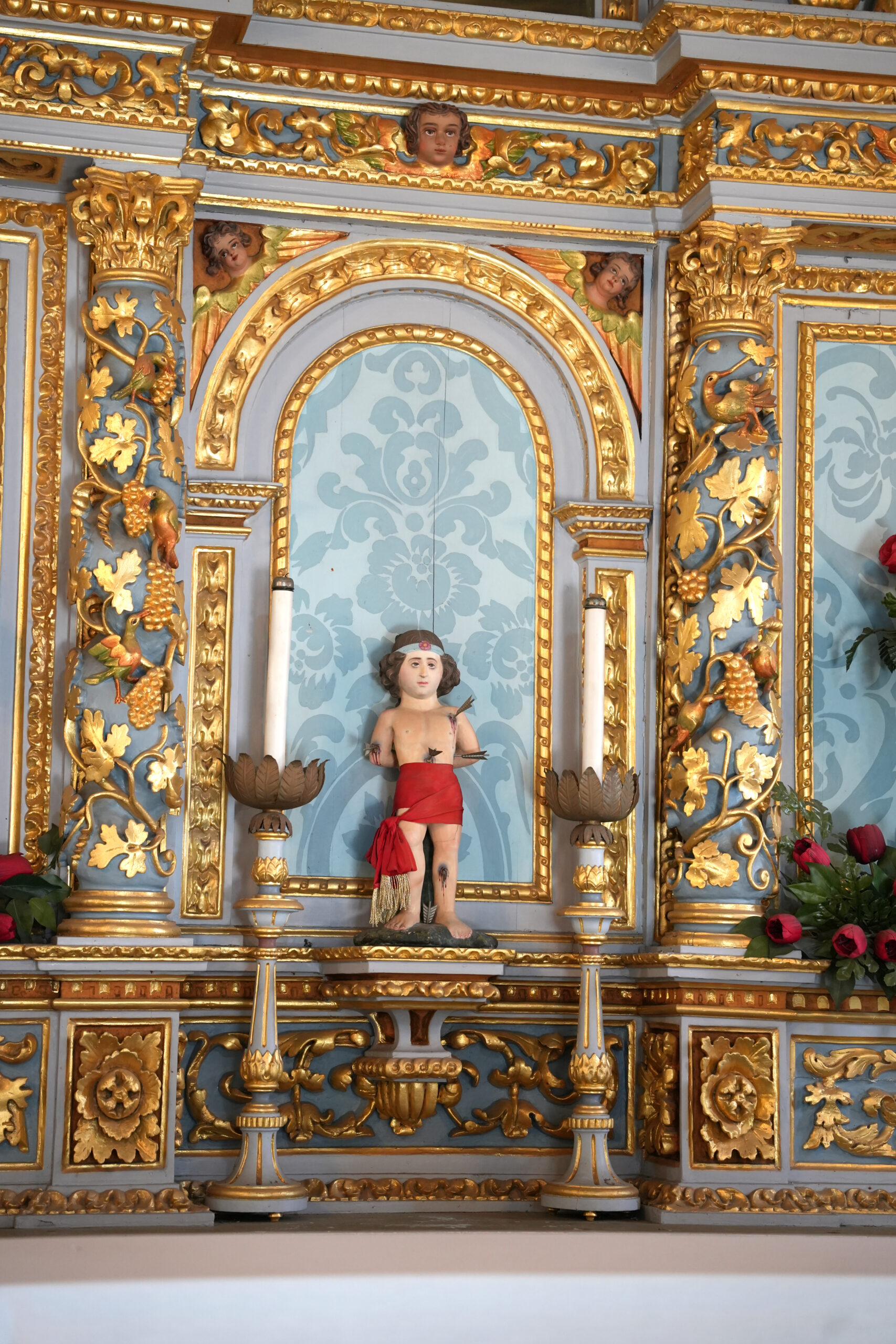
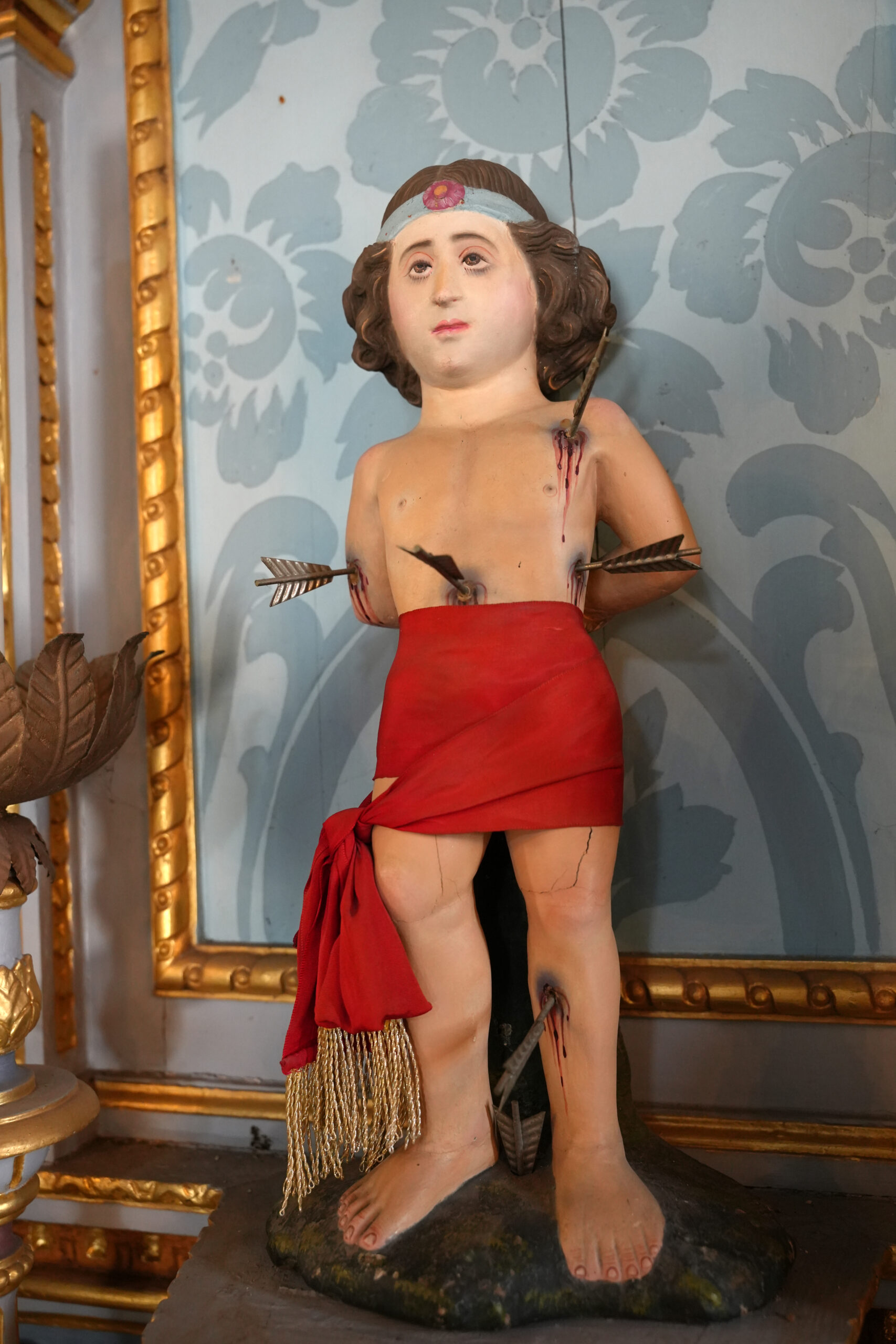
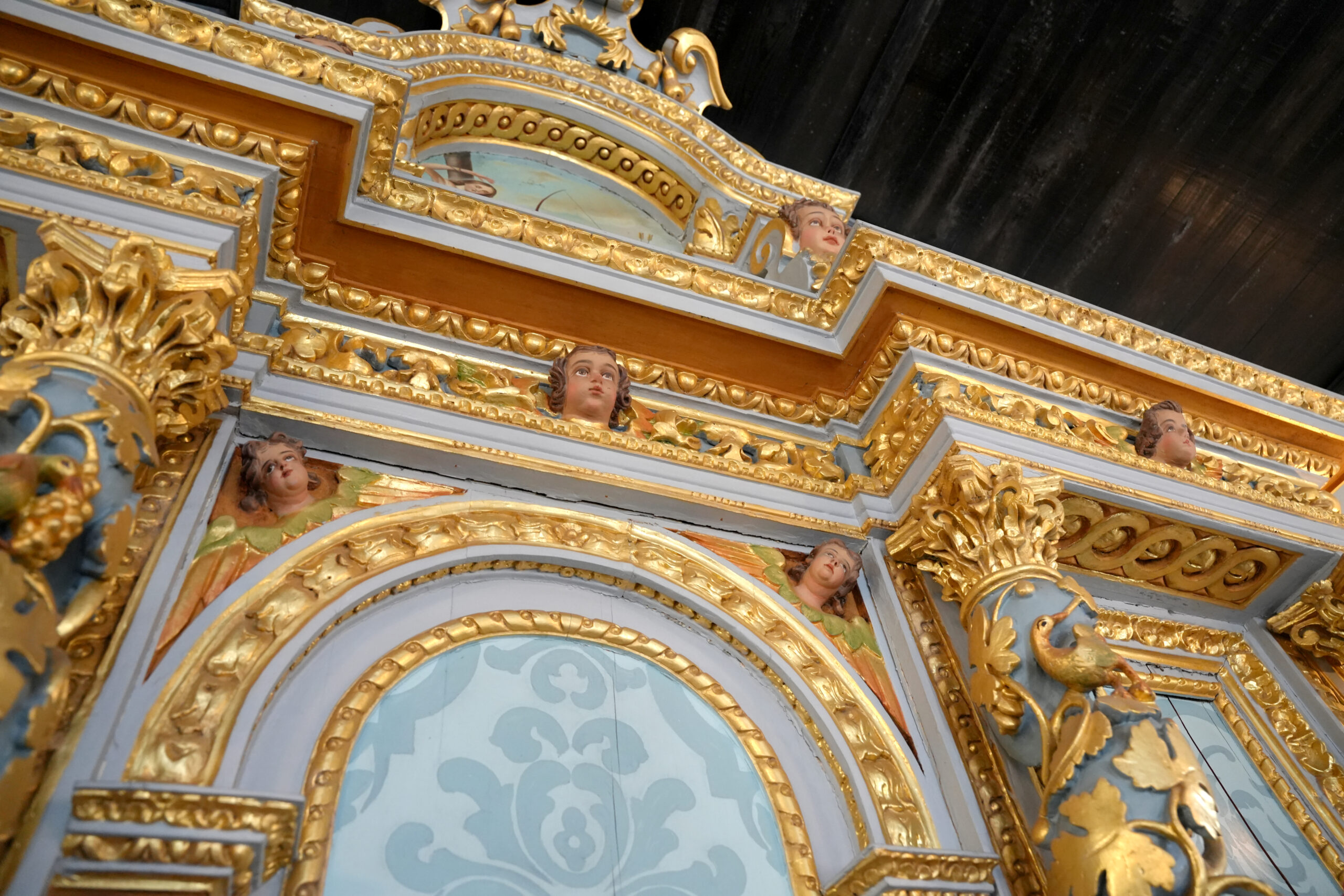
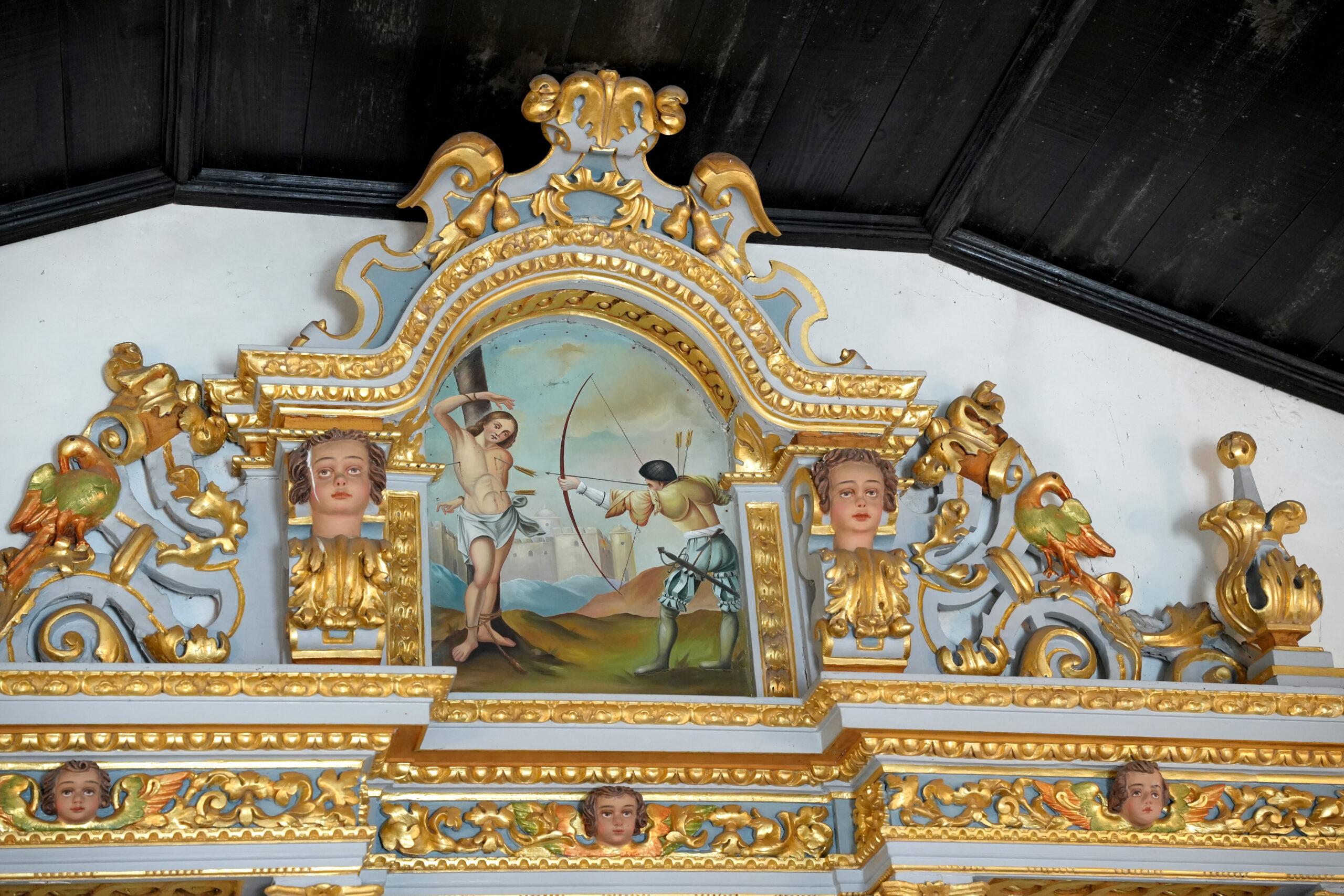
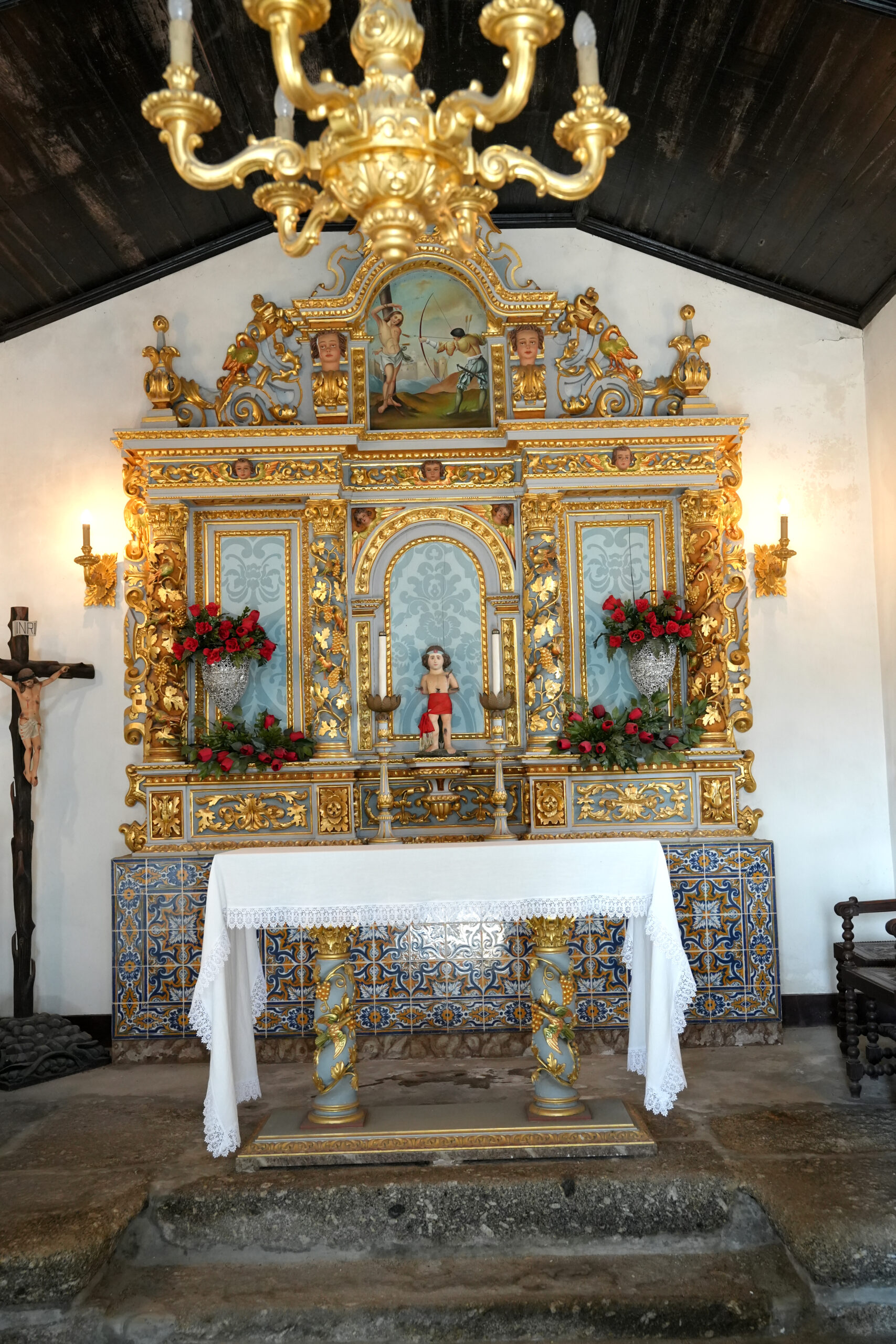
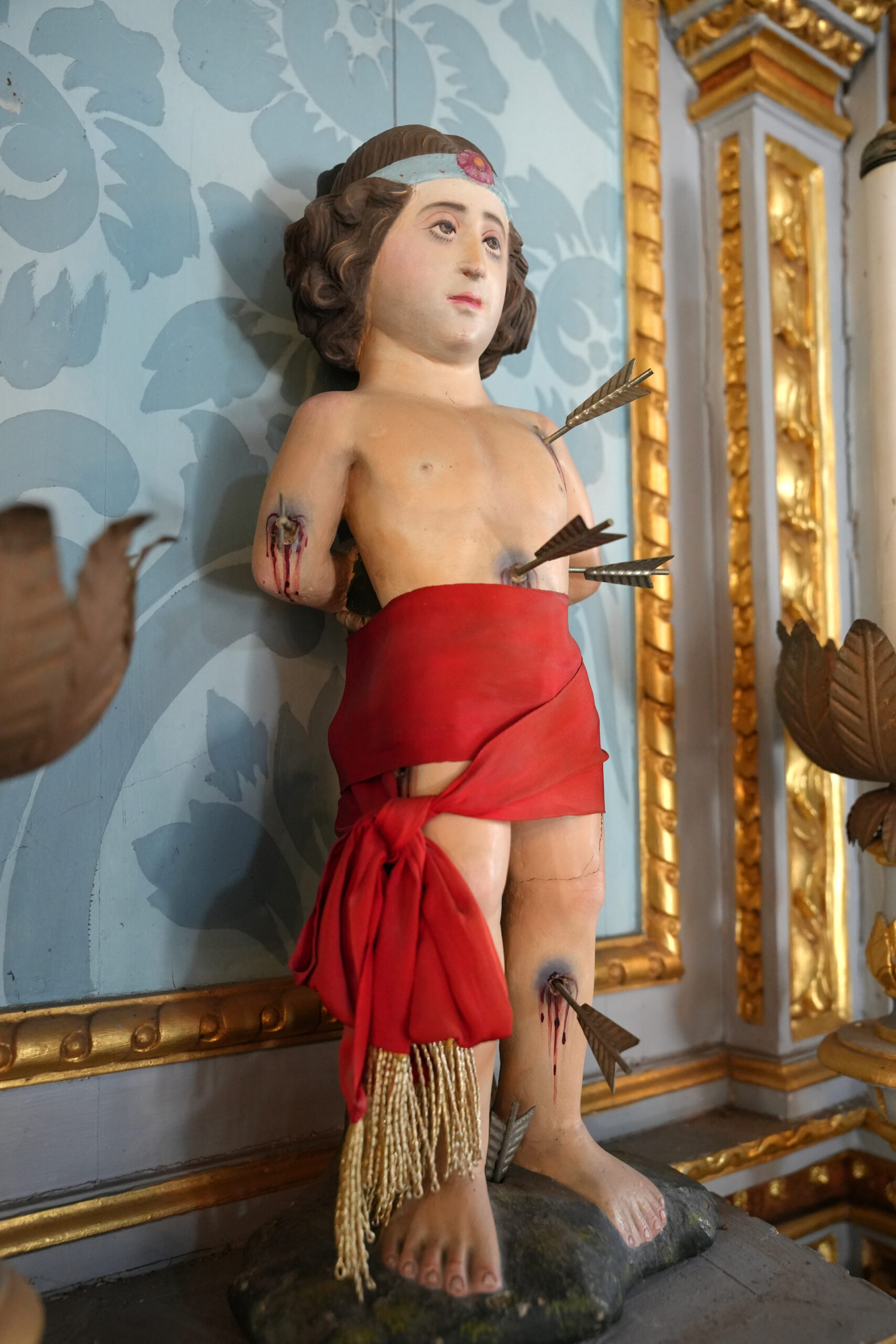
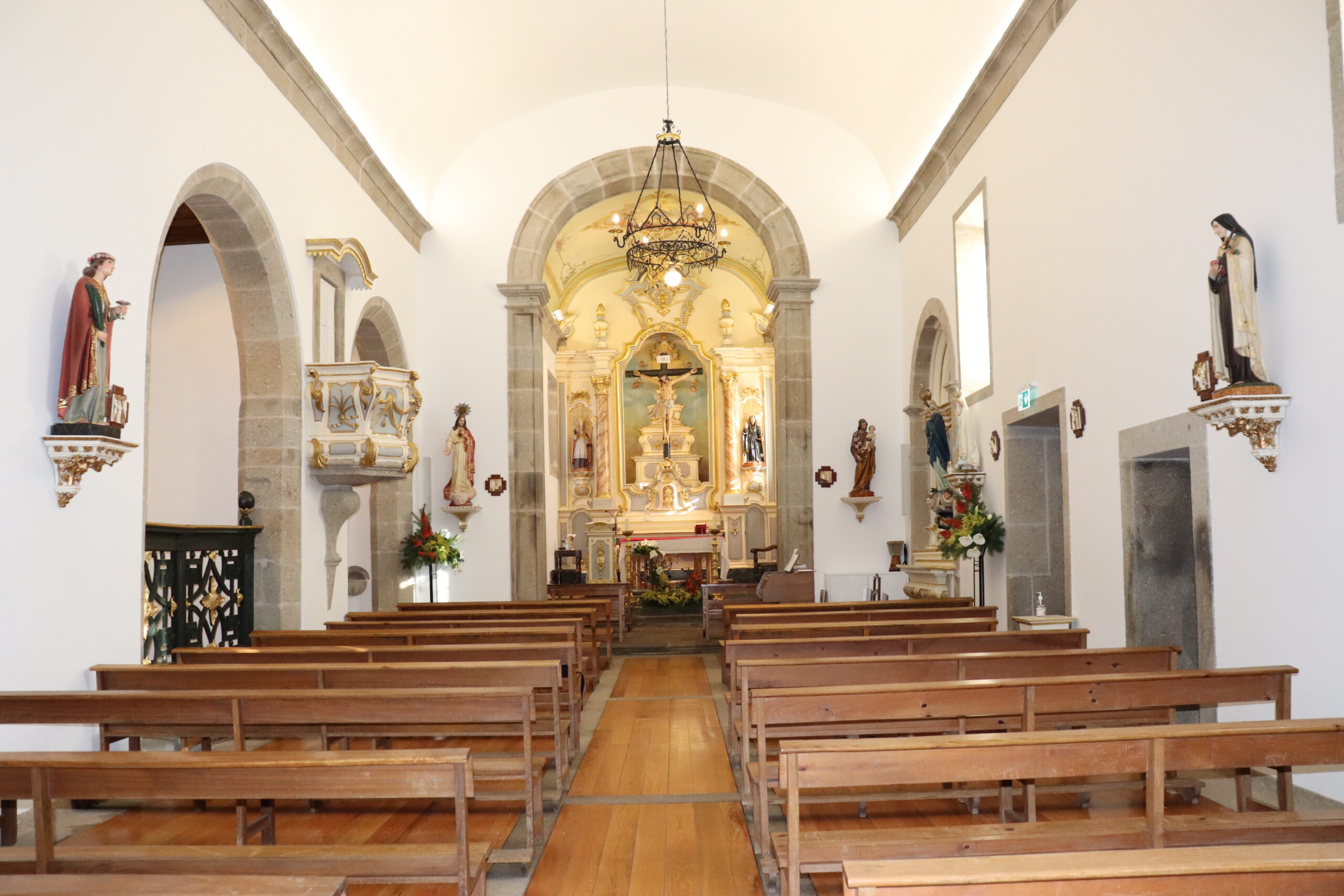
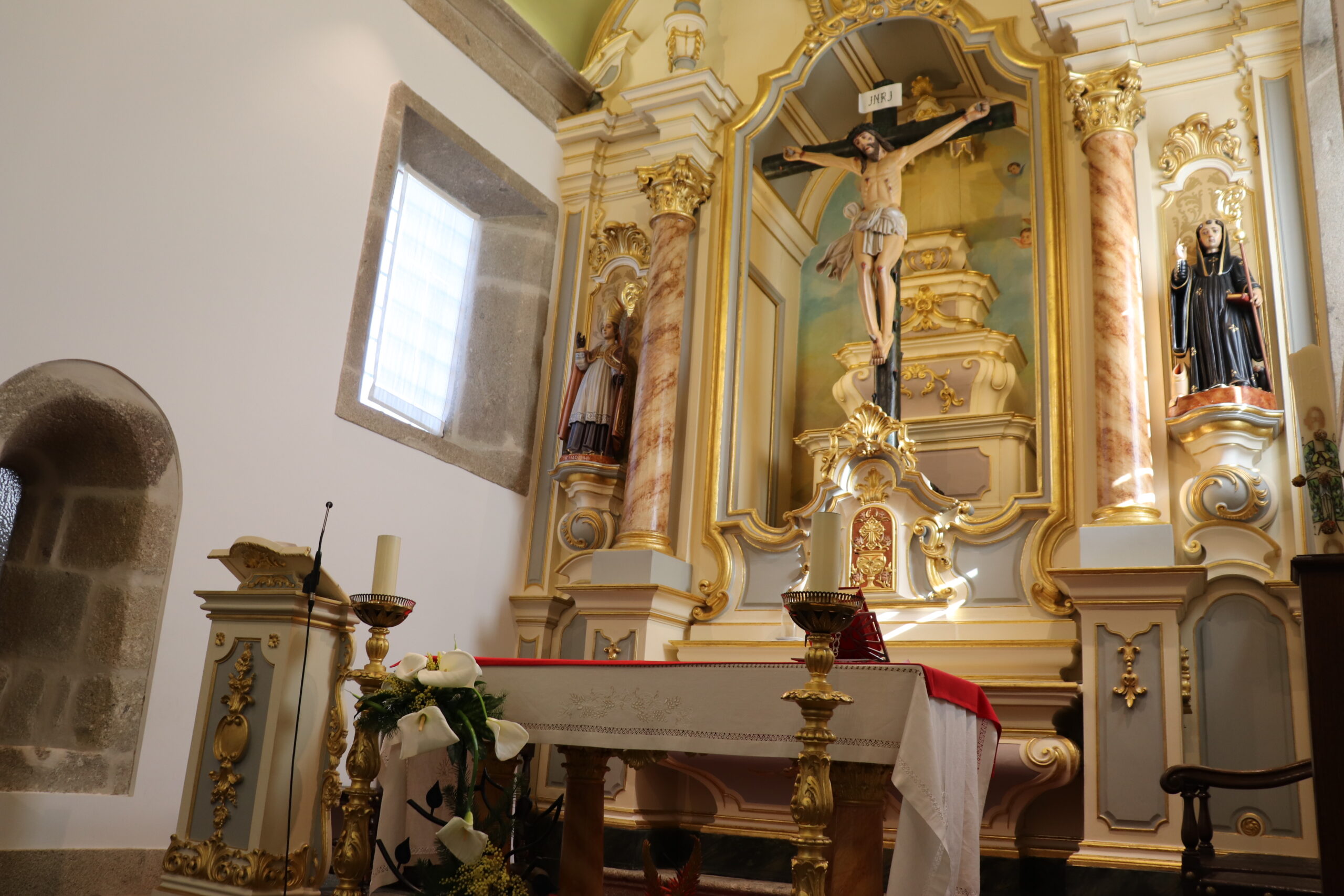
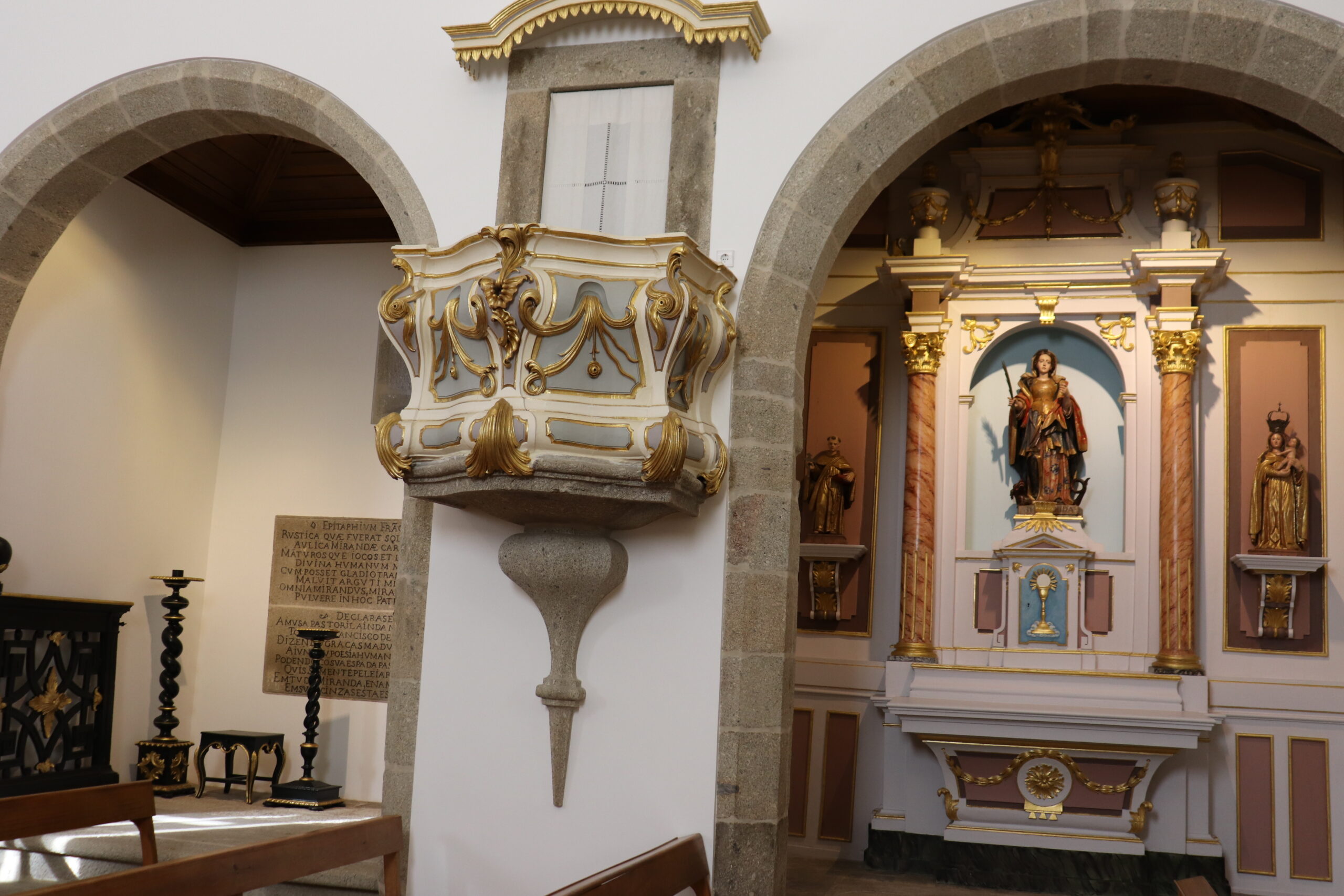
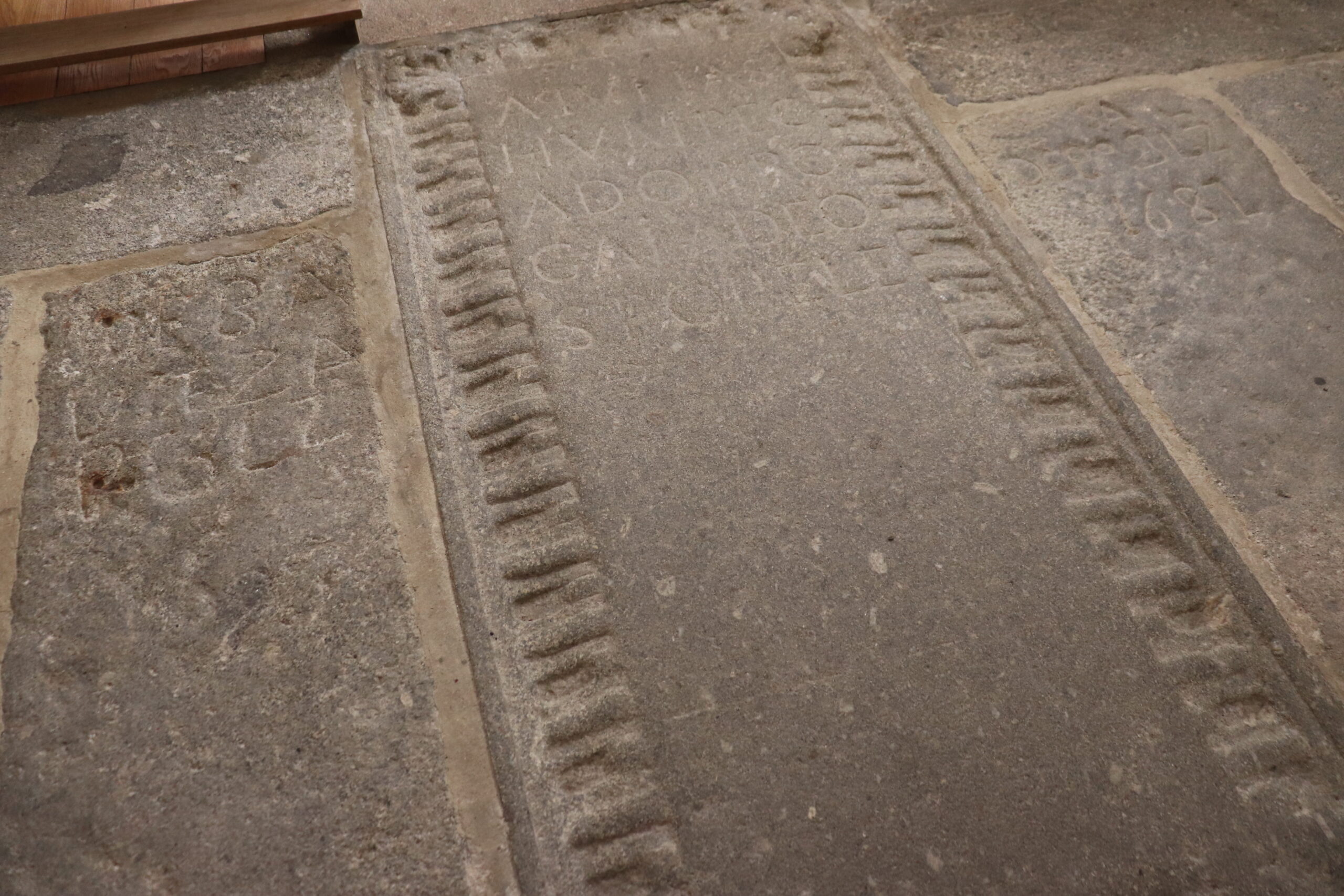
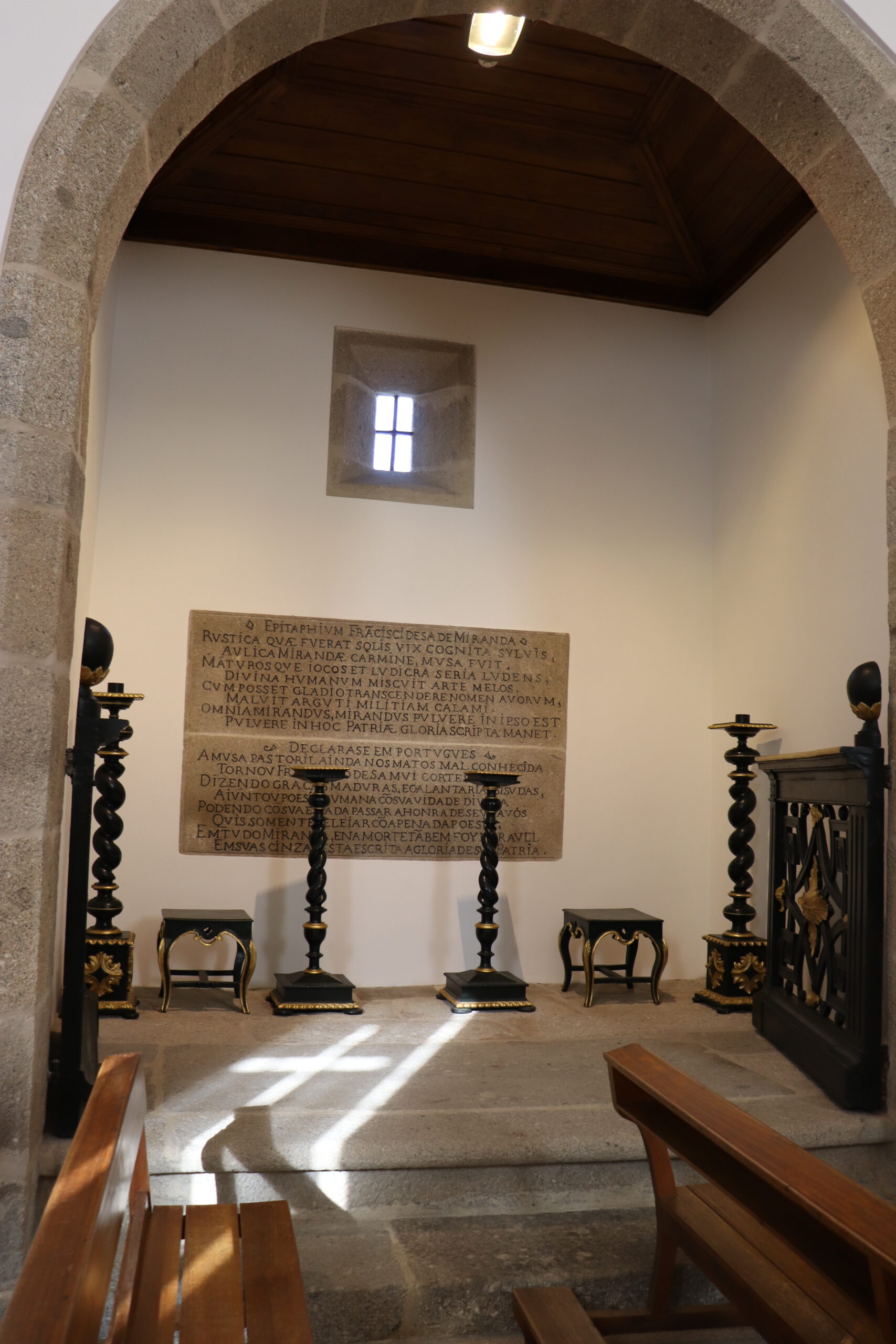
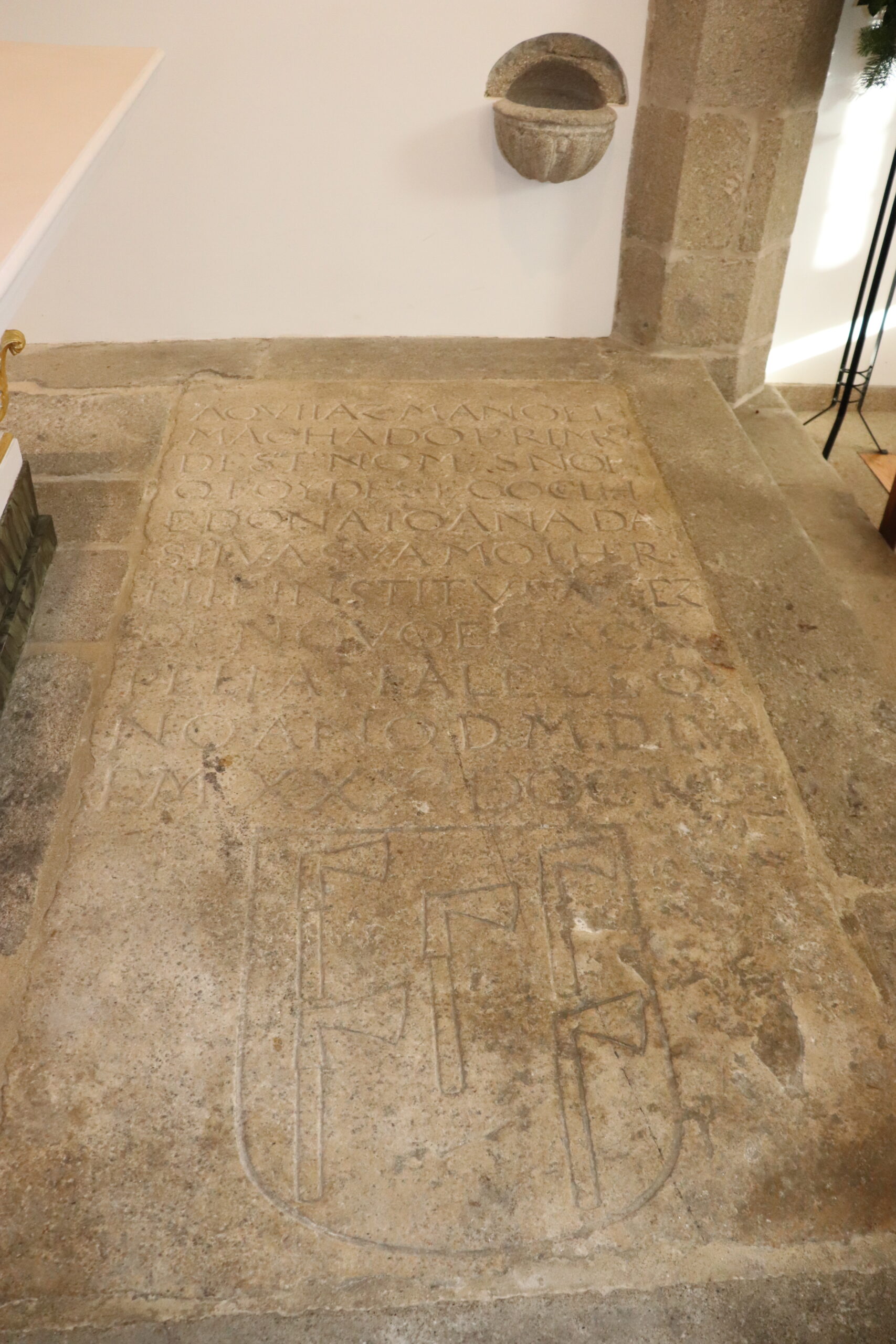
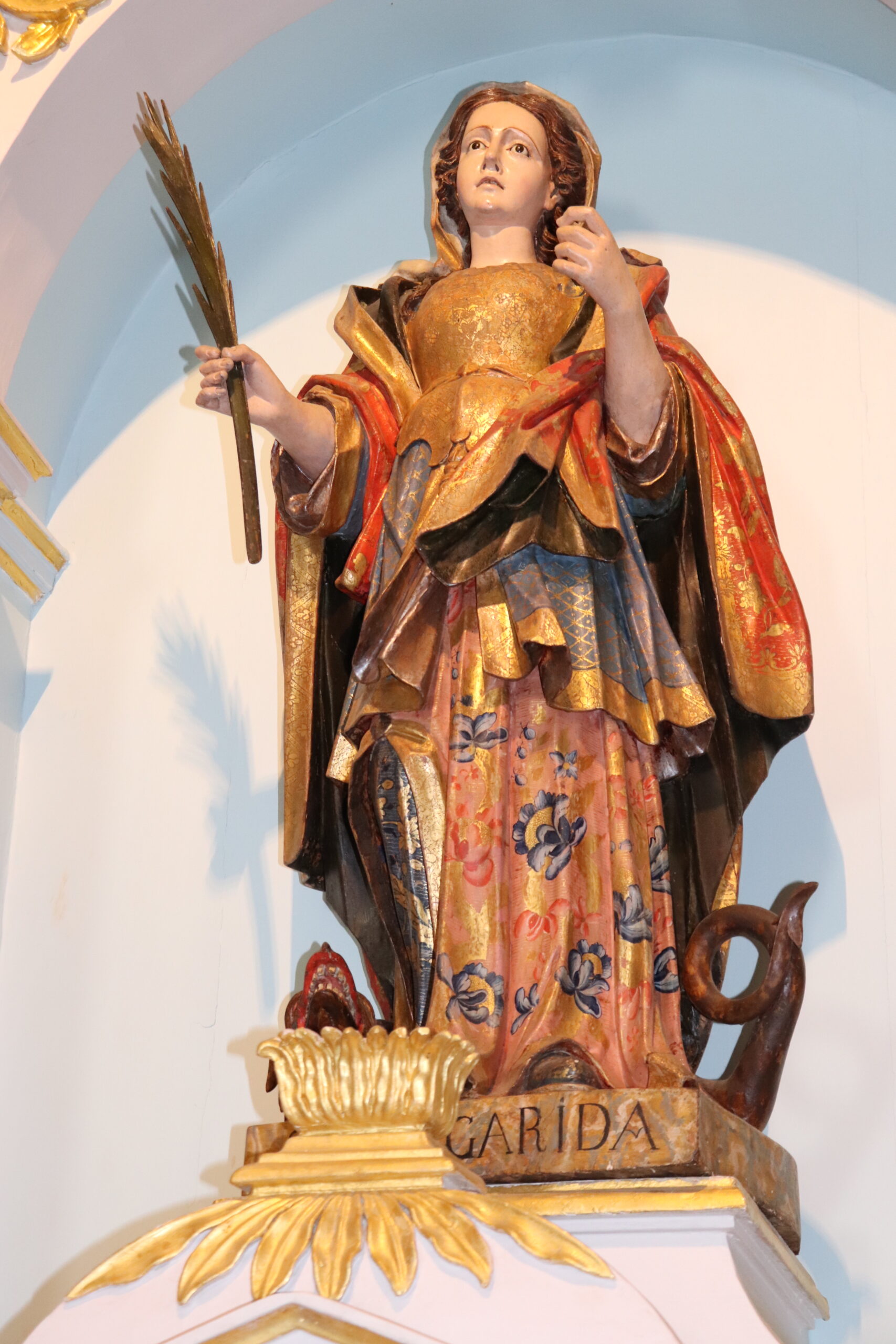
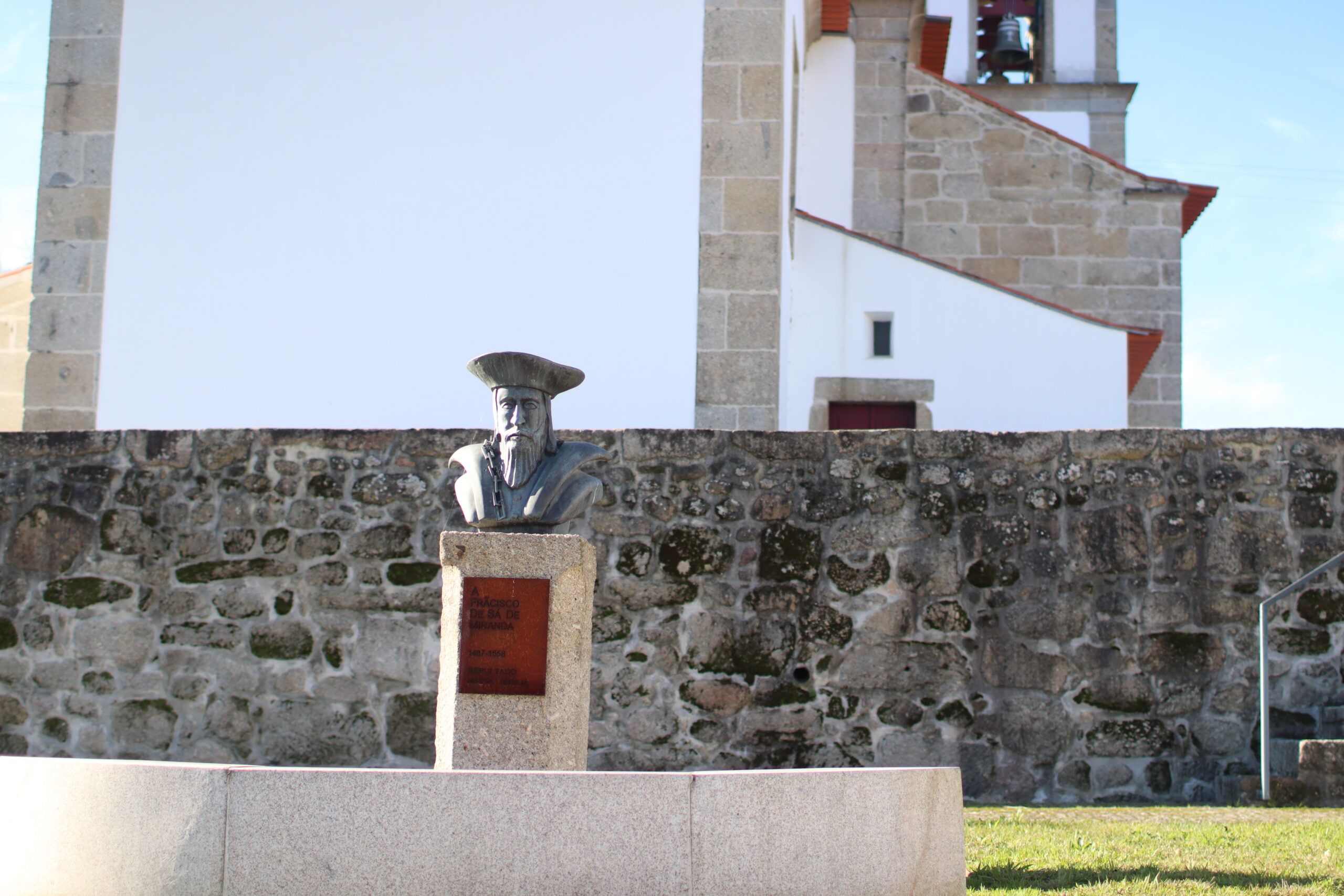
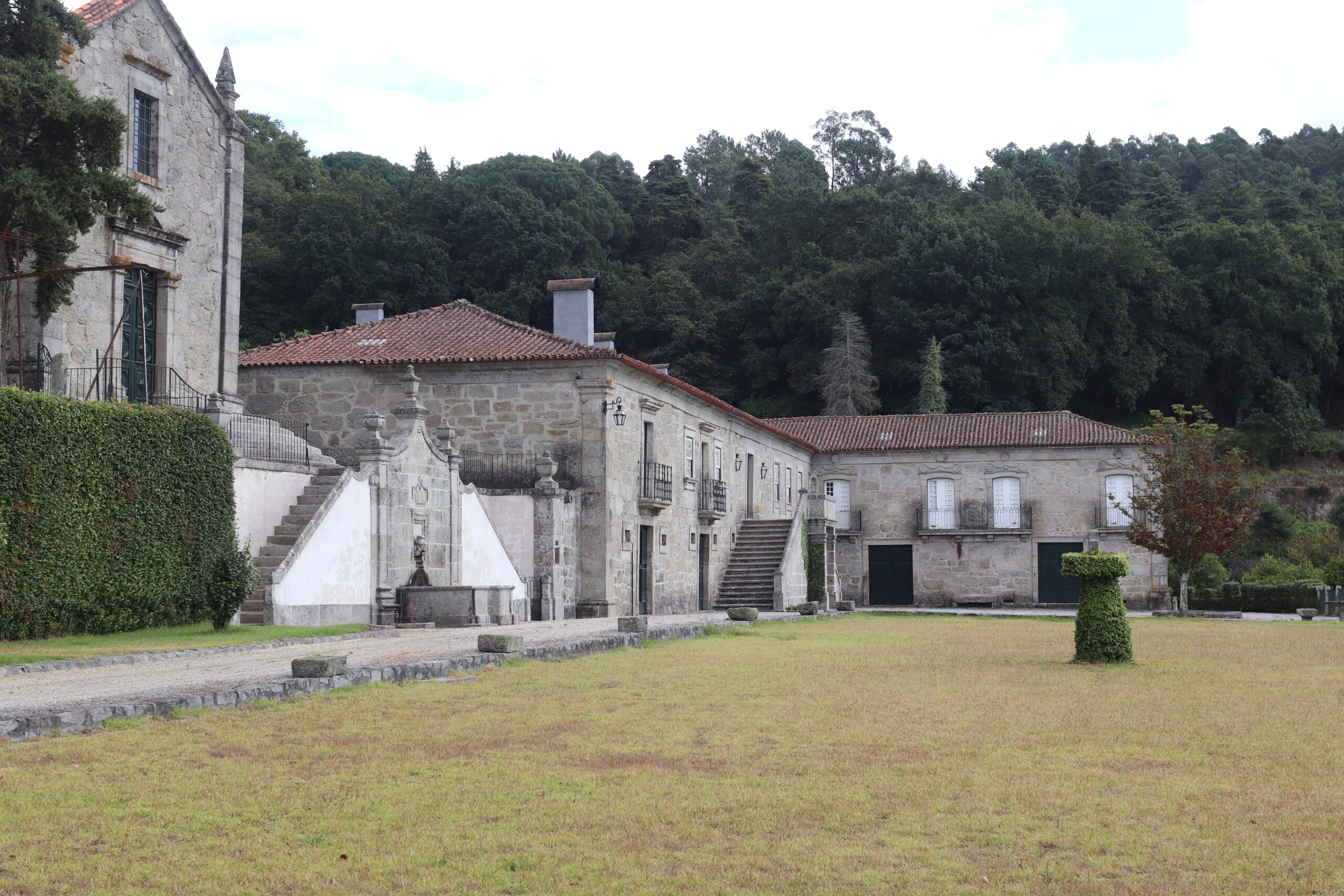
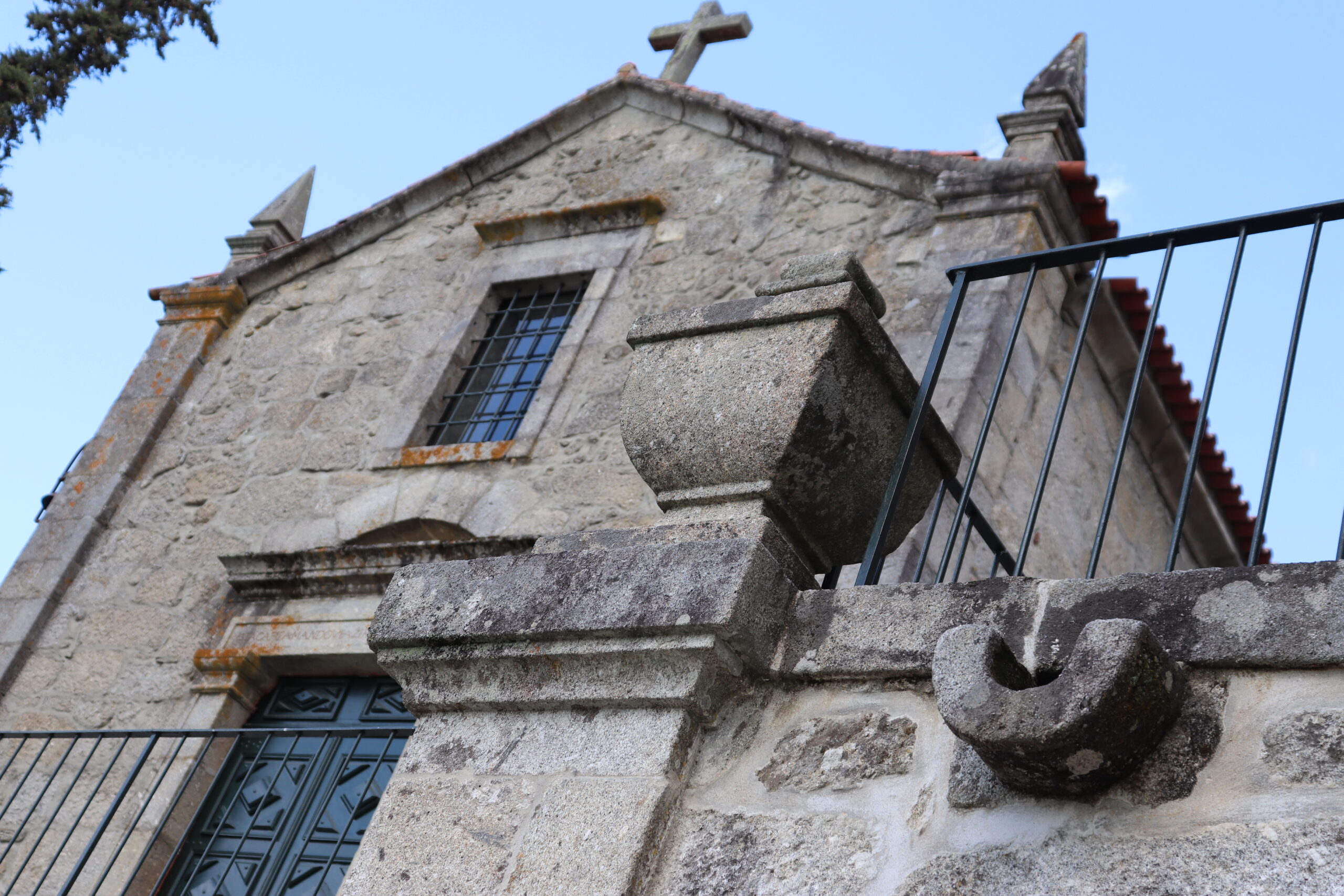
The origin of its construction dates back to the Middle Ages, as can be seen from the remains of a Romanesque window, discovered in one of the walls of the main chapel, belonging to the original church. In the 15th century, the chapel of Santa Margarida was built for the burial of Manuel Machado de Azevedo, 3rd Lord of Entre Homem e Cávado and his wife. In the second half of the 16th century, the son of Francisco de Sá de Miranda, Jerônimo de Sá de Miranda, ordered the construction of the chapel of Nossa Senhora da Apresentação or Tapada to place the tombs of his parents and family.
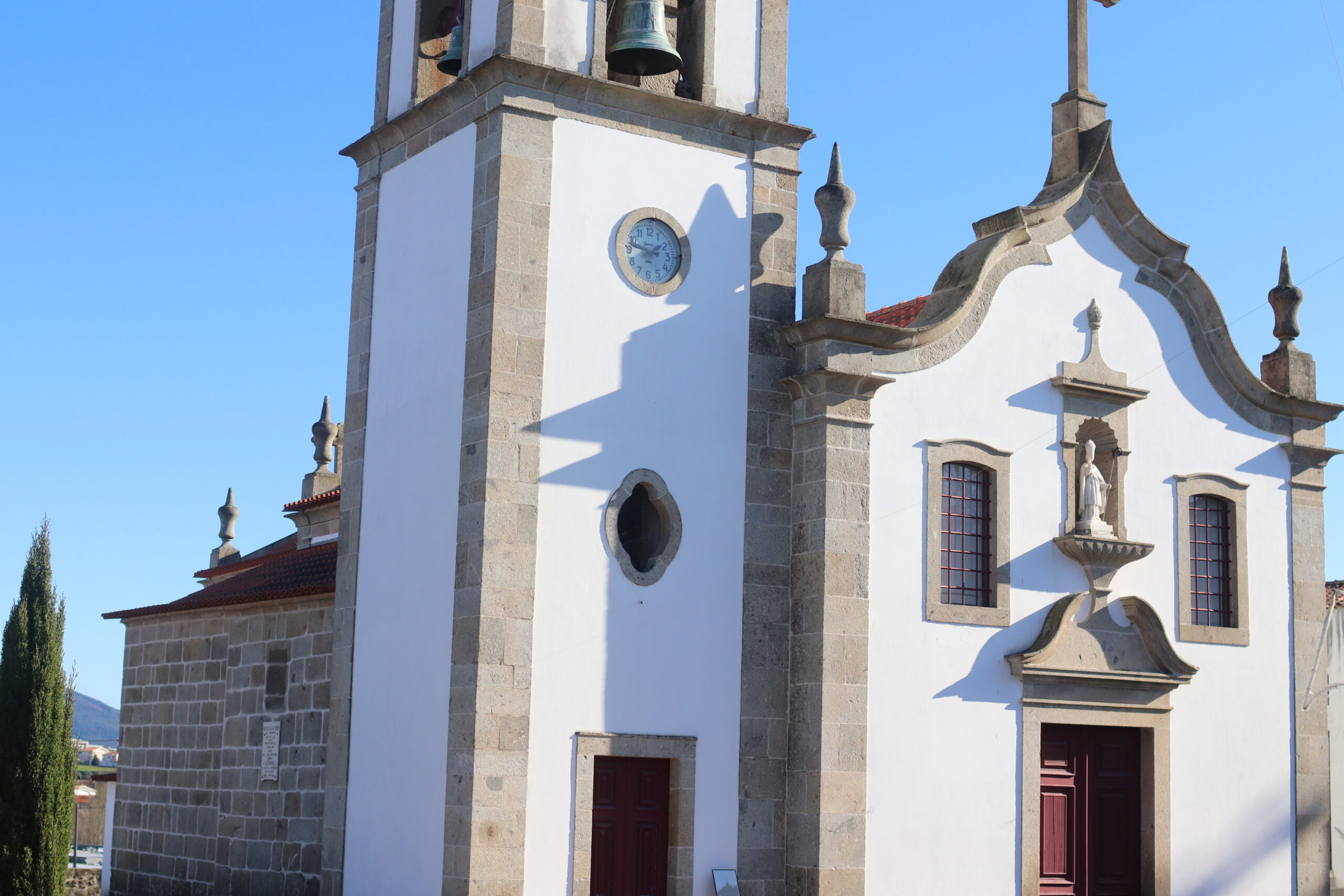
In the mid-18th century the church was rebuilt, presenting the architecture we can see today. The main façade of the church is Baroque, with a portal with a cut-out pediment, topped by a niche containing the image of S. Martinho, flanked by two large windows.