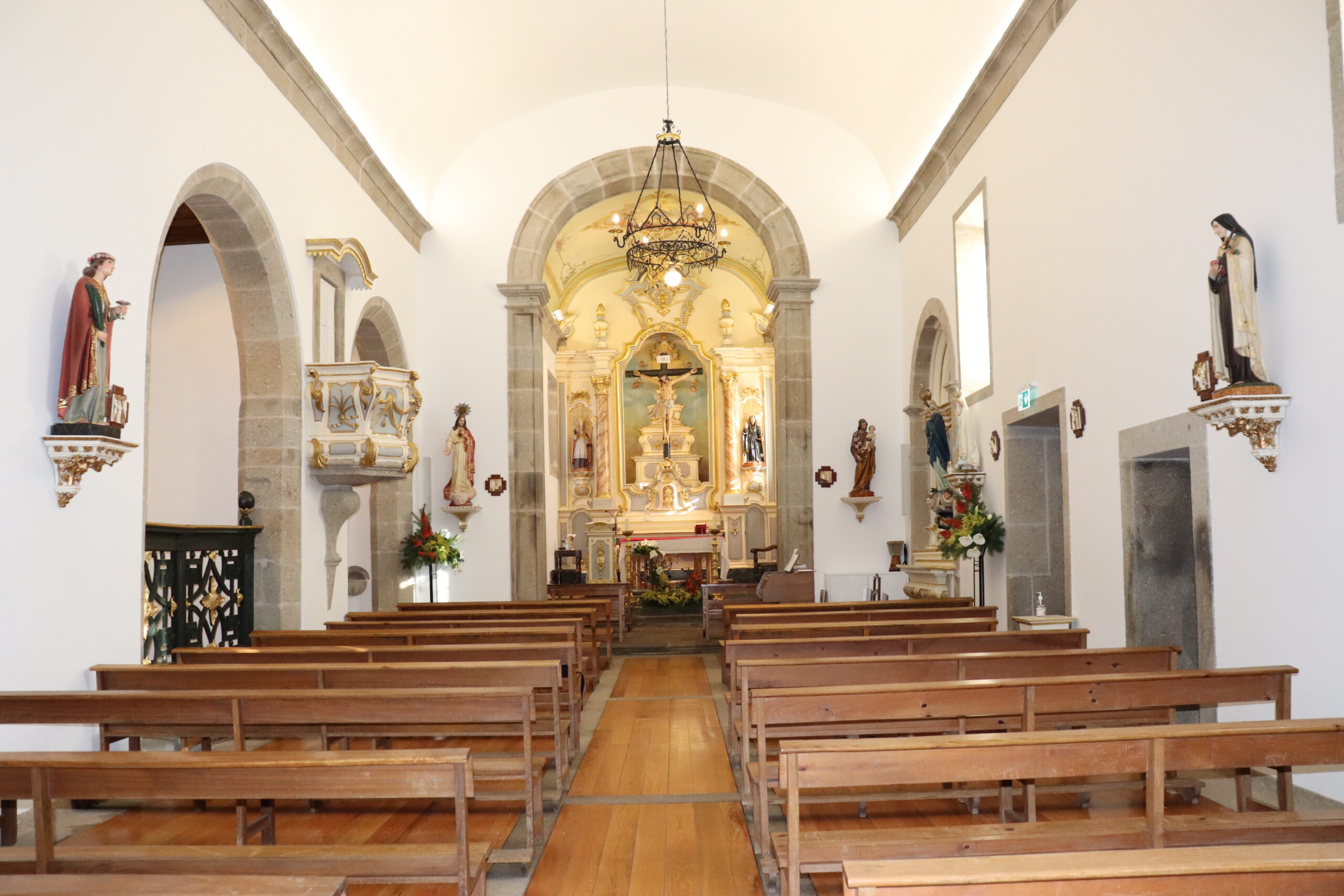
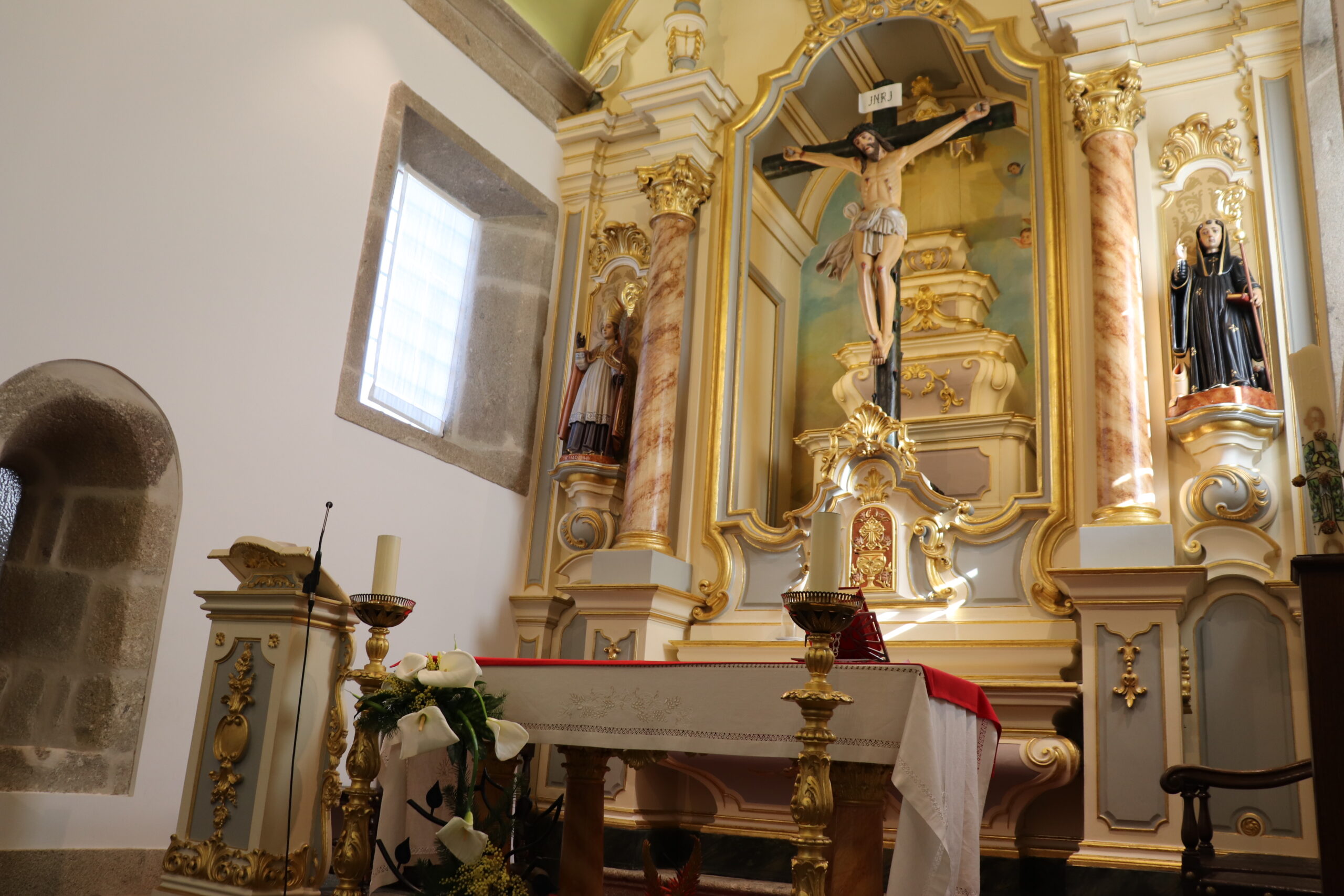
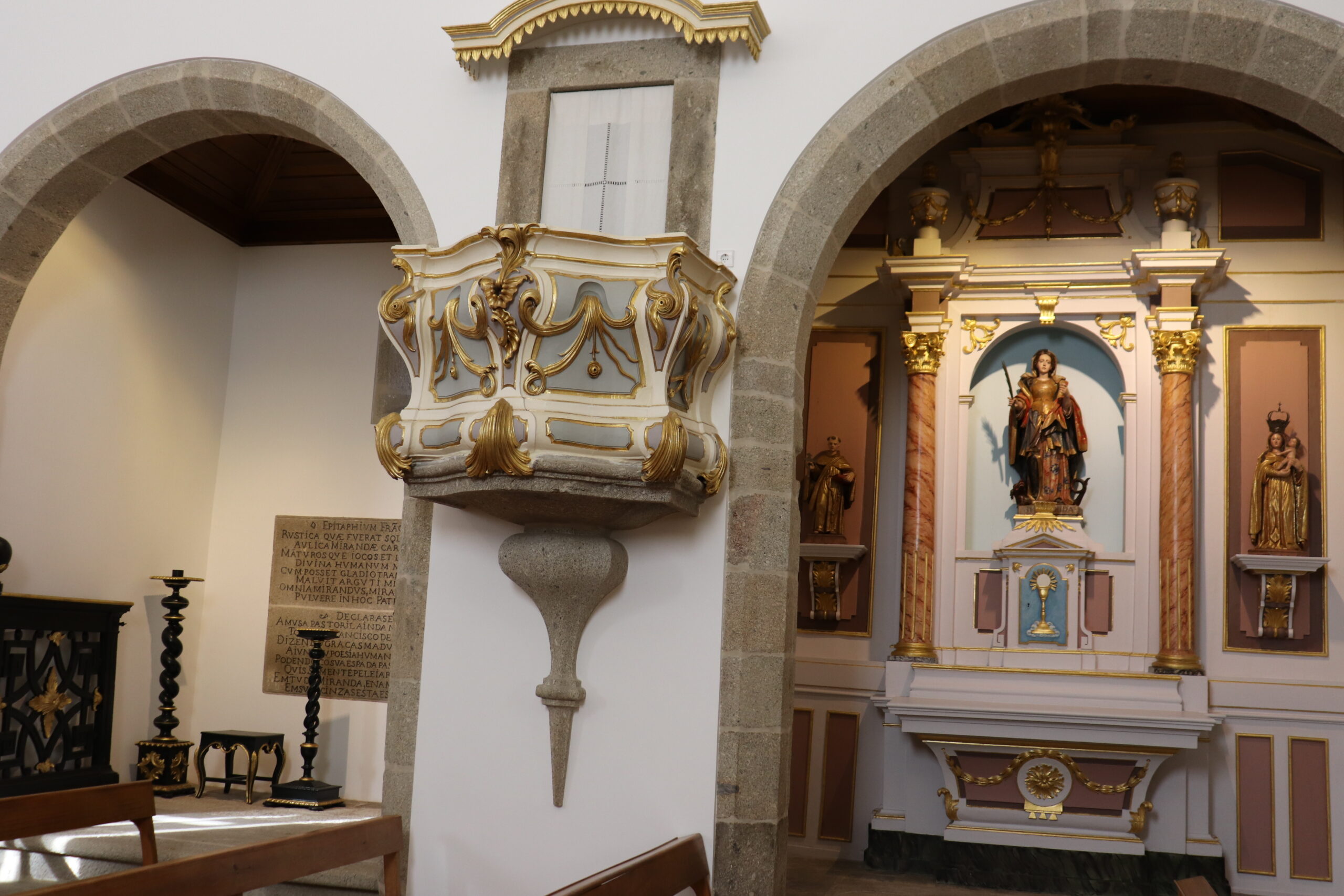
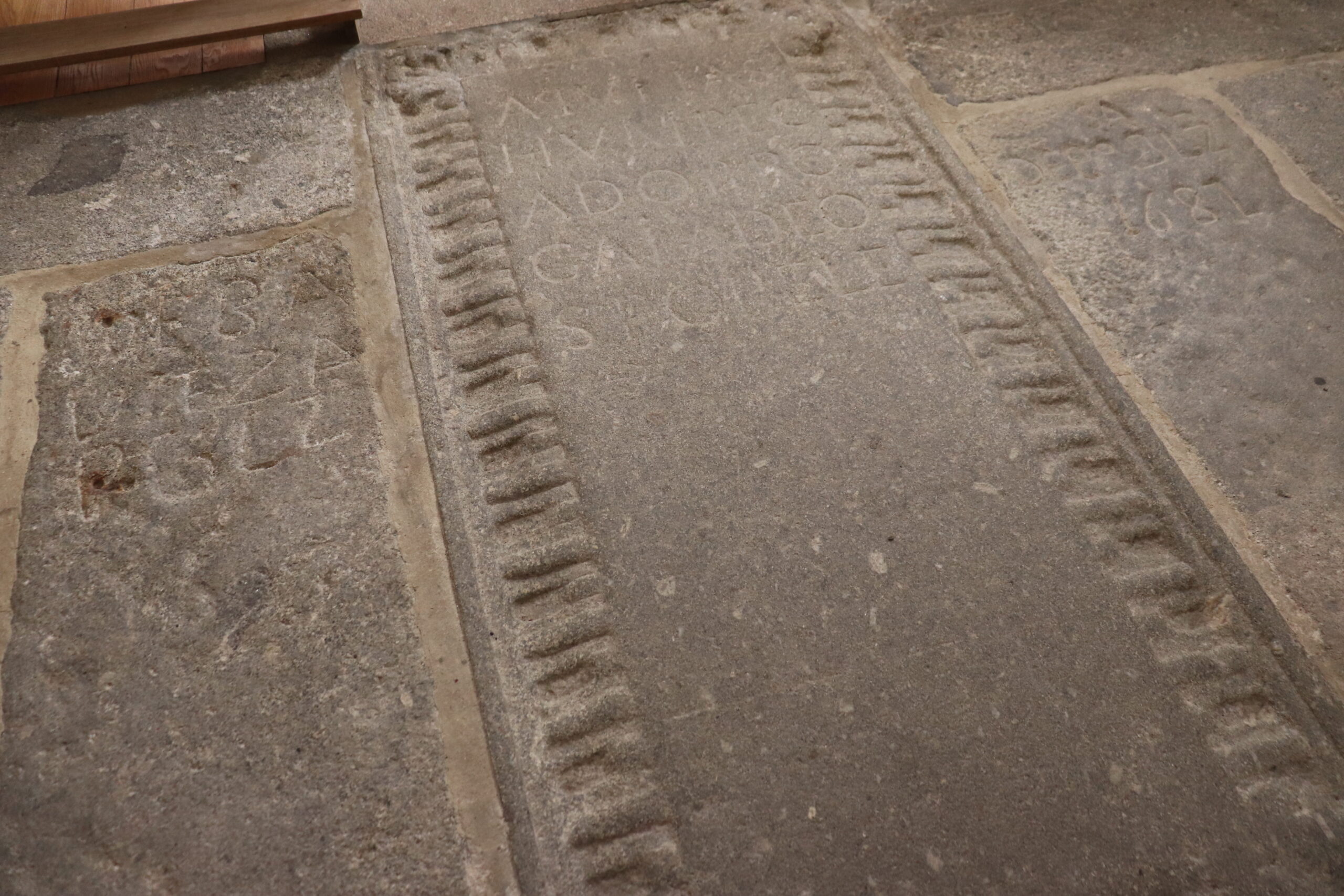
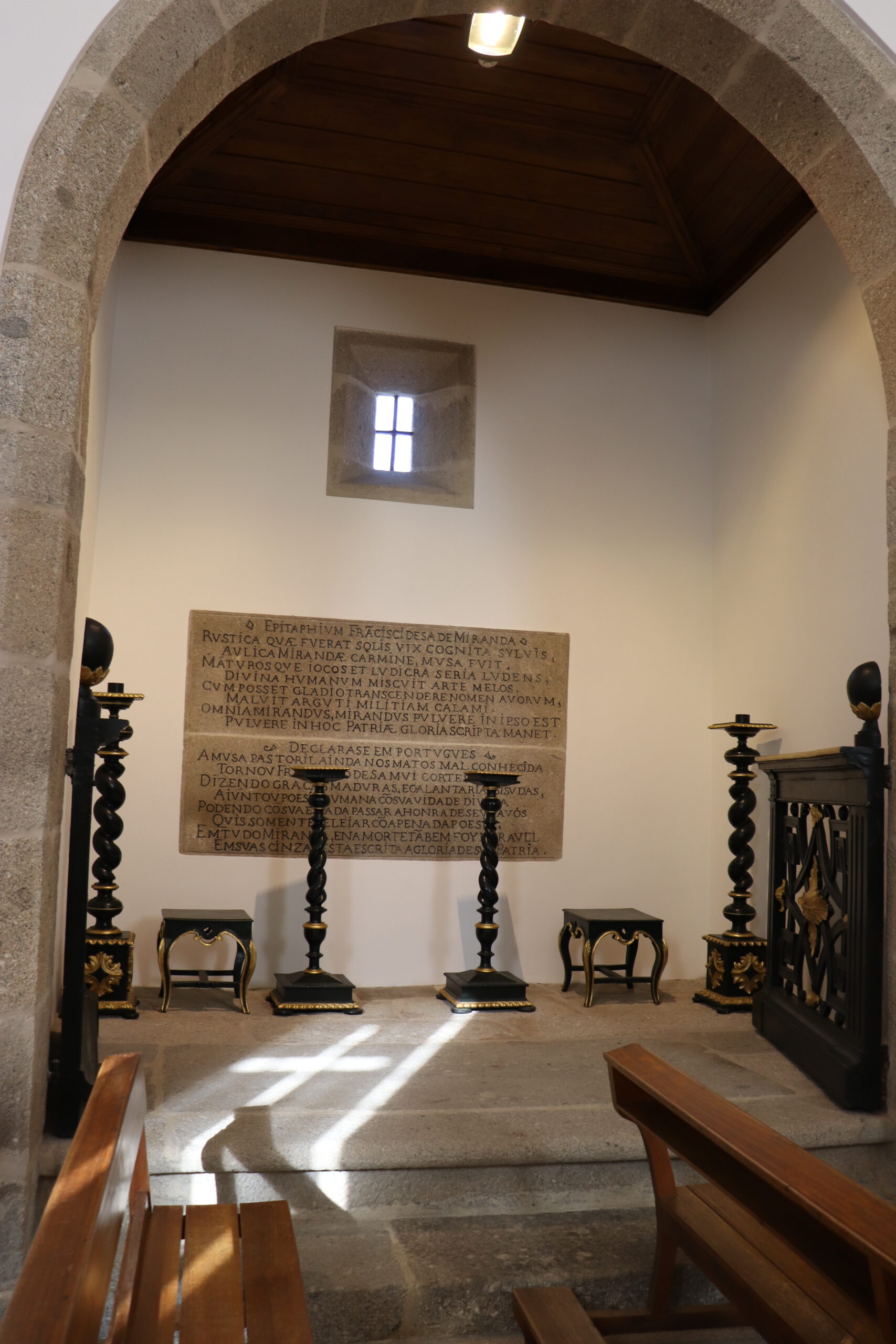
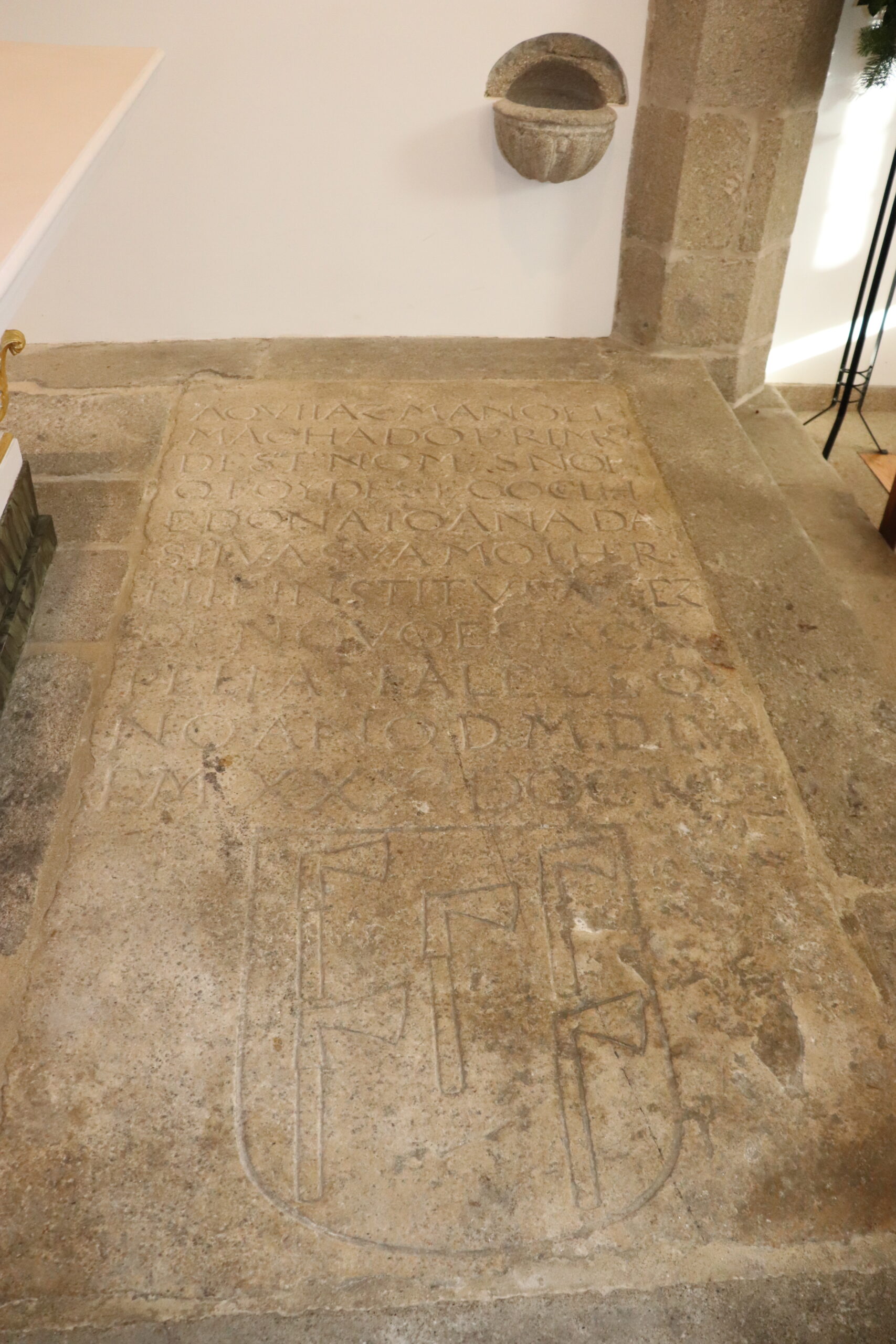
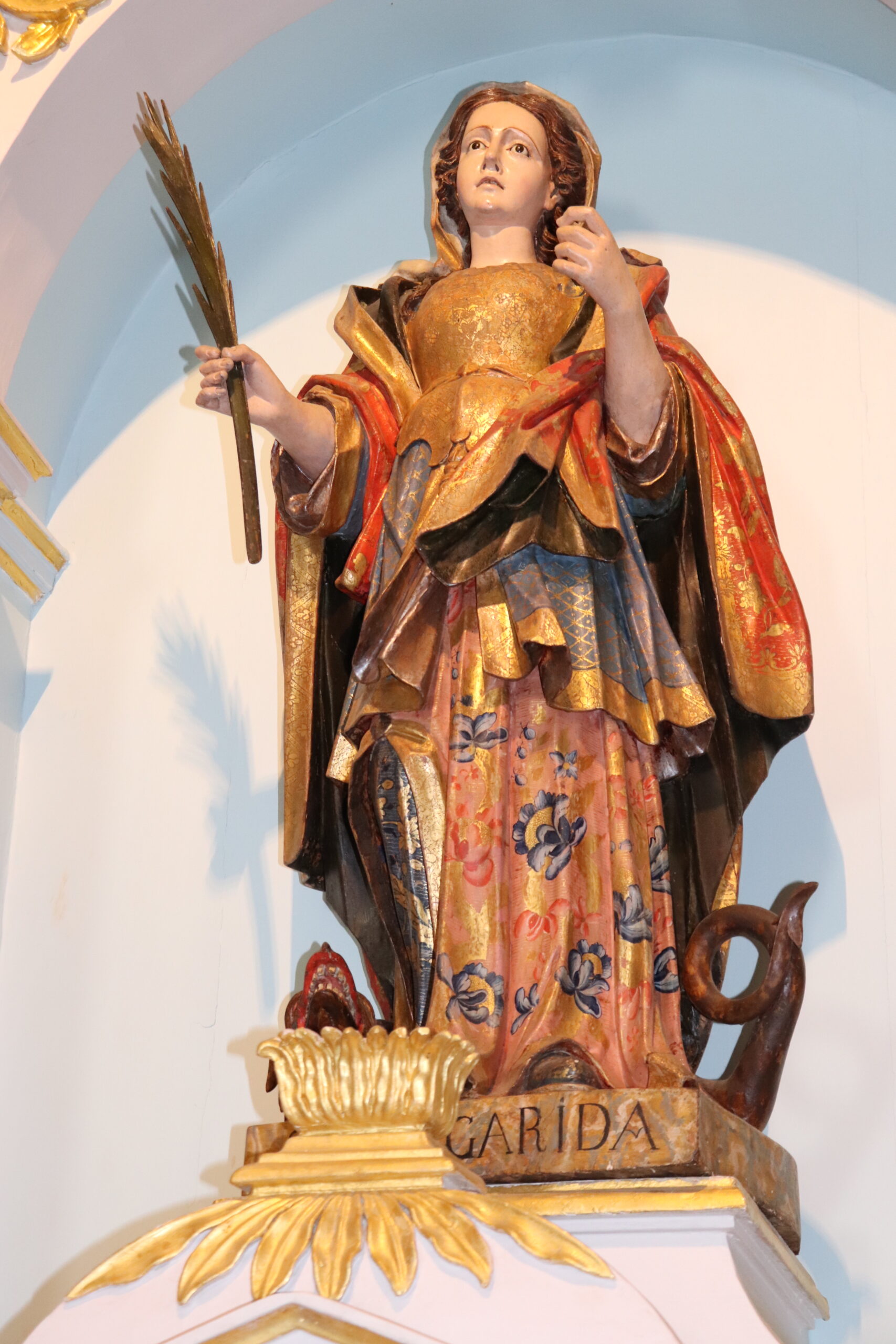
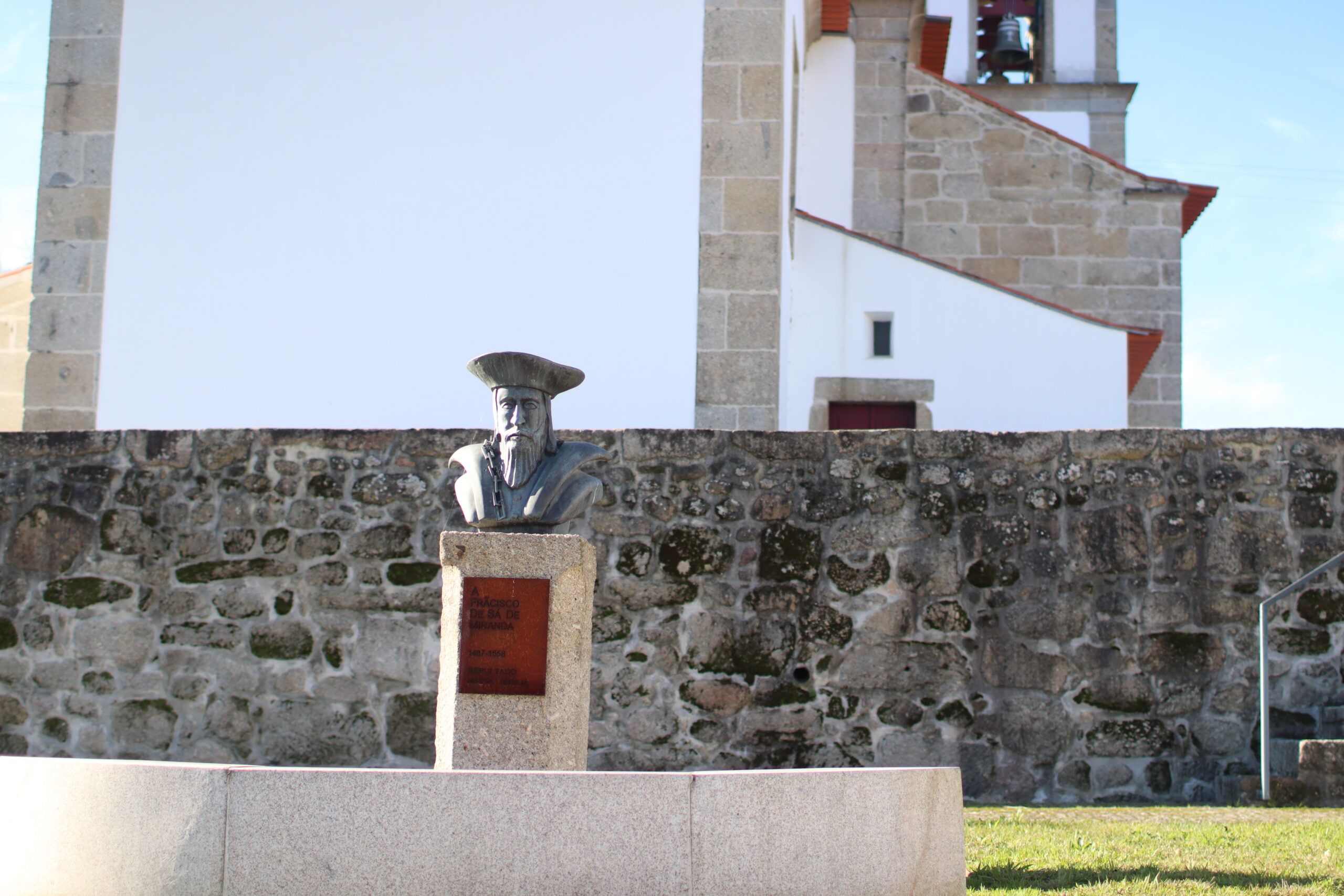
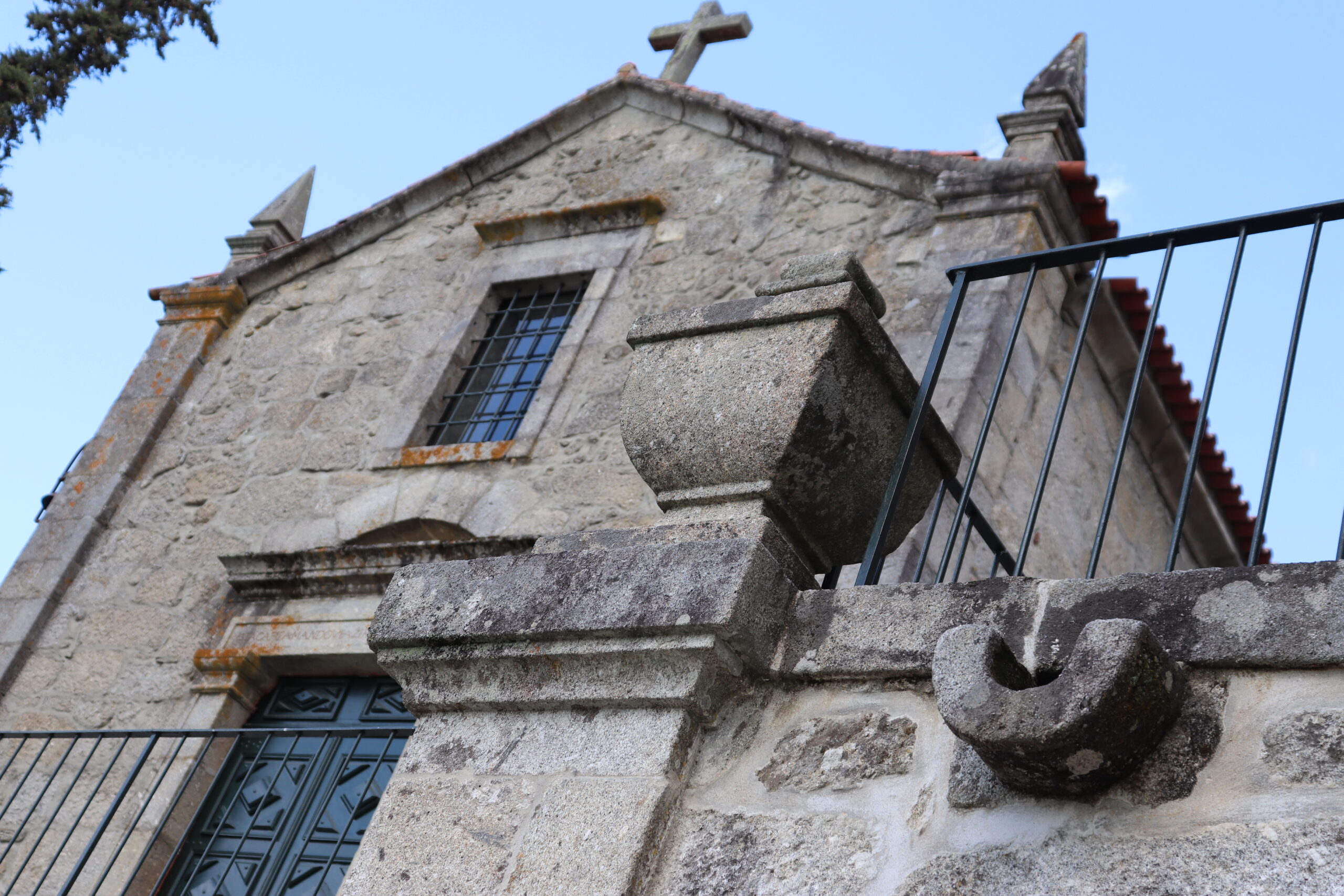
The origin of its construction dates back to the Middle Ages, as can be seen from the remains of a Romanesque window, discovered in one of the walls of the main chapel, belonging to the original church. In the 15th century, the chapel of Santa Margarida was built for the burial of Manuel Machado de Azevedo, 3rd Lord of Entre Homem e Cávado and his wife. In the second half of the 16th century, the son of Francisco de Sá de Miranda, Jerônimo de Sá de Miranda, ordered the construction of the chapel of Nossa Senhora da Apresentação or Tapada to place the tombs of his parents and family.
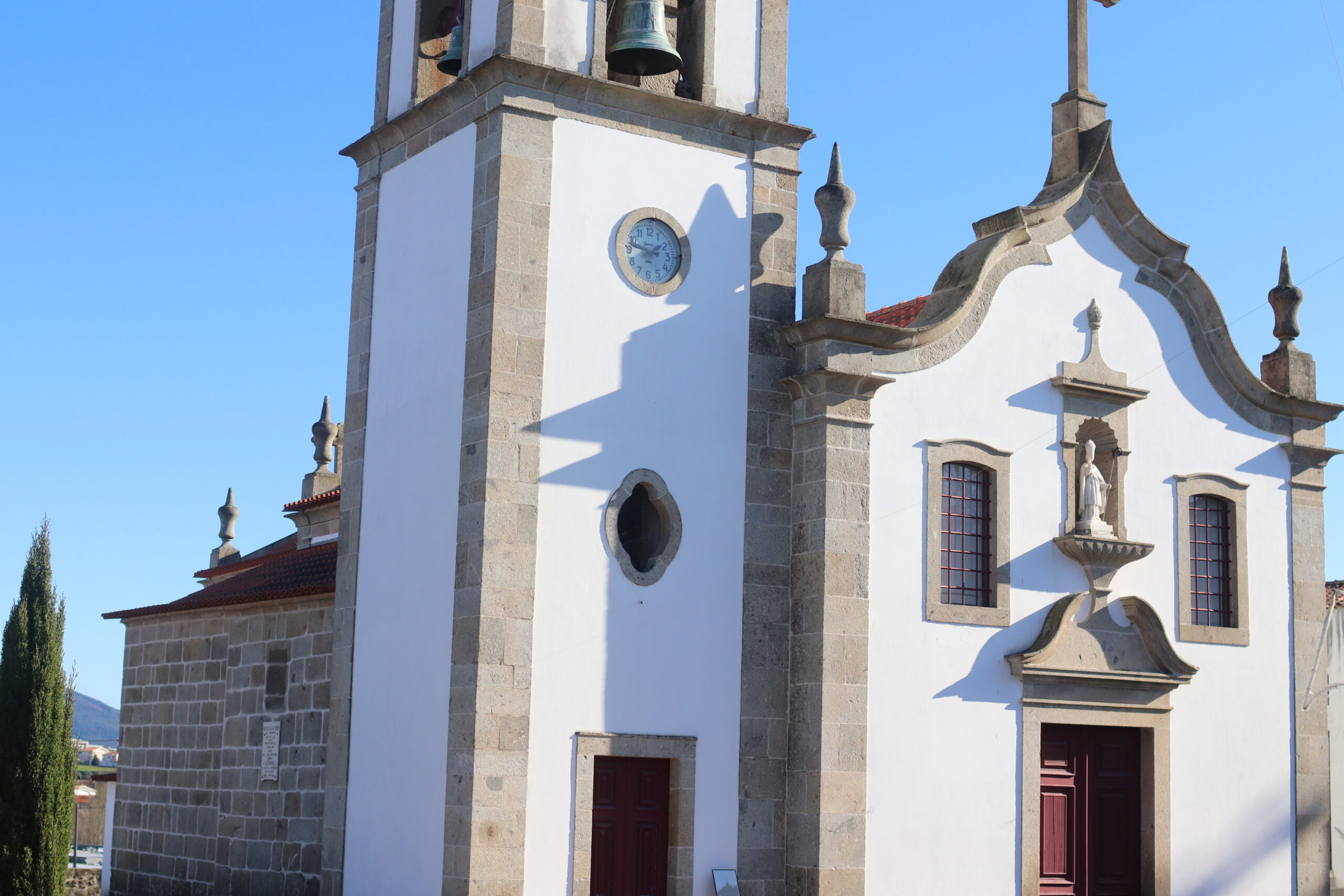
In the mid-18th century the church was rebuilt, presenting the architecture we can see today. The main façade of the church is Baroque, with a portal with a cut-out pediment, topped by a niche containing the image of S. Martinho, flanked by two large windows.
Francisco de Sá de Miranda, Portuguese poet and humanist, was born in Coimbra in 1486 or 1487 and died in 1558. He was the son of Canon Gonçalo Mendes de Sá, Canon of the Cathedral of Coimbra, and Inês de Melo, an unmarried lady, perhaps from the noble Mello family, with whom the priest had at least 8 children. The fact that he was born from an irregular relationship, Sá de Miranda does not make reference to his father and mother in his work, who perhaps does so, with bad intentions, is Gil Vicente, a playwright at Court, in Comédia Sobre a Divisa da Cidade de Coimbra and in Clérigo da Beira. On the other hand, Sá de Miranda, upon his return from Italy, questions the medievalism of Vincentian plays. The relationship between these two great personalities of Portuguese Literature has been cited several times by literary critics.
Although there are no documents to prove it, Sá de Miranda must have completed his elementary and secondary education at the schools of the Monastery of Santa Cruz in Coimbra, where he would have received a solid foundation in humanistic and Christian education. He obtained his doctorate in Law from the University of Lisbon, appearing as a “doctor” in the Cancioneiro Geral de Garcia de Resende, published in 1516.
Francisco de Sá de Miranda loved and was loved by a beautiful woman, poetically called Célia. For Rodrigues Lapa it could be Isabel Freire, lady-in-waiting to the Infanta D. Isabel, daughter of D. Manuel I. It is certain that Sá de Miranda had several youthful loves in the lands of Coimbra.
Sá de Miranda was a nobleman at the Court of D. Manuel, where he met Gil Vicente and Bernardim Ribeiro, with whom he formed a friendship and it was as a courtier that he emerged as the author of poems (songs, vilancetes and esparsas) in the Cancioneiro Geral.
Between 1521 and 1526 or 1527 Francisco de Sá de Miranda traveled to Italy, where the renaissance in the arts and letters had reached its peak. As a result of this stay, he introduced the novelties of the Italian school into Portuguese culture, namely the decasyllabic verse, compositions in triplets and octaves, the sonnet, ode, song, eclogue, sextina and prose comedy. A pioneer in the use of classical forms, Sá de Miranda initiated the Renaissance period in Portuguese literature.
In 1527, the Court of D. João III took refuge in Coimbra, away from the plague epidemic that was spreading in Lisbon. Sá de Miranda maintained very close relations here with the king and the nobles of the Court. Despite having already broken his ties with the Court, he maintained friendly relations with D. João III that lasted forever. The king’s predilection for Sá de Miranda earned him the Commandery of S. Julião de Moronho (municipality of Tábua) which he later exchanged for the Commandery of Duas Igrejas (municipality of Vila Verde).
Around 1530 Francisco de Sá de Miranda married D. Briolanja de Azevedo, from the Azevedos family that had crossed with the Machados, lords of the House of Castro, daughter of Francisco Machado, Lord of the House of Torre (Vila Verde) and Lord Donatário of the municipality of Entre Homem e Cávado. It was in Casa da Torre that Sá de Miranda and his wife lived until 1552, where they raised and educated their children, Gonçalo Mendes de Sá and Jerónimo de Sá e Azevedo.
After the marriage, he bought part of Quinta do Barrio, in Fiscal, but it was only after he had acquired the other part of the farm that it became Quinta da Tapada, where they moved to in 1552.
The death of D. João Manuel, who had great admiration for the work of Sá de Miranda, in 1554, the death of his eldest son, in combat in North Africa, and the death of his wife, deeply shook the last years of the poet’s life, who ended up dying in 1558.
The first poetic works of Francisco de Sá de Miranda, thirteen in number, were published in the Cancioneiro Geral de Garcia de Resende, in 1516. In literary prose he published two comedies, Os Estrangeiros and Os Vilhalpandos. Much of Mirandine poetry was written during his stay in Italy, as is the case of the Cantiga made in the great fields of Rome. Sá de Miranda left an important epistolographic work and a series of eclogues, among other texts. His work was published posthumously, in 1595.
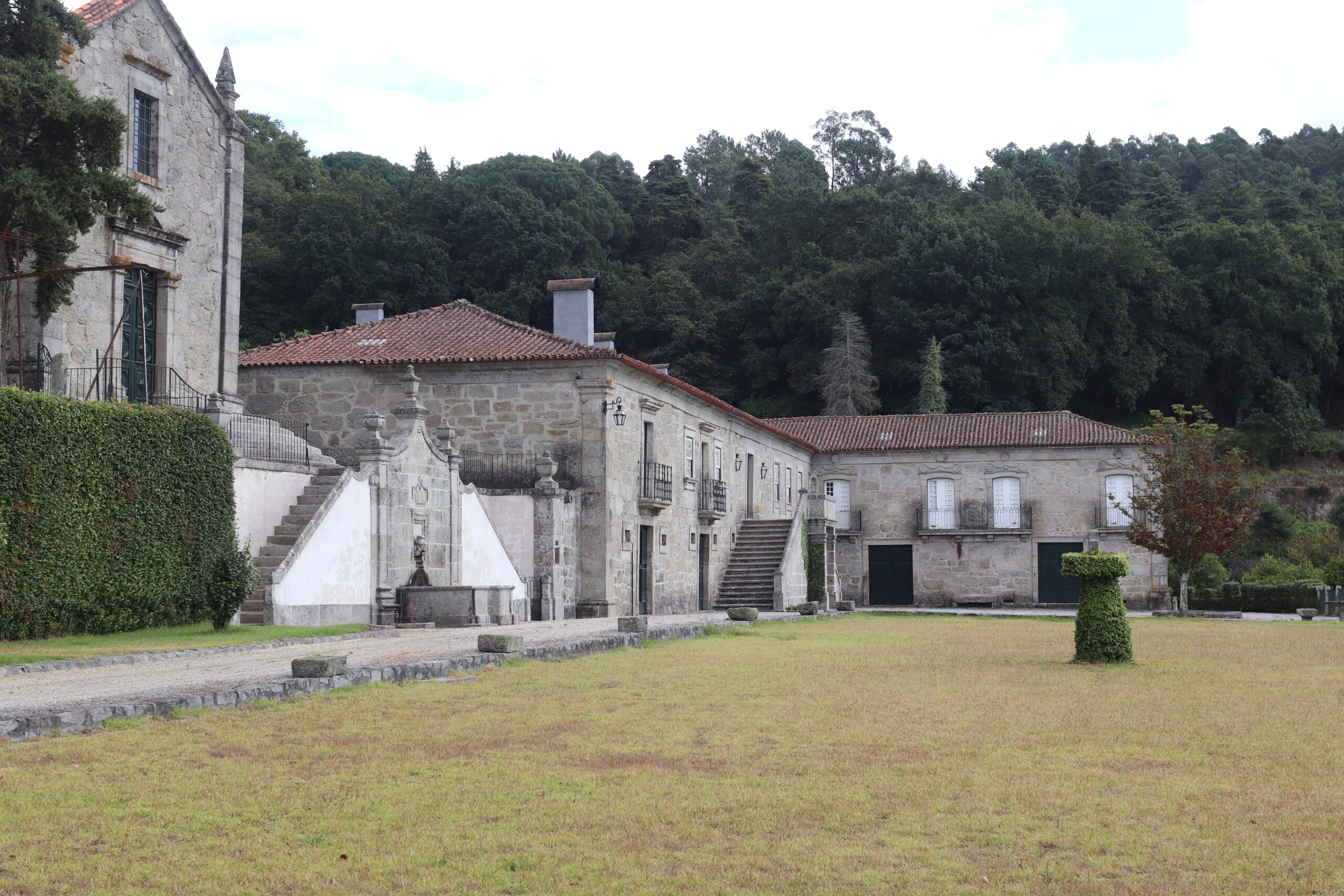
Classified as a Property of Public Interest by Decree of 1977, Casa da Tapada is located on the farm of the same name, in a rural area, isolated by vineyards and forest in the parish of Fiscal.
In 1530 Francisco de Sá de Miranda and his wife, D. Briolanja de Azevedo, bought the Quinta do Bárrio Novo or Bárrio da Fonte and, later, acquired another part of the farm with other lands, giving rise to the Quinta da Tapada.
Casa da Tapada was built by Francisco de Sá de Miranda in 1540, but it was only in 1552 that the couple settled permanently in the house.
In 1589 Francisco de Sá Menezes, grandson of Francisco de Sá de Miranda, and his first wife, ordered the construction of the Chapel of Our Lady of Salvation. It was a small chapel attached to the main house.
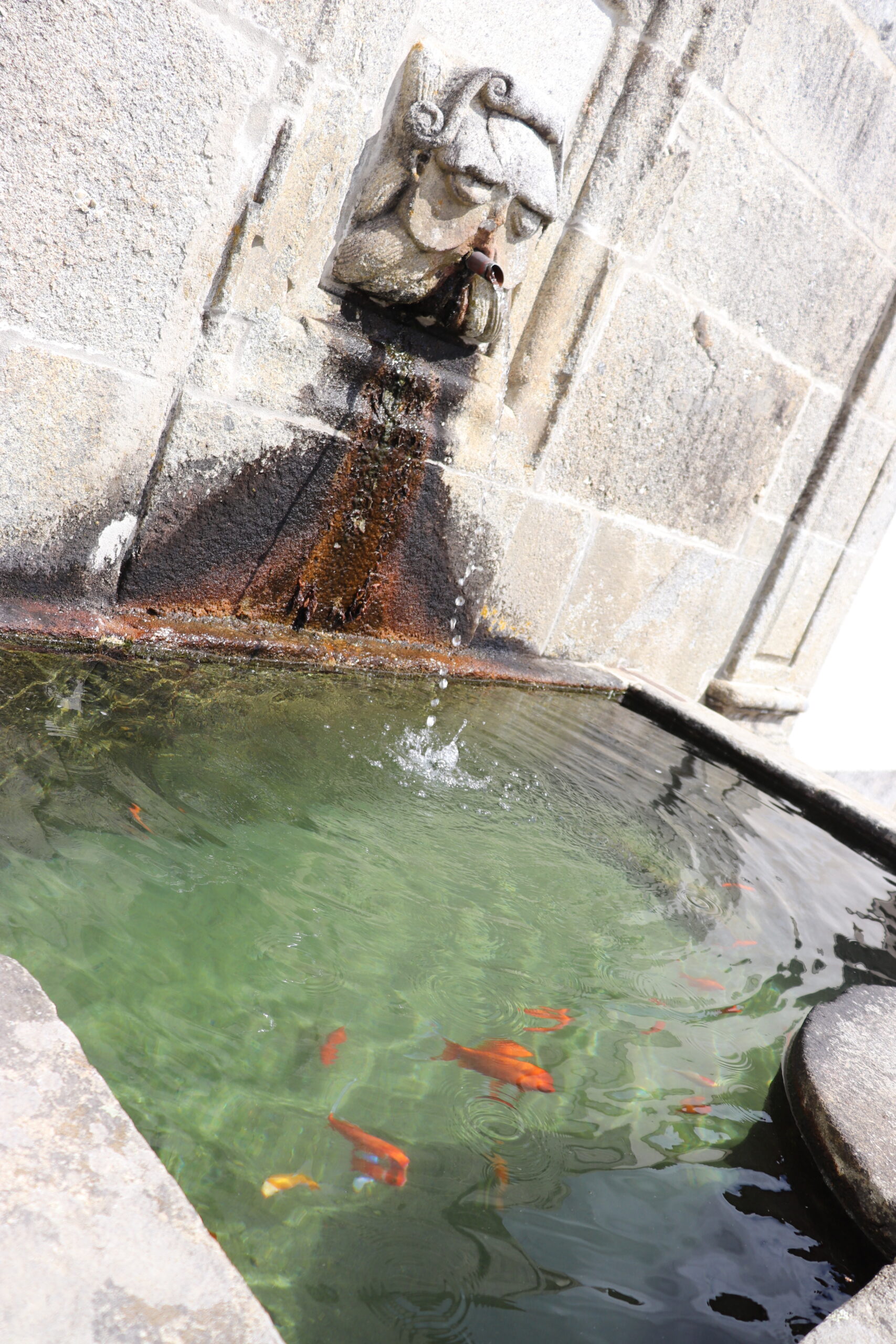
Next to the manor house there are agricultural buildings, namely a granary and other rustic houses. On the terrace, in front of the house, there is a backrest with a bas-relief representing Santiago, mounted on horseback, trampling the Moors, taken from a 17th century fountain.