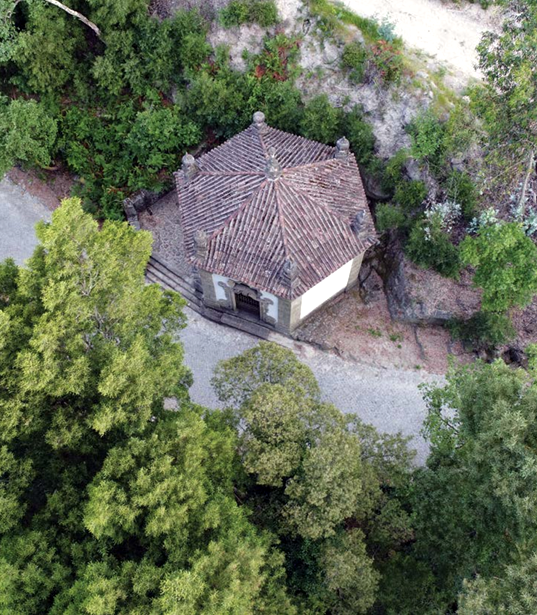
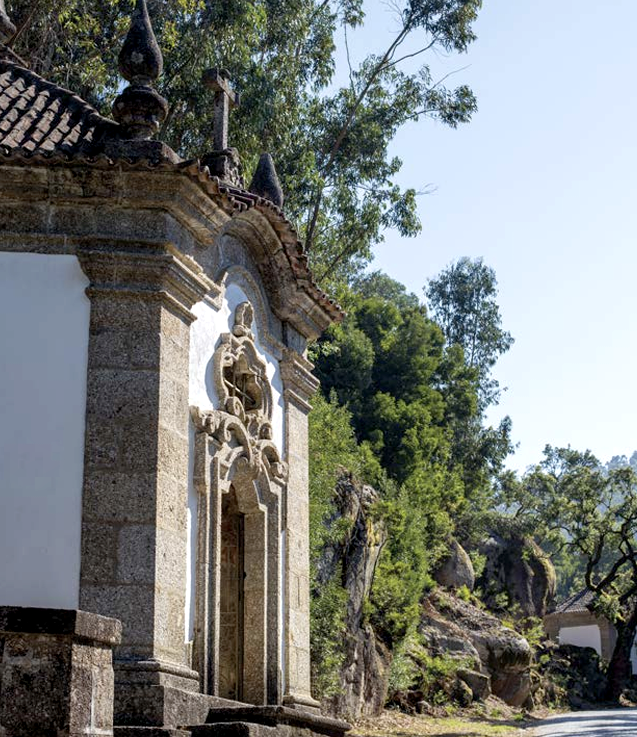
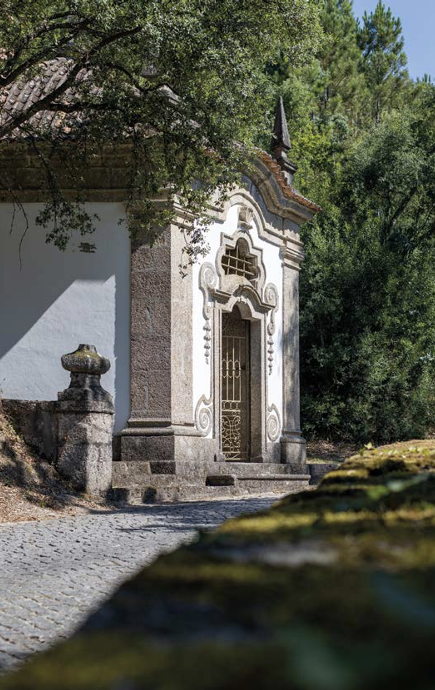
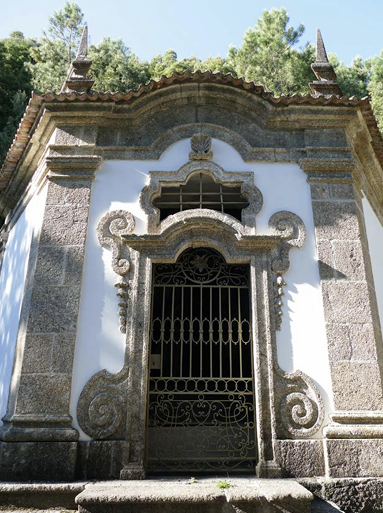
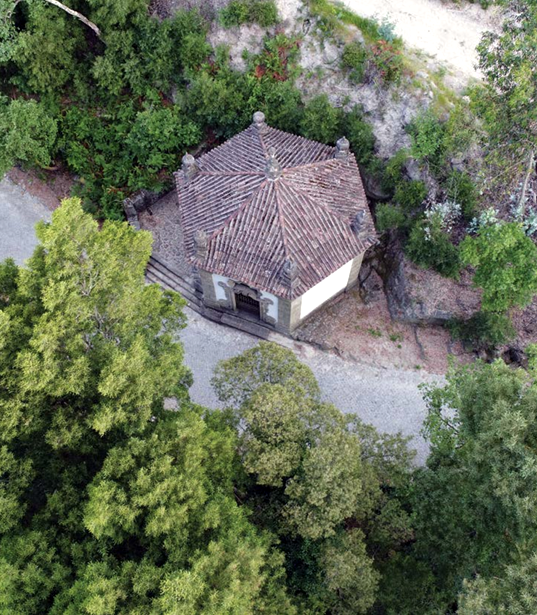
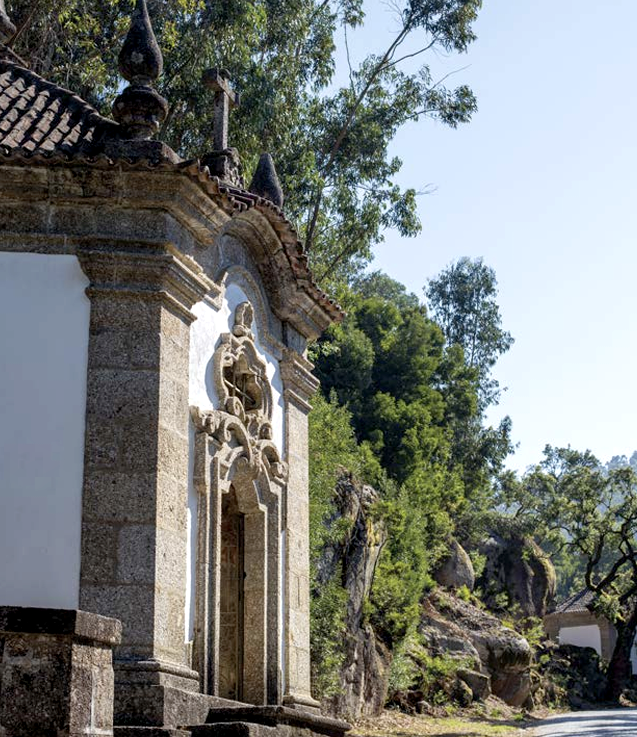
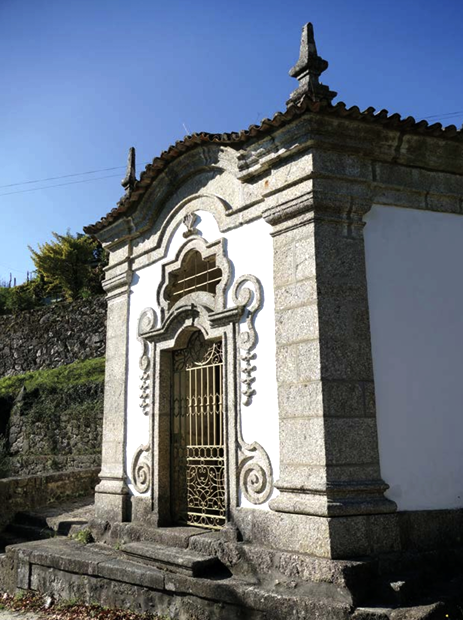
About a kilometer before the Santuário da Abadia, you can see the chapels corresponding to the paths of the “Passion of Christ” and the “Life of Mary”, popularly known as “Calvários da Senhora da Abadia” or “Caminhos de Belém”. A visit to the 15 chapels: seven rectangular and eight hexagonal with late Baroque façades, built mainly on the left side of the path, is a must, whether on a pilgrimage or just to enjoy nature. The rectangular chapels correspond to the main steps of the Passion of Christ, while the hexagonal ones represent the life of the Virgin Mary.
It is assumed that the chapels were built in the 18th century, after the visit of Archbishop D. Rodrigo de Moura Teles. Rodrigo de Moura Teles, responsible for the construction of the Bom Jesus do Monte staircase, in Braga.
The route is highly recommended for those who want to immerse themselves in the silence of the mountain, lulled by the singing of birds and the lapping of water, which are an uninterrupted feature throughout the Abadia.
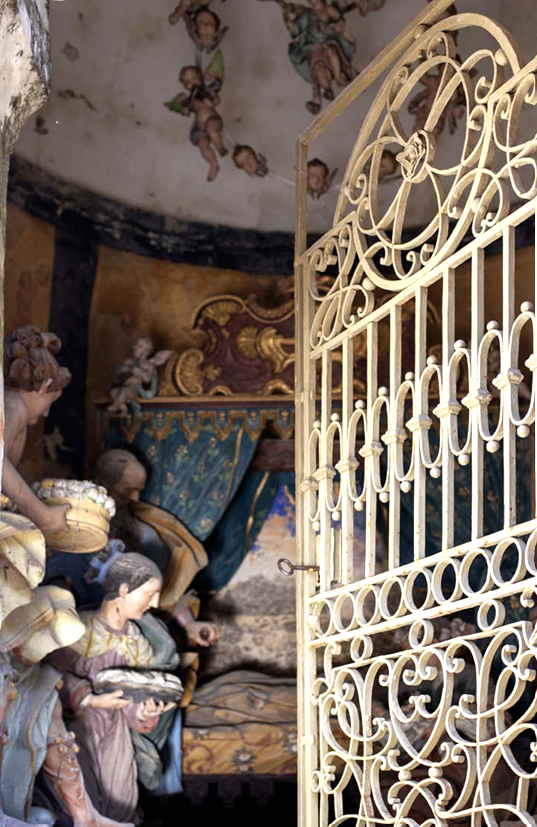
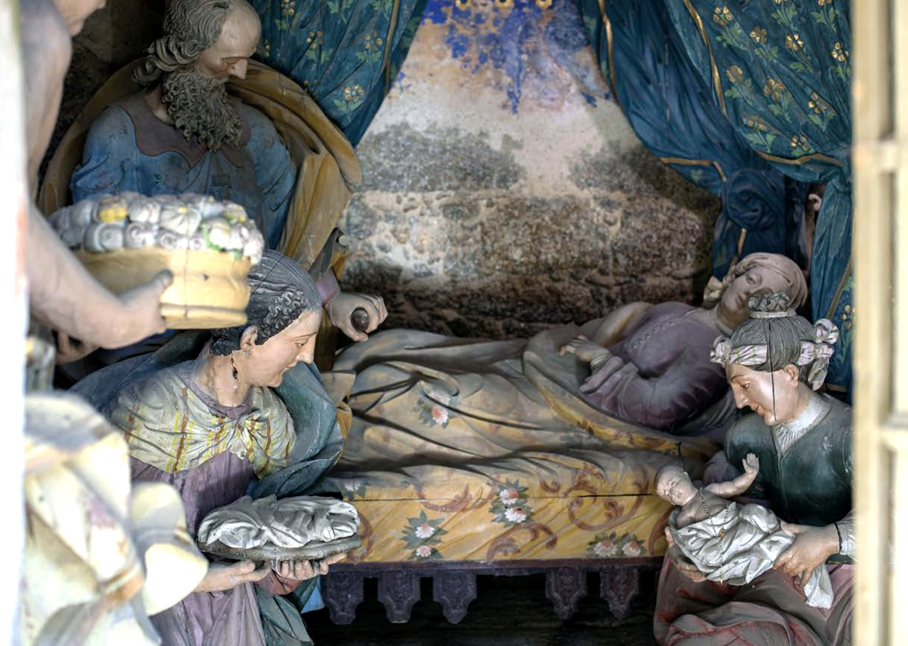
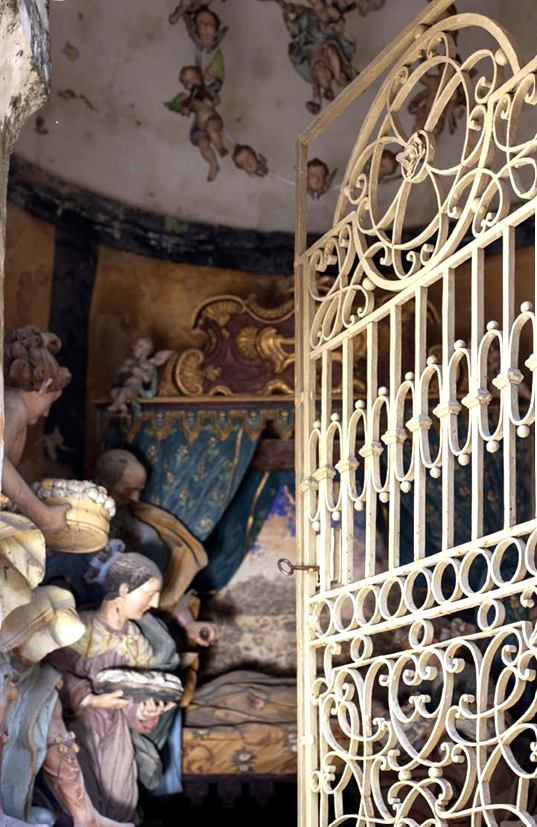
When you start walking, at the intersection of Calçada do Rebentaço with the main street, a few meters ahead is the first chapel: the birth of Virgin Mary. The scene is composed of two large angels venerating the newborn. In the center, Santa Ana rests with a happy air. Beside the bed, the maids who helped with the birth and, on the left, Maria’s father: São Joaquim, also happy, looking at his daughter.
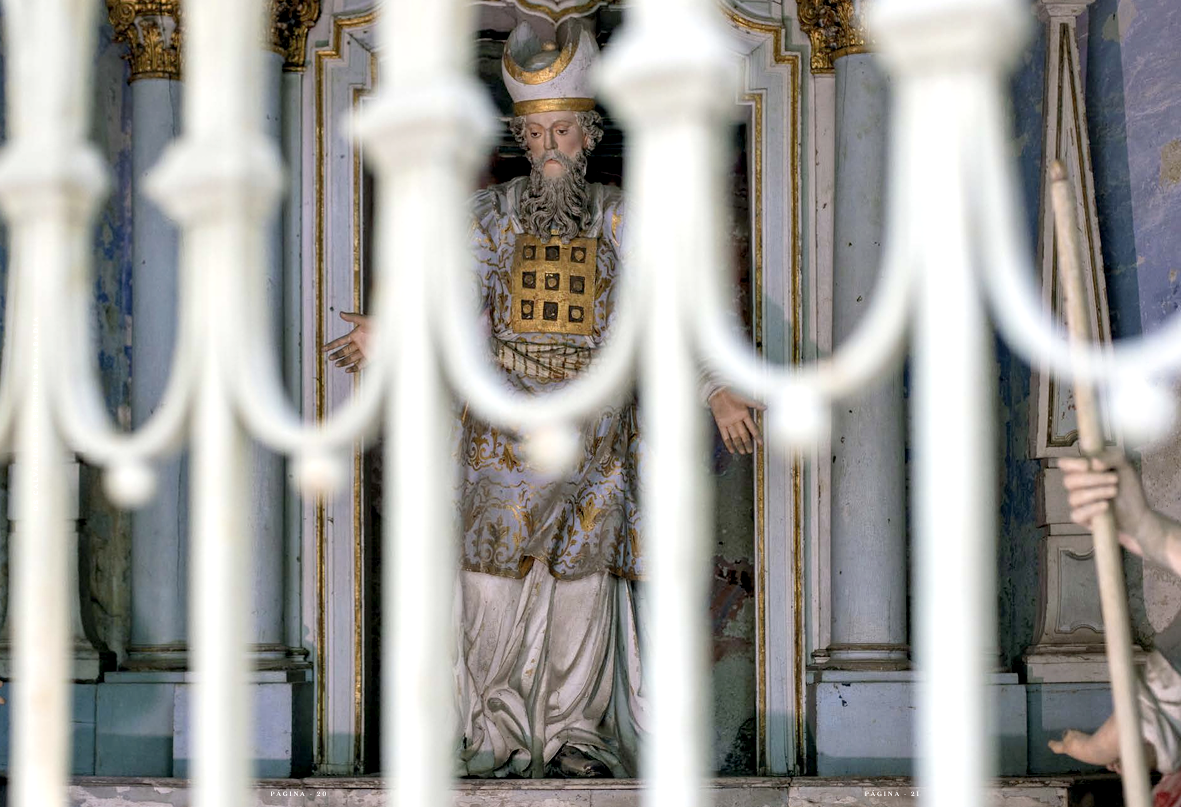
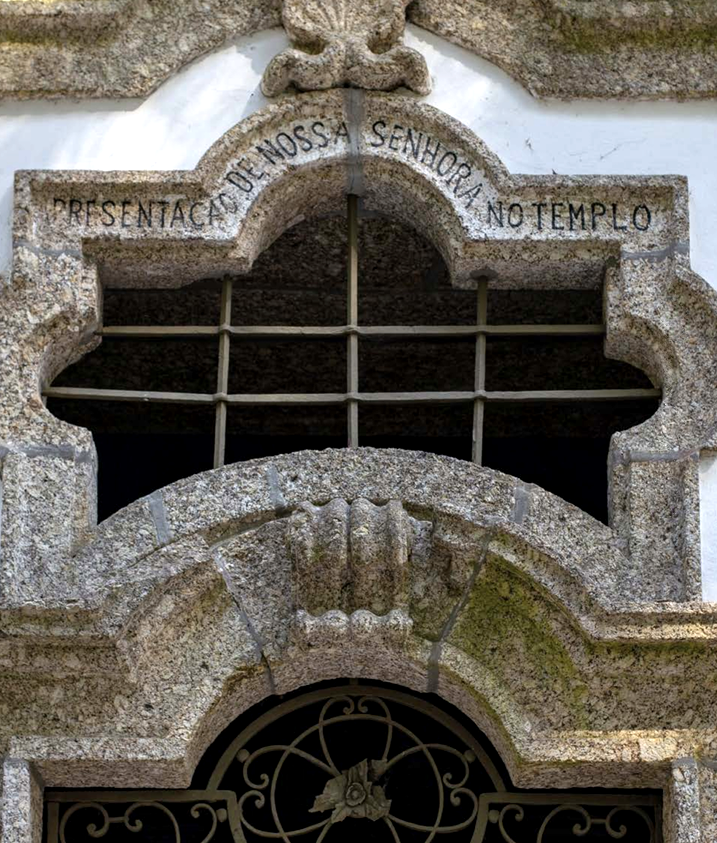
This is followed by the Presentation of Virgin Mary in the Temple. At the age of three, Virgin Mary was taken by her parents, São Joaquim and Santa Ana, to the Temple of Jerusalem, where she was carefully instructed in the faith and her duties towards God. Upon entering the Temple, Mary was welcomed with open arms by the priest, in a solemn session in which a sacrificed lamb was offered, carried in the lap of a servant.
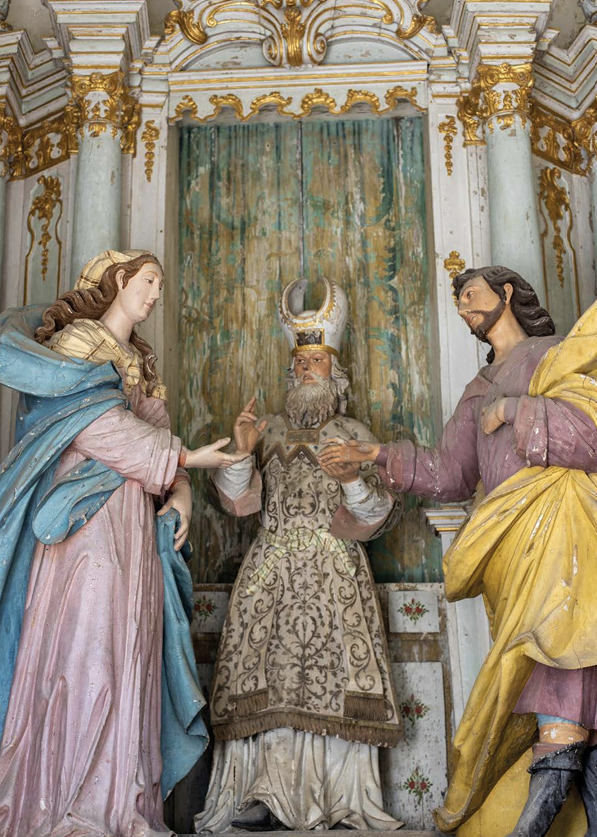
The chapel of the betrothal of Virgin Mary to São José is the third in the life of Mary and represents the marriage of José with the Virgin Mary. A ceremony witnessed by a few figures holding flowers and torches. In the center, a dove, symbol of the Holy Spirit, radiates light in various directions.
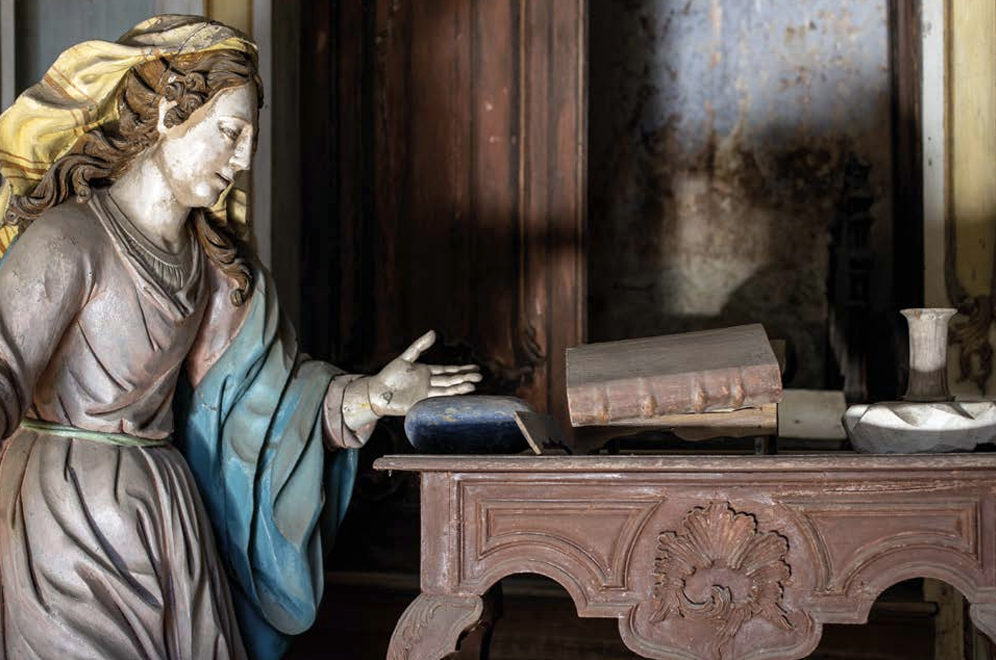
The Annunciation of the Angel Gabriel to Virgin Mary is represented in the fourth chapel. It represents the episode in which the Angel Gabriel, in the small village of Nazaré, announces her maternity to Mary. The angel appears on a cloud, holding a branch in his left hand and raising his right in a gesture of greeting to Mary, who kneels submissively.
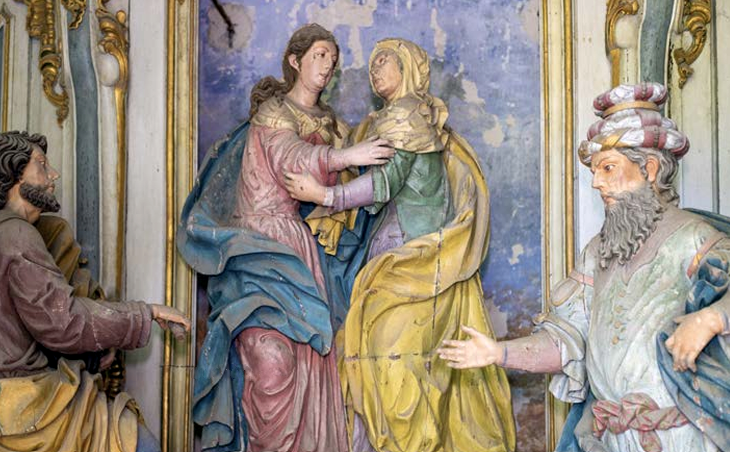
After the Annunciation, Mary goes to visit her cousin Isabel. In the fifth chapel, the two women share in an embrace the joy of the state in which they find themselves, under the gaze of their husbands: São José and São Zacarias.
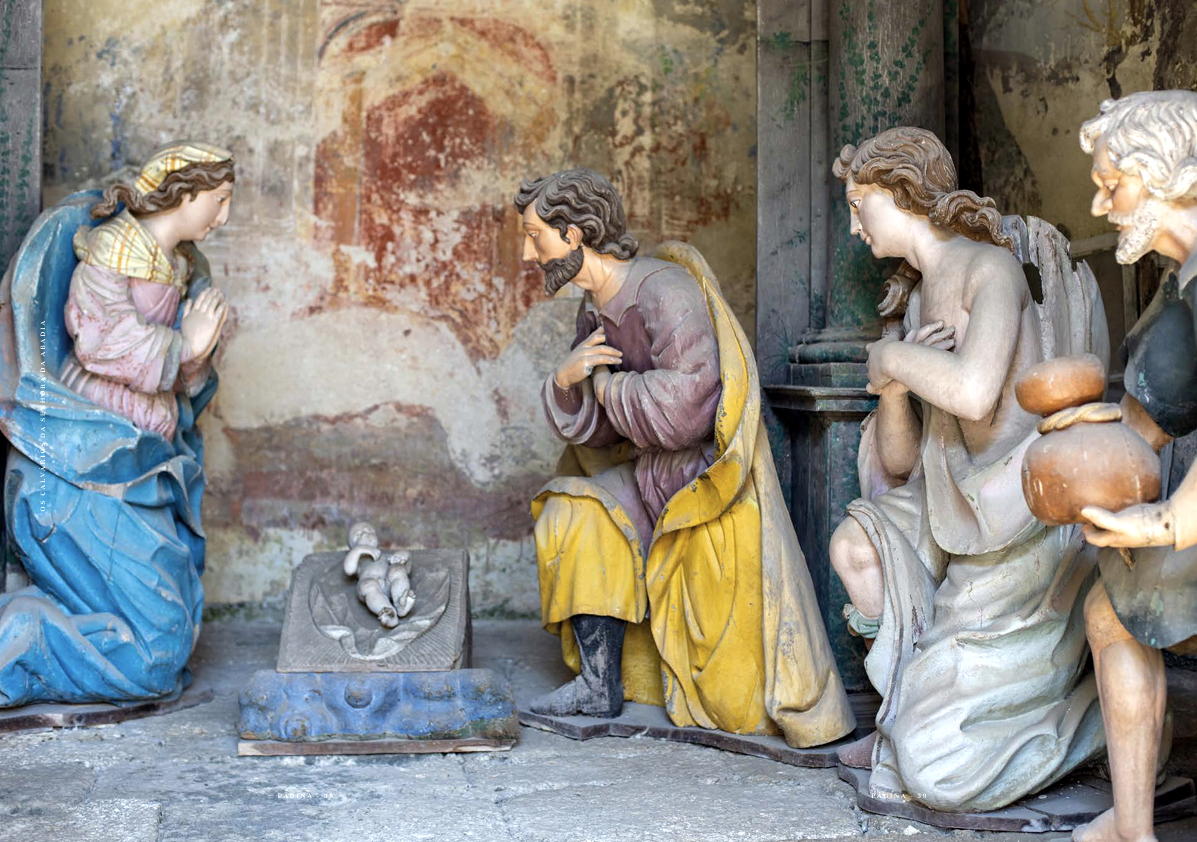
Continuing to climb, we reach the sixth hexagonal chapel, which represents the birth of the Baby Jesus in Belém. Maryia and José contemplate the newborn on their knees, surrounded by three shepherds on each side. At the top of the hut, an angel holds a ribbon with the words “Gloria in excelsis Deo”.
The seventh chapel of the Life of Mary shows the Adoration of the Three Kings to the Child Jesus, who is in the arms of his mother, supported by São José. Above, the star that guided the Three Kings. The chapel was built between 1765 and 1766.
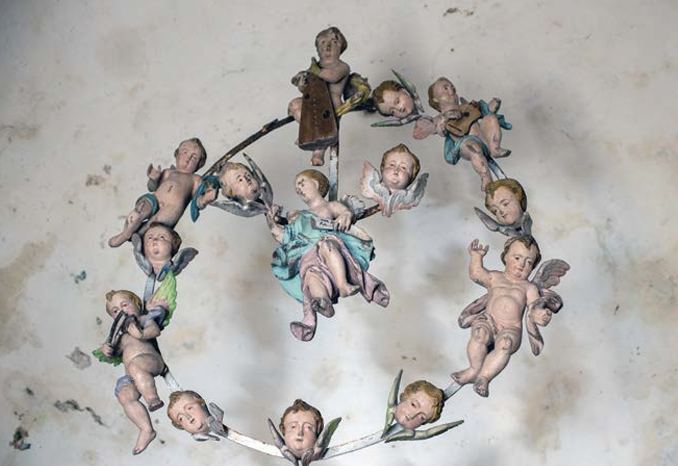
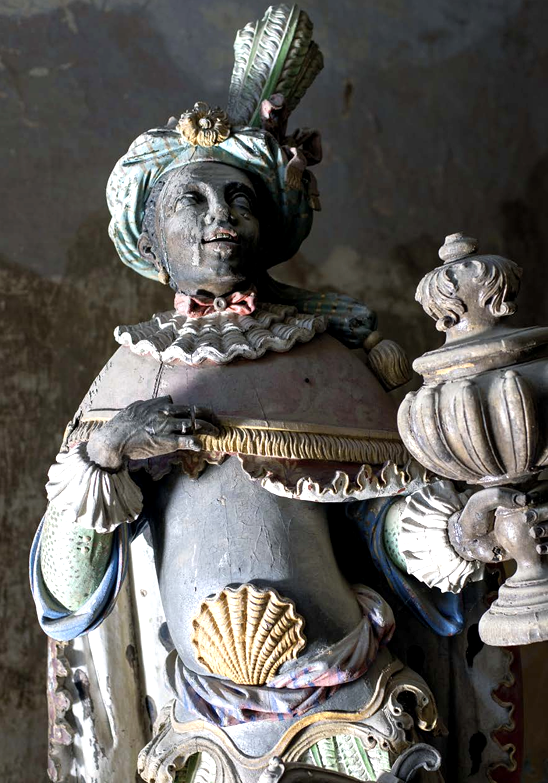
The last chapel of Mary’s life represents the arrival of the Baby Jesus in Egito and is built before the entrance to the Sanctuary of Our Lady of the Abadia. Mary arrives riding a donkey, with the Child in her arms, followed by São José with his tools on his back. A black angel points to the Sagrada Família at the entrance to the city, with a typically oriental atmosphere. According to popular legend, when the black angel suspended in the center of the chapel falls, the world will end!
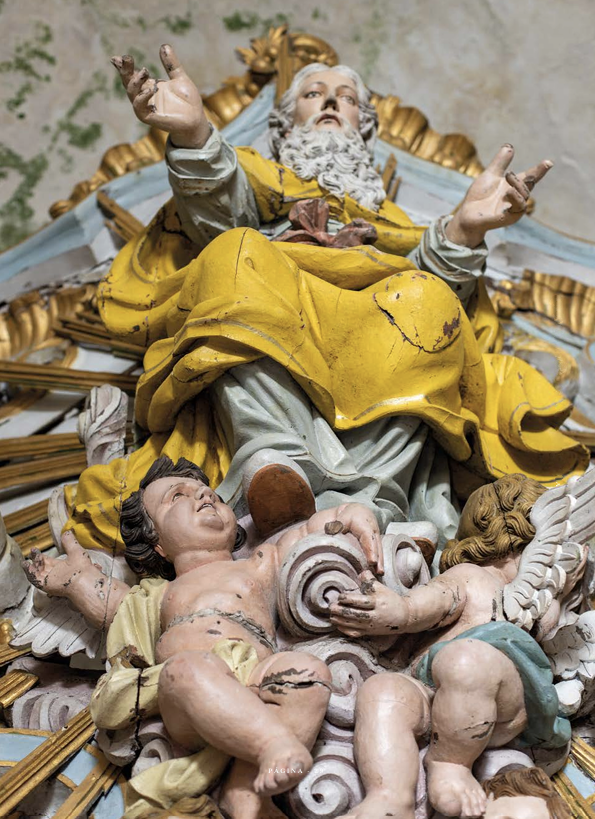
The Passion of Christ chapels, in addition to being smaller than those of the Life of Mary, are mostly composed of a single sculpture. The first chapel represents the Agony of Jesus in the Garden of Olives. The image that can be seen is that of Jesus prostrated on his knees before the Divine Savior, who appears on a cloud embedded in the wall and with an angel THE CALVARY OF THE VIRGIN MARY OF ABADIA and a cross in his left hand and the cup of bitterness in his right hand.
Continuing up, and right in the middle of the road, the second chapel of the Via Sacra appears, which shows the Flagellation of Jesus, tied to a column, with his feet and hands tied and blood gushing from the wounds on his body.
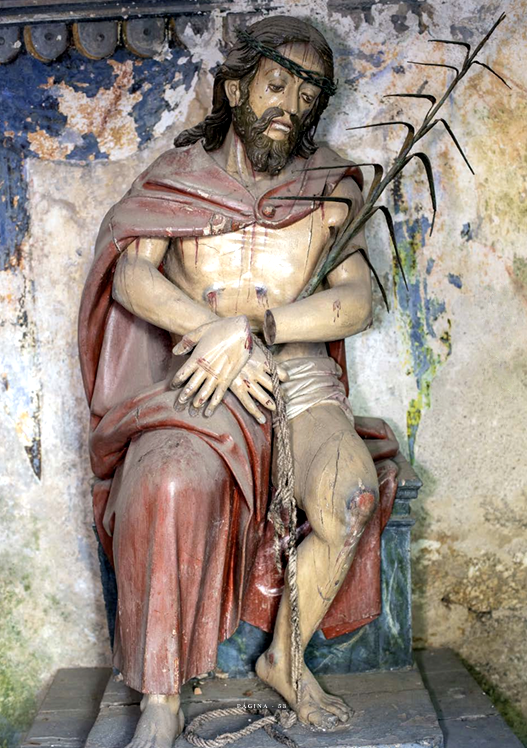
Continuing the journey, we arrive at the Coronation chapel, with Jesus being crowned with thorns by two Hebrew soldiers. In this chapel, we see Jesus sitting, covered with a purple cloak, with his hands tied and a crown of thorns on his head. Continuing our path to the Sanctuary, the sounds that fill our thoughts are calm, as is the natural landscape that surrounds and accompanies us.
A few hundred meters to the left of the sanctuary, near the cave of the apparitions, is the chapel of Ecce-Homo, which shows Pilate showing Jesus to the people.
Going up the road, here is another chapel: the Via Sacra farm. This is the Chapel of the Falls. Here, Jesus is on his right knee and holding a cross in his left hand, representing the three times he fell on the way to Calvary because he could not bear the weight of the cross.
Further up, the sixth chapel of the Via Sacra represents the removal of Jesus’ clothes, who, leaning against the cross, does not react and consents to the greatest humiliations of the soldiers.
Turning left and reaching a staircase, we arrive at the last chapel of the Passion of Jesus: Calvary. Covered in 17th century tiles, the largest of all the chapels represents the death of Jesus crucified in the center, flanked by his mother, the disciple João and with Maria Madalena embracing the cross. We are at the top of the hill and the landscape that we see dazzles anyone, whether due to the rare beauty of the landscape, the tranquility that emanates from there or the silence, only interrupted by the water lapping against the rocks.