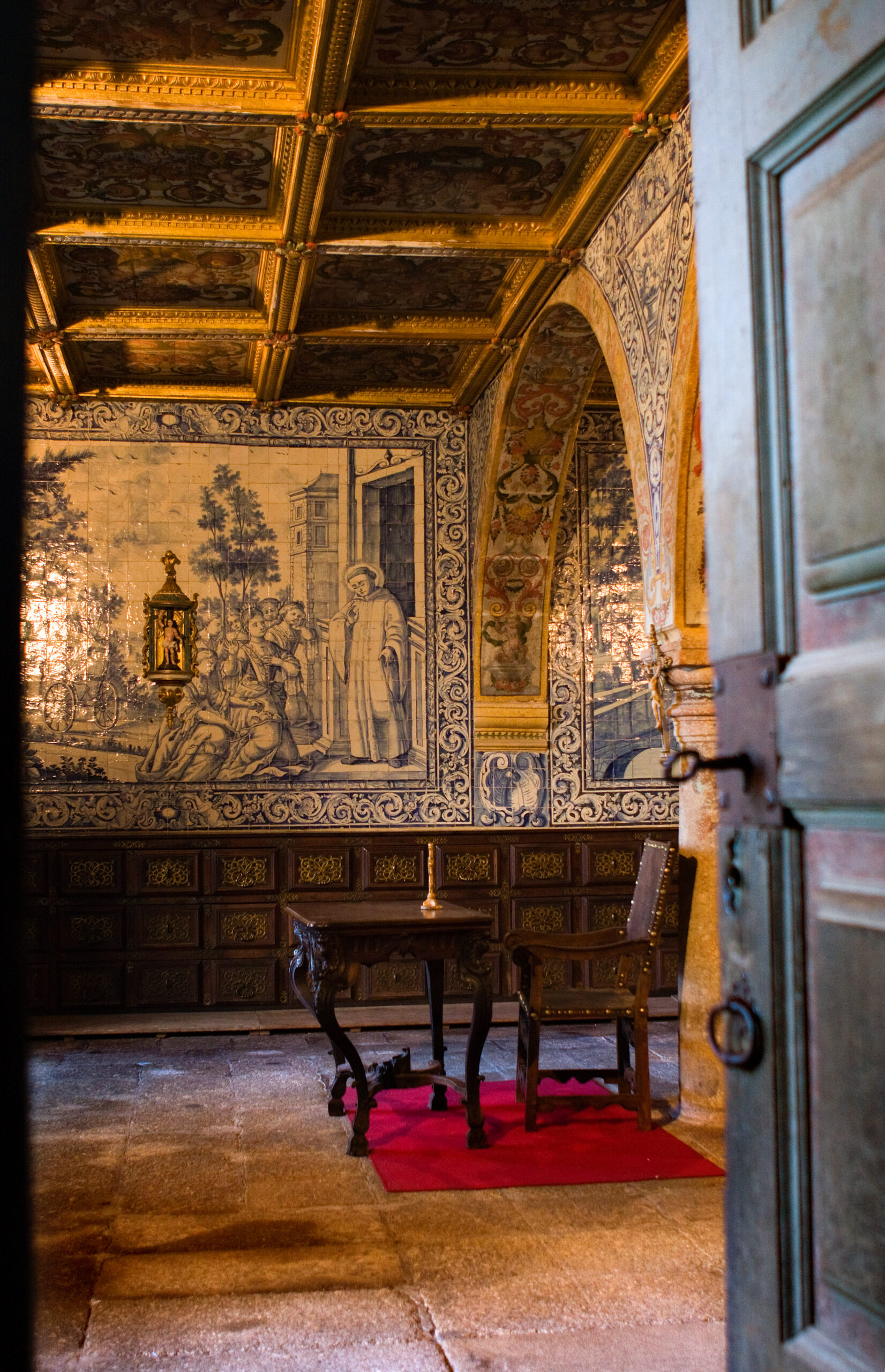
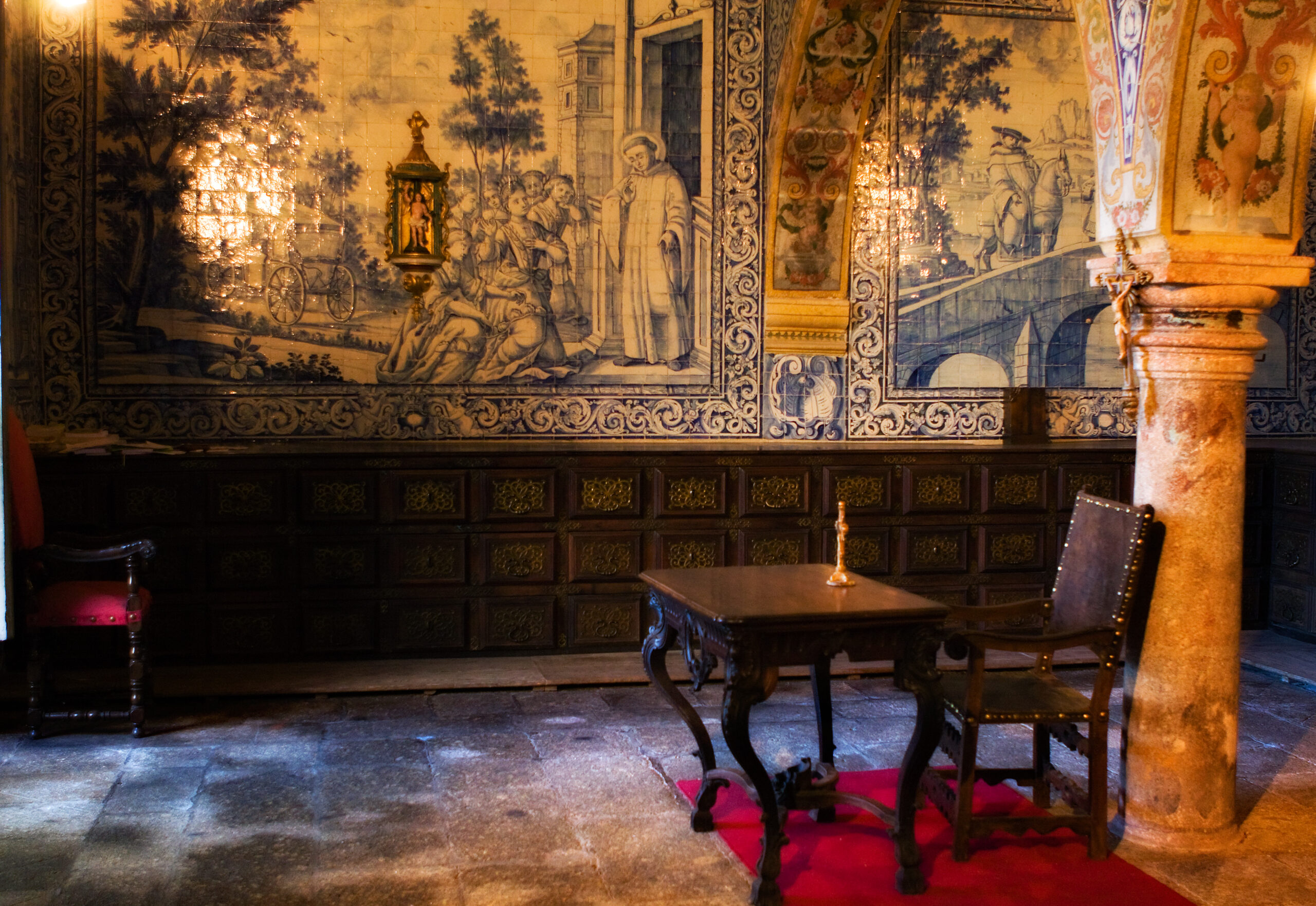
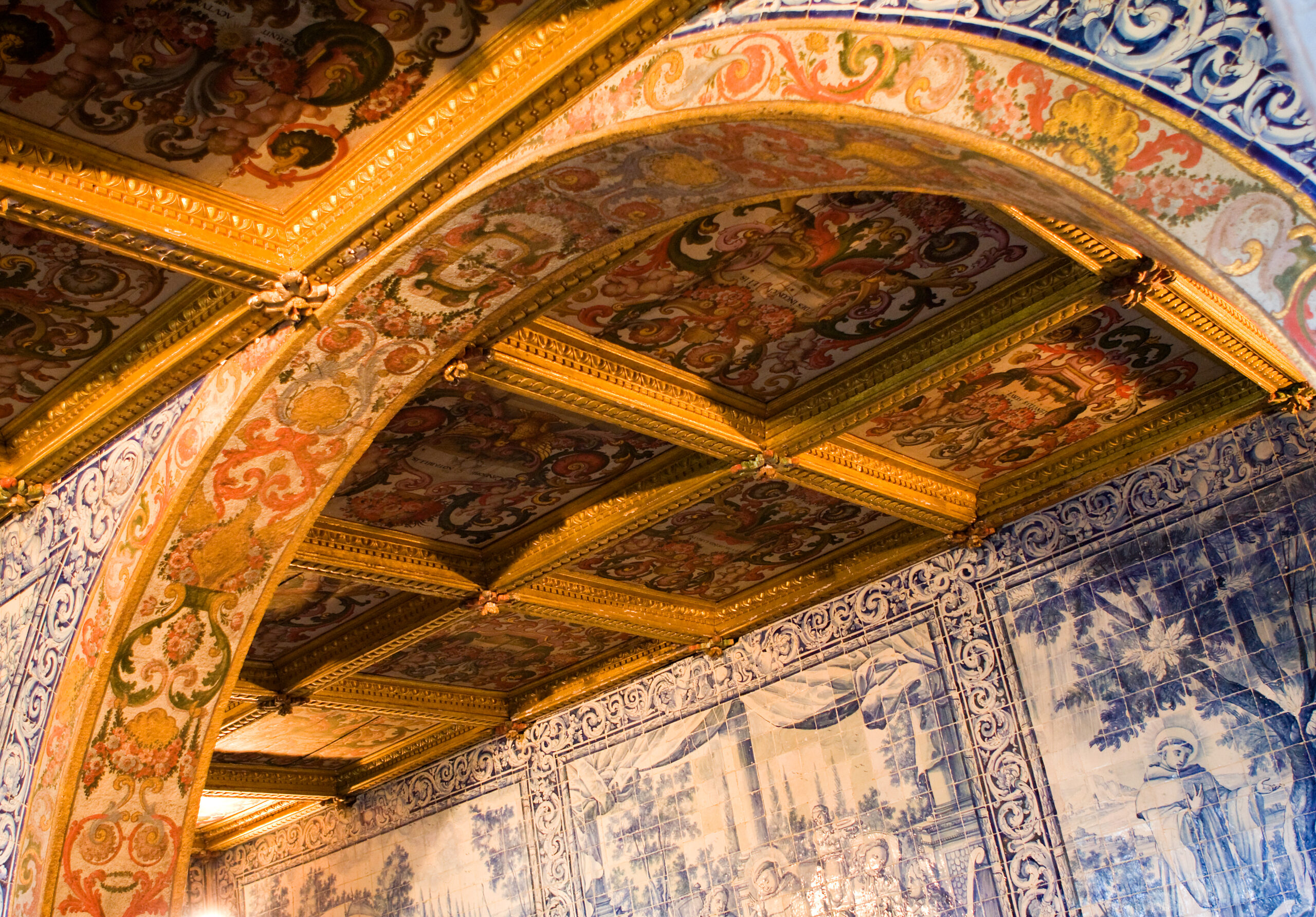
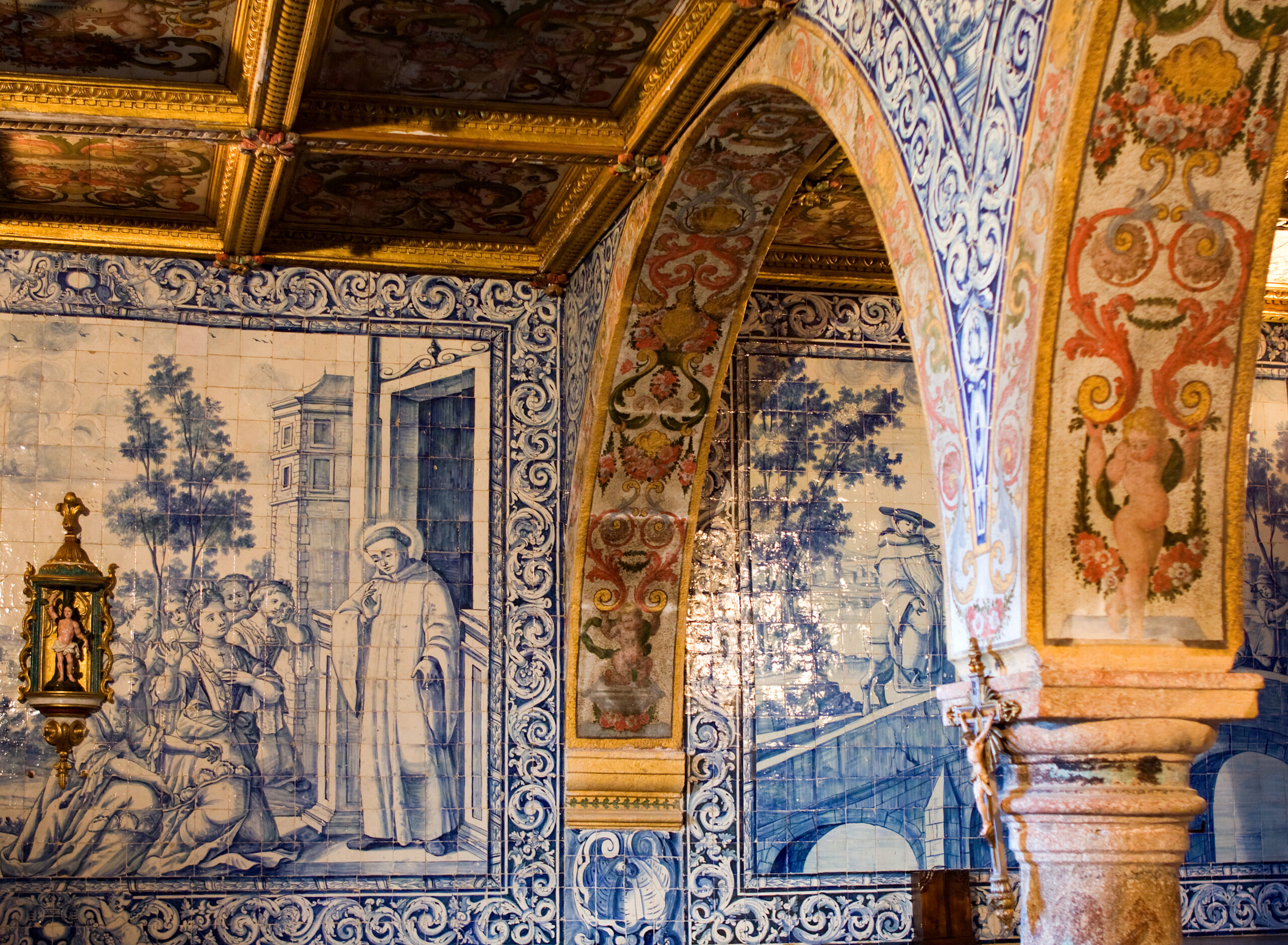
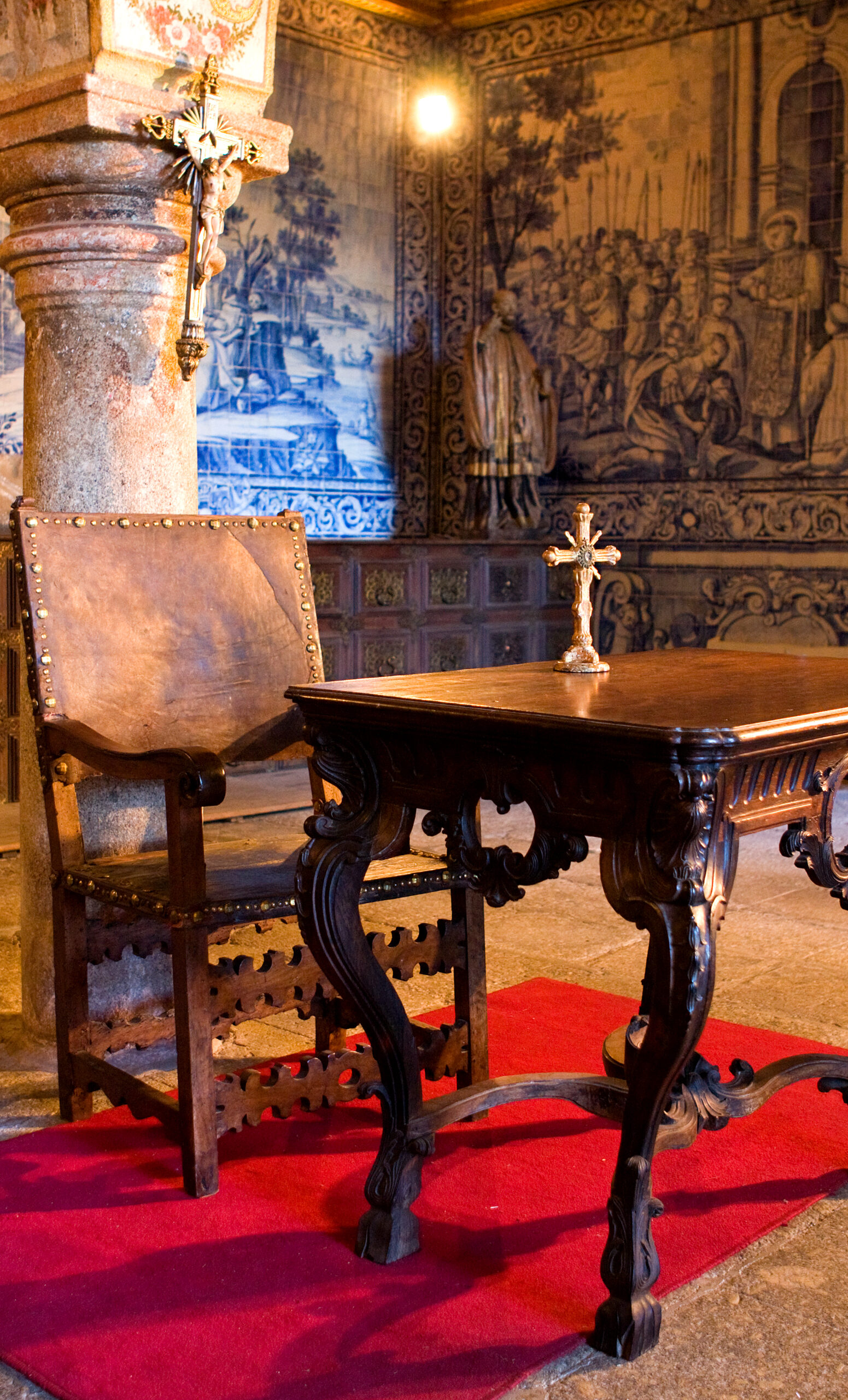
The Monastery belonged to the Cistercian Order and is characterized by its religious, Romanesque, Mannerist, Baroque, Rococo, Neoclassical and contemporary architecture. The Sacristy stands out in this property, divided by two painted arches, with a coffered ceiling decorated with paintings.It is worth highlighting the walls of the sacristy lined with 18th century tiles that depict the life of S. Bernardo, an artistic treasure bequeathed by our ancestors and unknown to the most attentive eyes.
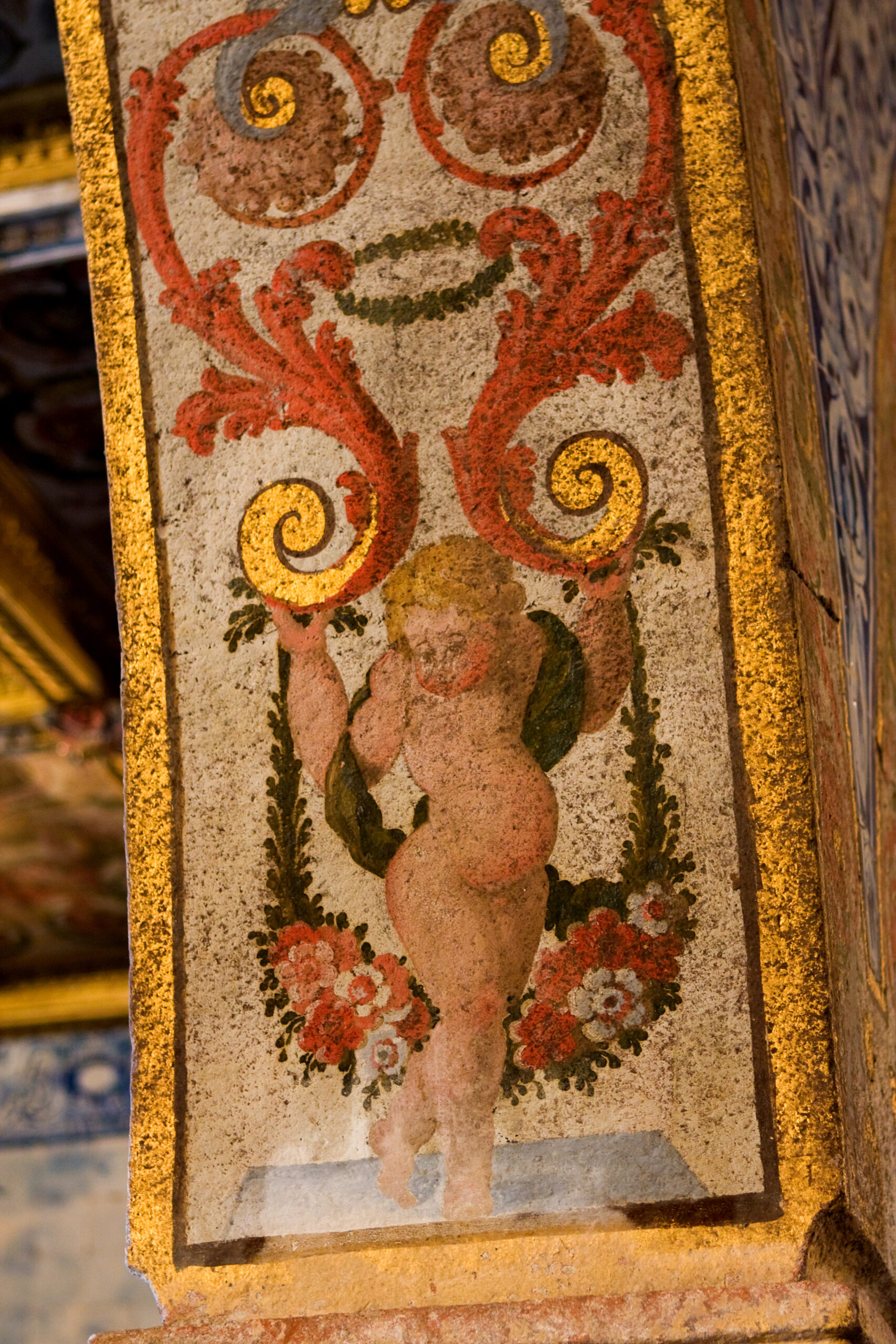
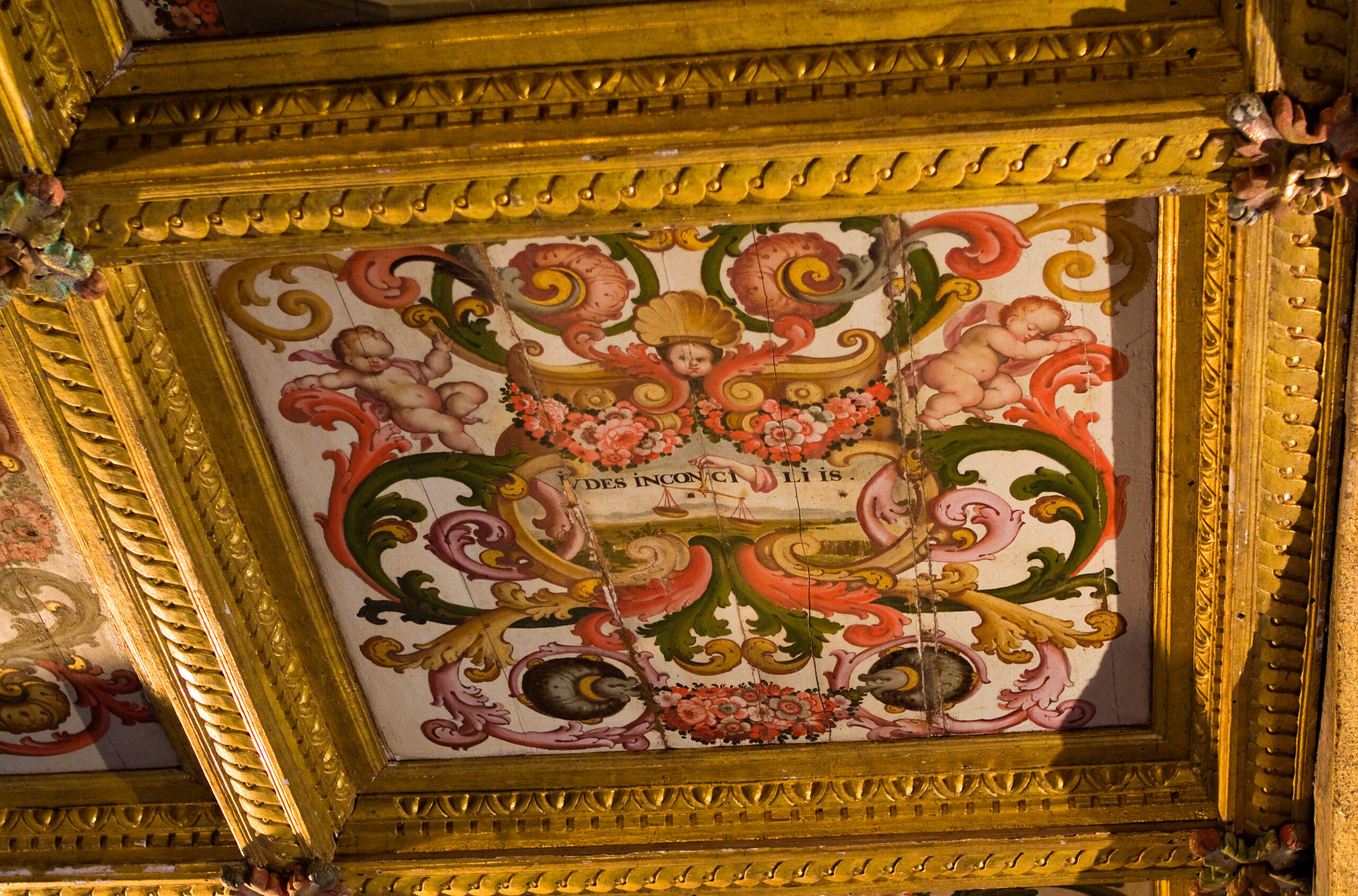
“The sacristy, which is preserved in an almost impeccable state, is the best, the most admirable piece of the entire convent complex; a true masterpiece of art, certainly unique.” These words are from Domingos M. Silva, and represent a little of the general feeling of those who visit the place. It is a rectangular space divided into two spans by a pillar, where two round arches open, ending in an elegant column, duly decorated with ancient painting similar to frescoes. The greatest beauty is on the ceiling: it is presented in coffered ceilings, with “extremely delicate ornaments” and background paintings, with different symbolic motifs, namely about nature, foliage, scrolls and little angels; and a series of biblical verses or Latin captions and allegories about the life of Nossa Senhora.
A casual glance makes you think that all the coffins are the same, but on closer inspection you can see that each polychrome box is a different, carefully painted painting.
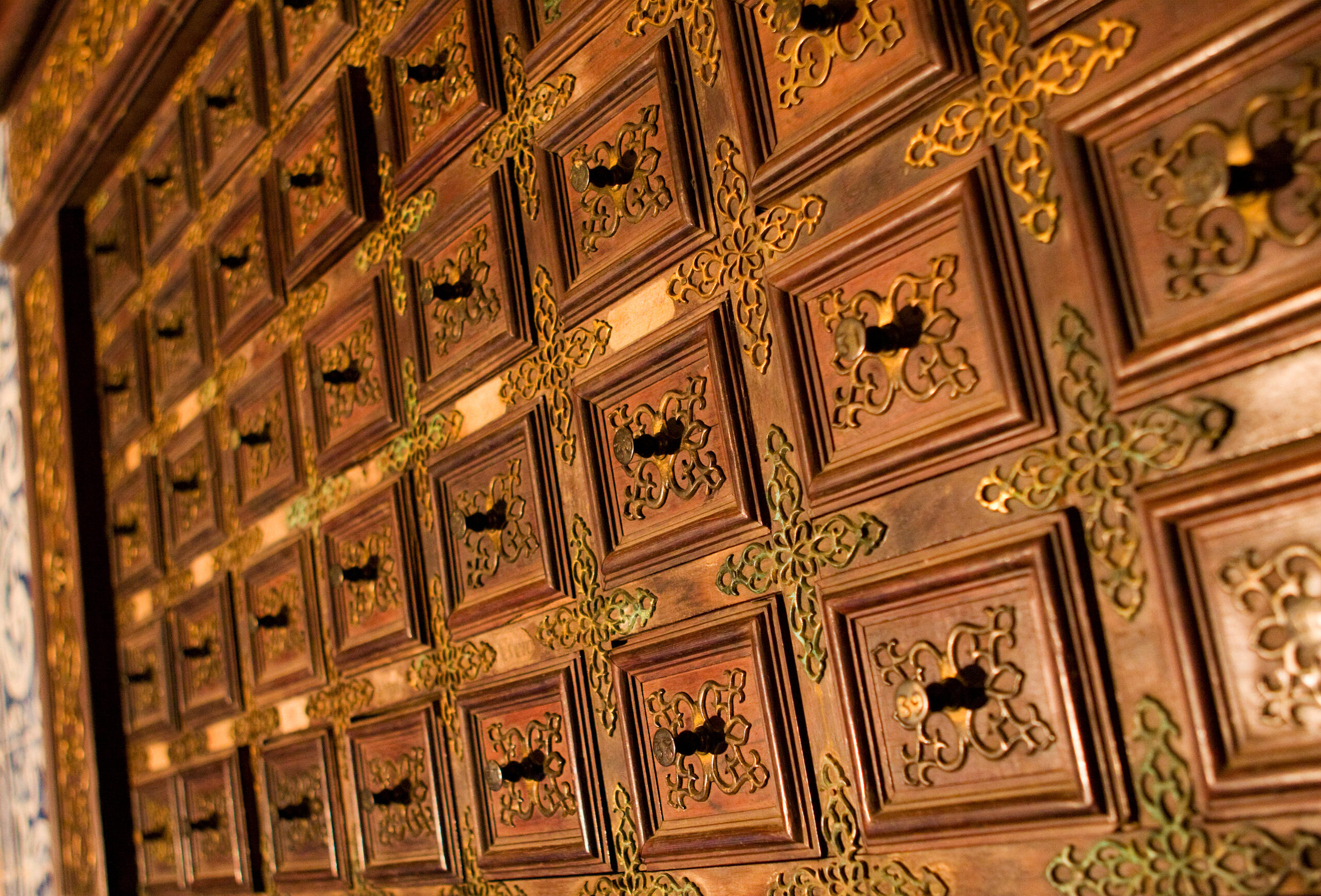
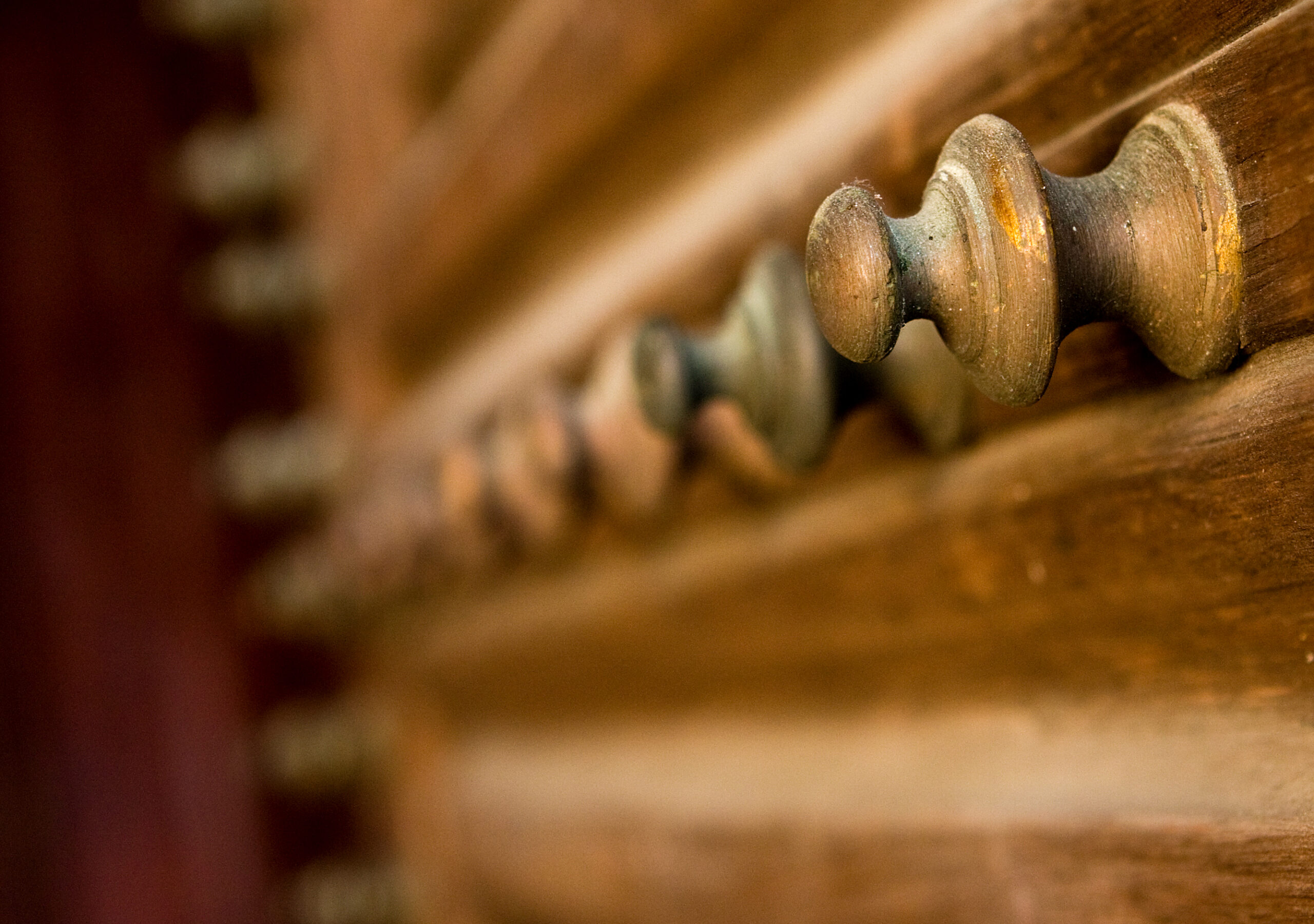
The furniture in the sacristy is another point of interest. All around and against the walls is a chain of large rosewood drawers, with artistic brass handles and inlays.
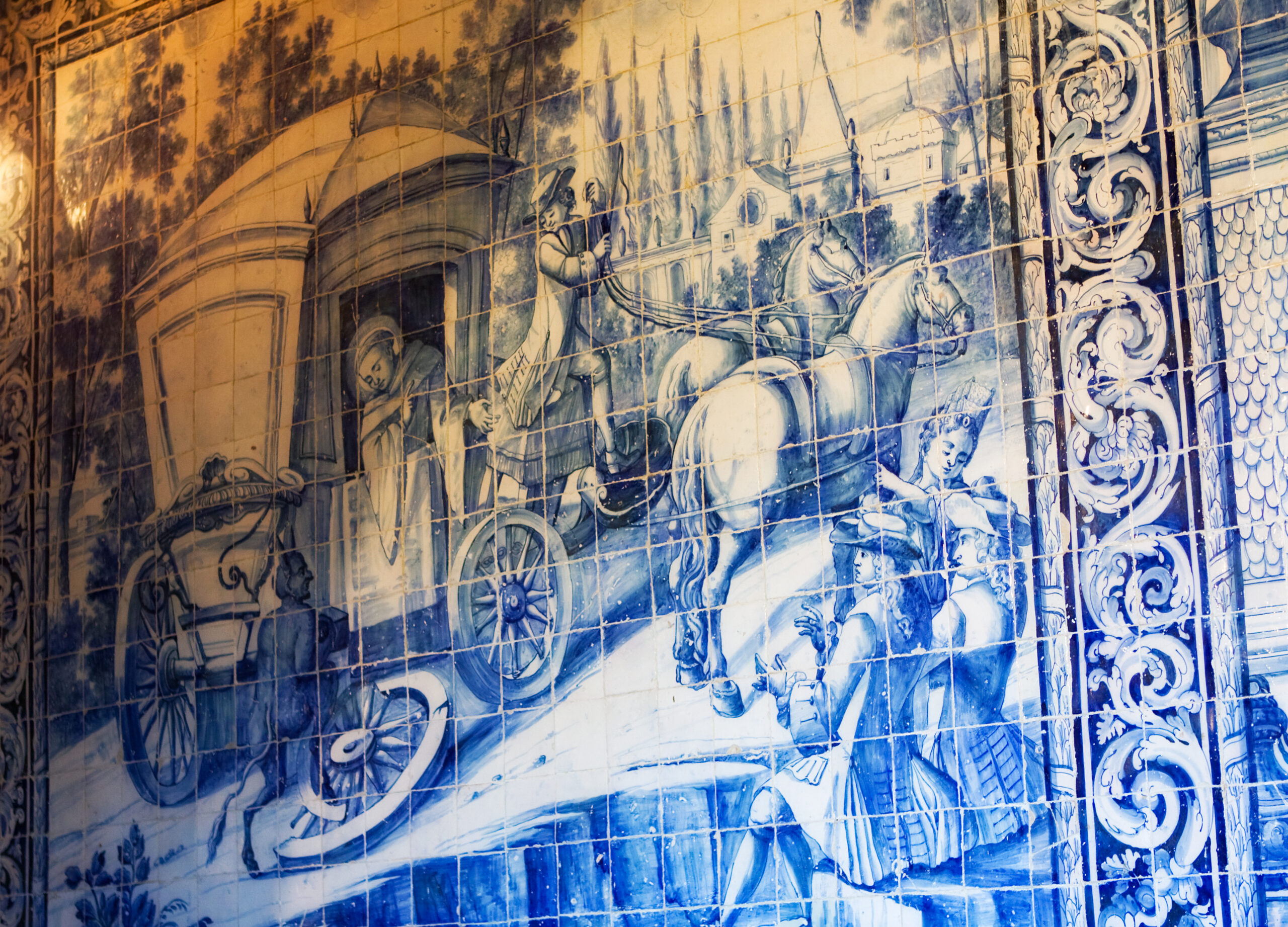
The artistic richness of the sacristy does not stop there. In addition to the ornaments, it is worth seeing and appreciating the quality of the tiles painted possibly by Teotônio dos Santos. The tiles tell the interesting legend of Umbelina, the sister of S. Bernardo, the abbot of Clairvaux.
In the brochure, “Real Mosteiro de Santa Maria de Bouro”, a collection by Father Carlos, the legend is described according to which S. Bernardo talks to his sister Umbelina; then refuses to receive her at Clairvaux, admonishing her for her luxurious attire. When crossing a bridge in the carriage on the way to the Council of Pisa, the devil appears harassing the saint. This forces him to throw himself into the river. But then, as revenge, the mafarrico breaks the wheels of the “cart”. As punishment, S. Bernardo forces the devil to use the wheel until the end of the journey. In other paintings it is possible to see the blessing of the cup and the miracle in which the saint keeps rainwater away from a scribe who is writing a letter to him, and from the respective parchment. The last painting refers to the conversion of Duke Guilherme da Aquitânia.
In the sacristy there were other paintings about the life of Nossa Senhora.
The date of the work in the sacristy is not known exactly, but the paintings on the ceiling must have been done in 1715, judging by an inscription on site. In addition to the artistic beauty of the place, it is also a space for reflection.