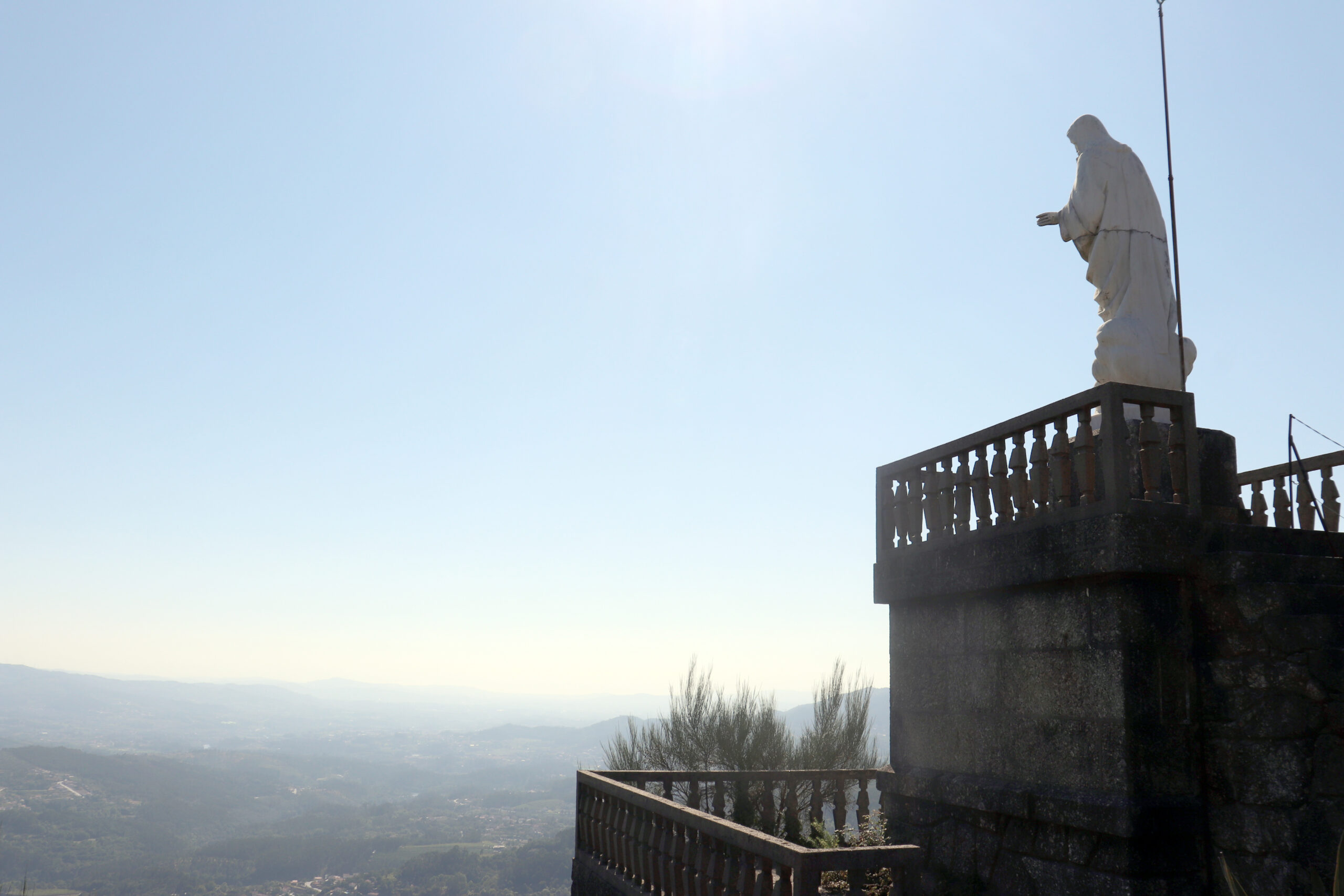
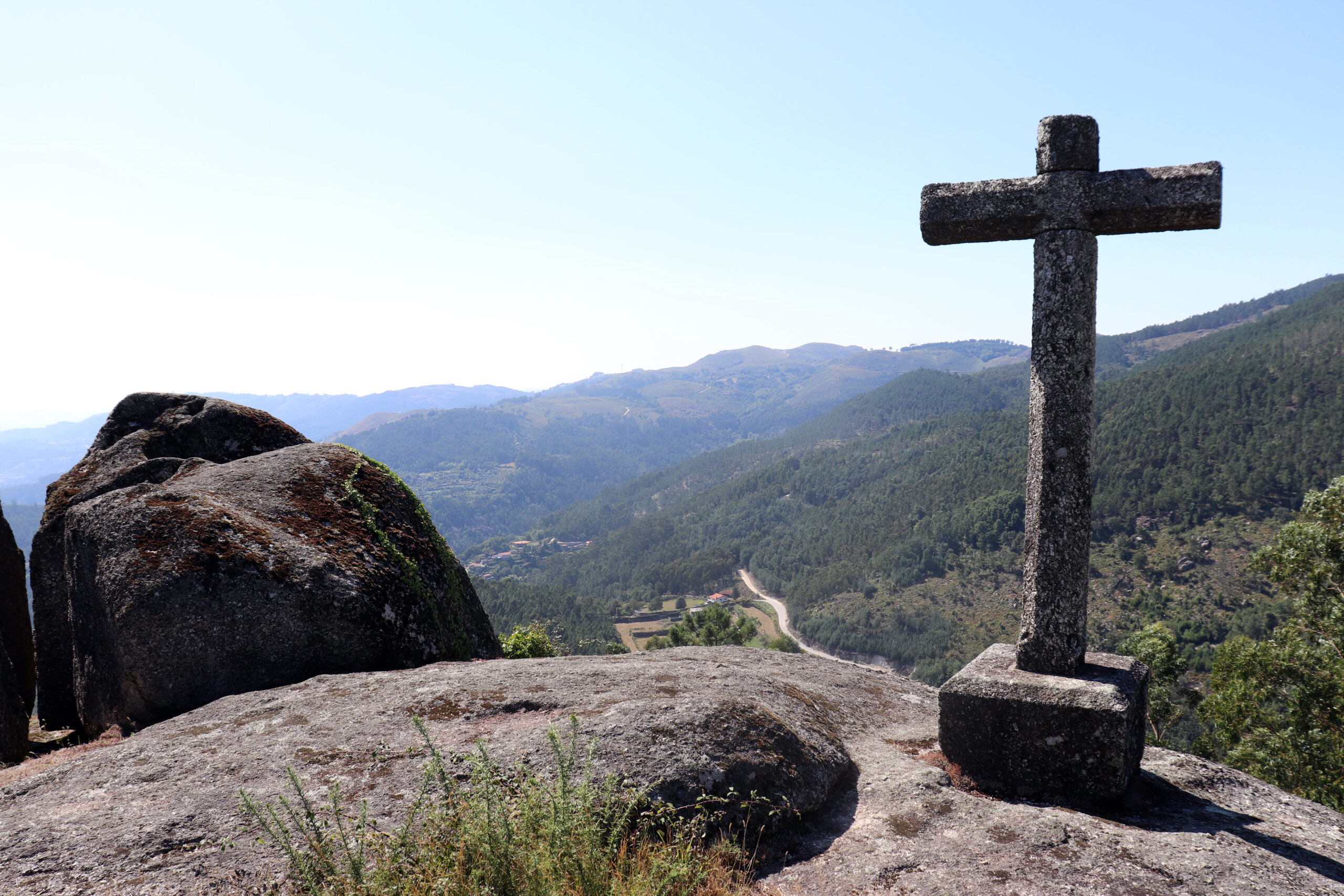
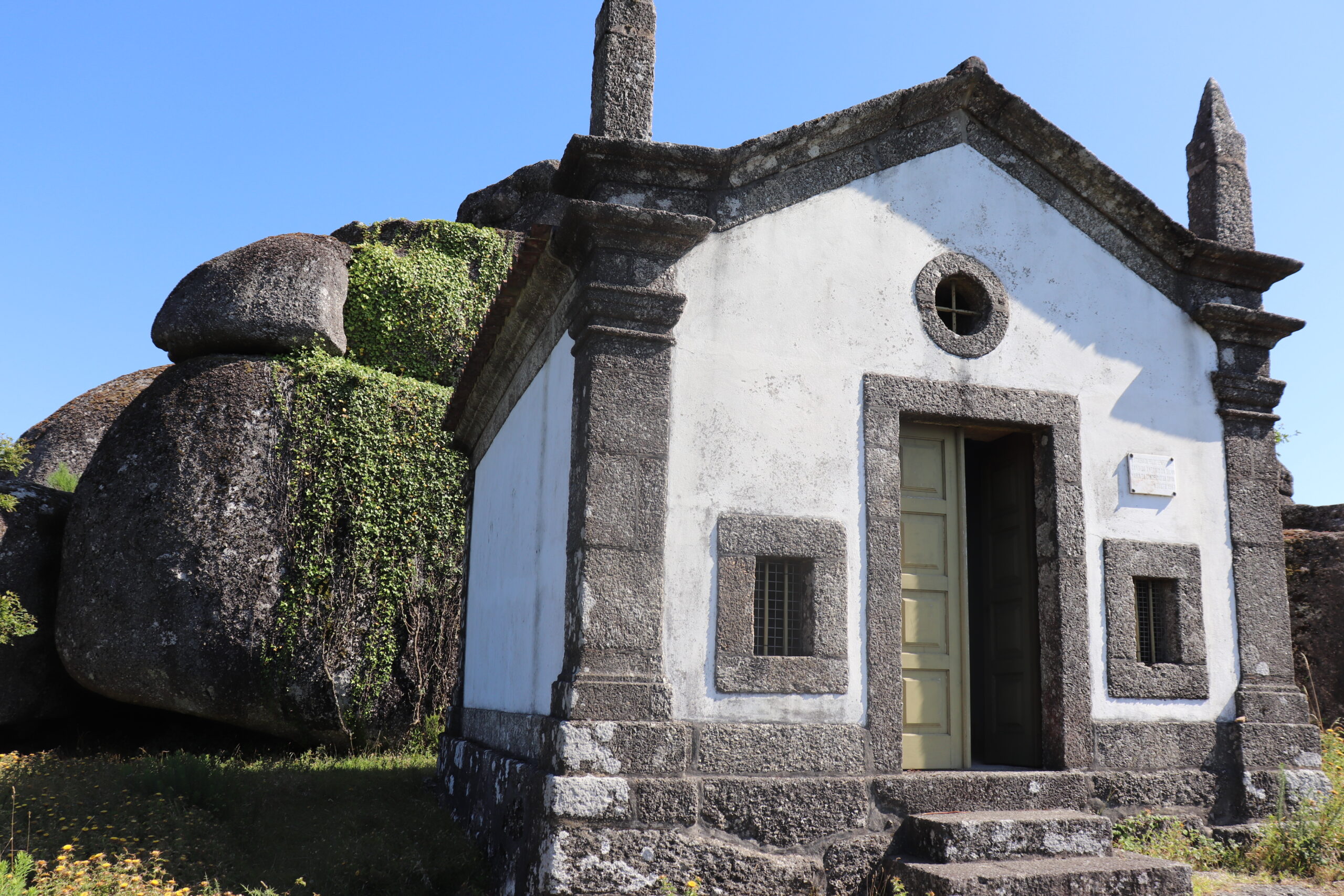
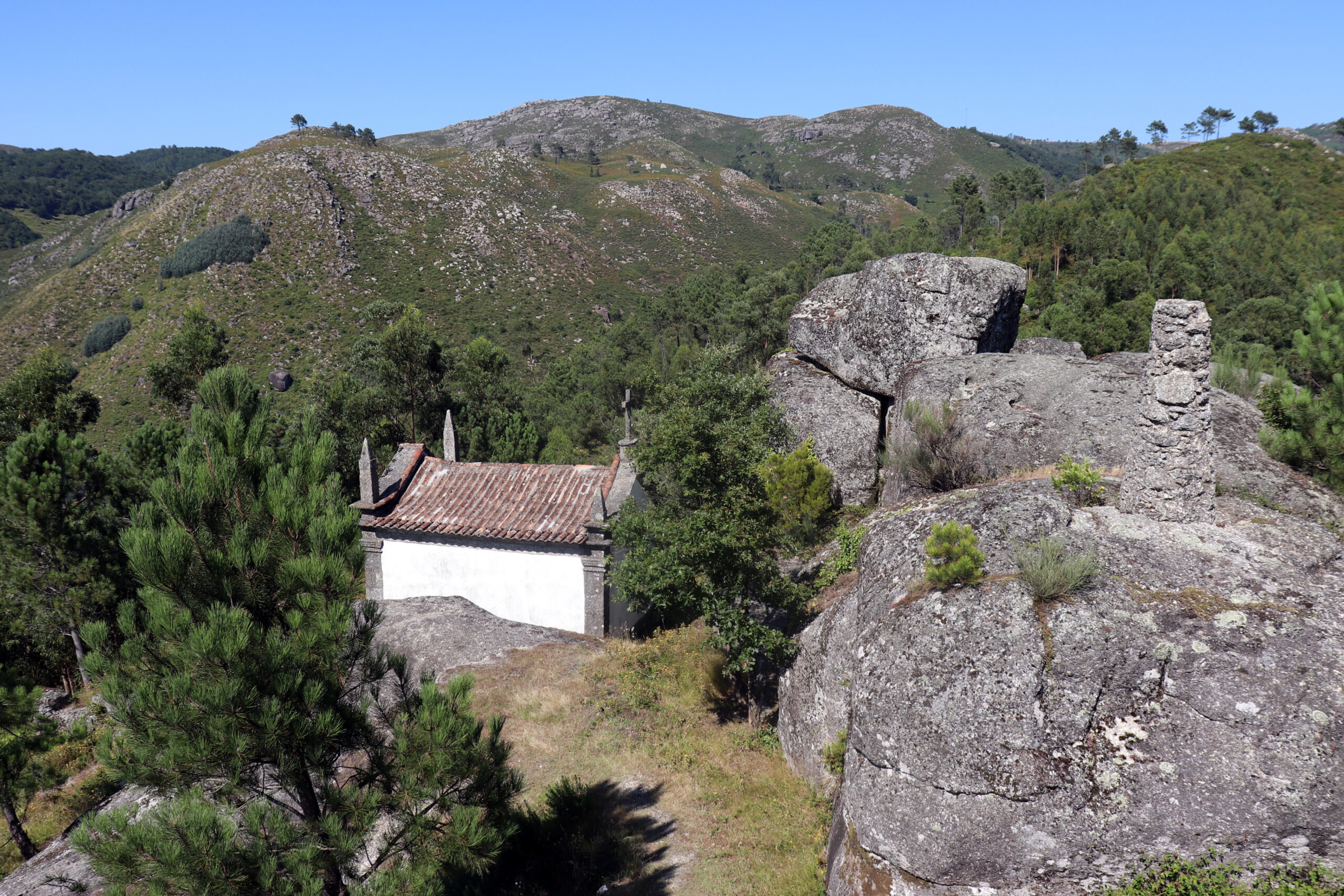
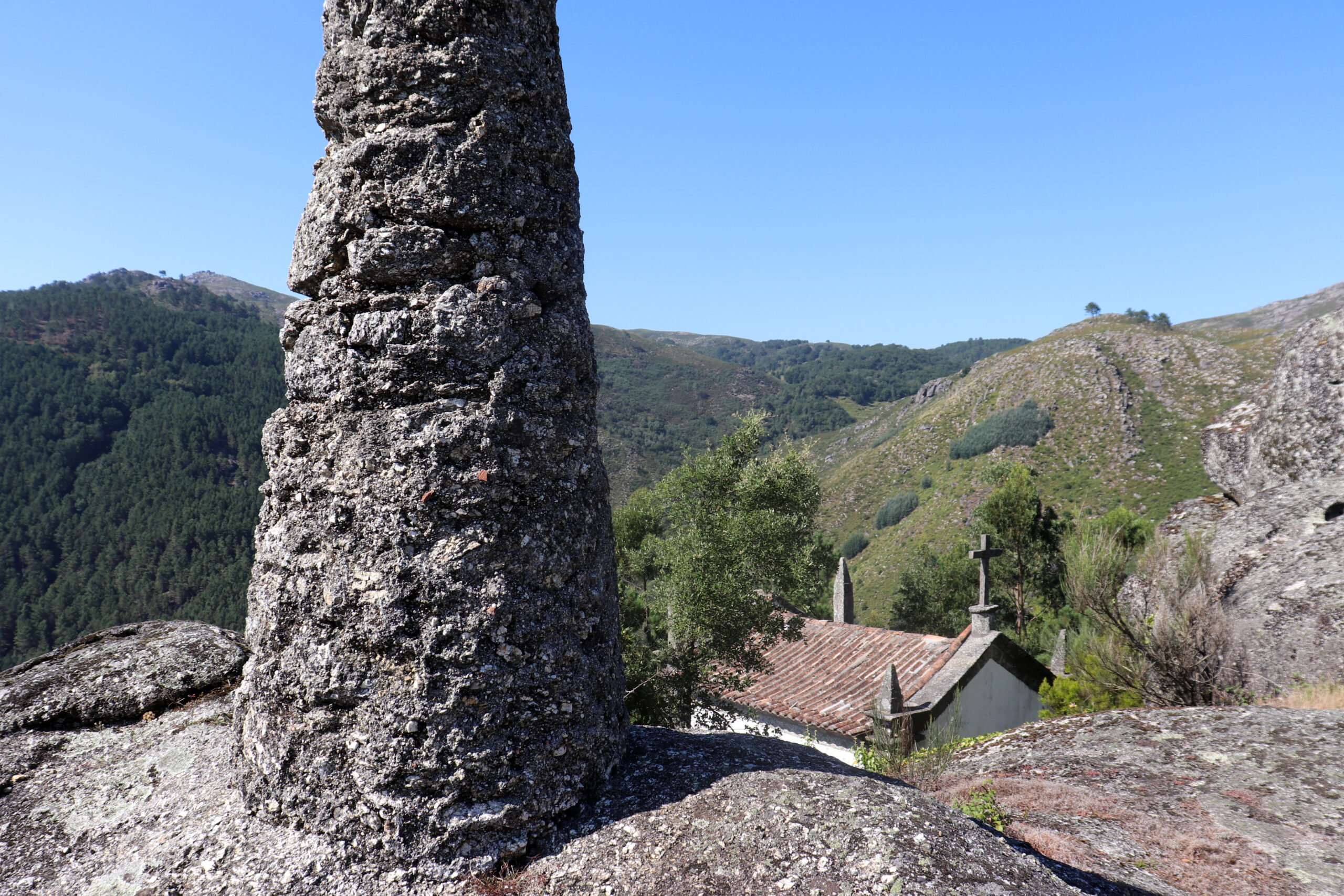
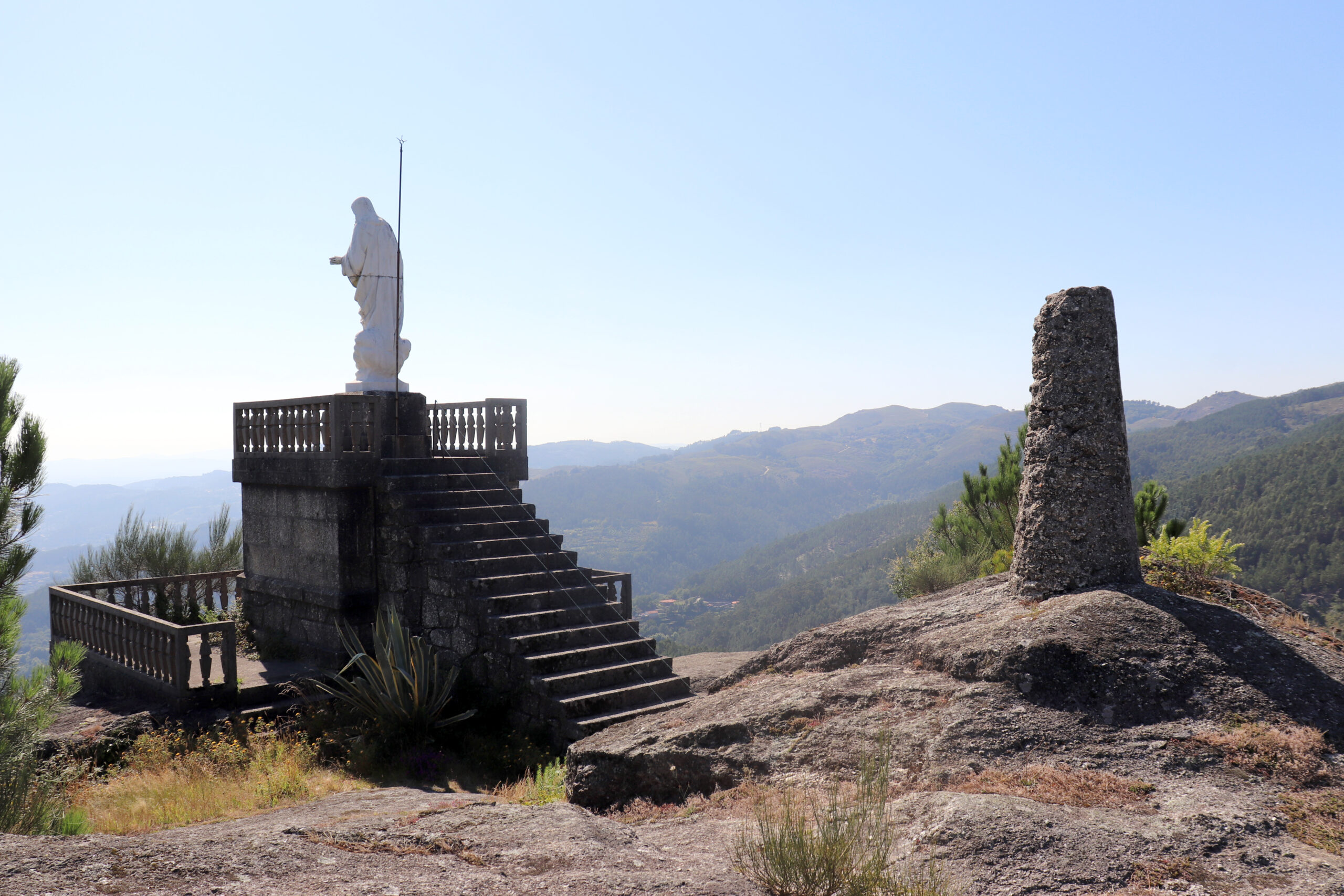
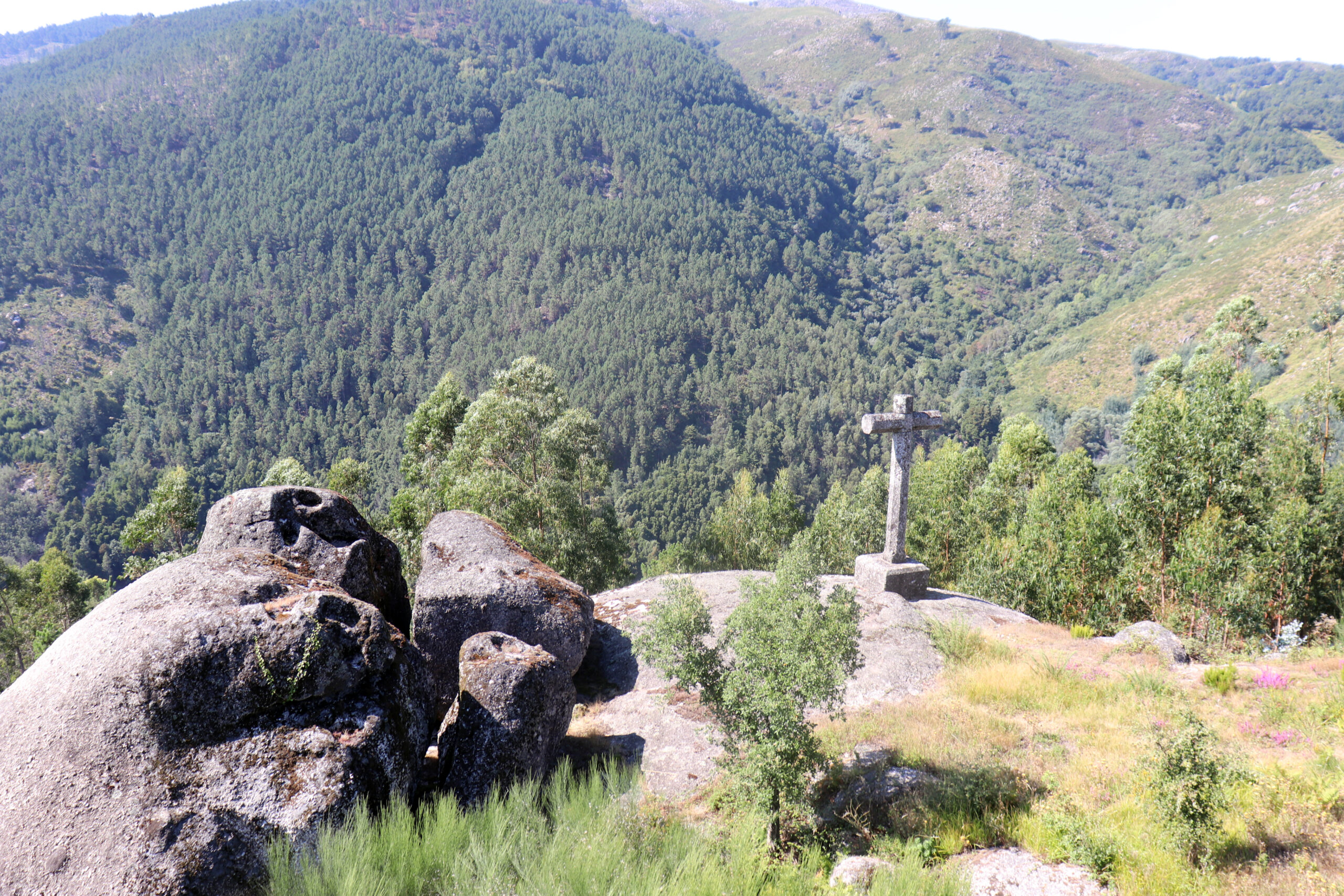
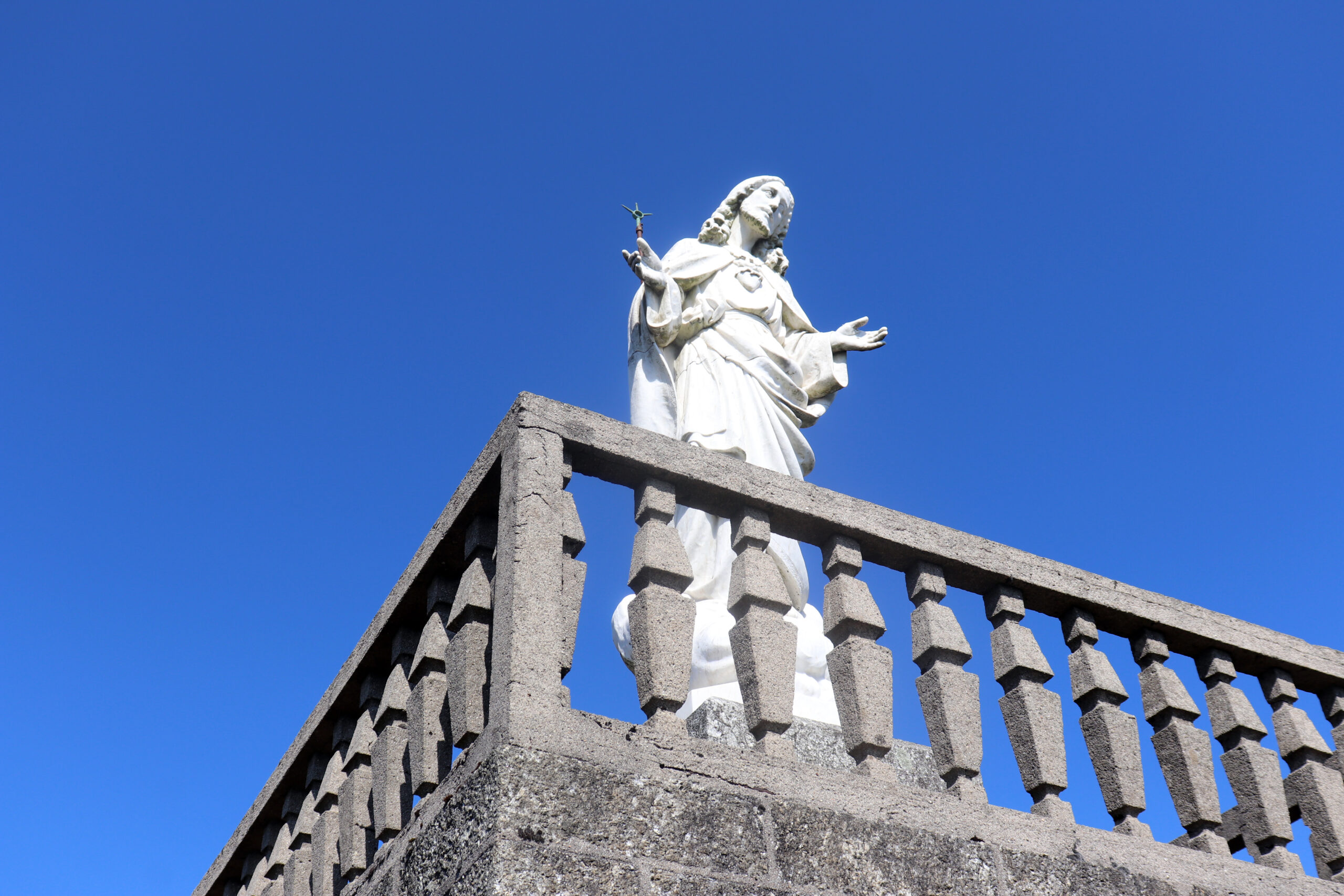
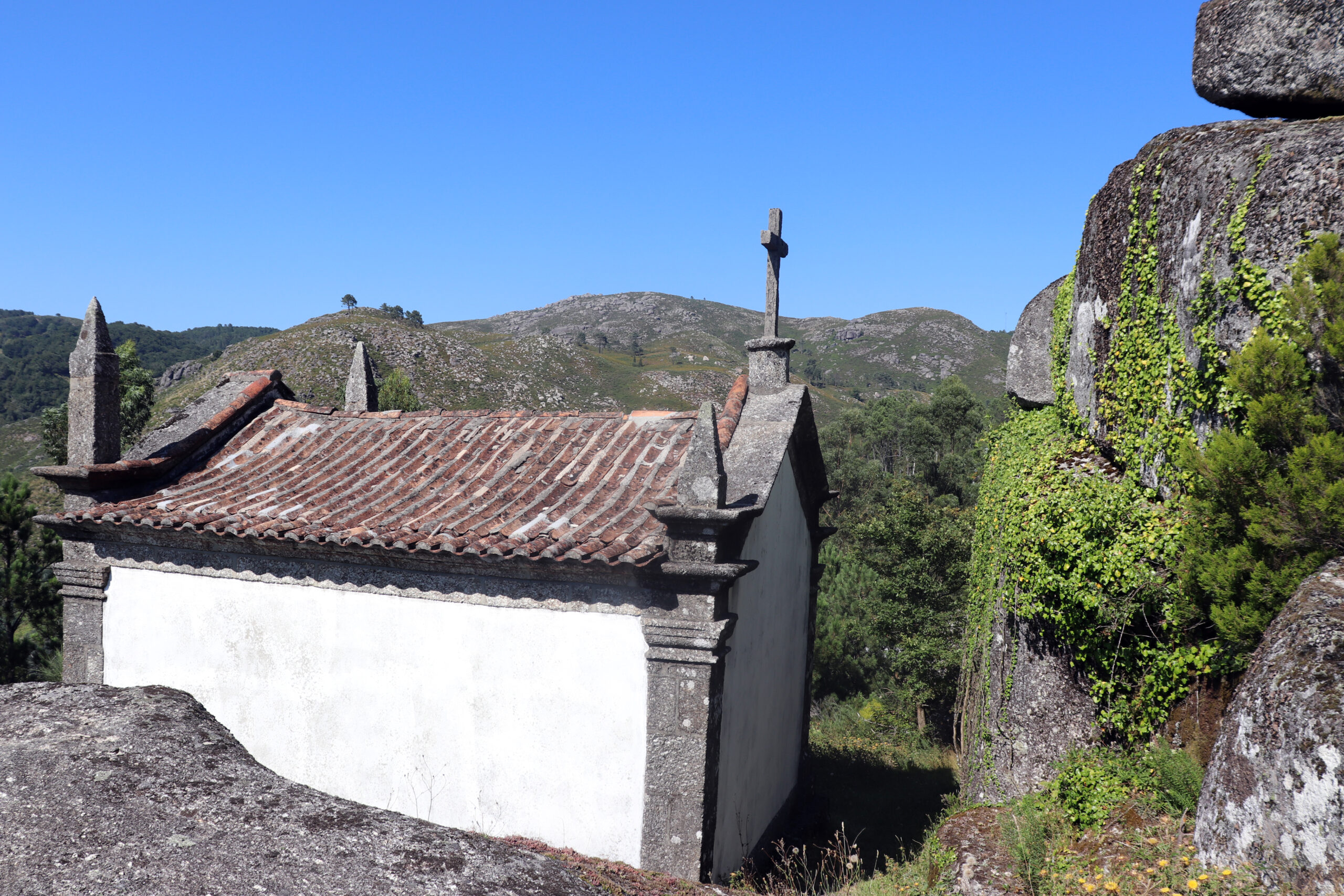
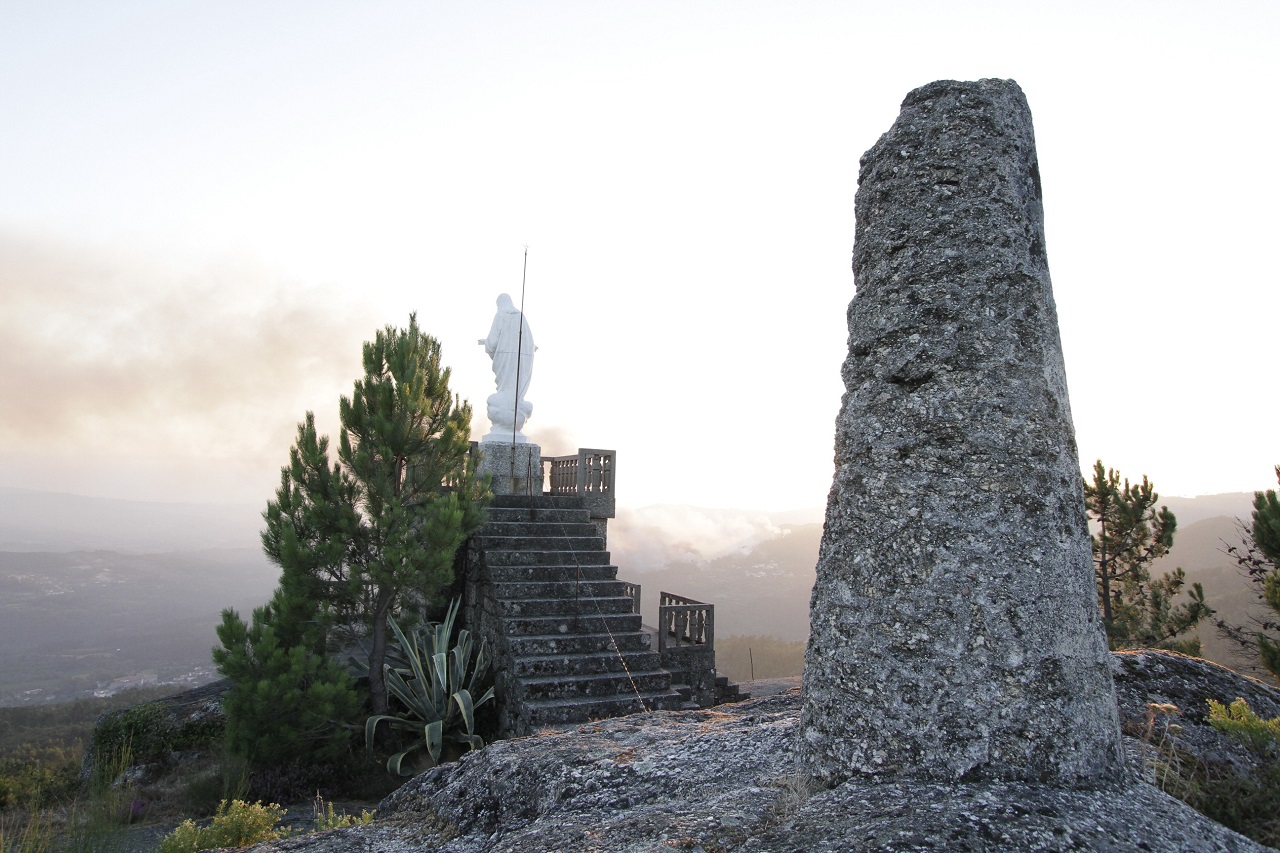
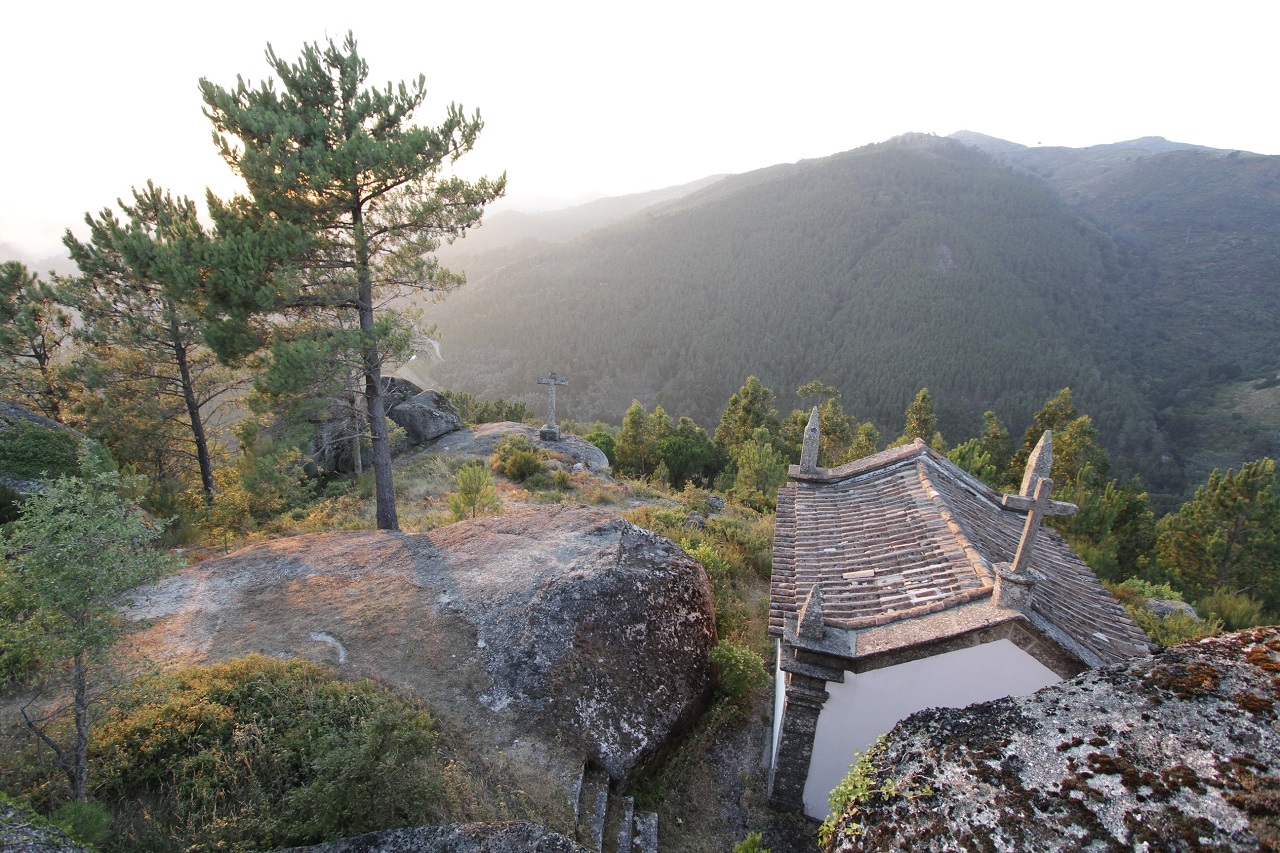
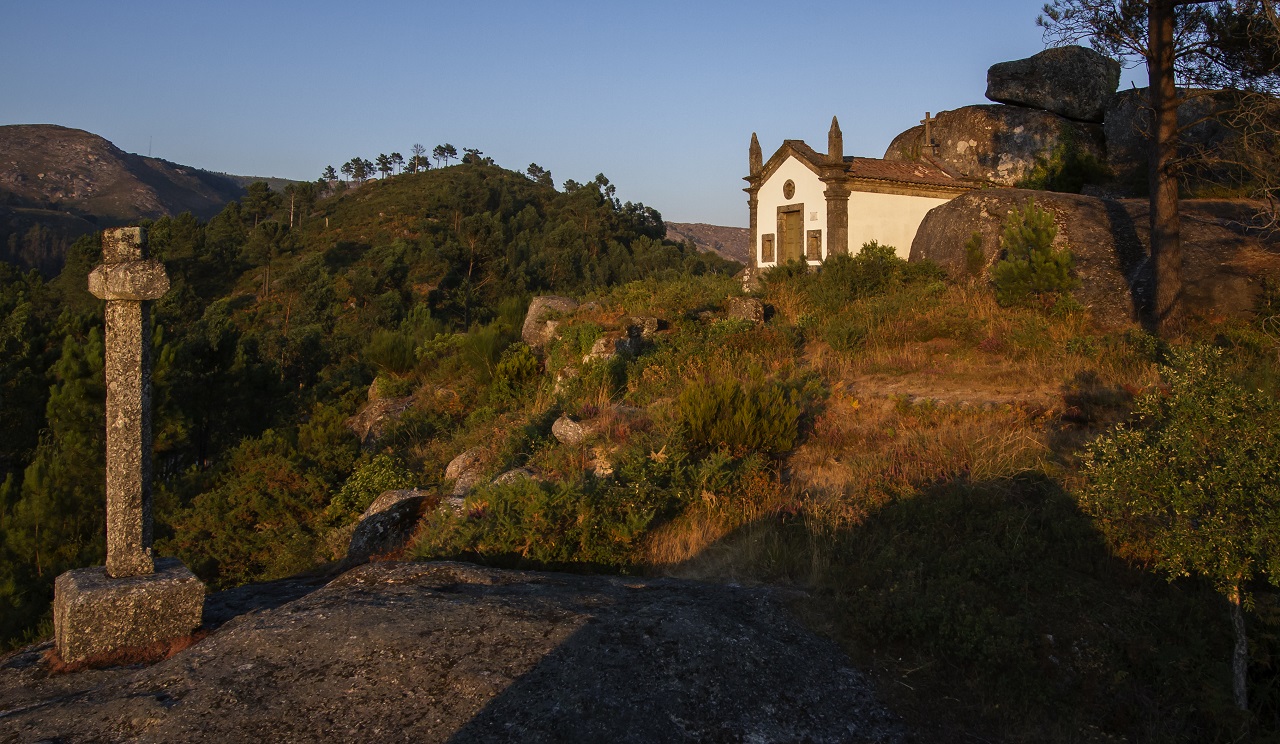
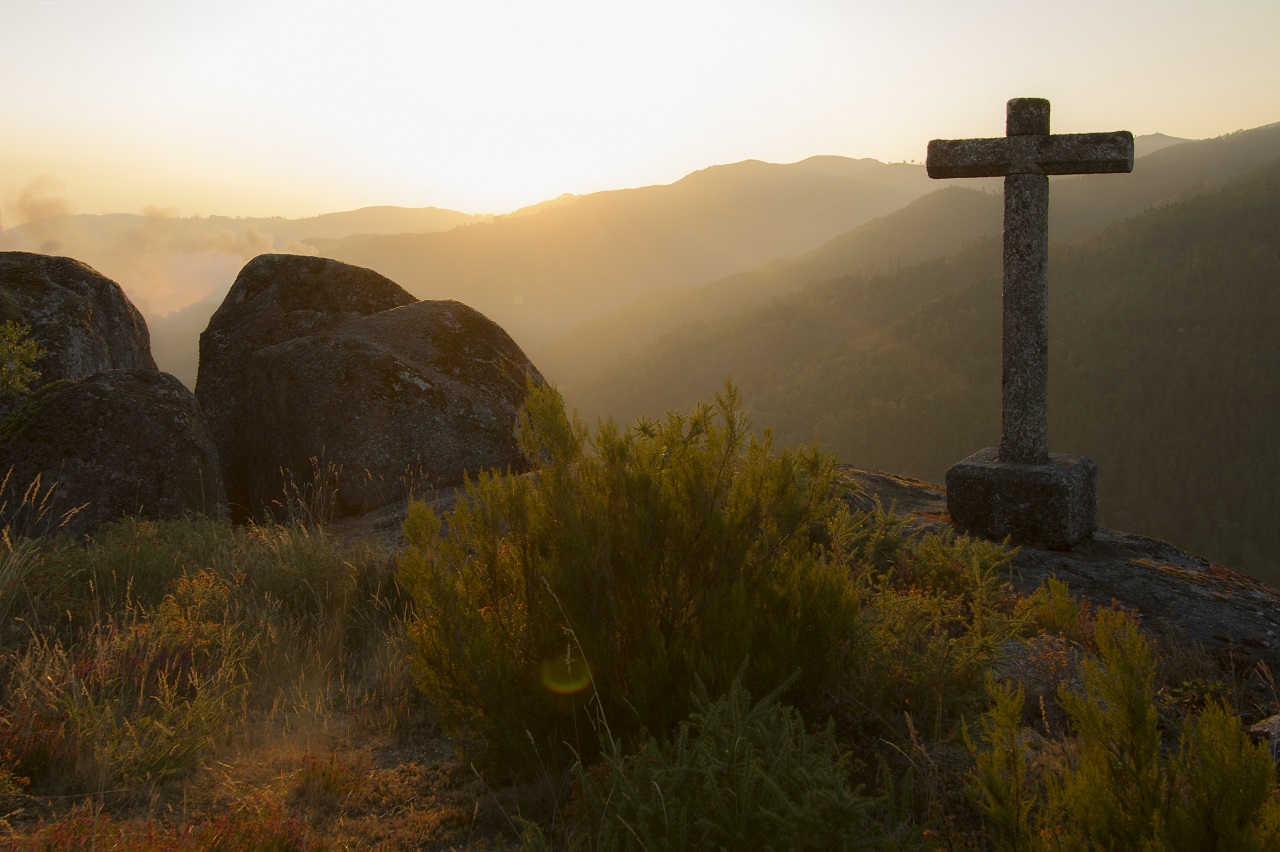
The mount of S. Miguel-o-Anjo is a viewpoint, framed by the rocky mountains of the Abadia, which gives it a good strategic position and excellent visibility over the Cávado valley.
Fragments of pottery from the Iron Age and Roman Period were found at this site.
On this mountain, S. Miguel-o-Anjo, we can find traces of castreja civilizations and fortified settlements, such as the village of cabins, castles and, mainly, Cidadelhe.
The highest point of Bouro Mountain is Crasto, a granite mound 992 meters high. About 50 meters from this location, towards the south, is Chã da Nábia, a place named after the Celtic goddess Nábia. Here, parties were held in his honor. These would have particularities consistent with their warrior character, with their association with water, rivers and the passage to the afterlife.
There are also other references in altars to another Celtic God, named Borvo, which led to the name Bouro being given, first to the mountain and then to the monastic community that settled in Cidadelhe.
Later, with Christianization, its name changed to Outeiro de S. Miguel.
Borvo means “the one who bubbles”, god of springs, streams, waterfalls and boiling waters.
At the confluence of the two streams that come down from the mountains, uniting the two Celtic gods mentioned, the Senhora da Abadia valley appears. The rivers and the gods unite and the Nossa Senhora da Abadia appears.