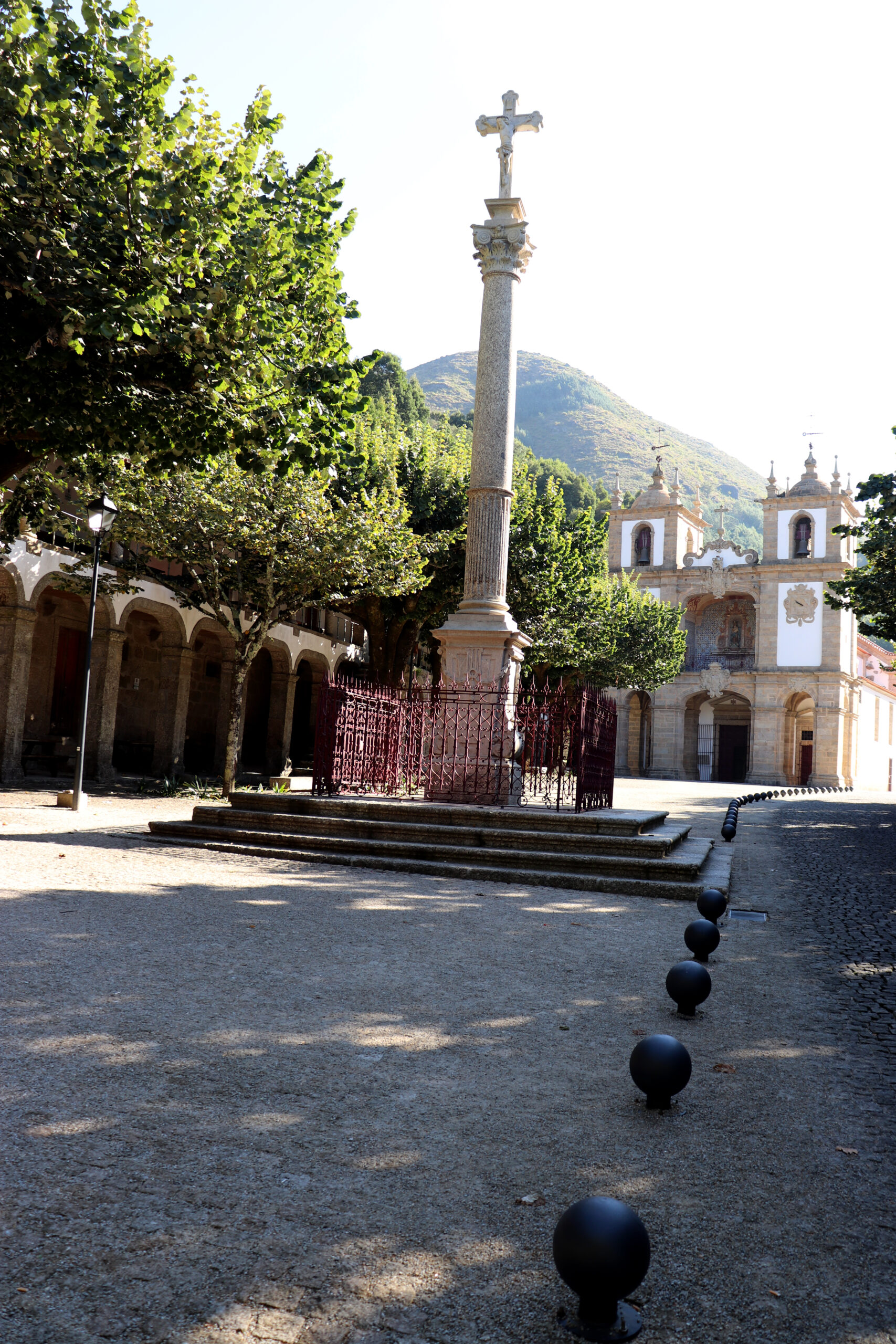

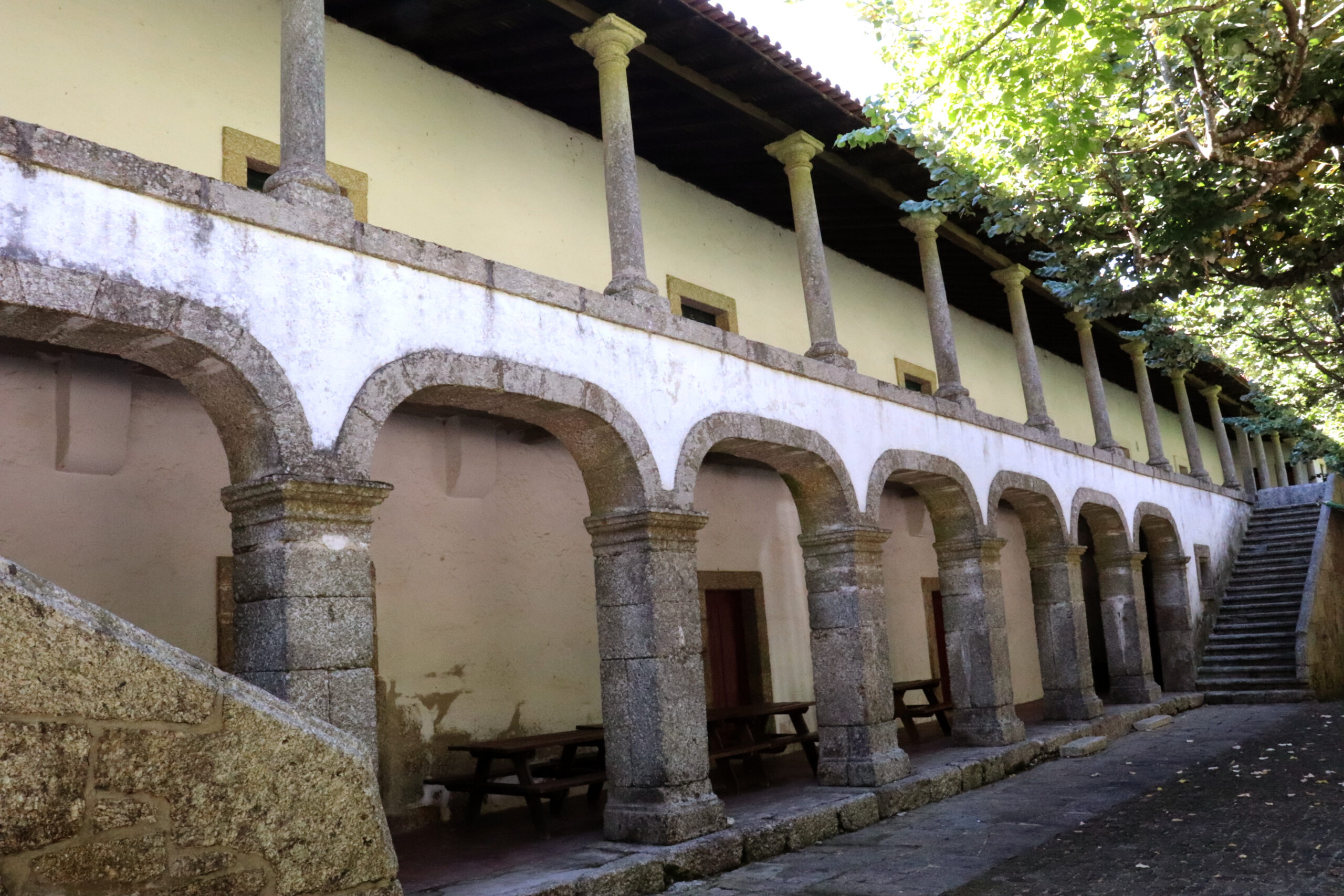
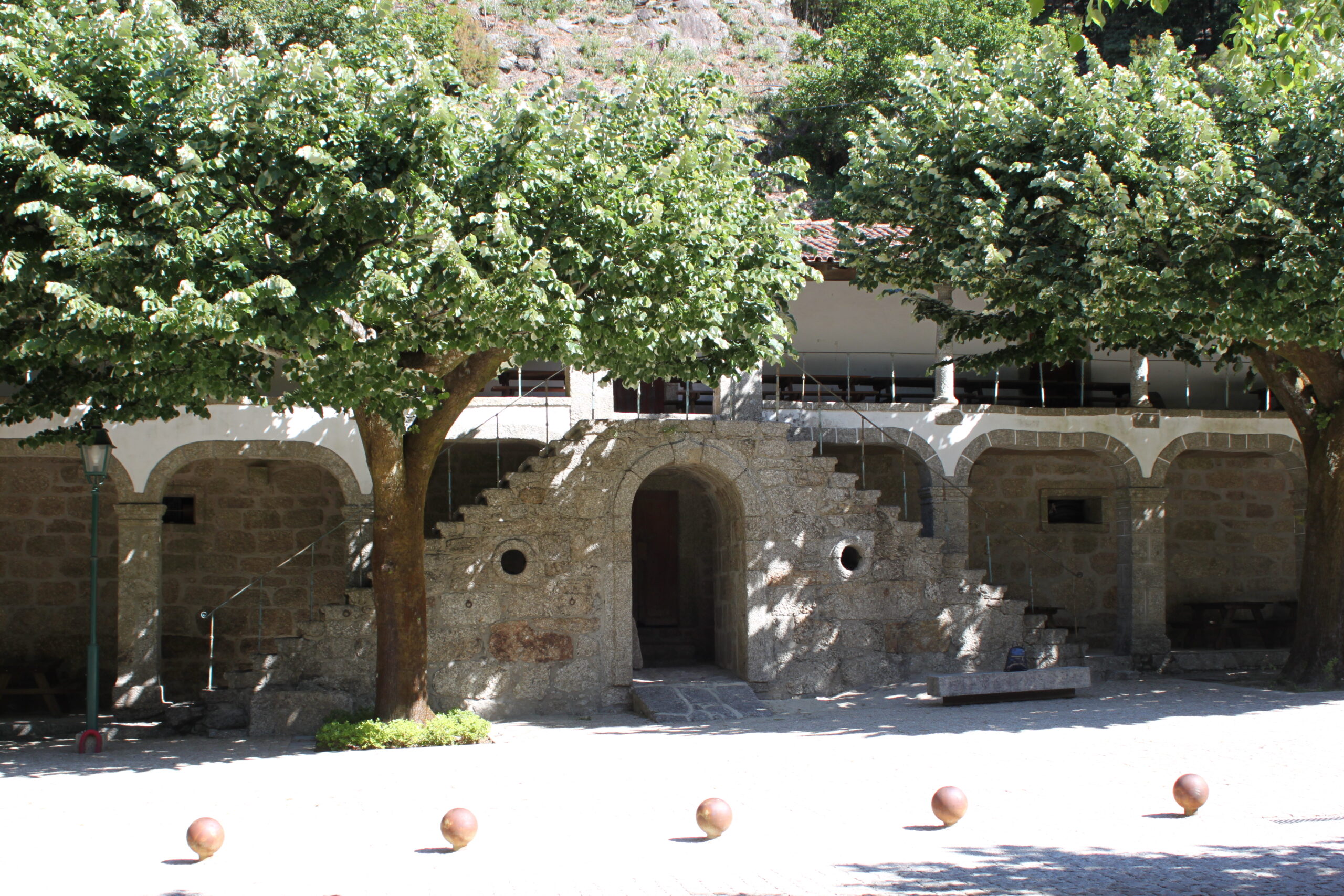
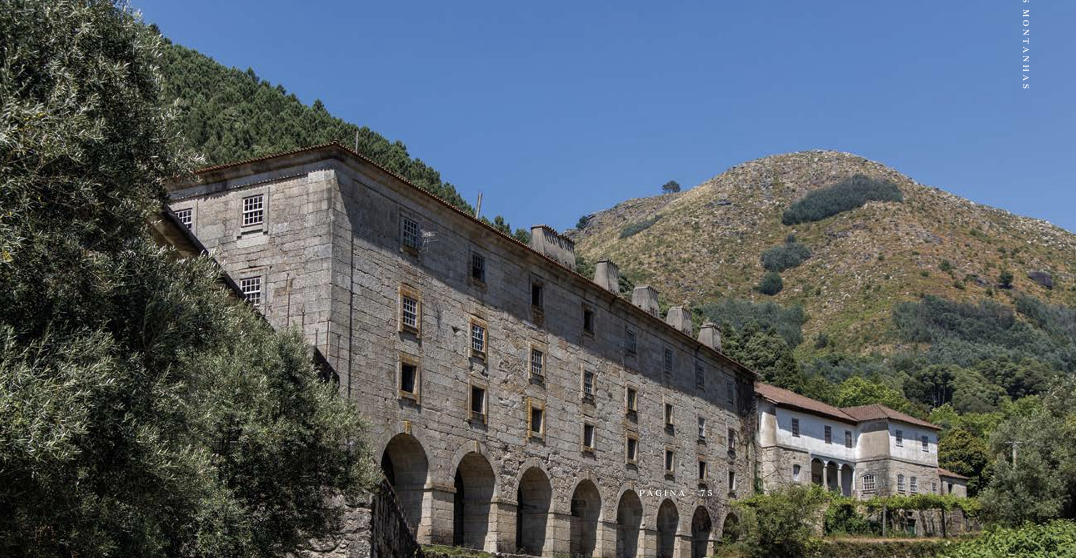
The Sanctuary of Nossa Senhora da Abadia is built on the mountainside, surrounded by vast vegetation, with the river flowing through the mountains and silence reigning throughout the space. The cross from the end of the 18th century, located in the center of the church’s large courtyard, indicates our arrival. On both sides of the square in front of the church, there are two buildings: the Casa das Ofertas dos Romeiros and the Barracks where, in times past, pilgrims spent the night. Today, it has been transformed into the Museum of Sacred Art of the Brotherhood of Nossa Senhora da Abadia. In the background, the Sanctuary stands out, considered by many to be the oldest Marian sanctuary in the Iberian Peninsula.
It was built in the first quarter of the 18th century, replacing a small medieval chapel built there in the 12th century, after the apparition of Nossa Senhora at the site of Abadia. The Sanctuary was integrated into the Monastery of Santa Maria de Bouro, built at the end of the 12th century by Benedictine monks who had occupied Monte de S. Miguel since the 9th century. A few years later, it began to be governed by the order of São Bernardo, remaining Cistercian until its extinction in 1834.
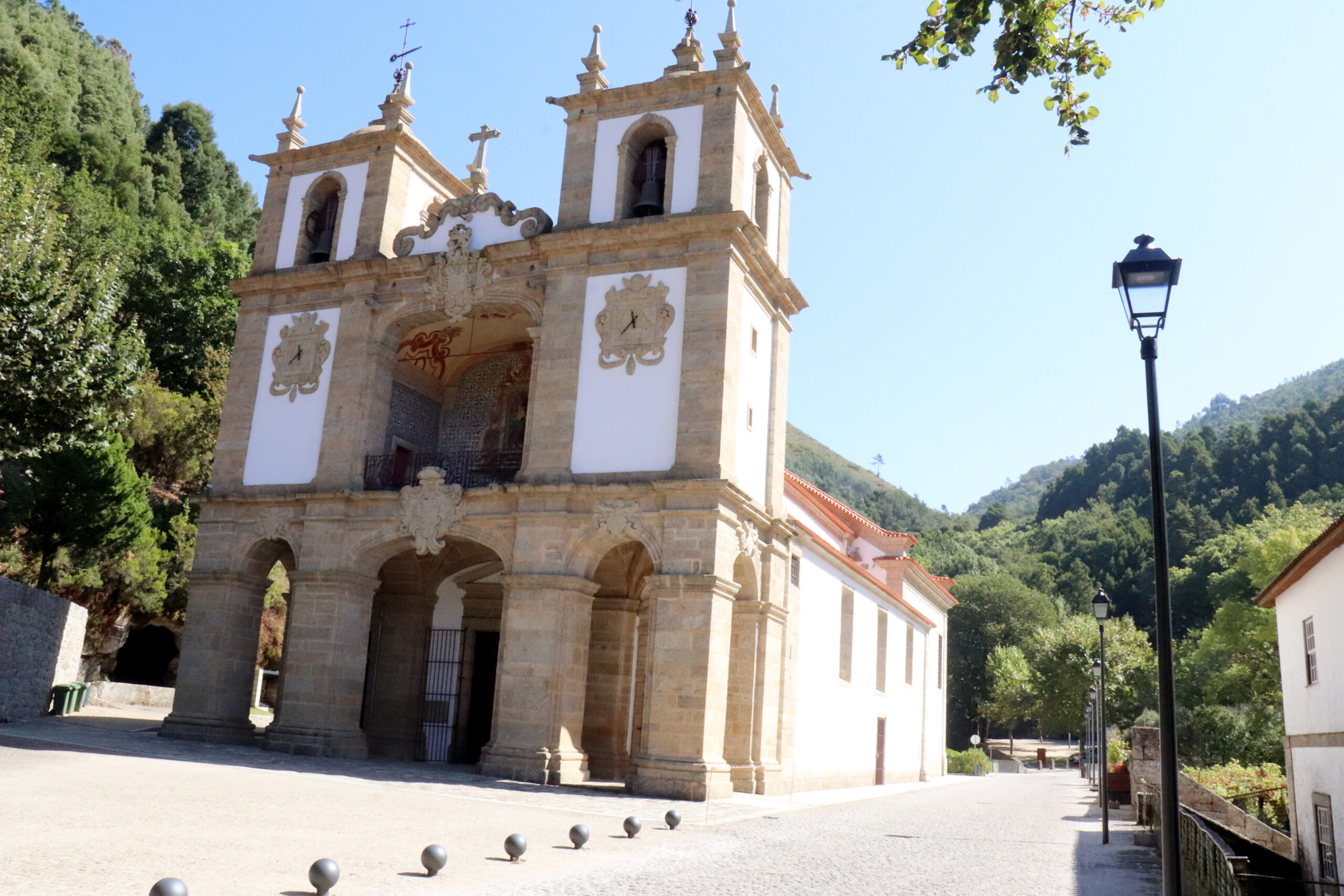
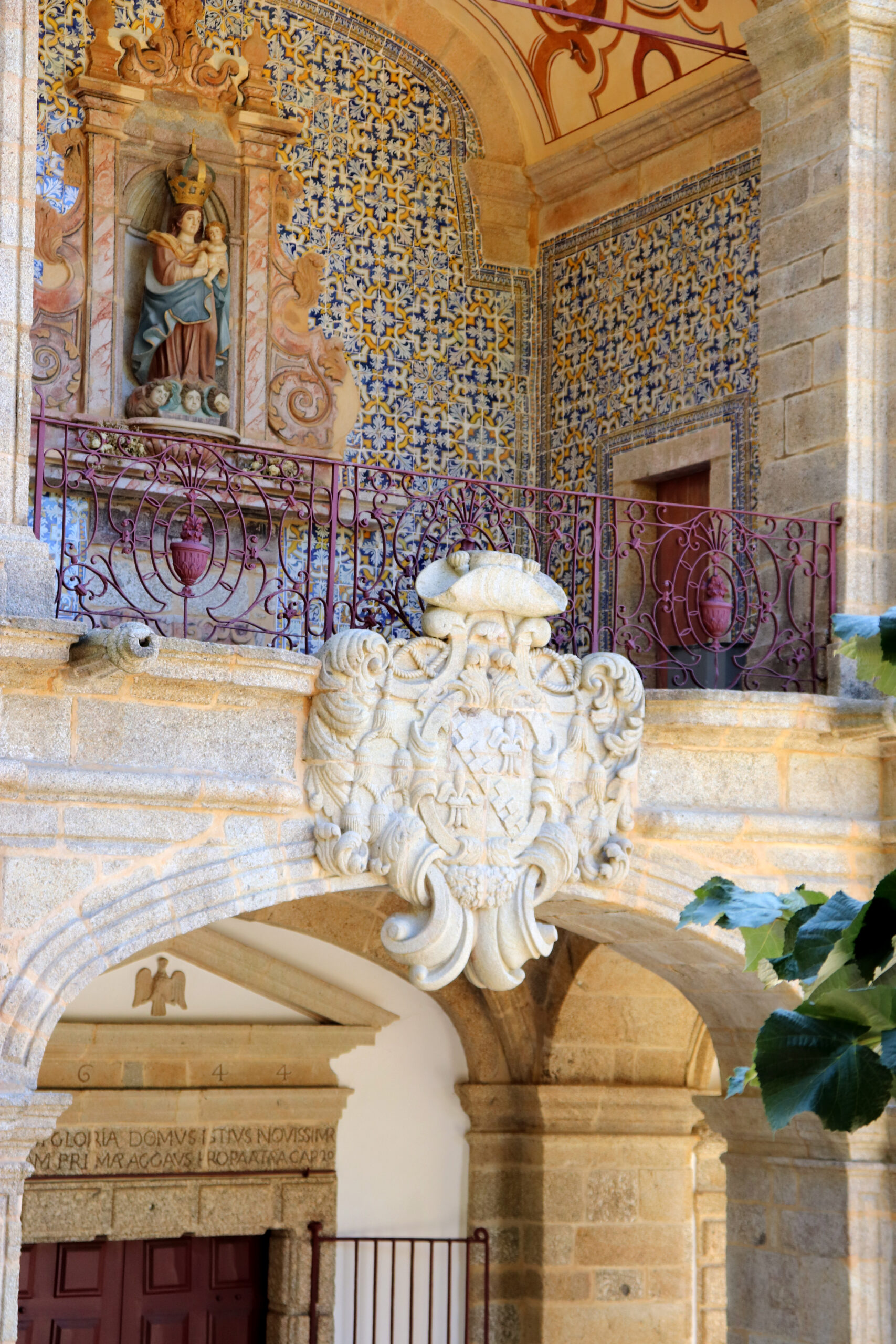
The main façade of the church is preceded by two granite bell towers with clock cartouches. In the center, a depressed arch with a coat of arms at the base, and at the top, a niche with the image of Nossa Senhora da Abadia.
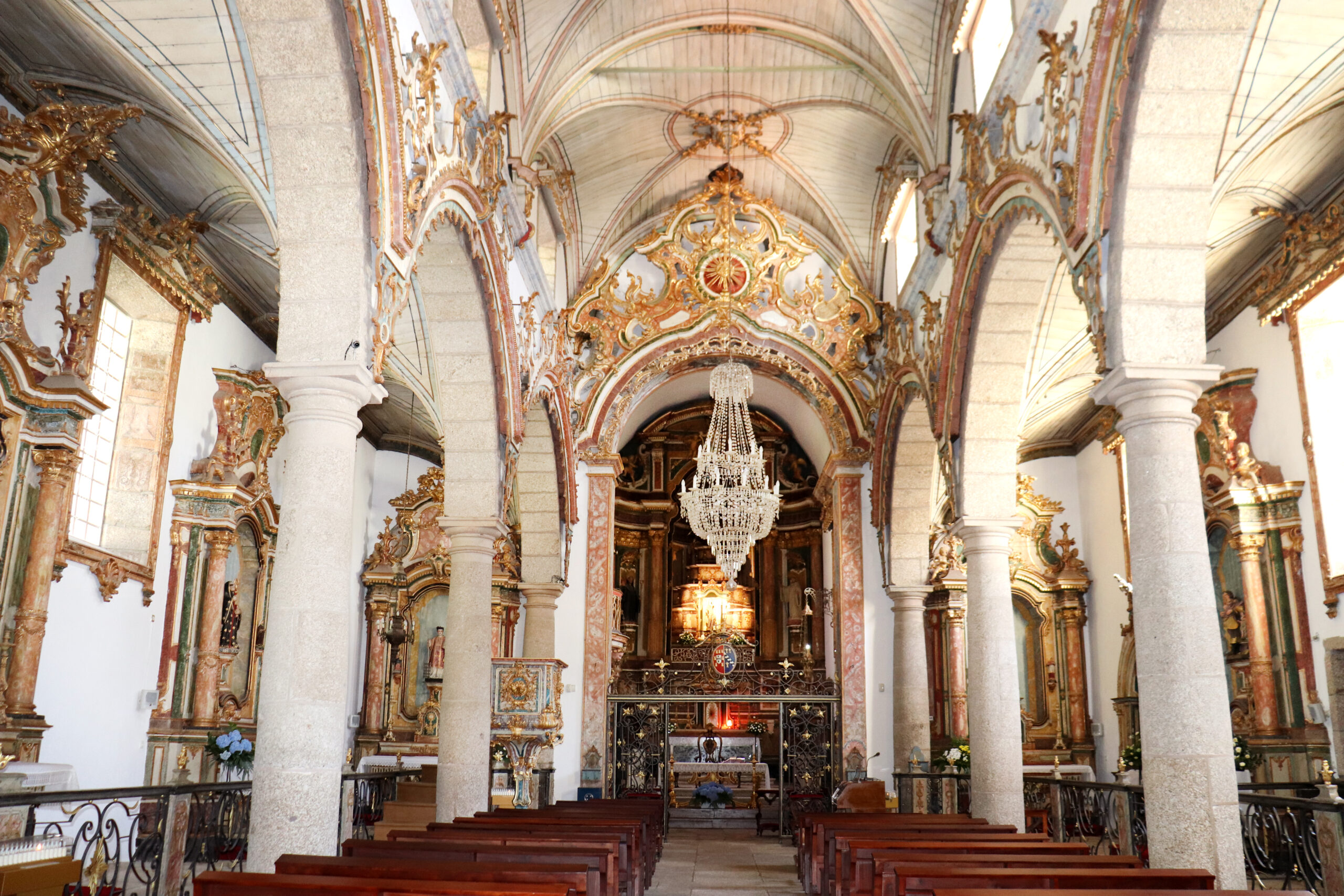
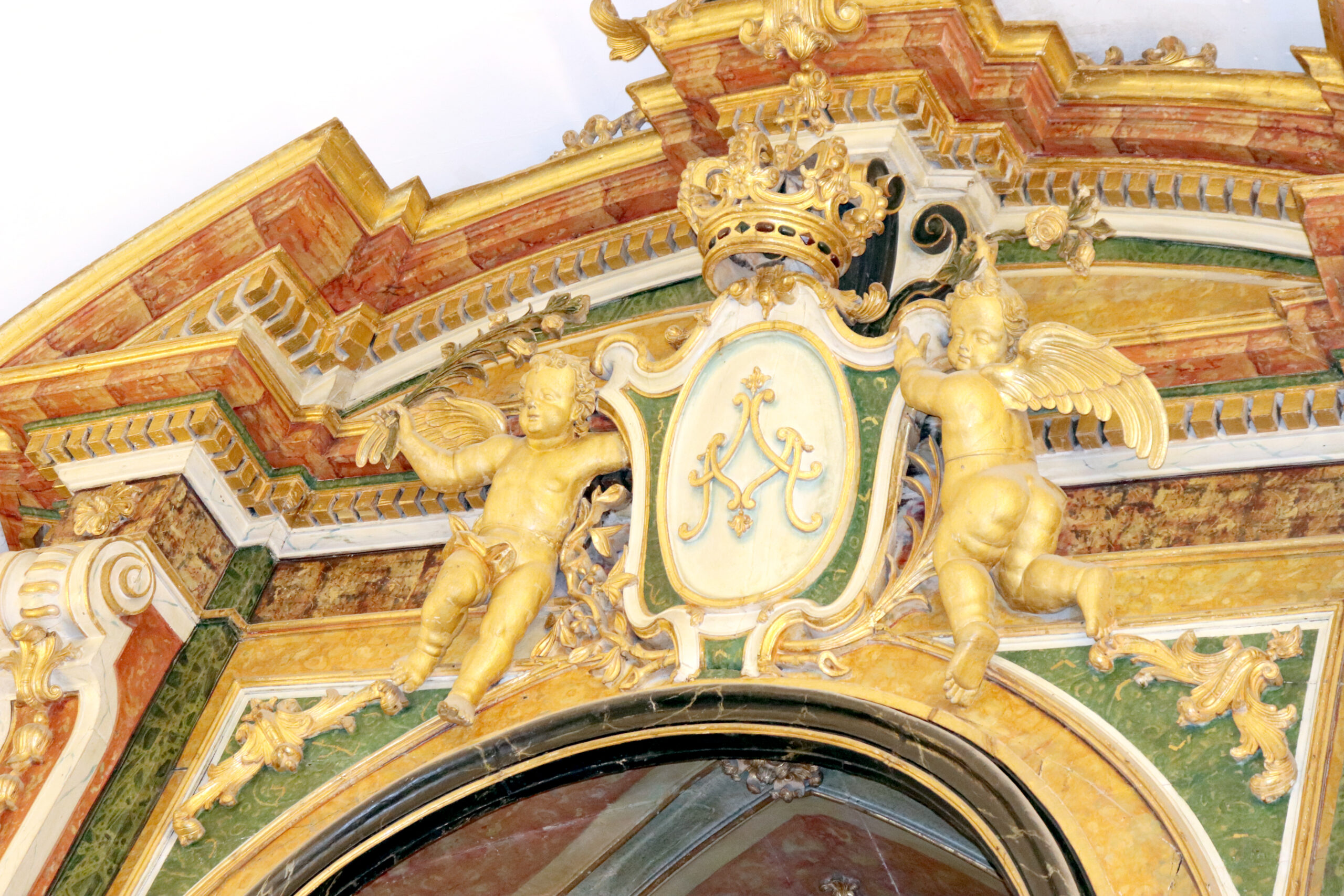
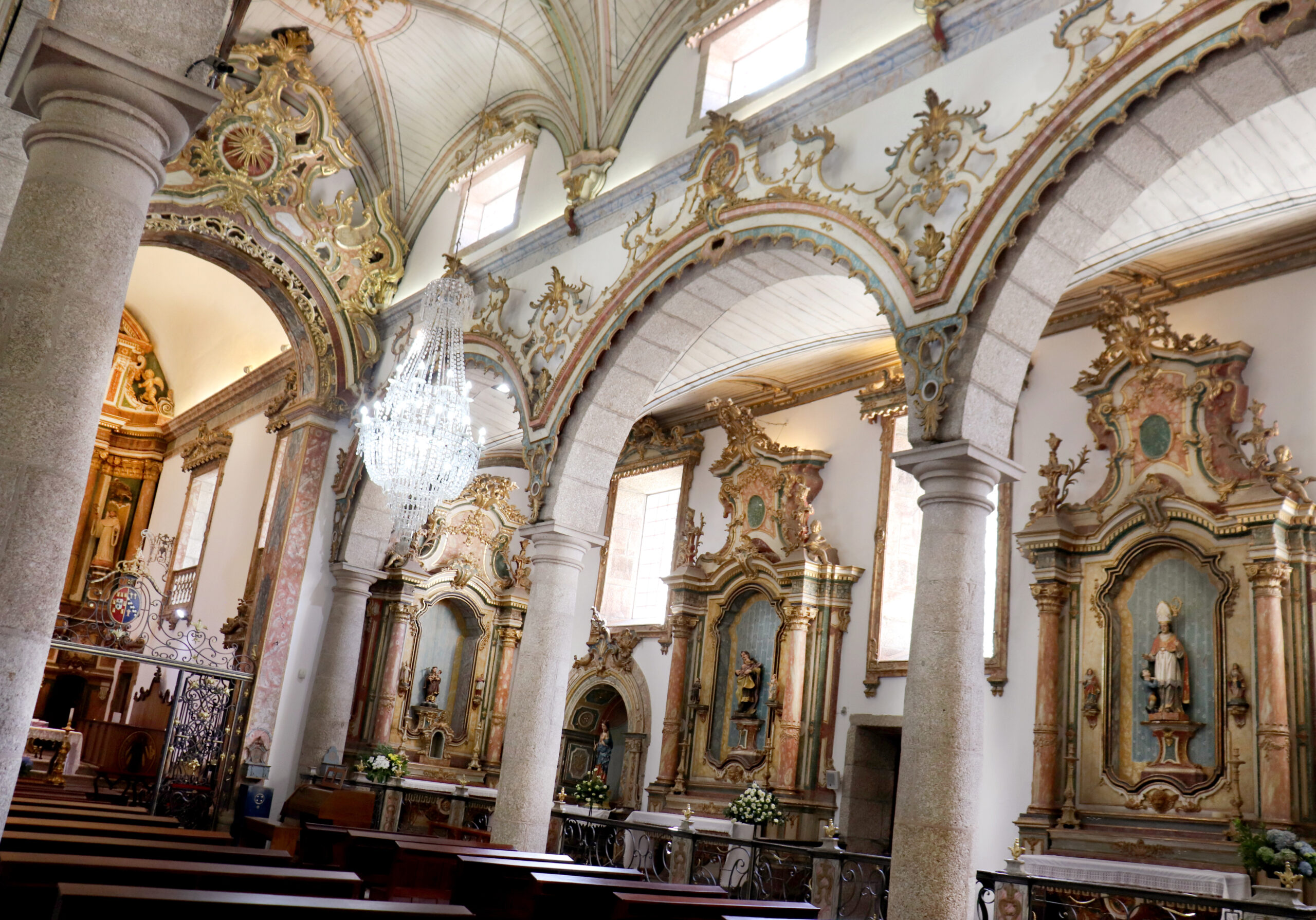
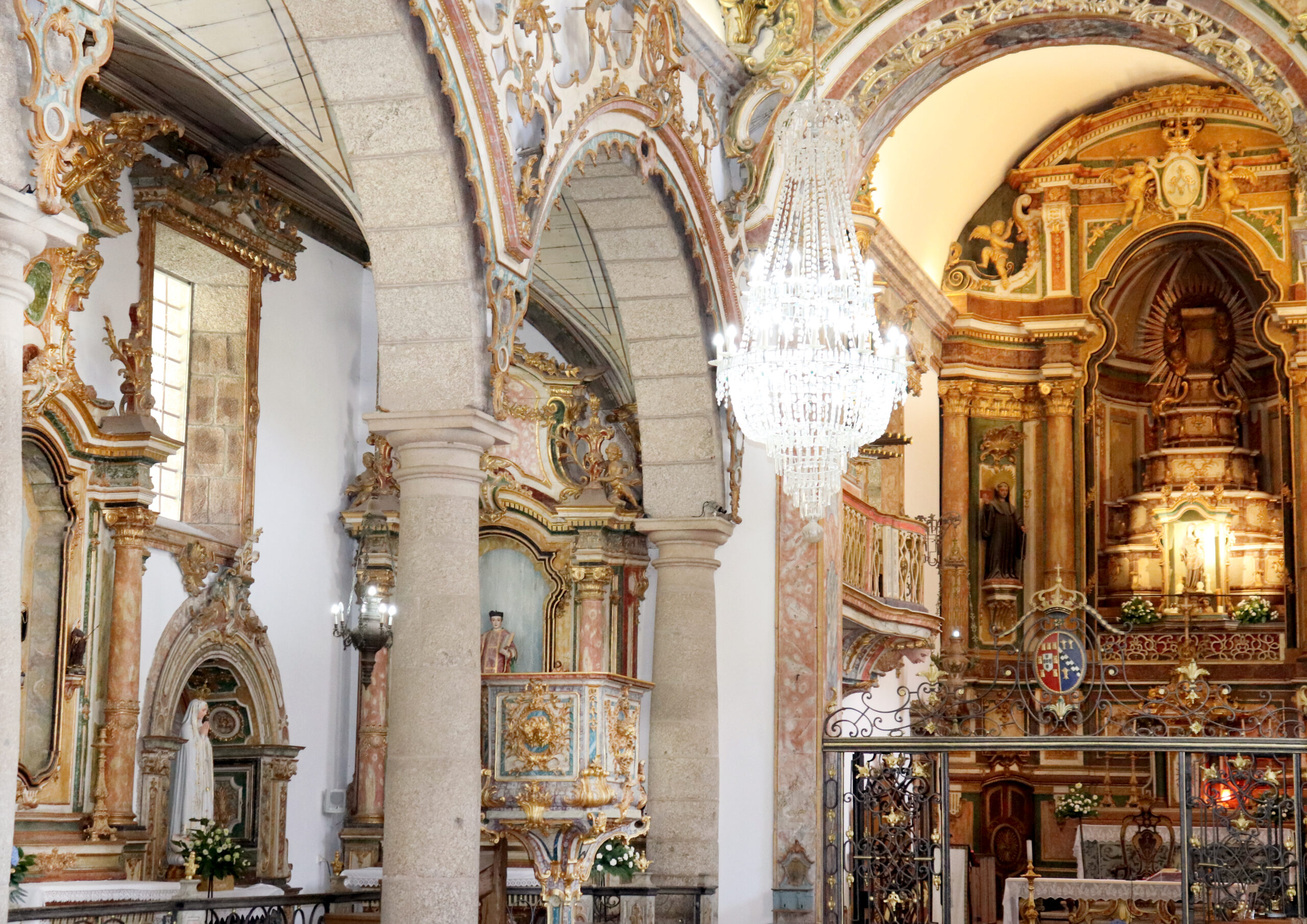
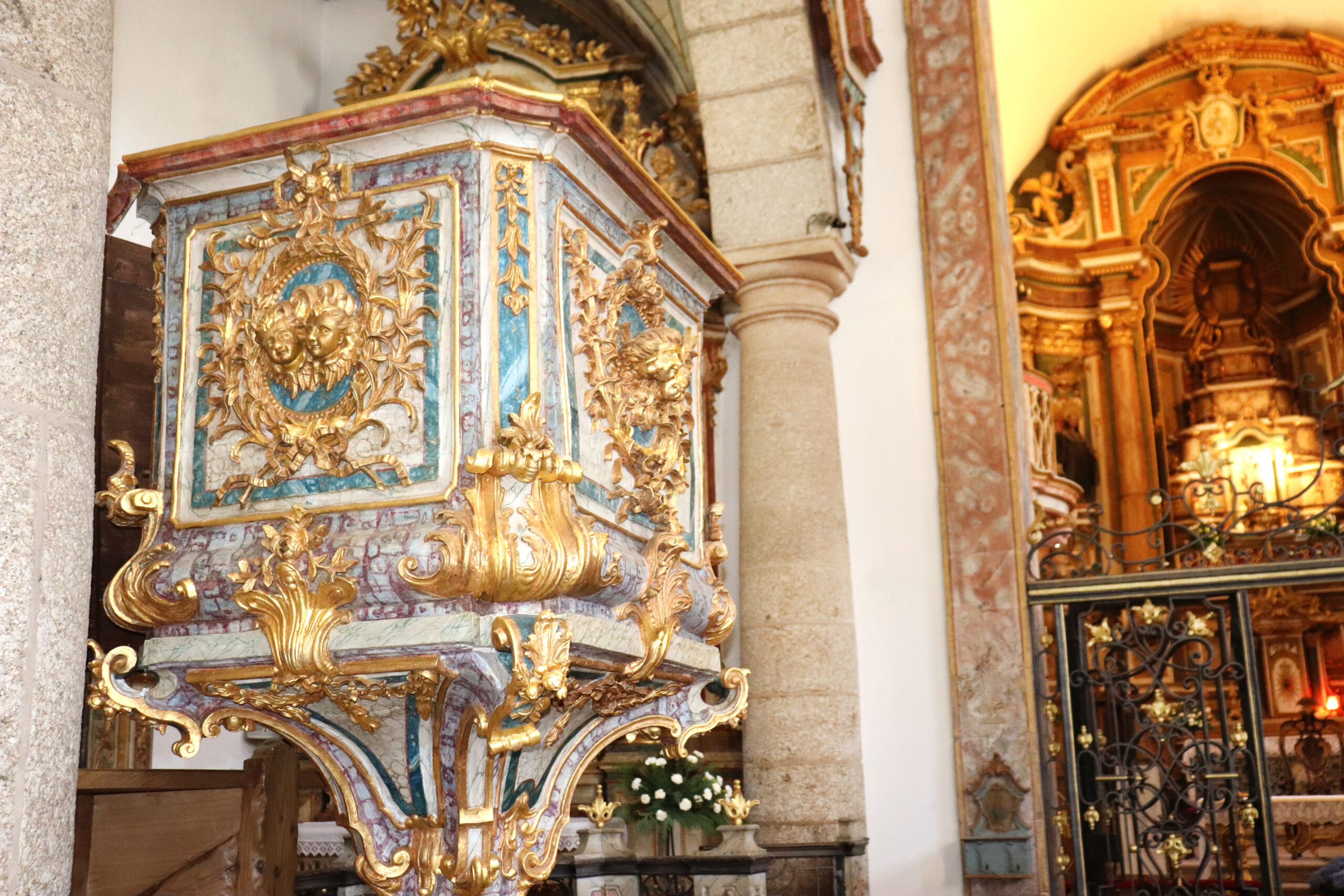
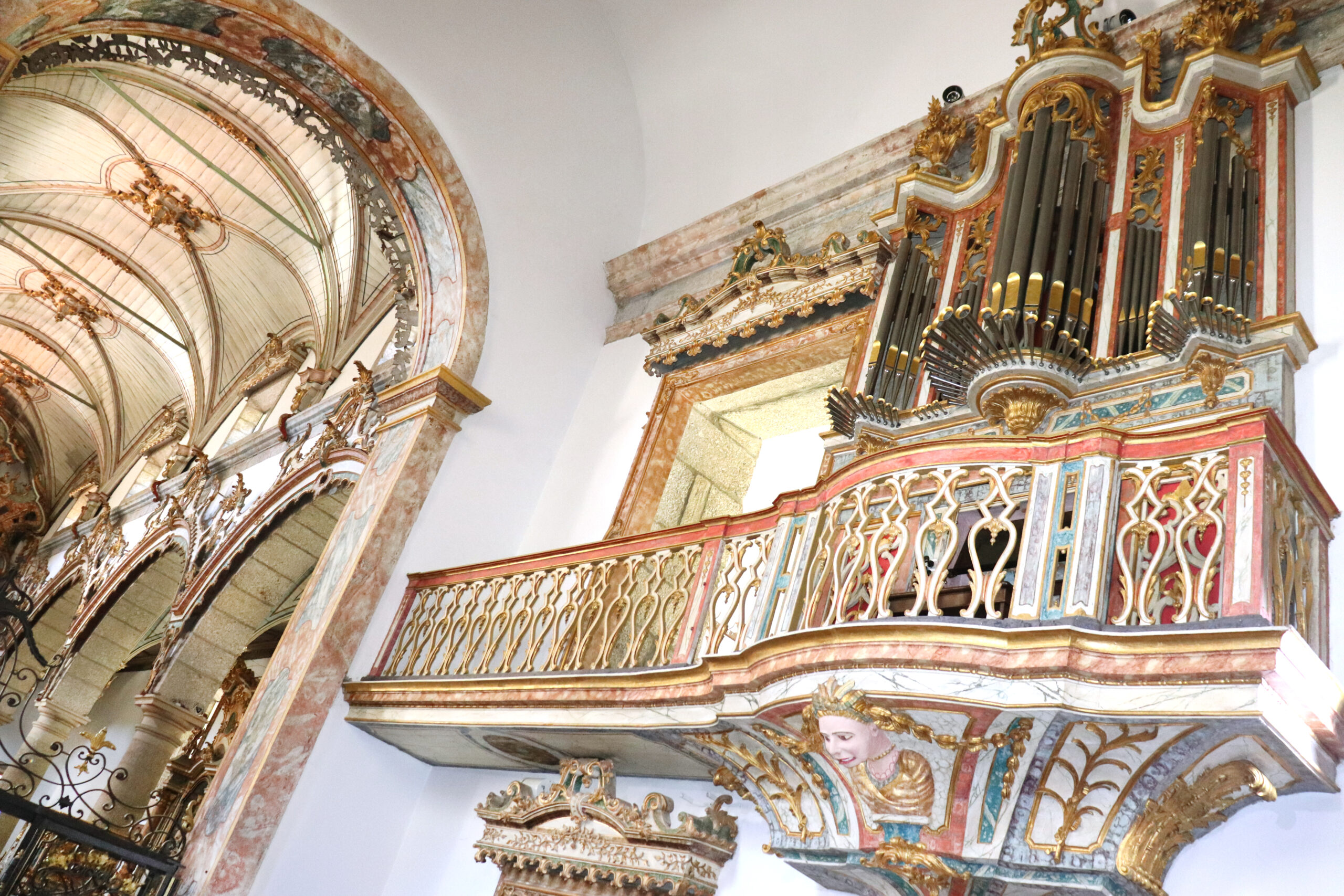
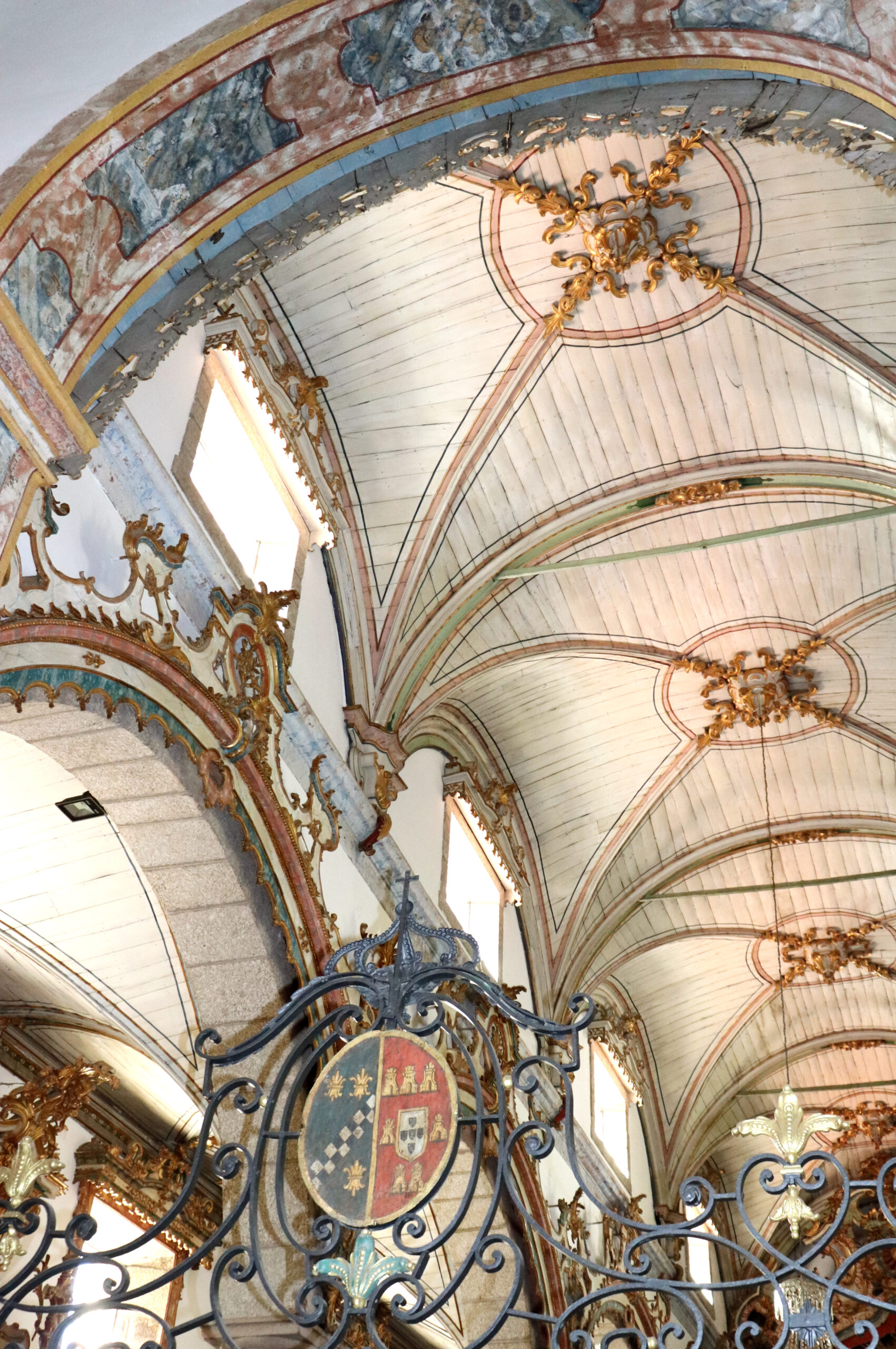
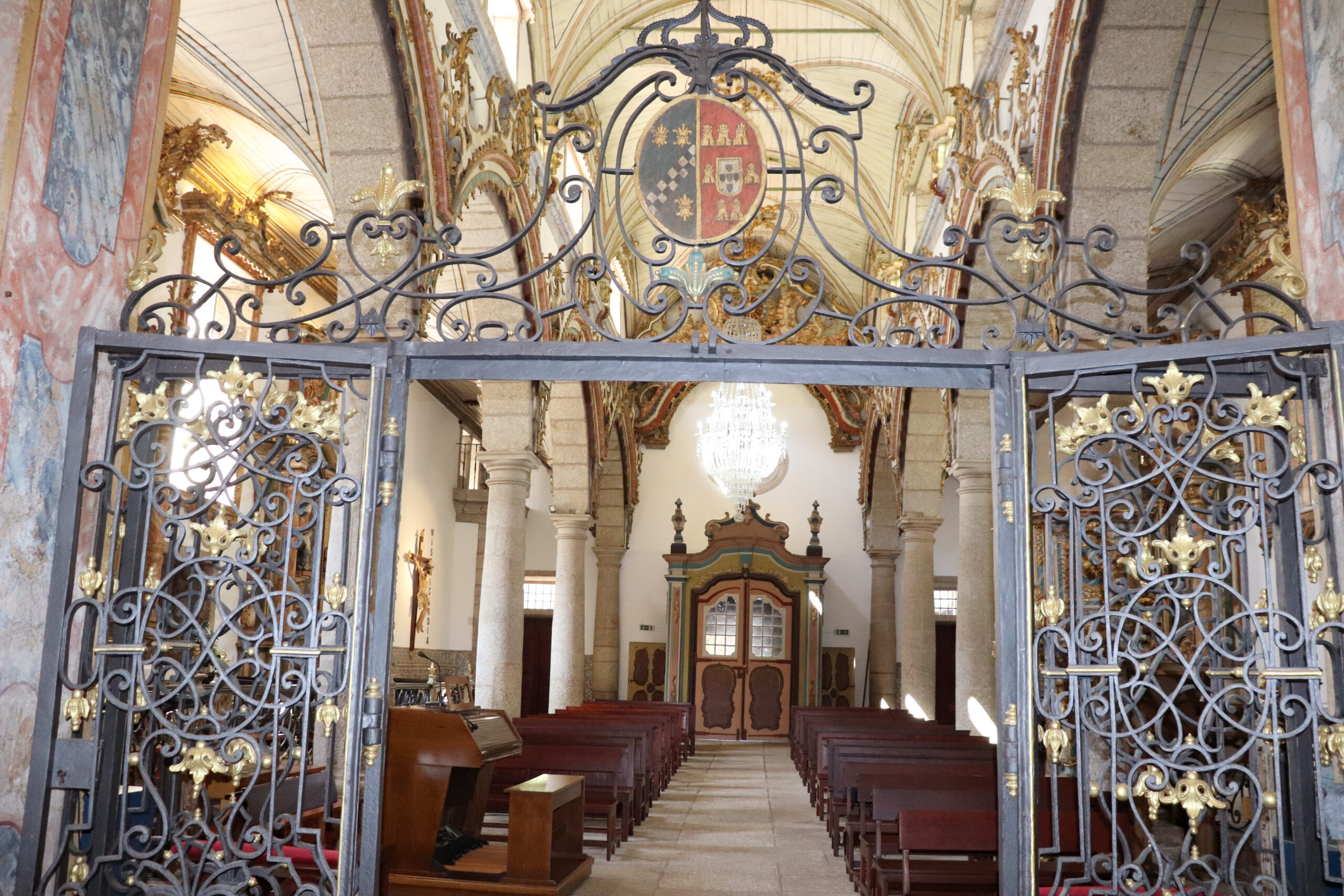
Inside, the numerous altars in the three side naves stand out, separated by round arches which, together with the main altar, impress with their grandeur and the beauty of their gilded carving. Also noteworthy is the 18th century organ, hand-carved, with the particularity of having a figurehead whose mouth moves simultaneously with the sound.
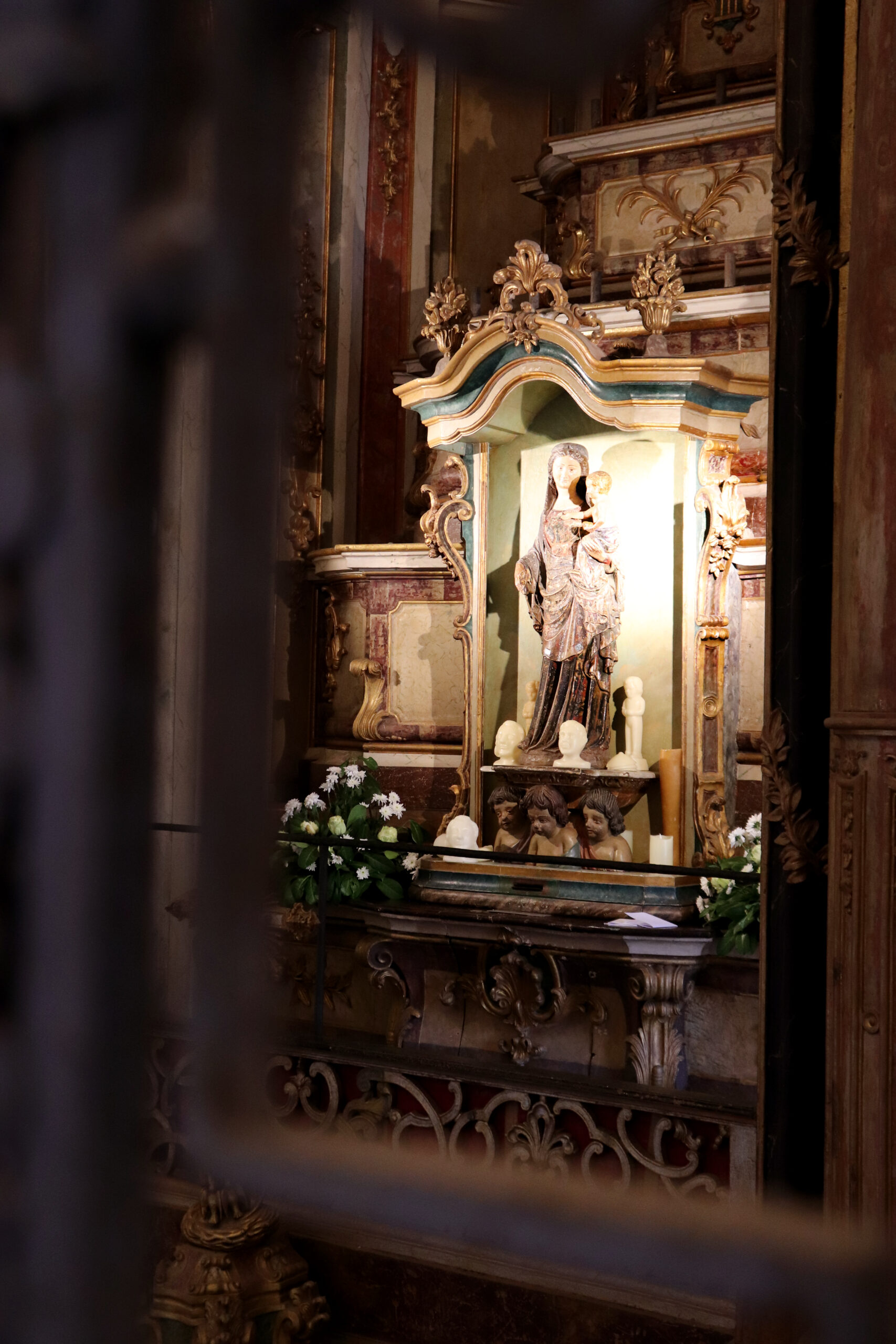
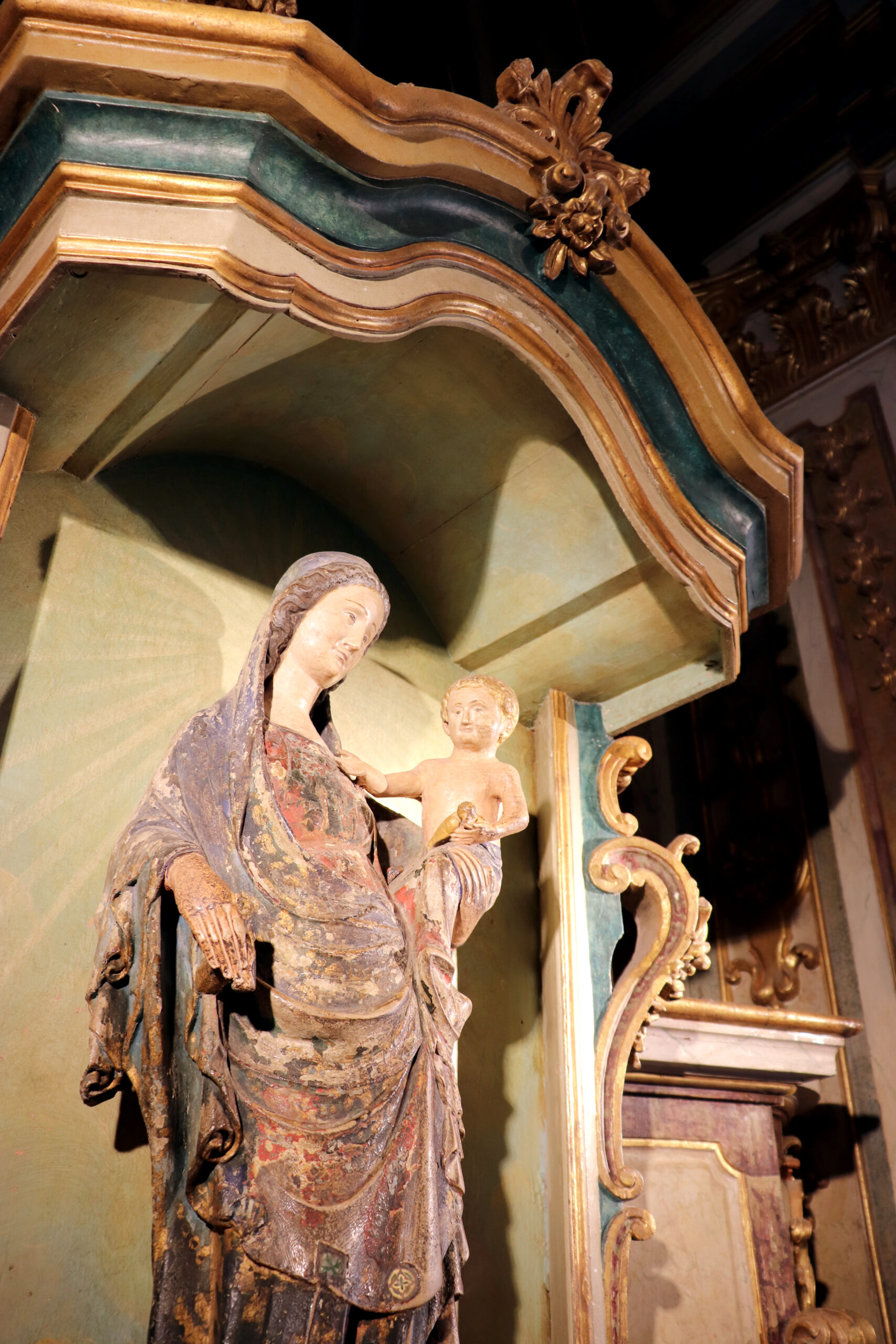
On the main altar, it is possible to climb up to the secular image of Nossa Senhora da Abadia with the Child in her arms, which is venerated by thousands of pilgrims who come there, mainly on the last Sunday of May and on August 15th. This sanctuary was classified as being of public interest in 2016.
It is believed that with the invasion of the mouros in the 8th century, the hermits who lived on Monte de S. Miguel, in Amares, left the place. However, before leaving and to avoid desecrating the image of the Blessed Virgin, they hid it at the bottom of the valley, in a safe and difficult to access place. Tradition has it that many centuries later, in the time of D. Henrique, the noble Pelaio Amado, after the death of his wife and, later, of his daughter, turned to religious life and became a hermit. He went to live with Frei Lourenço, on Monte de São Miguel. The hill still exists, just over a kilometer from the Sanctuary, and with it a breathtaking landscape.
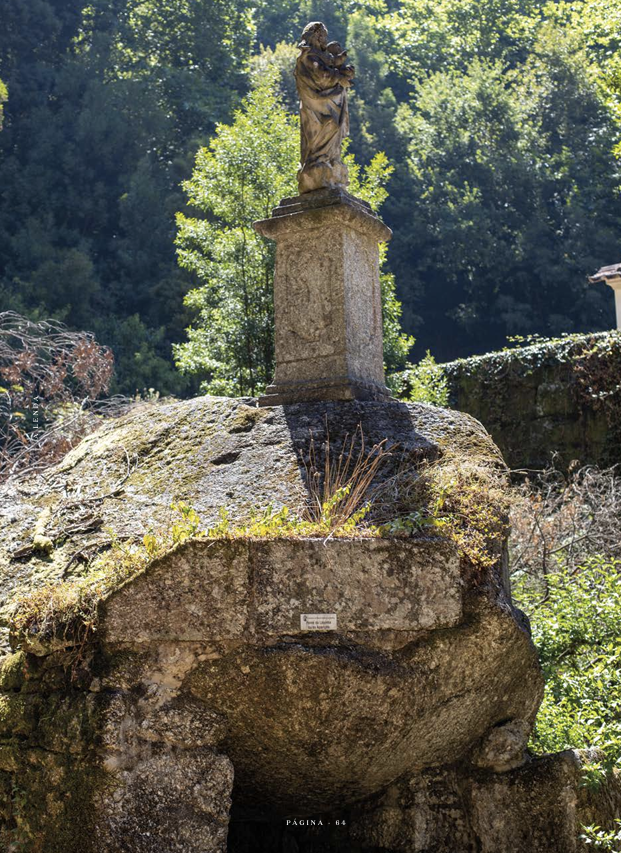
It is said that, one night, Frei Lourenço and Paio Amado saw, from the top of Monte de São Miguel, a strong and mysterious light coming from the bottom of the valley. The scene repeated itself the following night, until the following morning, when they both went down to the point where the light was coming from and there they found, hidden among the rocks and under a boulder, the image of the Virgin Mary carved into a rough stone. Filled with joy, they prostrated themselves before the image and, gratefully, began to venerate the Virgin Mary in it. The hermits moved to that location and built a simple chapel there, where they placed the image, which began to be visited by countless devotees, after the feat spread throughout the country. The miracle cave still stands on the site and a statue of the Virgin was erected above it, where the date 1883 can be read. However, anyone who enters the cave will see an inscription stating that the image was found in 1107, although there are doubts about this date. Later, and it is believed that, following the visit of the prelate from Braga, D. Maurício Burdino, he ordered the construction of the primitive church, made of carved stone. Considering the period of foundation, the church would be from the first phase of the Romanesque style. However, with successive reconstructions, today we are faced with a building in the Mannerist, Baroque and Rococo styles.
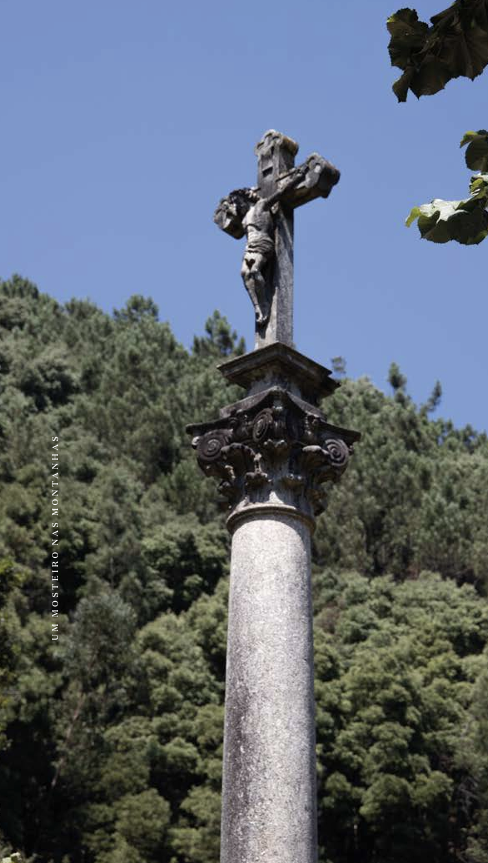
In the courtyard, there is a cross resting on a quadrangular platform with two to three steps, due to the slope of the land, with a parallelepiped plinth, decorated with festoons and volutes. Here, there is a column with a smooth shaft, with a fluted lower third and a Corinthian capital. At the top, a Latin cross with trilobed arms with the image of Christ Crucified. It was built in 1795 by José Ribeiro, from Cervães.
The Santuário da Abadia, whose history is closely linked to the history of the Monastery of Santa Maria de Bouro, is surrounded by “quartéis”, arcaded buildings that housed the pilgrims who spent days and nights there.
The Pilgrims’ Barracks, built on both sides of the sanctuary, were a place of rest and relaxation for those who came from far away to thank Nossa Senhora.
In the museum, it is possible to observe manifestations of ethnography, folklore and crafts, which contribute to a better identification of past times.
There are also various items on display that helped pilgrims when they spent the night there: chamber pots, jugs, oil lamps, etc.
The Sanctuary of Nossa Senhora da Abadia is above all a place of meditation and prayer. The main festivals and pilgrimages are the Pilgrimage held on the last Sunday of May and the Pilgrimage on August 15th, the day of the Assumption of Our Lady. However, on Easter Sunday, another festival takes place at this Sanctuary, the Pilgrimage of Nossa Senhora Goma or the festival dos Gozos de Nossa Senhora.
The pilgrimage to the Sanctuary of Nossa Senhora da Abadia is a tradition that has been maintained since 1978. Since then, on the last Sunday of May, hundreds of faithful climb the hill towards the Sanctuary.
Starting from Largo de Bouro, this pilgrimage from the Archpriesthood of Amares includes the presence of some parishes from Terras de Bouro and Vieira do Minho.
A place of Marian devotion before the development of other sanctuaries such as Sameiro or Fátima, in the square in front of the Santuário de Nossa Senhora da Abadia, there are two buildings: the house for pilgrims’ offerings and the quartéis, where in times past, pilgrims could spend the night. This space currently houses the Museum of Sacred Art of the Confraternity of Nossa Senhora da Abadia, opened on August 22, 1990. It is fundamentally identified by sacred art, statuary, implements, documentation and religious manifestations, etc. Ethnography, folklore and crafts (linen culture) also contribute to its identity.
Here, there are numerous elements of sacred art, essentially statuary, some of them belonging to the chapels of the Calvaries of Senhora da Abadia.
It is worth mentioning the collection of ex-votos on display in this museum. The ex-voto is the gift given by the faithful to their Saint of devotion in consecration, renewal or gratitude for a promise.
The volume and beauty of the ex-votos collected in this Sanctuary expressively describe the multiple circumstances, places and times in which the Virgin is invoked, appears and is present in the lives of those who implore her protection, in the most diverse critical moments of life. The oldest ex-voto dates from 1660.
The Confraria de Nossa Senhora da Abadia already existed in 1648, the date on which the Bull of indulgences was granted to the Confraternity by Pope Innocent X. With the expulsion of the Friars in 1834, references to the Confraria disappeared, passing to the direct tutelage of the civil order and power and the state.
In an edict of August 7, 1865, the Archbishop of Braga speaks only of a chaplain and “Reverend Administrator of the Sanctuary”.
In the last quarter of the 19th century, with the need to grant legal personality to the Sanctuary, an “Installation Committee of the Confraria de Nossa Senhora da Abadia” was organized. In a decree of August 7, 1886, the Statutes were approved and the Confraria was regularized, to which the Archbishop Primate D. António Honorato, in a forecast of the 13th of the month and year, granted Canonical institution. On August 9th, the election of the first Board of Directors of the Confraria was held.
“The new Statutes of the Confraria of Nossa Senhora da Abadia were published in 1942. They defined the objectives of the confraria, remodeled, in these horizons of the 20th century.”
The Latin term “ex-voto” designates a votive offering in gratitude to a sacred entity, in this case our Nossa Senhora da Abadia, for an event considered miraculous, that is, a grace received: miraculous healing or unexpected rescue from certain death, return to health of sick animals, work-related misfortune, travel incident, aggression, natural disasters, shipwrecks, war, etc.
The believer begs our Nossa Senhora for a certain grace and, if it is granted, he gives thanks. These are thanksgiving offerings, many of them without great monetary value, but of extraordinary interest, such as pieces of folk art.
It is worth dwelling on these objects, which are of incalculable value in the cultural characterization of a people. They are all living testimonies of the faith and gratitude that the faithful, since ancient times, have given to our Nossa Senhora da Abadia.
The origin of ex-votos dates back to the beginning of civilizations, and it is not known for sure when the relationship of offerings to divine entities began. The practice of donating small statues or other votive objects to temples dedicated to deities is already documented in Egyptian civilization, in ancient Greece, in Roman and Etruscan times.
The oldest ex-voto of our Nossa Senhora da Abadia dates back to 1660 and highlights the miracle that Nossa Senhora da Abadia performed on the Captain of S. João de Rei, António de Freitas, who was suffering from colic that could not be cured with any medicine and achieved health.
The Virgin Mary, Mother of God, has always been and will always be venerated in the most diverse ways and will always be present in various religious manifestations. There are countless temples that appear where their veneration and devotion and faith capture thousands of faithful.
The Marian Route is an example of this importance and devotion, which includes all the Sanctuaries where the presence of our Nossa Senhora gives rise to constant manifestations and celebrations of religious festivals.